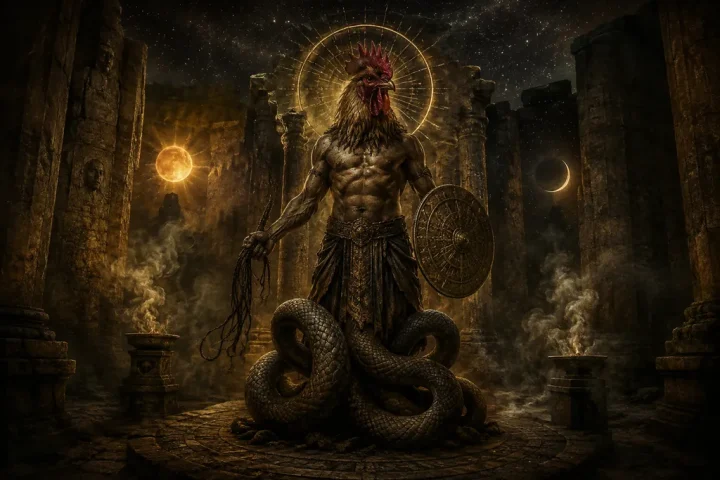
Abraxas: The Gnostic Power Beyond Good and Evil Abraxas, also written as Abrasax, Abraxis, or Abracax, is one of the most mysterious and paradoxical figures in Gnostic, magical, and demonological tradition. He
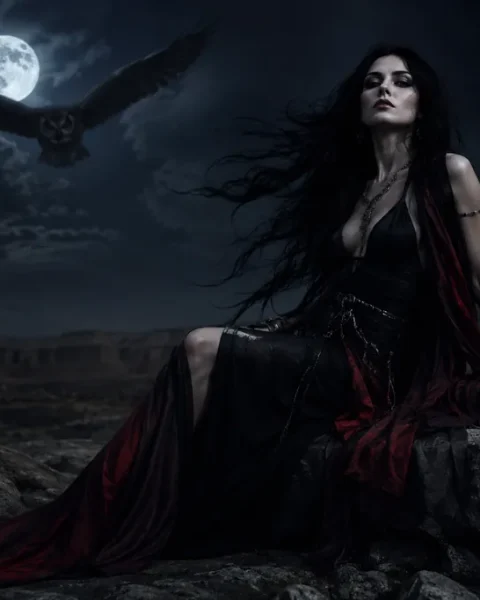
Lilith : Screech Owl; Beautiful Maiden; Dark Maid; Flame of the Revolving Sword; Maid of Desolation; Night Demon; Hand of Inanna; The Night Witch; The Howler Lilith: First Woman, Night Demon and Queen of the Wilderness Few supernatural beings possess
Mortoliel: A duke who serves the demon Hydriel. Mortoliel is drawn to wet or watery locales. According to the Ars Theurgia, he is very courteous in nature and possesses a good temperament.
Moschel: When he manifests, this demon may appear to flit and flutter about the conjuration space; Samuel L.MacGregor Mathers gives his name as meaning “to move oneself about.” Moschel is a servant
Motmyo: A demon who aids with the art of divination. He is called upon as part of a spell to gain information through psychic means in the fifteenthcentury Munich Handbook. SEE ALSO:
Mudiret: One of ten great dukes under the rule of the wandering prince Bidiel, Mudiret is an essentially good spirit and his appearance reflects this: when he manifests, he assumes the form
Luciel: A demon who appears as a serpent with a woman’s head, Luciel is one of twelve dukes who serve the greater demon Hydriel. Luciel and his fellow dukes are described in
Losimon: According to Mathers’ translation of the Sacred Magic of Abramelin the Mage, Losimon is one of a number of demons who serve beneath the four infernal princes of the cardinal directions.
Loriol Loriol is an obscure demon named in S. L. MacGregor Mathers‘ translation of The Book of the Sacred Magic of Abramelin the Mage, where he appears among the spirits serving the
Luesaf: A demon governed by the infernal ruler Magoth. In the Mathers translation of the Sacred Magic of Abramelin the Mage, Luesaf is said also to serve Kore, another name for the
Lyut is a demon named in the Driscoll edition of the Sworn Book, a fourteenth-century magical text concerned with the summoning of both angels and demons. Within its infernal hierarchy, Lyut serves
Lytim: One of the many alternate names of the demon Lilith. This version of her name appears in conjunction with a spell known as the “Mirror of Lilith.” Detailed in the fifteenth-century
We're excited to share THIS LIST of spellcraft and witchcraft guides. Whether you're just starting out or deepening your practice, these books cover everything from wicca to hoodoo to demonology.CLICK HERE

Follow