

Poppet
A poppet is a magical doll used in spell-casting, ritual magic, folk magic, and witchcraft. It serves as a substitute or symbolic double for a person, spirit, deity, intention, or magical force.
In spell work, the poppet represents the person who is the object of the spell. Whatever is done to the poppet is believed to affect the person, condition, or energy to which it has been magically linked.
The Magical Link
A poppet is usually made with intense concentration and clear intention. The practitioner focuses on the purpose of the spell while constructing the doll, so that the poppet becomes more than an object. It becomes a vessel for magical influence.
Ideally, the poppet contains something belonging to the subject, such as pieces of clothing, hair, nail clippings, or other personal items. Hair and nails are especially prized in folk magic because they are believed to carry the living essence of the person.
These personal concerns create a magical link between the poppet and the individual it represents.
Substitutes for Personal Items
When personal items were not available, substitutes were sometimes used.
In earlier folk practice, a kite might be flown over the chimney of the intended subject’s home to collect soot. This soot was believed to contain the essence of the occupants and could then be placed inside the poppet.
Animal hair was also used as stuffing for poppets, especially when the doll needed to be filled with natural or magically charged material.
Giving Life to the Poppet
In some traditions, life is breathed into the poppet by blowing into the doll’s mouth through a straw.
This symbolic breath gives the poppet a magical life of its own. It activates the doll and prepares it to carry the intention of the spell.
The act echoes ancient ideas about breath, spirit, and animation. To breathe into something is to awaken it.
Poppets in Curses and Binding Spells
Poppets are sometimes associated with curses, harmful magic, and binding spells. In these cases, the doll is used to symbolically afflict, restrain, weaken, or stop the actions of the person it represents.
In historical witchcraft lore, poppets connected with curses might be pierced, bound, burned with candle wax, buried, or otherwise ritually damaged. These actions were believed to transmit illness, misfortune, pain, restriction, or death to the target.
A binding poppet might be tied with cord to prevent someone from taking a particular action. A poppet connected with an illicit love affair might be symbolically bound or pierced to stop the relationship.
These practices should be understood as part of historical magical belief and folklore, not as ethical modern guidance.
Photographs as Poppets
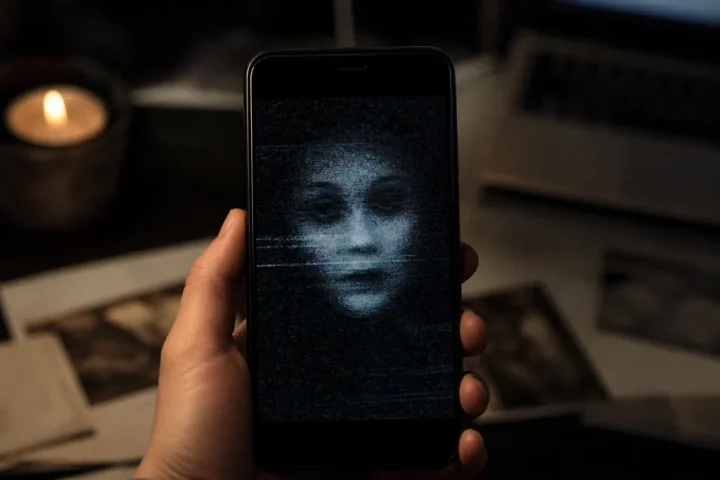
A photograph can sometimes function as a poppet substitute.
Because an image represents a person, it may be treated in a similar way within sympathetic magic. The photograph becomes the magical link, replacing the doll.
This reflects the principle behind all poppet magic: the image, object, or substitute is treated as though it is connected to the person it represents.
Sympathetic Magic
Poppet magic is a form of sympathetic magic.
Sympathetic magic is based on the idea that like affects like, and that objects once connected remain magically connected. A doll shaped like a person, containing pieces of that person, is believed to carry a link to them.
This principle appears in many magical traditions around the world. It is not limited to European witchcraft, although poppets are especially famous in that context.
Poppets in the Salem Witch Trials
Poppets appeared in accusations during the Salem witch trials.
Several accused people were said to have used poppets to harm or kill others. George Burroughs was accused of making Abigail Hobbs stick pins into poppets he had given her. Bridget Bishop, Goody Hawkes, and Hawkes’ enslaved woman Candy were also accused of using poppets to inflict pain at a distance.
These accusations reflected the deep fear of malefic magic in seventeenth-century New England.
Candy’s Poppet
Judge John Hathorne ordered Candy to produce one of her poppets in court.
The doll was made mostly of rags and grass. Hathorne forced Candy to eat the grass, then burned the rags. One of the afflicted girls screamed that her hand was being burned at the same time, so the flames were put out.
To the court, this incident seemed to confirm that the poppet was magically linked to the afflicted girl. Today, it is better understood within the hysteria, coercion, and dangerous superstition of the Salem trials.
Bridget Bishop and the Wall Poppets
Two men who worked on Bridget Bishop’s house testified that they had found several poppets hidden inside a wall.
The poppets were made of rags and hog bristles, with headless pins stuck into them. This discovery was used as evidence that Bishop had bewitched people, caused harm, and practised evil magic.
The poppets seemed to validate the testimony against her, although the Salem trials are now remembered as a tragic example of fear, accusation, and injustice.
Healing Poppets
Not all poppets are used for harmful magic.
Many are created for healing, blessing, prosperity, protection, love, fertility, and emotional restoration. A healing poppet may be filled or adorned with herbs, stones, crystals, oils, ribbons, written prayers, or symbols intended to support recovery.
In healing work, the poppet becomes a focus for care. It may represent the person who needs healing, allowing prayers, blessings, and restorative energy to be directed towards them.
Protection Poppets
Poppets may also be made to protect a person, household, child, animal, or sacred space.
A protective poppet might be placed near a door, hidden in a wall, kept by the hearth, or buried near the home. It may be filled with protective herbs, pins used defensively, salt, stones, thread, or written charms.
Such poppets act as magical guardians. They absorb, deflect, or block harmful influences before they reach the person or place being protected.
The Boscastle Poppet
The Museum of Witchcraft and Magic in Boscastle, Cornwall, England, holds an extensive collection of poppets.
One of its poppets was made for good luck and protection within the home. It had been walled into the chimney of a cottage and was discovered during restoration work.
The chimney is symbolically important because it belongs to the hearth, the heart of the home. A poppet hidden there would have protected the wellbeing, warmth, fortune, and spiritual centre of the household.
Poppets in Ritual Magic
In ritual magic, poppets may represent aspects of the God and Goddess, seasonal powers, spiritual forces, or energies being invoked during ceremony.
In this context, the poppet is not a substitute for a human target. It is a sacred image, a ritual body, or a vessel through which divine or seasonal energy is welcomed.
The poppet becomes a focal point for devotion, transformation, and magical activation.
The Biddy or Bridie Doll
One of the best-known ritual poppets is the Biddy or Bridie Doll, made at Imbolc in honour of St Bride, also known as Brigid.
Imbolc marks the first stirring of spring and is associated with purification, healing, fertility, fire, milk, lambing, and the return of light.
The Bridie Doll welcomes the energy of Brigid into the home, the land, and the coming season.
Making the Bridie Doll
Traditionally, the Bridie Doll is made as much as possible from natural materials.
Twigs and straw may form the body. A pine cone may be used for the head. Rushes may become hair. Pebbles may serve as eyes. Silk may be used for the dress, and shells may be added as decoration.
Traditionally, this work was often performed by women. The making of the doll was itself a sacred act, calling in fertility, healing, and the renewing power of spring.
The Bride Song
When the Bridie Doll is completed, a Bride song may be sung to invite goddess energy.
This song calls in the healing and fertile presence of Brigid, especially for the land. The doll is then placed in a decorated carriage and taken to a home near her final destination.
The ritual participants enter the home, while the person carrying the doll remains outside. The door is knocked upon three times, and the doll is welcomed in three times, entering on the third invitation.
She remains in the home overnight before being given to the land.
The Glastonbury Ritual
In Glastonbury, England, a variation of the Bridie Doll ritual has been performed by placing the doll in a darkened room.
Children enter the room carrying candles, and a welcome song is sung to the doll. The doll is then taken to the Chalice Well garden, a natural spring site associated with the legend of the Holy Grail.
This version beautifully combines Imbolc, candlelight, sacred water, childhood innocence, Brigid’s blessing, and the renewal of the land.
Poppets and the Hearth
Poppets are closely connected with the home, the hearth, and the body.
A poppet may protect a household, heal a person, bind danger, welcome spring, or embody divine energy. Whether hidden in a chimney, placed on an altar, buried in the earth, or carried as a charm, it functions as a magical body.
The poppet is small, but symbolically powerful. It is the human form reduced to a vessel of intention.
The Occult Meaning of Poppets
The poppet reveals one of the oldest principles of magic: representation creates connection.
A doll can stand for a person. A symbol can hold power. A small ritual object can become a bridge between intention and manifestation.
Poppets are feared because they can be used to harm. They are honoured because they can heal, protect, bless, and embody sacred forces.
Their power lies not in the doll alone, but in the magical relationship created between image, intention, spirit, and will.
The Legacy of the Poppet
Poppets remain among the most recognisable tools of folk magic and witchcraft.
They appear in trial records, healing charms, protective household magic, seasonal rites, museum collections, and modern magical practice. Their reputation has often been darkened by fear, especially through stories of curses and witchcraft accusations, but their uses are much broader.
The poppet is not inherently evil. It is a vessel. Its meaning depends on the intention, ethics, and tradition of the person who creates it.
Join the Occult World Mystery School
If you want to go deeper into poppets, folk magic, witchcraft, sympathetic magic, protection work, healing charms, seasonal rituals, and the hidden power of magical objects, join us inside the Occult World Mystery School.
Inside the community, we explore witchcraft, Hoodoo, Vodou, demonology, angelology, grimoires, mythology, Kabbalah, protection magic, spirit work, magical herbs, and practical occult knowledge for serious seekers.
Join the Occult World Mystery School and continue your journey into the powerful, mysterious, and living world of magic.
SOURCE:
The Encyclopedia of Witches, Witchcraft and Wicca – written by Rosemary Ellen Guiley – Copyright © 1989, 1999, 2008 by Visionary Living, Inc.





Follow