

Spittle in Magic and Folklore
Spittle, or saliva, has long been regarded as a potent magical substance. Because it comes directly from the body, many traditions believed that it carried part of a person’s vitality, identity and intention.
Like blood, hair, nail clippings, urine and other bodily substances, saliva was used in sympathetic magic. According to this principle, anything once connected to a person could continue to represent that person and create a magical link through which a spell might act.
Spittle could therefore be used to bless, protect, heal, curse, strengthen magical objects or establish a connection with spirits.
The Magical Principle of Connection
In sympathetic magic, a physical substance belonging to a person acts as a link between the individual and the magical operation.
A sorcerer who possessed someone’s saliva was believed to possess a small but powerful part of that person. The saliva could then be placed inside a poppet, fetish, charm bag, gris-gris, amulet or talisman intended to influence them.
The same principle could be applied by the magician using their own saliva.
Spitting upon an object while reciting an incantation was believed to transfer personal will and magical intent into it. The object became charged not only through spoken words and ritual gestures, but also through direct physical contact with the practitioner’s body.
For this reason, spittle was sometimes described as carrying the essence of the person who used it.
Spittle in Curses and Bewitchment
Saliva appears in numerous traditions involving curses, hexes and harmful sorcery.
One simple method of casting a curse involved spitting upon a stone and rubbing it while naming the intended victim or reciting the curse. The stone might then be hidden, buried, thrown into water or left somewhere associated with the target.
In other workings, the practitioner spat upon knots tied in cord or cloth. The knots symbolically bound the victim, while the saliva connected the sorcerer’s intention with the spell.
Some objects were destroyed after being spat upon. Burning, breaking or burying the object was believed to transfer the same destructive force to the victim.
Lapland Traditions
In folklore attributed to Lapland, spittle was incorporated into several forms of harmful magic.
One practice involved spitting three times upon a knife before rubbing or touching the blade against the intended victim. This was believed to bring illness or misfortune.
Another curse called for tying three knots into a linen towel in the name of the Devil. The magician then spat upon the knots and named the victim, symbolically binding that person to destruction.
The repetition of three is significant. Three appears throughout European magical tradition as a number of completion, power and ritual emphasis.
Spitting into Leaves
Among some traditional Marquesan sorcerers, saliva was reportedly spat into leaves while incantations were spoken against an enemy.
The leaves were then buried.
Burial could symbolise concealment, decay, entrapment or the gradual weakening of the intended victim. As the leaves decomposed in the earth, the curse was believed to take effect.
Such practices demonstrate how bodily substances, natural materials and ritual speech were combined into a single act of sympathetic magic.
Effigies and Destructive Sorcery
Accounts of Malay sorcery describe the use of clay figures representing intended victims.
Saliva might be combined with blood, urine, excrement or other bodily substances and placed upon the effigy. The figure was then heated, roasted or otherwise ritually damaged.
The destruction of the image was intended to cause corresponding harm to the person it represented.
This is a classic form of image magic. The effigy becomes a symbolic double, while bodily substances strengthen the link between representation and victim.
Stories of this kind appear in many cultures, although the precise methods and meanings vary considerably.
The Danger of Careless Spitting
Because saliva was believed to preserve a magical connection with the body, many cultures warned against spitting carelessly.
An enemy, witch, sorcerer, spirit or demon might collect the saliva and use it in a harmful spell.
Some communities in East Africa, southern Africa and New Zealand reportedly concealed or covered their saliva to prevent it from falling into the hands of magical practitioners.
This concern reflects the wider belief that bodily remnants should be controlled carefully. Hair, nail clippings, bloodied cloth and discarded clothing could all become dangerous if obtained by someone with hostile intentions.
From this perspective, controlling one’s bodily substances was a form of magical self-protection.
Spittle and Necromancy
Spitting has occasionally been described as part of rituals for conjuring or communicating with the dead.
In necromantic rites, saliva might be used to seal a command, mark ritual ground or transfer personal force into an offering or magical object.
The precise significance depended upon the ritual tradition.
It could represent contempt, authority, vitality or a deliberate breaking of ordinary social and religious boundaries. Necromantic practices often employ actions considered impure, forbidden or unsettling precisely because they separate the ritual from normal life.
Historical references to such customs should not be assumed to represent one universal system of necromancy. They reflect a wide variety of local beliefs and magical practices.
Spitting as Protection
Although saliva was feared as a potential ingredient in curses, spitting was also one of the most widespread folk defences against supernatural harm.
People spat to repel:
The Evil Eye
Bad luck
Illness
Malevolent spirits
Dangerous places
Unwanted magical attention
The protective act might involve spitting on the ground, over the shoulder, into clothing or three times in rapid succession.
In many cases, the spitting was symbolic rather than literal. A person might make the sound or gesture of spitting without releasing saliva.
The act expressed rejection: whatever evil was present was being expelled, insulted or denied entry.
Protection Against the Evil Eye
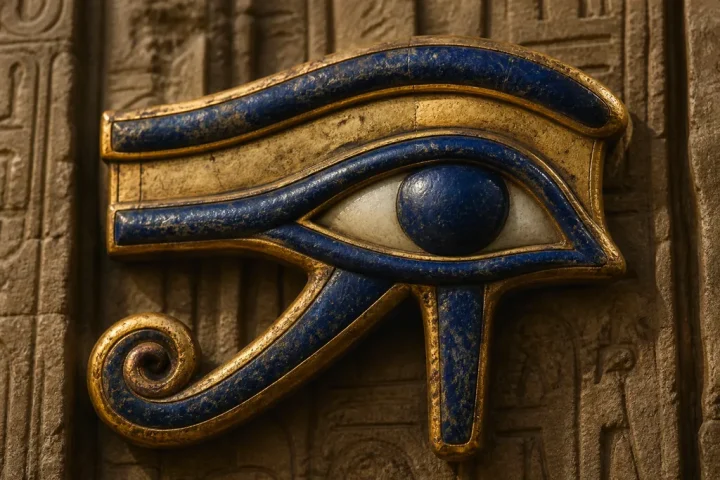
Spittle has been especially associated with protection against the Evil Eye, also known in some traditions as fascination.
The Evil Eye is the harmful influence believed to pass through an envious, admiring or hostile gaze. Infants, children, beautiful people, pregnant women, livestock and valuable possessions were often considered particularly vulnerable.
Spitting could interrupt or neutralise this dangerous admiration.
In some Italian customs, a person suspected of casting the Evil Eye upon a child might be asked to spit towards the child or lightly upon them to undo the harm.
In other traditions, people made a spitting sound after praising a baby, beautiful person or fortunate event. This prevented admiration from becoming spiritually dangerous.
The apparent insult was therefore protective rather than hostile.
Infants and Children
Children were frequently believed to require special protection because their life force was still developing.
Saliva might be used in blessing, healing or defensive gestures intended to protect a child from fascination, spirits or illness.
These customs should be understood within their historical and cultural settings. Literal spitting upon another person would now raise clear concerns regarding hygiene and consent.
The underlying symbolic intention can instead be expressed through words, gestures, prayer or protective charms.
Roman Beliefs About Spittle
Roman writers recorded numerous beliefs concerning the magical and medicinal properties of saliva.
Pliny the Elder described spittle as useful against various illnesses and dangerous influences. It was traditionally associated with the treatment of boils, eye complaints, epilepsy, leprosy and other disorders.
These were historical medical and magical beliefs rather than treatments supported by modern medical evidence.
Spitting rituals also appeared in ordinary Roman life. People might spit to avert danger, reject an omen or protect themselves after encountering something considered threatening.
The act could be performed three times, reinforcing its ritual significance.
Spitting in the Right Shoe
One old protective custom called for spitting into the right shoe each morning.
The precise meaning is uncertain, but it may have been intended to prevent bad luck, strengthen the wearer or place a protective mark upon the path they would walk that day.
The right side was often associated with favour, strength and correct order, while the left could be linked with uncertainty or misfortune.
By spitting into the right shoe, the person may have symbolically charged their first steps with protection.
Spitting After Urination
Another recorded folk practice involved spitting into the toilet or privy after urination.
This may have been intended to prevent spirits, sorcerers or harmful forces from using bodily waste as a magical link.
Urine, like saliva, was believed to maintain a connection with the person from whom it came. Spitting afterwards may have acted as a form of magical sealing or rejection.
Such customs reveal the anxiety once associated with leaving bodily substances unprotected.
Spitting at Dangerous Places
People sometimes spat while passing locations associated with death, spirits or misfortune.
These could include:
Cemeteries
Crossroads
Execution sites
Abandoned buildings
Ruins
Sites of accidental death
Places believed to be haunted
The spitting gesture announced that the traveller rejected any spirit or harmful influence that might attempt to follow them.
Some traditions recommend spitting salted water at a haunted location. Salt provides purification and protection, while the act of spitting forcefully projects the liquid towards the perceived threat.
Spittle and Haunted Locations
Spitting salted water has been used in some forms of folk protection against ghosts and negative presences.
The water may be blessed, prayed over or combined with protective herbs before use.
The person spits or sprays it towards a doorway, room, path or object believed to be affected by spiritual disturbance.
The action combines several powerful symbols:
Water cleanses.
Salt preserves and repels corruption.
Breath carries intention.
Saliva establishes personal authority.
Modern practitioners may prefer to sprinkle or spray salted water rather than place it in the mouth, particularly for reasons of hygiene.
Spitting into the Hands
The familiar custom of spitting into the hands before beginning difficult physical labour or fighting has ancient roots.
The gesture was believed to increase strength, improve grip and charge the hands with personal force.
Roman sources refer to related practices, and variations have survived into modern times.
Although it may appear practical, the custom also has a symbolic dimension. The person prepares the hands as instruments of action and transfers will into the task ahead.
The spittle becomes a brief consecration of strength.
Witches and Spittle
European witch-hunters surrounded saliva with contradictory beliefs.
Witches were accused of using saliva in curses, harmful charms and deceptive practices. At the same time, witch-finders claimed that accused witches could not shed genuine tears.
According to this superstition, a witch might attempt to deceive interrogators by secretly smearing saliva upon the cheeks to imitate crying.
There is no factual basis for this claim. It formed part of the cruel and irrational mythology used to justify the persecution of accused witches.
The inability to cry was treated as evidence of guilt, while any attempt to appear emotional could be dismissed as deception. Such beliefs ensured that the accused could rarely prove their innocence.
Saliva in Magical Objects
Spittle may be used to charge or personalise magical objects.
A practitioner might place a small amount upon:
- A poppet
- A charm bag
- A talisman
- A protective amulet
- A petition paper
- A knot
- A stone
- A candle
- A ritual tool
This act symbolically links the magician to the object and gives it a specific purpose.
In some traditions, the object is then breathed upon, prayed over, anointed or placed upon an altar.
The magical meaning does not come from saliva alone. It is created through the combination of intention, symbolism, ritual action and belief.
Spittle as a Carrier of Intention
Breath, speech and saliva emerge from the mouth, which is itself a powerful magical symbol.
The mouth names, blesses, curses, prays and commands. Words leave the body carried upon breath and touched by saliva.
Spitting may therefore function as a physical extension of magical speech.
A blessing spoken over an object gives it purpose.
A curse spoken while spitting transfers hostility.
A protective command accompanied by spitting rejects danger.
In this sense, saliva becomes the material residue of the spoken spell.
Threefold Spitting
Spitting three times is found in many traditions.
The number three may represent:
Beginning, middle and end
Birth, life and death
Past, present and future
Body, mind and spirit
The threefold structure of a divine power
Completion of a magical act
Repeating an action three times separates it from ordinary behaviour and transforms it into ritual.
Threefold spitting may be used to reject evil, strengthen a charm or seal an incantation.
Healing Traditions
Saliva also appears in historical healing customs.
A healer might spit upon a wound, wart, swelling or painful area while reciting a charm. In some cases, the saliva was applied directly. In others, the healer spat upon a cloth, herb or object used in the treatment.
These practices relied upon a combination of physical contact, symbolic transfer and confidence in the healer’s power.
They should not be confused with modern medical care. Human saliva contains bacteria and may spread infection, especially when applied to broken skin, the eyes or another person.
Historical magical practices can be studied without repeating unsafe actions.
Blessing and Affection
Not every use of saliva was hostile or defensive.
In some cultures, ritualised spitting could express blessing, approval or affection. Elders might spit lightly towards a younger person while offering words of good fortune.
To an outsider, the gesture may appear insulting. Within its cultural context, however, it may communicate protection and the transmission of vitality.
This illustrates an important principle of folklore: the meaning of an action depends upon the community performing it.
The same gesture may represent contempt in one culture and blessing in another.
The Double Nature of Spittle
Spittle occupies an unusual place in magical tradition.
It is both intimate and impure.
It comes from within the body but is discarded outside it. It may carry blessing or pollution, healing or disease, affection or contempt.
This ambiguity gives saliva much of its magical power.
Substances that exist between categories are often treated as spiritually potent. Saliva is part of the self, yet it can be separated from the self. Once expelled, it becomes available for magical use.
It therefore represents both connection and release.
Modern Magical Practice
Some contemporary practitioners continue to use saliva in private spellwork, particularly when charging personal objects or sealing petitions.
However, hygiene, safety and consent must remain essential considerations.
Saliva should never be placed upon another person, shared object, food, drink, wound or public surface without clear consent. It should not be used in ways that risk transmitting illness.
Many symbolic alternatives are available.
A practitioner may use:
- Breath
- Consecrated water
- Salt water
- Oil
- A spoken incantation
- A fingerprint
- A handwritten signature
- A personal symbol
These alternatives preserve the magical intention without unnecessary health risks.
The Power of the Personal Link
The magical importance of spittle comes from the belief that the body and spirit remain connected to everything they produce.
Hair, blood, breath, handwriting and saliva become signatures of identity.
Whether understood literally, symbolically or psychologically, the principle is powerful: magic becomes more personal when the practitioner places something of themselves into the working.
Spittle was one of the simplest and most accessible ways to create that link.
It required no expensive ritual tools, formal temple or rare ingredients.
The magician carried it at all times.
Explore Folk Magic, Curses and Protective Traditions
The magical history of spittle reveals how even the most ordinary substances can carry extraordinary meaning. Saliva has been used in curses, healing rites, protective customs, spirit work, amulets and sympathetic magic across many cultures.
Inside the Occult World Mystery School, you can explore folk magic, witchcraft, curses, protection, necromancy, spirit work, ancient grimoires, Hoodoo, divination and practical magical traditions in far greater depth.
The Classroom offers structured courses that help you move beyond scattered information and develop genuine understanding. You will also gain access to an expanding occult Library filled with rare books, historical sources and practical teachings.
You can ask questions, share experiences and receive personal guidance within a community created for serious students of the occult.
Do not stop at the surface of magical folklore.
Join the Occult World Mystery School today and discover how traditional ingredients, forgotten customs and ancient beliefs continue to shape modern magical practice.
FURTHER READING:
- Leach, Maria, ed., and Jerome Fried, assoc. ed. Funk & Wagnall’s Standard Dictionary of Folklore, Mythology and Legend. New York: Harper & row, 1972.
- Mickaharic, Draja. A Century of Spells. York Beach, me.: Samuel Weiser, 1988.
- Parrinder, Geoffrey. Witchcraft European and African. London: Faber & Faber, 1970.
SOURCES:
- The Encyclopedia of Magic and Alchemy Written by Rosemary Ellen Guiley Copyright © 2006 by Visionary Living, Inc.
- The Encyclopedia of Witches, Witchcraft and Wicca – written by Rosemary Ellen Guiley – Copyright © 1989, 1999, 2008 by Visionary Living, Inc.











Follow