

Num: Supreme Sky God of the Nenets
Description: Supreme Sky God and Creator of the Nenets
Num is the supreme sky god and creator of the Nenets, one of the Indigenous peoples of the Russian Arctic historically described in older literature as the Samoyeds or Yurak Samoyeds. His name is inseparable from the heavens themselves, for in the Nenets language Num can refer both to the sky and to the divine power dwelling within it. He is not simply a god who rules from somewhere above the clouds. He is the immense celestial presence of the upper world, the distant creator whose domain arches over tundra, reindeer herds, frozen rivers and the endless Arctic horizon.
Num belongs to a cosmology in which the world is alive with spirits and divided into supernatural regions above, upon and beneath the earth. The visible landscape is only one layer of existence. Beyond it stretch worlds that may be entered by spirits and traversed by shamans, while beneath the ground lies a darker realm associated with death, sickness and hostile powers. At the highest reaches of this cosmological order stands Num, remote, powerful and difficult for ordinary humans to approach directly.
The Lord of the Upper World
Num is associated above all with the heavens. The sky is his realm, and the very use of his name for both deity and firmament reveals how closely divine power and the natural world were bound together in Nenets thought. The immense sky above the tundra was not an empty void. It was sacred territory, the domain of the highest supernatural authority.
Traditions credit Num with the creation or ordering of the world, human beings and the conditions that permit life to exist. Yet unlike gods who constantly descend into the human world, Num generally remains distant. His remoteness does not make him weak. It makes him more formidable. He belongs to a level of reality so far above ordinary existence that direct communication with him is exceptional.
The Nenets religious world therefore contains numerous spirits who stand between humanity and the highest divine power. Shamans could enter altered states, undertake spiritual journeys and communicate with beings occupying regions inaccessible to ordinary perception. Num remained above this immense network of spirits as the ultimate celestial authority.
Num and the Creation of the World
Nenets creation traditions vary, as oral mythology rarely survives in one fixed version, but Num repeatedly appears as the great creative force associated with the upper world. In some narratives, the early world exists beneath primordial waters or in an incomplete state until divine beings participate in establishing the earth upon which humans can live.
One widespread northern Eurasian creation pattern involves a supernatural being sending a bird or other creature beneath the primeval waters to retrieve earth from the bottom. The tiny amount of soil brought upward expands until it becomes the land. Versions of this motif occur among several Siberian and Uralic peoples, including traditions associated with Samoyedic cultures.
The mythology is therefore not concerned with creation from absolute nothingness in the theological sense familiar from later monotheistic religion. Instead, creation is often an act of bringing order out of a mysterious primordial condition, establishing solid earth where previously there was water, darkness or formlessness.
Num stands behind this ordering of existence. The world becomes habitable because the celestial power has established the conditions in which life can endure.
Num and Nga
The darker side of Nenets cosmology is embodied in Nga, a being associated with the underworld, death, disease and the hostile powers beneath the earth. In some recorded traditions Nga is described as related to Num, sometimes even as his son, although surviving accounts differ and the relationship should not be treated as a single fixed doctrine.
What matters mythologically is the opposition between the two supernatural domains. Num belongs to the sky above, while Nga belongs to the darkness below. Between them lies the middle world inhabited by human beings, animals and countless spirits.
This creates a cosmic tension rather than a simple battle between good and evil. Num is associated with the ordering and sustaining powers of the upper world, while Nga governs forces connected with mortality, decay and the dangerous realm of the dead. Both belong to the structure of existence.
For the Nenets shaman, this division was not merely theoretical. The supernatural universe could be travelled. The shaman might journey upward toward celestial powers or descend toward regions connected with sickness and the dead, confronting beings who could assist, threaten or deceive.
The human world existed between these invisible territories, surrounded by powers that could not always be controlled.
The Remote Creator
Num differs sharply from many familiar mythological gods because the surviving traditions do not surround him with endless tales of love affairs, battles and adventures. His power lies partly in his distance.
He is the creator who remains above creation.
This remoteness is characteristic of many supreme sky gods across northern Eurasia. After establishing the world, the highest deity may withdraw from ordinary human affairs, leaving spirits, ancestral beings and lesser supernatural powers to interact more directly with humanity.
Num could therefore be honoured without becoming the constant focus of everyday religious attention. The spirits of particular places, households, animals and natural forces could be far more immediate because they inhabited the same landscape as human beings. Num, by contrast, remained beyond them all.
The distinction creates an immense hierarchy of supernatural power. The spirits may be near, but Num is above.
Sacrifice to Num
Despite his remoteness, Num was not forgotten. Ethnographic sources record offerings made to him, including animal sacrifice and other gifts. Reindeer occupied a central position in Nenets life and spirituality, and sacrificial offerings reflected the profound relationship between humans, animals and supernatural powers in Arctic society.
The killing of an animal in a sacred context was not merely destruction. It created a bond between the human community and the invisible world. Blood, flesh, clothing, valuable objects and food could become vehicles through which respect, dependence and obligation were expressed.
Offerings to Num acknowledged that survival beneath the Arctic sky was never entirely under human control. Weather could destroy a herd. Winter could kill. Disease could move through a camp. Hunting could fail. The same sky that gave light could unleash storms, snow and bitter cold.
To live beneath Num was to live beneath a power vastly greater than oneself.
The Sacred Sky
The Arctic sky itself helps explain the power of Num. Across the tundra there are few boundaries capable of hiding the heavens. The sky stretches almost without interruption from horizon to horizon, enormous and overwhelming.
During winter, darkness may dominate the world for long periods, while in summer the Sun may remain visible far into the night. Storms can appear suddenly, and winds can cross the open land with devastating force. The aurora moves across the darkness like supernatural fire.
For people living within such an environment, the sky was impossible to ignore. It governed light, temperature, weather, movement and survival. Num therefore represents not merely an abstract celestial principle but the divine mystery of the heavens themselves.
He is the vastness above the human world, watching without necessarily speaking.
Shamans and the Road to the Heavens
Num belongs to a religious universe in which the shaman served as one of the most important intermediaries between human beings and supernatural powers. The Nenets shaman could enter altered states of consciousness and undertake journeys through invisible realms, aided by spirit helpers and ritual power.
The cosmos could be imagined as layered. The shaman might ascend toward the upper world or descend into lower regions associated with death and dangerous spirits. These journeys were not symbolic in the modern psychological sense. Within the traditional worldview, they represented real encounters with other levels of existence.
Num occupied the highest celestial territory, beyond the ordinary spirits that inhabited the landscape.
To approach such a being was therefore not comparable to simply praying to a household spirit or making an offering at a local sacred place. The path toward Num led upward through the structure of the cosmos itself.
The shaman became the traveller between worlds.
The World Beneath Num
Nenets mythology presents existence as a precarious balance between visible life and invisible power. Humans move across the tundra accompanied by spirits they cannot always see. The dead pass into other regions. Shamans cross boundaries that ordinary people cannot. Beneath the earth dwell dangerous powers, while above everything stretches the celestial realm of Num.
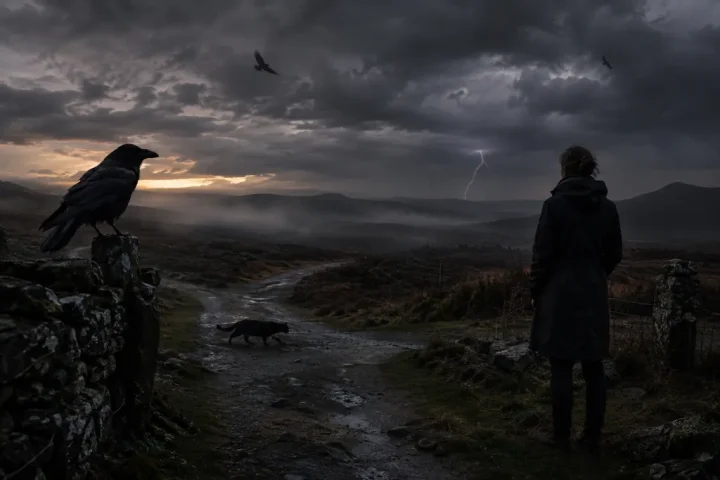
This is what makes Num so compelling within northern mythology. He does not require elaborate temples or monumental statues to establish his authority. His temple is the sky.
Every storm reveals something of his domain. Every change in weather reminds humanity of its dependence upon powers beyond human control. Every open horizon becomes an image of the distance separating the mortal world from the divine.
Num is therefore not merely the ruler of heaven. He is the mystery of transcendence itself, the presence that exists beyond the countless spirits inhabiting the world below.
The Silent God Above the Tundra
There is something profoundly unsettling about a god who creates the world and then remains distant from it. Num does not constantly descend to reassure humanity. He does not explain every death, every winter or every disaster. His domain remains above, immense and unreachable.
Beneath that sky, the Nenets lived among forces that could nourish or destroy them. Reindeer gave life. Winter brought death. Spirits inhabited sacred places. Shamans travelled into realms hidden from ordinary sight. Nga waited below, associated with the darkness of mortality, while Num remained above them all.
The mythology does not reduce this universe to a comforting moral system. It presents existence as something far older and more dangerous, suspended between heaven and the underworld.
Num stands at its highest point, remote but never absent. The sky itself is the reminder that he is there.
Enter the World of Real Occult Power
If you are content to collect the names of gods, demons and spirits without ever understanding the forces behind them, then remain a spectator and continue consuming occult knowledge as entertainment. But if you are serious about becoming dangerous through knowledge, enter the Occult World Mystery School and begin learning what ordinary people are never taught about Demonology, Power, Black Magick and the hidden systems through which occultists have sought to control circumstances, influence reality and command their own world. Powerful people do not drift helplessly through existence while other people decide what happens to them. They study how influence works, they understand the mechanisms behind belief and power, and they learn how to impose intention upon the world around them. Stop standing outside the gates reading fragments. Enter, study, practise and become the person who controls your world instead of being controlled by it.











Follow