
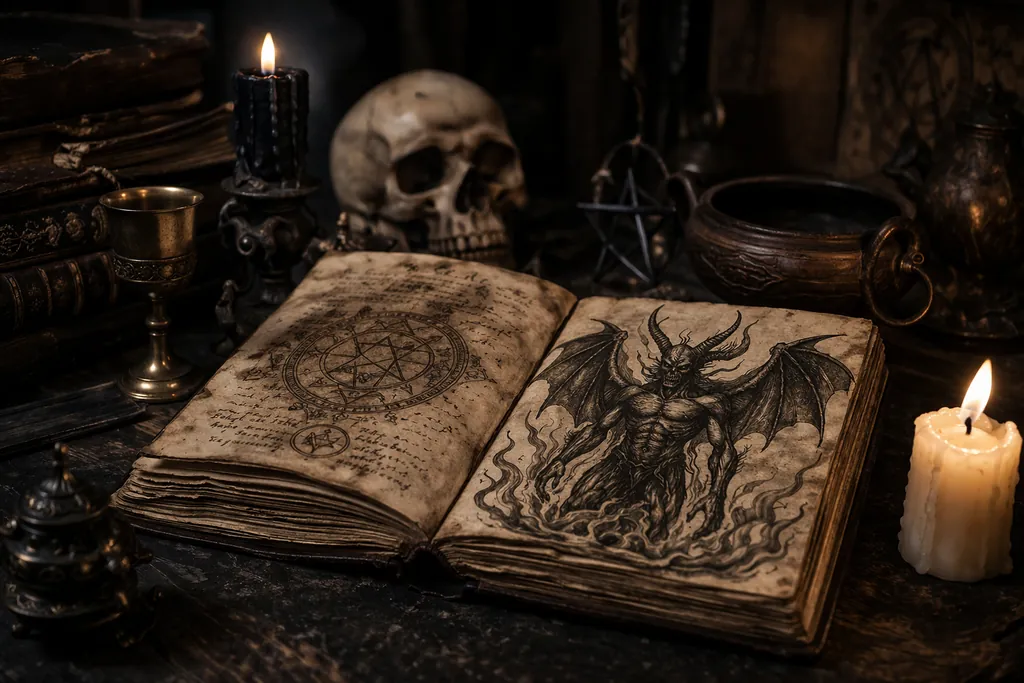
The word “demon” is one of the most powerful and misleading terms in the history of religion, folklore, and occultism. It is a word that carries fear, judgement, fascination, and centuries of theological conflict. For many people today, a demon is automatically imagined as an evil being: a servant of the Devil, a corrupting force, a possessing spirit, or a hostile intelligence opposed to God and humanity.
Yet this definition is historically narrow.
The idea of the demon has changed dramatically across cultures, languages, religions, and magical systems. A demon in ancient Mesopotamia is not necessarily the same as a demon in Christianity. A Greek daimon is not the same as a medieval infernal spirit. A jinn in Islamic tradition is not identical to a Goetic demon. A spirit described as demonic in one religion may be understood as an ancestor, nature spirit, deity, trickster, guardian, disease-spirit, or shadow-force in another.
To ask “What is a demon?” is therefore not to ask a simple question. It is to enter a long history of spiritual classification, religious fear, cultural interpretation, and occult practice.
A serious study of demonology begins here: with the recognition that the word “demon” does not have one universal meaning.
The Problem with the Word “Demon”
In modern English, the word demon is usually associated with evil. It suggests something hostile, corrupt, dangerous, and spiritually unclean. This meaning has been strongly shaped by Christian theology, medieval demonology, exorcism literature, and later horror culture.
However, when we look at older traditions, the picture becomes more complex. The word “demon” has often been used as a translation for many different kinds of beings: spirits of the dead, local gods, disease-causing entities, nature spirits, underworld beings, restless ghosts, divine messengers, tricksters, tempters, guardians, and spirits outside the accepted religious order.
This creates a major problem for modern readers. When an ancient text says “demon,” or when a modern translation uses that word, we may unconsciously impose a Christian or horror-film meaning onto a being that originally belonged to a very different worldview.
A spirit called a demon in one context may not have been viewed as purely evil in its original culture. It may have been feared, respected, appeased, invoked, avoided, worshipped, or negotiated with. Some spirits were dangerous only under certain conditions. Some were ambivalent. Some were guardians of boundaries. Some were protectors if treated properly and harmful if neglected.
The word “demon” therefore tells us as much about the culture using the term as it does about the being being described.
Ancient Spirits and the Origins of Demon-Like Beings
Long before the development of formal Christian demonology, ancient cultures already recognised beings that modern readers might call demons. These were not always understood as evil in the absolute moral sense. They were often understood as dangerous, unpredictable, liminal, or spiritually powerful.
In Mesopotamian religion, for example, many harmful spirits were associated with illness, misfortune, nightmares, childbirth danger, wilderness, and death. Some were feared because they crossed boundaries: between life and death, human and divine, civilisation and wilderness, order and chaos. Protective rituals, amulets, incantations, and apotropaic images were used to defend against them.
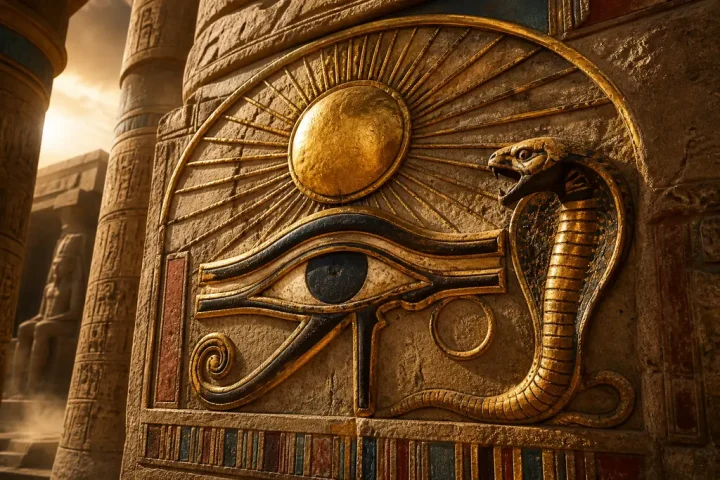
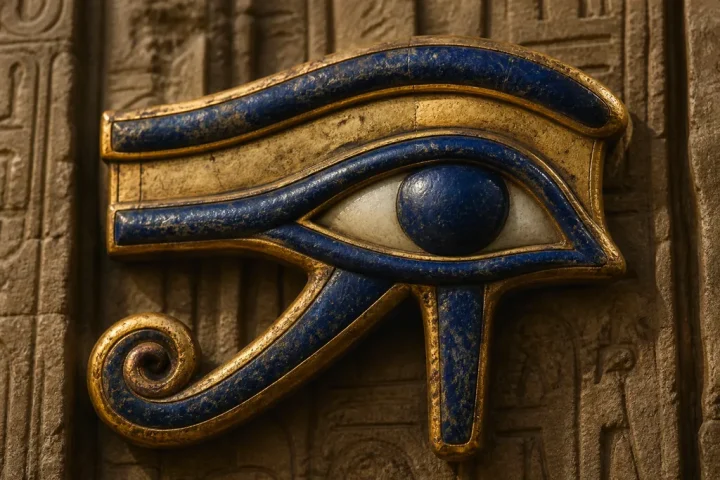
In ancient Egypt, hostile spiritual forces also existed, but they were part of a larger cosmic struggle between order and disorder. Not every frightening being was simply “evil” in the later theological sense. Some beings threatened the dead in the underworld. Others had protective functions in specific contexts. The same frightening imagery that could terrify an enemy might guard a tomb, a temple, or a sacred threshold.
In Greek thought, the term daimon originally had a far broader meaning than the modern word demon. A daimon could be a divine or semi-divine power, a mediating spirit, a personal guiding force, or a being occupying the space between gods and humans. The word did not automatically mean an evil entity. Over time, especially through later religious reinterpretation, the term became increasingly associated with negative or hostile spirits.
This pattern appears repeatedly across history: older categories of spirits are reinterpreted through newer religious systems. What was once a local god, a nature spirit, an ancestral presence, or an ambiguous spiritual intelligence may later be called a demon.
Demons in Religious Systems
Religions often define demons in relation to their own understanding of cosmic order. A demon is frequently what stands outside, resists, corrupts, attacks, tempts, or threatens that order.
In Christianity, demons are usually understood as fallen angels or evil spirits opposed to God. They are connected with temptation, possession, deception, sin, and spiritual warfare. Christian demonology developed through biblical interpretation, early church writings, medieval theology, exorcism traditions, and later occult classifications. In this framework, demons are not neutral forces. They are morally and spiritually dangerous.
In Islam, the category of jinn is often compared with demons, but the comparison must be made carefully. Jinn are not identical to Christian demons. They are beings created from smokeless fire, possessing free will. Some are righteous, some are unbelieving, some are mischievous, and some are harmful. Iblis, who refuses to bow to Adam, becomes a central rebellious figure, but Islamic spirit cosmology remains distinct from Christian demonology.
In Jewish tradition, harmful spirits, shedim, lilin, and other dangerous beings appear in biblical, rabbinic, folkloric, and mystical contexts. Jewish demonology is complex and varies across texts and periods. Some beings are connected with wilderness, impurity, night, sexuality, disease, or danger. Others belong to later mystical and magical systems.
In Hindu, Buddhist, and other Asian traditions, beings sometimes translated as demons may include asuras, rakshasas, pretas, maras, yakshas, or other classes of spirits. These categories do not map neatly onto the Western idea of demons. Some are hostile. Some are morally complex. Some are converted, subdued, or transformed within religious narratives. Some represent psychological obstacles, cosmic forces, or beings inhabiting non-human realms.
The key point is this: “demon” is often a translation imposed across very different spiritual systems. Serious demonology must respect the original categories instead of flattening them into one universal concept.
The Demon as Enemy of Order
Despite cultural differences, many demon-like beings share one recurring feature: they disturb order.
They may disturb the body through illness.
They may disturb the mind through obsession, terror, confusion, or temptation.
They may disturb the household through haunting, conflict, or misfortune.
They may disturb society through chaos, violence, moral corruption, or rebellion.
They may disturb religious order by opposing divine law, ritual purity, or spiritual authority.
This is why demons so often appear at boundaries.
They are associated with night, crossroads, deserts, cemeteries, ruins, wilderness, thresholds, caves, underworlds, storms, fever, dreams, and moments of crisis. These are places and states where normal order weakens. The demon appears where certainty breaks.
In this sense, the demon is not merely a monster. It is a figure of disruption. It marks the place where human control fails.
That is why demonology has always been connected with protection. To study demons is also to study the methods used to resist, negotiate with, banish, bind, appease, classify, or understand them.
Demons, Devils, Spirits, and Gods
One of the most important distinctions in demonology is the difference between demons, devils, spirits, and gods.
These terms are often confused, especially in popular culture.
A devil usually refers to a supreme or major evil figure within a specific theological system, such as Satan in Christianity. A demon, by contrast, is generally a lesser hostile or dangerous spirit, though some demons may hold high rank in later grimoires.
A spirit is a broader term. It may refer to a ghost, ancestor, nature being, elemental, guide, guardian, deity, planetary intelligence, land spirit, or non-human presence. Not all spirits are demons.
A god or deity is usually a divine being within a religious system. However, when religions come into conflict, the gods of one culture may be demonised by another. This process is historically important. Many spirits and deities labelled “demons” in later texts may originally have belonged to older religious systems, rival traditions, or foreign pantheons.
This does not mean every demon was once a god. That claim is too simplistic. But it is true that demonisation has often been used as a religious and political tool. To call another culture’s spirits “demons” is to declare them spiritually illegitimate.
Demonology, therefore, is not only about spirits. It is also about power, authority, translation, conquest, fear, and religious identity.
The Medieval and Grimoire Demon
In medieval and early modern Europe, demonology became more systematised. Demons were classified, named, ranked, and placed into hierarchies. Theological demonology concerned itself with the nature of fallen angels, temptation, sin, possession, witchcraft, and the power of the Devil. Magical demonology, especially in grimoires, organised spirits into catalogues of names, seals, offices, and ritual procedures.
This is where many modern occult ideas about demons come from.
Texts such as the Solomonic grimoires and later magical manuals presented demons not merely as vague forces of evil, but as named intelligences with titles, functions, and powers. A demon might be described as a king, duke, prince, marquis, president, earl, or knight. It might teach sciences, reveal hidden knowledge, find treasures, influence emotions, answer questions, or command legions of spirits.
This grimoire image of the demon is very different from the simple horror image. The demon is not only a beast. It is an intelligence with a specific office.
However, this does not make the demon harmless. The grimoire tradition usually surrounds spirit contact with strict ritual protections: circles, divine names, conjurations, purification, timing, tools, and formal commands. The magician is not encouraged to approach casually. The entire structure assumes danger and the need for discipline.
The grimoire demon is therefore both classified and feared, named and constrained, contacted and controlled.
Demons in Folklore
Outside formal theology and ceremonial magic, demons also appear in folklore. Here they are often less systematic and more local.
A folkloric demon may haunt a road, guard a bridge, attack travellers, torment sleepers, steal children, bring disease, seduce the unwary, inhabit abandoned places, or appear as an animal, stranger, shadow, or beautiful figure. Such beings are often tied to specific landscapes and local fears.
Folkloric demons may overlap with ghosts, fairies, witches, monsters, night-hags, incubi, succubi, vampires, and land spirits. The boundaries are rarely clean. A being may be called a demon by one storyteller, a fairy by another, a ghost by a third, and a curse by a fourth.
This fluidity is important. Folk belief does not always behave like theology. It often preserves older layers of belief, local memory, and practical fear. The question is not always “What category does this being belong to?” but “What does this being do, where does it appear, and how do people protect themselves from it?”
In folklore, demons are often known by their effects.
They disturb sleep.
They drain vitality.
They cause illness.
They create dread.
They tempt, deceive, seduce, or mislead.
They occupy dangerous places.
They violate the boundary between the living and the dead.
This makes folklore essential to demonology. It shows how ordinary people experienced and explained the dangerous unseen.
The Psychological Demon
In modern thought, demons are often interpreted psychologically. This does not necessarily deny their spiritual significance. Rather, it adds another level of meaning.
A demon may represent an internal force that feels alien, compulsive, destructive, or overwhelming. Addiction, obsession, rage, shame, grief, trauma, envy, fear, and self-sabotage are often described as “inner demons” because they seem to behave like hostile presences within the self.
This metaphor is powerful because it preserves something ancient: the feeling that certain forces inside us are not easily mastered by ordinary willpower.
From a psychological perspective, demons may represent shadow material — aspects of the self that have been rejected, repressed, feared, or split off from conscious identity. The demon becomes the face of what the person does not want to see.
This symbolic interpretation is useful, but it should not be used lazily. Not every demonological tradition can be reduced to psychology. Ancient and religious systems often treated these beings as real spiritual presences. A serious approach allows multiple levels to coexist: historical, religious, magical, symbolic, and psychological.
The demon can be studied as an entity, a symbol, a cultural category, and a mirror of the human psyche.
The Demon in Modern Occult Practice
In modern occult practice, the meaning of “demon” varies widely.
Some practitioners work within ceremonial magic and study demons through the Solomonic or Goetic tradition. They may focus on names, seals, ranks, evocation, invocation, ritual tools, and protective structures.
Others approach demons through Luciferian, Left-Hand Path, or adversarial spiritual frameworks, where demons may be interpreted as forces of rebellion, liberation, self-deification, hidden knowledge, or personal transformation.
Some modern witches and eclectic practitioners view demons as powerful spirits requiring respect, caution, offerings, and boundaries, but not necessarily worship. Others avoid direct contact entirely and study them academically or symbolically.
Some people approach demons through shadow work, treating demonic names and figures as archetypal energies that reveal hidden fears, desires, or wounds. Others reject psychological interpretation and insist on literal spirit contact.
This diversity means that “modern demonology” is not one single practice. It is a field of competing interpretations.
A serious student must therefore be precise. What tradition are we discussing? What definition of demon is being used? Is the approach theological, magical, devotional, psychological, folkloric, or academic? Is the practitioner seeking study, protection, communication, transformation, or power?
Without precision, the word “demon” becomes meaningless.
Why Demons Remain So Fascinating
Demons fascinate because they stand at the intersection of fear and power.
They represent the forbidden.
They test spiritual authority.
They expose human desire.
They give form to chaos.
They inhabit the border between religion and magic.
They carry the memory of suppressed gods, feared spirits, and condemned practices.
They symbolise the shadow of cultures and individuals.
They ask what happens when human beings confront forces they cannot fully control.
This is why demons have never disappeared from human imagination. Even in secular societies, the language of demons remains alive. People speak of personal demons, social demons, political demons, technological demons, demons of addiction, demons of war, and demons of memory.
The form changes, but the pattern remains.
The demon is the name given to what disturbs us, tempts us, threatens us, or reveals what we fear to know.
Studying Demons Without Sensationalism
A serious study of demons requires discipline.
It is not enough to collect names, sigils, or frightening stories. Nor is it useful to dismiss every account as superstition. Demonology demands a more careful method.
A serious student should ask:
What culture or tradition does this being come from?
What original name was used?
Was the being considered evil, dangerous, neutral, divine, ancestral, or ambiguous?
How was it approached, avoided, appeased, or banished?
What role did religion play in defining it as demonic?
What symbols, myths, or fears surround it?
What protections were traditionally used?
How has the being been reinterpreted in modern occultism?
Is the current understanding based on history, theology, folklore, magic, psychology, or popular culture?
These questions protect the student from confusion. They also prevent the common mistake of treating all demons as the same.
Demonology is not a catalogue of monsters. It is the study of spiritual categories, cultural fears, religious boundaries, magical systems, and the hidden forces that human beings have named, feared, resisted, invoked, or transformed.
What Is a Demon?
So what is a demon?
The most honest answer is that a demon is not one thing.
A demon may be a hostile spirit.
A fallen angel.
A disease-bringing entity.
A restless dead presence.
A wilderness being.
A trickster.
A tempter.
A guardian of forbidden thresholds.
A demonised god.
A grimoire intelligence.
A jinn-like being in mistranslation.
A shadow archetype.
A symbol of fear.
A name for spiritual danger.
A force that challenges order.
The meaning depends on the tradition.
This is why serious demonology cannot begin with panic or fantasy. It must begin with study. Before one can understand demons, one must understand language, culture, history, religion, folklore, symbolism, and ritual context.
The demon is not merely an evil creature hiding in the dark. It is one of the oldest and most complex figures in human spiritual imagination.
It is the face of danger.
The sign of the forbidden.
The name of the unknown.
The shadow at the edge of order.
The spirit that must be recognised before it can be resisted, understood, banished, negotiated with, or transformed.
Continue Your Study of Demonology
The word “demon” has never meant only one thing. Across history, demons have been feared as evil spirits, respected as powerful beings, interpreted as fallen angels, confused with older gods, classified in grimoires, translated from foreign spirit categories, and reimagined as symbols of the human shadow.
To understand demonology properly, you must learn to distinguish between these layers.
This is where many beginners make serious mistakes. They see one word — demon — and assume every tradition means the same thing. They encounter a sigil and assume they understand the spirit. They read a name online and assume they are ready for contact. They confuse curiosity with preparation.
Demonology requires more than fascination.
It requires structure, protection, history, discernment, and discipline.
Enter the Occult World Demonology Course
If you are drawn to demonology, begin with proper study.
The Occult World Demonology Course is created for serious students who want to understand demons beyond fear, fantasy, and superstition. This course guides you through the foundations of demonological study in a structured, grounded, and responsible way.
Inside the course, you will explore:
The meaning of demons across cultures and religions
The difference between demons, spirits, jinn, fallen angels, shadow figures, and deities
The history of demonology in theology, folklore, and occult practice
Famous grimoires and their role in spirit classification
Demonic names, ranks, sigils, seals, and hierarchies
The seventy-two demons of the Goetia and their symbolic importance
Protection techniques, cleansing, grounding, and spiritual boundaries
The difference between invocation and evocation
The psychological and symbolic meaning of demonic figures
Ethics, discernment, and preparation for deeper occult study
This is not a course built on horror, panic, or reckless experimentation. It is a serious path into one of the most misunderstood areas of the occult.
If demons fascinate you, do not remain at the level of fear.
Study them properly. Learn their history. Understand their symbols. Recognise the difference between spiritual danger, cultural interpretation, and psychological shadow.
Enter the Occult World Demonology Course and begin your study with knowledge, protection, and discipline.



Follow