

Manly P. Hall
Philosopher of the Ancient Mysteries; Founder of the Philosophical Research Society
Manly Palmer Hall was a Canadian-born philosopher, lecturer and prolific author whose writings introduced generations of readers to mythology, comparative religion, symbolism, Freemasonry, Hermeticism, alchemy, Rosicrucianism and the ancient mystery traditions.
Best known for The Secret Teachings of All Ages, Hall devoted approximately seventy years to searching for the universal principles he believed were concealed within the religions and philosophical systems of humanity. He founded the Philosophical Research Society in 1934 and remained its president until his death in 1990. The Society credits him with more than 150 books and essays and over 8,000 lectures delivered throughout his lifetime.
Early Life
Manly Palmer Hall was born on 18 March 1901 in Peterborough, Ontario, Canada.
His early family life was unsettled, and he was largely raised by his maternal grandmother. He received relatively little formal higher education, yet developed into an extraordinary autodidact with a remarkable memory and an intense appetite for reading.
Hall moved to California while still a young man. Los Angeles was already becoming an important centre for alternative religion, spiritualism, astrology, Theosophy and metaphysical teaching. The city offered an ideal environment for someone determined to explore traditions that existed beyond conventional academic and religious boundaries.
The Young Lecturer
Hall demonstrated an unusual gift for public speaking at an early age.
Biographical accounts place his first major public lecture around the age of nineteen or twenty. The subject was reincarnation, a theme that would remain central to his interpretation of religion and human destiny.
He became associated with the Church of the People in Los Angeles and was ordained there in May 1923. Shortly afterwards, he became its permanent pastor. Although the organisation used the language of a church, Hall’s teachings extended far beyond a single Christian denomination. He spoke about mysticism, philosophy, symbolism, comparative religion and the spiritual heritage of both East and West.
His style was dignified, deliberate and accessible. He could present complicated metaphysical ideas without making them sound lifeless or purely academic.
Hall rarely treated philosophy as abstract speculation. He believed ancient wisdom should help individuals develop character, discipline, insight and a more responsible relationship with the world.
His First Publications
Hall began publishing while still in his early twenties.
His earliest writings included The Breastplate of the High Priest and Wands and Serpents. These works were later collected with another early essay in Symbolic Essays. The Philosophical Research Society continues to describe them as among his first published writings.
During this early period, Hall also produced books including The Initiates of the Flame, The Ways of the Lonely Ones and The Lost Keys of Freemasonry.
The Lost Keys of Freemasonry is especially significant because Hall wrote it decades before becoming a Freemason himself. He later acknowledged that his knowledge at the time came from publicly available literature rather than personal initiation.
Even in these early works, Hall displayed the method that would characterise his career. He gathered myths, rituals and symbols from many different traditions and interpreted them as expressions of a shared spiritual philosophy.
Searching for the Ancient Wisdom
Hall travelled extensively in Europe and Asia, studying religious practices, monuments, manuscripts and philosophical traditions.
His journeys strengthened his belief that the world’s religions preserved different expressions of an underlying wisdom. He did not argue that all traditions were identical. Instead, he believed that their symbols and teachings frequently pointed towards common questions concerning the soul, morality, death, initiation and humanity’s relationship with the divine.
During his travels and later through specialist dealers, Hall assembled an important collection of rare books, manuscripts, artwork and esoteric material. This collection eventually became the foundation of the library maintained by the Philosophical Research Society.
For Hall, collecting books was not an exercise in ownership. He considered the preservation of old texts a sacred responsibility.
He believed that forgotten ideas could become necessary again and that the wisdom rejected by one age might offer guidance to another.
The Secret Teachings of All Ages
In 1928, at only twenty-seven years old, Hall published the work that established his lasting reputation:
The Secret Teachings of All Ages
Its full original title was An Encyclopedic Outline of Masonic, Hermetic, Qabbalistic and Rosicrucian Symbolical Philosophy.
The book was financed through a subscription campaign and produced as an elaborate, oversized volume. Artist J. Augustus Knapp created many of its celebrated illustrations, while distinguished printer and book designer John Henry Nash contributed to its presentation.
The result was not merely a conventional reference book. It was designed as an object of symbolic importance in its own right.
Its chapters investigate subjects including:
Ancient mystery schools
Hermetic philosophy
Alchemy
Kabbalah and the Tree of Life
Rosicrucianism
Freemasonry
Tarot symbolism
Astrology
Pythagorean philosophy
Egyptian religion
Sacred geometry
Initiation
Mythical creatures
The symbolism of world religions
Hall attempted to gather the fragments of the Western esoteric tradition into one immense philosophical structure.
A Monument Made of Symbols
Hall believed that symbols were among humanity’s oldest and most enduring methods of communicating spiritual knowledge.
A symbol could preserve several meanings at once. It might communicate one lesson to an ordinary observer and reveal a deeper teaching to someone prepared to contemplate it carefully.
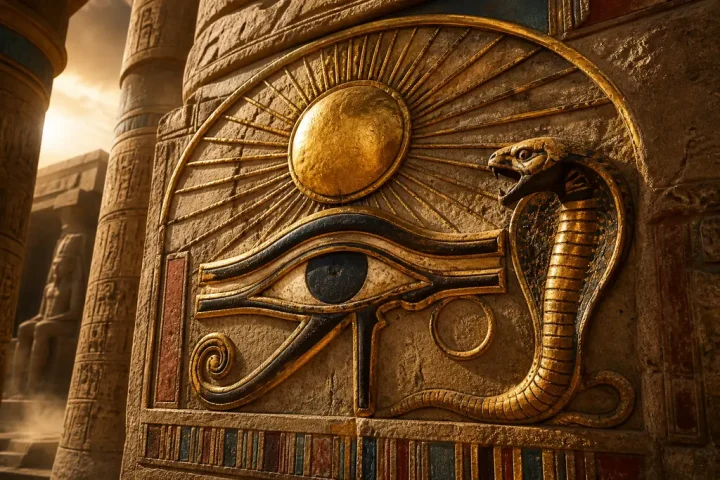
For Hall, the serpent could represent wisdom, temptation, regeneration, cosmic energy or the dangerous misuse of power. The sun might symbolise physical light, consciousness, divine intelligence or the immortal centre of the human being.
The meaning depended upon context and upon the understanding of the observer.
The Secret Teachings of All Ages was therefore intended to function as more than an encyclopaedia. It was itself a symbolic journey.
Hall did not expect readers merely to memorise information. He wanted them to recognise patterns, make connections and develop intuitive understanding.
The Perennial Philosophy
At the centre of Hall’s worldview was the conviction that a universal spiritual wisdom lay behind the world’s great religious and philosophical traditions.
This hidden philosophy was not necessarily the property of one secret organisation. Nor did Hall claim that every religion taught precisely the same doctrines.
Rather, he believed that sincere seekers in different cultures had encountered similar truths and then expressed them through the language, mythology and symbolism available to them.
In his interpretation, the gods, heroes and initiatory stories of antiquity represented stages in the development of the human soul.
The descent into the underworld symbolised confrontation with the hidden self.
The death and resurrection of a god represented spiritual regeneration.
The search for the Philosopher’s Stone expressed the transformation of ordinary human nature into wisdom.
The temple represented both the universe and the perfected individual.
Hall approached mythology as a philosophical language through which earlier civilisations communicated psychological, moral and spiritual truths.
Hall and Freemasonry
Manly P. Hall is closely associated with Freemasonry, but his relationship with the Craft is frequently misrepresented.
He wrote extensively about Masonic symbolism long before becoming a Mason. The Lost Keys of Freemasonry appeared in 1923, while Hall was not formally initiated into Jewel Lodge No. 374 in San Francisco until 1954. He was initiated on 28 June, passed on 20 September and raised as a Master Mason on 22 November of that year.
Hall regarded Freemasonry as more than a social fraternity. He interpreted its tools, ceremonies and architectural imagery as expressions of an inner system of moral and spiritual development.
The unfinished stone represented the undisciplined personality.
The working tools symbolised methods by which character could be shaped.
The temple represented the ideal human being reconstructed through wisdom, virtue and service.
Hall later received the degrees of the York and Scottish Rites. In 1973, the Scottish Rite’s Southern Jurisdiction conferred upon him the honorary 33°, recognising his contribution to Masonic education and philosophy. This occurred seventeen years before his death, not in 1990 as is sometimes stated.
The Philosophical Research Society
Hall founded the Philosophical Research Society in Los Angeles in 1934.
He envisioned it as a non-sectarian centre where philosophy, religion, science and art could be studied together. The Society was not intended to promote one creed or demand allegiance to a particular occult order.
Its purpose was to preserve wisdom from many cultures and make it available to serious seekers.
Hall dedicated the institution to the “ensoulment” of the arts, sciences and crafts. By this, he meant that human activity should be guided by meaning, conscience and an awareness of deeper purpose.
The Society’s Los Angeles campus included a library, auditorium, lecture spaces, bookstore and later an art gallery. Its buildings were designed by architect Robert Stacy-Judd and were eventually designated as a historical-cultural site by the City of Los Angeles.
The Library of the Philosophical Research Society
Hall’s private collection became one of the most important features of the Philosophical Research Society.
He gathered rare works concerning alchemy, mysticism, comparative religion, symbolism, magic, philosophy and the occult sciences. The present PRS library contains approximately 30,000 volumes, including material acquired through Hall’s international travels and lifelong study.
The library reflects Hall’s conviction that esoteric knowledge should be preserved but not imprisoned.
Ancient books were valuable not merely because they were rare. Their true value lay in whether they could help modern readers understand themselves and live more wisely.
The All-Seeing Eye
Hall also published and edited a periodical called The All-Seeing Eye.
The magazine was devoted to examining contemporary problems through the philosophical and spiritual teachings of earlier cultures. It included discussions of symbolism, religion, ethics and metaphysics.
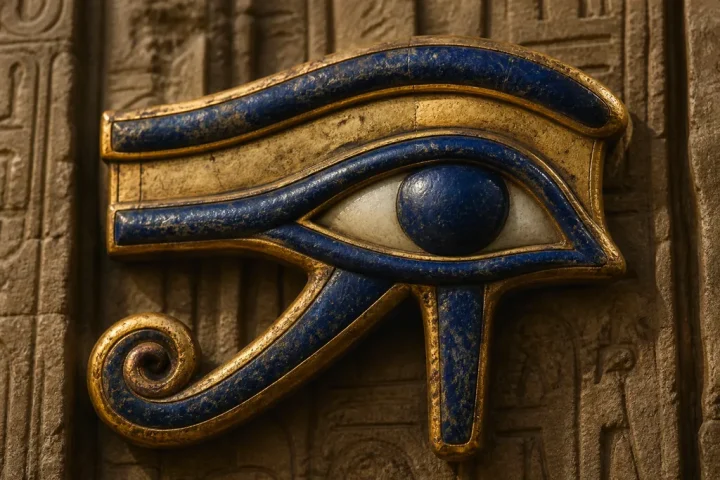
Its title reflected one of Hall’s central interests: the eye as a symbol of awakened consciousness and divine perception.
The periodical appeared in different formats between 1923 and 1931 and helped Hall establish a regular readership beyond those who attended his lectures in person.
Hall as a Teacher
Hall’s extraordinary reputation depended as much upon his lectures as upon his books.
The Philosophical Research Society records that he delivered more than 8,000 lectures during his career. Many lasted for approximately two hours and were presented extemporaneously, without written notes.
He spoke about an enormous range of subjects, including Plato, Buddha, Christ, Confucius, alchemy, astrology, mythology, psychology, ethics, reincarnation and the mystical interpretation of scripture.
Hall did not merely list facts. He told stories, created connections and encouraged listeners to recognise the moral meaning hidden within religious traditions.
His calm, measured voice became part of his appeal. Even when discussing extraordinary subjects, he usually avoided the sensational manner adopted by many occult lecturers.
He wanted esotericism to produce thoughtful and responsible people, not merely collectors of strange experiences.
Hall’s Understanding of Initiation
For Hall, initiation was not simply a ceremony conducted by a secret society.
True initiation was an internal process.
An individual could possess titles, passwords and ritual knowledge without having achieved genuine wisdom. Conversely, someone who had never entered a formal temple might undergo profound spiritual transformation through study, discipline and service.
The outer ceremony was valuable when it reflected an inner change.
Hall repeatedly emphasised the refinement of character. Knowledge without virtue could become dangerous, while occult power without self-control could strengthen pride and selfishness.
The genuine initiate was therefore not the person who claimed the greatest secrets. It was the person who had learned to live with wisdom, restraint and compassion.
Alchemy and Human Transformation
Hall interpreted alchemy as both a physical tradition and a philosophy of transformation.
The alchemists’ search for gold could be understood materially, but their symbols also described the purification of the human being.
Lead represented an undeveloped condition.
Gold represented spiritual illumination.
The furnace symbolised the trials through which transformation occurred.
The Philosopher’s Stone represented the perfected state in which wisdom, virtue and spiritual consciousness had been united.
Hall did not reduce alchemy entirely to psychology. He believed its imagery operated simultaneously on physical, philosophical and spiritual levels.
This layered interpretation became characteristic of his treatment of all occult subjects.
Christianity and the Mystical Christ
Although Hall studied many non-Christian traditions, he frequently returned to Christian symbolism.
He distinguished between the historical institutions of Christianity and what he understood as the mystical meaning of Christ.
For Hall, Christ represented a divine principle capable of awakening within humanity. The Nativity, Crucifixion and Resurrection could therefore be interpreted not only as historical or theological events but also as symbols of spiritual development.
His writings sought to recover the initiatory and philosophical dimensions he believed had become obscured by dogma and sectarian conflict.
Hall did not reject religion. He attempted to reveal the wisdom he believed was concealed beneath its literal forms.
Astrology and the Symbolic Cosmos
Astrology also occupied an important place in Hall’s work.
He did not treat the planets merely as physical objects that mechanically controlled human destiny. Instead, he interpreted them as symbols of universal principles reflected within nature and human consciousness.
The zodiac became a map of archetypal forces.
The horoscope represented tendencies, possibilities and lessons rather than an unavoidable sentence.
Hall warned against using astrology to surrender personal responsibility. A chart might reveal patterns, but individuals still possessed the duty to develop character and make intelligent choices.
The purpose of occult study was not to escape responsibility. It was to understand responsibility more deeply.
A Prolific Author
Hall continued writing throughout his life.
Among his many works are:
The Initiates of the Flame
The Lost Keys of Freemasonry
Melchizedek and the Mystery of Fire
The Secret Destiny of America
The Mystical Christ
The Occult Anatomy of Man
How to Understand Your Bible
Freemasonry of the Ancient Egyptians
The Secret Destiny of America
Meditation Symbols in Eastern and Western Mysticism
His books vary widely in length and purpose. Some are extensive philosophical studies, while others are concise essays developed from lectures.
The official PRS biography credits him with more than 150 books and essays, although broader bibliographies sometimes produce larger totals by counting pamphlets, articles and lecture transcripts separately.
The Strengths and Limitations of Hall’s Work
Hall’s writings remain highly influential, but they should be read with discernment.
He was a synthesiser rather than a conventional academic historian. He frequently brought material from different cultures together in order to reveal symbolic correspondences.
This method can be illuminating, but it can also blur important historical and cultural distinctions.
Modern scholarship has corrected or challenged some of his claims concerning the origins of symbols, secret societies and ancient religions. Hall sometimes relied upon sources that reflected the romantic occult theories of the nineteenth and early twentieth centuries rather than current archaeological or historical research.
This does not make his work without value.
His greatest strength lies in symbolic interpretation, comparative philosophy and his ability to inspire further study. His books are best approached as influential works of esoteric philosophy rather than unquestionable historical authorities.
Philosophy as a Way of Life
Hall believed that philosophy should transform daily behaviour.
A person could study every sacred book and still fail to become wise.
Wisdom required patience, humility, self-observation and service. The real test of spiritual knowledge was how a person behaved during difficulty, disappointment and conflict.
Hall urged his listeners to cultivate inner stability rather than chase constant supernatural excitement.
He saw philosophy as a discipline capable of protecting the individual from fanaticism, fear and manipulation.
The seeker should learn to think carefully, recognise symbolism and remain open to truth without surrendering independent judgement.
Death and Continuing Influence
Manly P. Hall died in Los Angeles on 29 August 1990 at the age of eighty-nine.
By then, he had spent approximately seven decades writing, teaching and preserving philosophical literature. He remained president of the Philosophical Research Society until his death.
The Society continues his educational mission, preserves his library and publishes new editions of his work. It also offers lectures, courses and cultural programmes devoted to philosophy, mythology, mysticism and the humanities.
Hall’s influence extends far beyond formal occult organisations.
His books continue to be read by Freemasons, astrologers, ceremonial magicians, philosophers, artists, students of comparative religion and readers encountering Western esotericism for the first time.
The Legacy of Manly P. Hall
Manly P. Hall’s greatest achievement was not the creation of a new religion or magical order.
It was the construction of a bridge.
He connected ancient myths with modern psychological questions, religious symbols with philosophical ideas and the private language of occult schools with a wider reading public.
The Secret Teachings of All Ages remains the clearest symbol of that achievement: an immense attempt to gather the scattered fragments of sacred tradition and present them as parts of one great search for wisdom.
Hall believed that civilisation could not survive through technology and material success alone.
Without wisdom, knowledge could become destructive.
Without ethics, power could become tyranny.
Without symbolism, education could lose its relationship with wonder and meaning.
His work continues to remind seekers that the mysteries are not only hidden in temples, manuscripts or secret societies.
They are also hidden within the human being.
Enter the World of Ancient Wisdom and Occult Philosophy
Manly P. Hall spent his life opening doors into alchemy, Hermeticism, Freemasonry, Rosicrucianism, astrology, mythology and the ancient mystery traditions. His work demonstrates how much deeper occult knowledge becomes when separate symbols and teachings are studied as parts of a greater spiritual system.
Inside the Occult World Mystery School, you can continue that journey far beyond a single article.
Explore structured courses covering ancient grimoires, ceremonial magick, Kabbalah, demonology, angels, divination, necromancy, mythology, secret societies, witchcraft and practical occult traditions.
You will also gain access to an expanding Library filled with rare books, important esoteric texts and works by influential occult thinkers such as Manly P. Hall.
The community gives you a place to ask questions, exchange discoveries and receive personal guidance as you develop genuine knowledge.
Do not simply collect the symbols of the mysteries.
Learn how to understand them.
Join the Occult World Mystery School today and begin exploring the hidden wisdom preserved within the world’s most powerful magical, philosophical and initiatory traditions.
SEE ALSO:
FURTHER READING:
Hall, Manly P. The Secret Teachings of All Ages. 1928. Reprint, Los Angeles: The Philosophic Research Society, 1977. “Manly P. Hall.” Available online. URL: https://www/prs.org/ mphbio.htm. Downloaded August 29, 2005.
SOURCE:
The Encyclopedia of Magic and Alchemy Written by Rosemary Ellen Guiley Copyright © 2006 by Visionary Living, Inc.






Follow