

Initiation: Crossing the Threshold into Mystery
Initiation is one of humanity’s most ancient ritual forms. It marks the psychological, spiritual or social crossing of a threshold into new knowledge, abilities, responsibilities and ways of understanding oneself.
At the centre of initiation is the universal pattern of suffering, death and rebirth. The initiate undergoes an ordeal, symbolically dies to an earlier identity and is reborn as someone transformed by new wisdom.
Initiation may produce a profound sense of attainment, but its deeper effect occurs within the psyche. The initiate begins to perceive the self, the world and the sacred differently.
Initiation in Magic, Witchcraft and Paganism
In esoteric traditions, initiation may mark entry into a closed or secret society. It can open the way to ritual teachings, magical practices, psychic development and more advanced states of consciousness.
In contemporary Witchcraft and Paganism, initiation may serve several purposes:
- Entry into a coven, lodge or initiatory tradition
- Access to ritual secrets and specialised teachings
- The development and responsible use of magical abilities
- A spiritual transformation directed towards self-knowledge
- A deepening relationship with the Goddess, God, gods or Divine Force
- The beginning of a new religious or spiritual path
Contemporary Witchcraft is often described as a mystery religion because it provides a ritual setting in which the initiate may begin to “know thyself”.
Formal and Informal Initiation
Although many traditions preserve established initiation ceremonies, Witches, Pagans and magicians do not always believe that initiation must occur in one fixed form.
An initiation may be:
- Conducted by a group or experienced alone
- Formal or informal
- Based upon an ancient ceremony or a newly created rite
- Received within a coven, magical lodge or Pagan organisation
- Experienced through meditation or dreams
- Triggered by a spontaneous spiritual awakening
- Encountered during a festival
- Undertaken through a solitary vigil or shamanic journey
Initiation is therefore not always something conferred by another human being. Some people experience it as an internal event in which the spiritual threshold is crossed without formal recognition from an organisation.
Preparing for Initiation
Ritual preparation traditionally involves purification.
Depending upon the path, this may include:
- Fasting
- Ritual bathing
- Baptism or symbolic cleansing
- Meditation
- Prayer
- Silence
- Solitude
- Abstinence
- An outdoor vigil
These practices separate the initiate from ordinary life and prepare the mind, body and spirit for transformation.
Physical and Non-Physical Initiation
The occultist Dion Fortune distinguished between two principal forms of esoteric initiation: physical and non-physical. She observed that the two are commonly experienced together, although either may occur without the other.
A physical initiation marks formal entry into a lodge, order, coven or organised course of study. The candidate receives a recognised place within the structure and purpose of the group.
A non-physical initiation is an inward spiritual experience. Through it, the initiate may establish contact with beings, intelligences or forces believed to exist upon the inner planes.
Fortune described initiation as the awakening of the Inner Light and the manifestation of the Augoeides, or Body of Light, within physical existence. In this interpretation, initiation occurs when the higher self begins to enter and transform the ordinary personality, making greater enlightenment possible.
Initiation Through the Four Elements
One traditional pattern within magical orders is initiation through the four classical elements:
- Earth
- Air
- Fire
- Water
Each element may be represented by a symbolic trial or ordeal. Passing through these trials demonstrates that the candidate is prepared to confront different aspects of nature and the self.
Magical lodges, Wiccan covens and Pagan organisations may also use a sequence of initiations to mark increasing knowledge, discipline, responsibility and magical skill.
Historical Beliefs About Witch Initiation
During the European witch persecutions, witch initiation was portrayed very differently.
Witch-hunters and demonologists claimed that initiation into witchcraft was a diabolical ceremony involving obscenity, blasphemy and allegiance to the Devil. Many of these stories came from confessions extracted under torture.
The details varied, but certain themes repeatedly appeared in trial records and demonological literature.
Some accused witches claimed that they had been initiated during infancy or puberty. Their mothers were said to have taken them to Sabbats, presented them to the Devil and pledged them to his service.
Adult candidates were supposedly recruited by local coven officers. Once they voluntarily agreed to join, they were formally presented to the group and initiated.
The alleged ceremony was usually described as a parody or deliberate inversion of Christian rites, reflecting the theological assumptions of the period.
Renunciation and Allegiance
According to witch-hunters, the ceremony took place at night in an isolated location, with the Devil himself present.
Candidates were sometimes said to bring a copy of the Gospels and surrender it to the Devil. They then renounced Christianity, baptism, heaven and their human relationships.
The seventeenth-century French witch-hunter Pierre de Lancre recorded a supposed renunciation in which the initiate rejected God, the Virgin Mary, the saints, baptism, family, heaven, Earth and everything belonging to the world.
After this renunciation, the initiate allegedly swore loyalty to the Devil.
Scottish witches were said to place one hand upon the crown of the head and the other beneath the sole of a foot, dedicating everything between the two hands to the Devil’s service.
Scandinavian witches were reported to place metal clock shavings and stones into small bags and throw them into water, declaring that just as the shavings could never return to the clock, their souls could never return to heaven.
The Supposed Devil’s Mark
The Devil was believed to baptise new witches and give them secret names known only within the coven.
He supposedly placed a permanent mark upon them by biting or scratching them with a claw. This became known as the Devil’s Mark.
Initiates were also said to kiss the Devil’s anus in the so-called Kiss of Shame, an inversion of the custom of kissing the Pope’s foot.
Other alleged acts included:
- Trampling or spitting upon the cross
- Being cut or pricked by the Devil
- Signing a pact in blood
- Swearing obedience to the coven
- Receiving one or more familiar spirits
- Having one’s name entered into a “black book”
This black book was supposedly a record of membership and attendance at coven meetings.
Some stories also claimed that black birds or animals were sacrificed during initiation.
The Alleged Feast and Orgy
Witch-hunting accounts frequently ended the ceremony with lurid descriptions of wild dancing, sexual relations with the Devil or demons and the consumption of vile or forbidden food.
These tales sometimes included claims of cannibalism and the eating of unbaptised infants.
Such accusations should not be accepted as reliable descriptions of actual historical practice. Many were produced through torture, leading questions, fear, theological prejudice or fantasy.
How the Witch-Hunt Stories Developed
The most horrific elements of alleged witch initiations may be explained by several factors.
Some confessions were clearly shaped by torture. Others may have reflected mental illness, delusion or a desperate attempt to satisfy interrogators.
In some cases, accounts of magical flight or supernatural gatherings may have been influenced by hallucinogenic substances used in ointments.
Witch-hunting manuals such as the Malleus Maleficarum, first published in 1486, gave inquisitors detailed ideas about what witches were expected to confess. These books supplied material for leading questions and helped create remarkably similar testimony across different trials.
Family traditions of folk magic and surviving Pagan customs may genuinely have existed. Some may even have included initiatory rites. However, there is no credible evidence that they resembled the elaborate diabolical ceremonies imagined by witch-hunters.
What Modern Witch Initiation Does Not Involve
Modern Witchcraft and Pagan initiation bears no resemblance to the descriptions produced by early demonologists.
Contemporary initiation does not require:
- Renunciation of Christianity or any other religion
- Worship of the Devil
- Satanic kisses, oaths or pacts
- Blood sacrifice
Satan is not recognised as part of the spiritual system of most Witches and Pagans. The identification of Witchcraft with Satanism is rooted largely in historical Christian demonisation rather than in the beliefs of contemporary practitioners.
Traditional Coven Initiation
In some traditional forms of Witchcraft, a person is not regarded as a full member of the Craft until formally initiated into a coven.
The candidate traditionally completes an apprenticeship lasting a year and a day before initiation.
Women may be initiated by a High Priest, while men are initiated by a High Priestess. This reflects the principle of ritual polarity within some Wiccan traditions.
In hereditary forms of Witchcraft, initiation may remain within the family. A mother may initiate her daughter and a father his son in what is sometimes described as adoption into the clan.
Not every contemporary Witch follows these customs, and other traditions use different approaches.
Gardnerian and Alexandrian Initiation
Gardnerian and Alexandrian Wicca are among the largest initiatory traditions within modern Witchcraft.
Both practise a system of three degrees. Entry into each degree is marked by a separate initiation, through which progressively deeper teachings are revealed.
Although the two traditions differ in certain details, their principal structures are similar.
The degrees may be compared with advancement through Freemasonry or Western magical orders, in which each stage introduces the initiate to further mysteries, obligations and ritual knowledge.
First-Degree Initiation
During a traditional first-degree initiation, the candidate may be blindfolded and bound with cords.
Before entering the magic circle, the candidate is challenged and asked whether they possess the courage to continue. The traditional response expresses readiness, in “perfect love and perfect trust”, to suffer, be purified and learn.
Once inside the circle, the candidate may be lightly scourged with cords. This is a symbolic ordeal rather than a severe physical punishment.
The candidate may also be measured with a cord. Knots are tied into it to preserve the initiate’s measurements.
An oath is then administered.
In the presence of the Goddess and God, or goddesses and gods, the Guardians, the Mighty Dead and the brothers and sisters of the Craft, the initiate promises to:
- Protect the Craft
- Preserve its secrets
- Remain loyal to fellow initiates
- Assist other members when required
- Use the teachings responsibly
The candidate is ritually anointed and kissed, formally proclaimed a Witch and presented with magical tools.
A new Craft name is adopted, and secret names of the Goddess and God may be revealed.
The Initiate’s Measure
Gardnerian and Alexandrian practices differ concerning the measuring cord.
In Alexandrian tradition, the measure is returned to the newly initiated Witch.
In Gardnerian tradition, the initiator traditionally retains it.
Gerald B. Gardner, after whom Gardnerian Witchcraft is named, described the retained measure as a form of insurance intended to encourage the initiate to honour the oath.
Second-Degree Initiation
During the second-degree initiation, the Witch may once again be blindfolded and bound.
The initiate renews the acknowledgement that suffering may be necessary for purification and learning. A ritual scourging may follow.
The Witch adopts another Craft name and receives a transmission of magical power or authority from the initiator.
This degree marks deeper advancement into the teachings and responsibilities of the tradition.
Third-Degree Initiation
The third degree represents the consummation of the mysteries.
It traditionally includes the Great Rite, a ritual expression of the union between masculine and feminine divine powers.
The Great Rite may be enacted physically by consenting adults or performed symbolically using magical tools, usually the athame and chalice.
The rite represents divine polarity, fertility, creation and the sacred union of Goddess and God.
Cakes and Wine
Initiations traditionally conclude with a celebration involving food and drink, commonly called Cakes and Wine.
This shared meal grounds the participants after the intensity of the ceremony. It also celebrates the initiate’s entrance into a new stage of spiritual life and membership within the coven.
Solitary Self-Initiation
Many Witches practise alone and do not believe that membership in a coven is required in order to be a Witch.
Solitary practitioners may create and perform their own initiation rites.
A self-initiation may include:
- A ritual bath
- Anointing
- Meditation
- The casting of a circle
- A declaration of spiritual intent
- A pledge to serve the Goddess or gods
- A promise to use magical abilities for the benefit of others
- The dedication of ritual tools
- The adoption of a magical or Craft name
Some traditions distinguish between self-dedication and initiation, reserving the latter term for formal entry into an established lineage. Others regard a sincere solitary rite as a valid initiation.
The Initiatory Vigil
Some Witches and Pagans undertake a vigil as part of initiation.
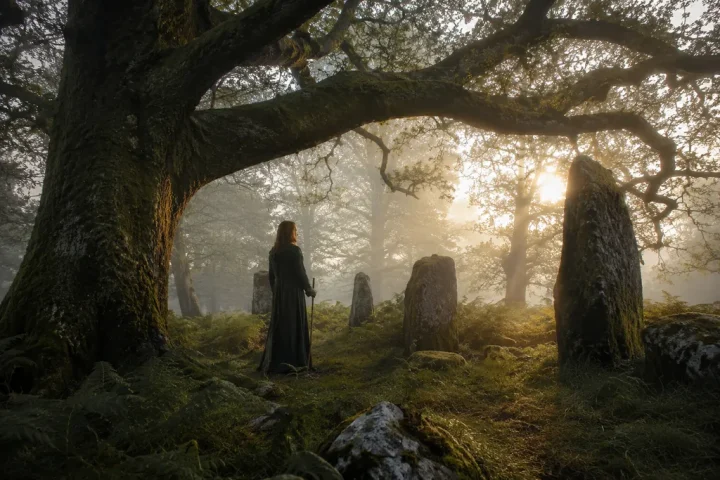
This may involve fasting and spending an entire night outdoors. During the vigil, the initiate seeks direct contact with the gods, discovers personal spiritual power and attempts to connect with tutelary, totemic or guardian spirits.
The solitude, darkness and exposure to nature create an ordeal through which ordinary identity may be stripped away.
At dawn, the initiate symbolically returns to the human community as a changed person.
Shamanic Initiation
Other practitioners experience initiation through shamanic methods.
A shamanic initiation may involve an ecstatic journey into other realms of consciousness. During this experience, the initiate may encounter spirits, ancestors, animals, guides or divine beings.
Symbolic death and dismemberment frequently appear in accounts of shamanic initiation. The initiate is then reassembled, healed or reborn with new powers and responsibilities.
This experience may occur through ritual, trance, dreams, illness or spontaneous visionary encounters.
Initiation as Inner Transformation
The outer ritual is only the visible part of initiation.
A person may receive robes, tools, secret names and membership within an organisation, yet these things alone do not guarantee spiritual transformation.
True initiation requires an internal change.
The old identity is confronted and relinquished. The initiate accepts new knowledge, responsibility and self-awareness. The higher self begins to influence the ordinary personality.
In this sense, initiation is not completed in a single ceremony. The rite opens the door, but the initiate must continue walking the path.
The Continuing Initiatory Journey
Each stage of esoteric development may contain another symbolic death and rebirth.
A first initiation begins the journey rather than completing it. Further initiations mark increasing knowledge, skill, discipline and understanding.
Whether experienced through a magical lodge, a Wiccan coven, a solitary dedication, a dream or a spontaneous spiritual awakening, initiation represents a decisive moment of transformation.
The initiate stands at the threshold, leaves an older self behind and enters the mysteries with new vision.
Cross the Threshold with the Occult World Digital Coven
Initiation is not merely a ceremony. It is the moment when curiosity becomes commitment, when the seeker consciously steps beyond the familiar and enters a deeper world of knowledge, discipline and transformation.
The Occult World Mystery School was created for those who are ready to take that next step.
Inside our Digital Coven, you can explore the mysteries of Witchcraft, Wicca, ceremonial magic, Paganism and spiritual initiation through structured courses, members-only teachings and an ever-expanding occult library.
Continue your studies through subjects including:
- Witchcraft and Wiccan practice
- Initiation, dedication and spiritual transformation
- The magic circle and ritual preparation
- The Goddess, the Horned God and divine polarity
- Magical tools, symbols and sacred names
- Coven traditions and solitary practice
- Psychic development and altered states of consciousness
- Western occultism, grimoires and secret societies
- Protection, grounding and spiritual discernment
- The Wheel of the Year and the mysteries of the Sabbats
Become Part of a Living Occult Community
The occult path can be deeply personal, but it does not need to be lonely.
Inside the Occult World Mystery School, you can meet fellow witches, Pagans, magicians, mystics, paranormal researchers and serious occultists from around the world.
Ask questions. Share your experiences. Discuss books and traditions. Learn from others who understand your fascination with magic, spirits, ritual and the unseen world.
Our Digital Coven offers a place where you can study without ridicule, explore without judgement and develop your path alongside people who share your hunger for hidden knowledge.
Your Initiation Begins with a Decision
Every initiatory journey begins at a threshold.
You may remain outside, reading about the mysteries from a distance, or you may choose to step forward and begin exploring them for yourself.
The courses are waiting. The occult library is growing. The members of our worldwide Digital Coven are ready to welcome you.
Join the Occult World Mystery School and begin your journey into Witchcraft, Wicca, magic and the deeper mysteries of spiritual transformation.
The door is open.
Are you ready to cross the threshold?
FURTHER READING:
- Fortune, Dion. Esoteric Orders and Their Work and the Training and Work of the Initiate. London: The Aquarian Press, 1987.
- Gray, William G. Magical Ritual Methods. York Beach, Maine: Samuel Weiser, 1980.
- Greer, John Michael. Inside a Magical Lodge: Group Ritual in the Western Tradition. St. Paul, Minn.: Llewellyn Publications, 1998.
SOURCES:
The Encyclopedia of Magic and Alchemy Written by Rosemary Ellen Guiley Copyright © 2006 by Visionary Living, Inc.
The Encyclopedia of Witches, Witchcraft and Wicca – written by Rosemary Ellen Guiley – Copyright © 1989, 1999, 2008 by Visionary Living, Inc.


Follow