

Aufhocker: The Spirit That Climbs Onto Your Back
The Aufhocker is a sinister being from German folklore that attacks solitary travellers after dark by leaping onto their backs and forcing them to carry its steadily increasing weight. Its name is pronounced approximately OWF-hock-er and derives from the German verb aufhocken, meaning to climb onto someone, crouch upon them or settle across their shoulders. Although modern occult reference books sometimes portray the Aufhocker as an enormous vampiric black dog, older German traditions describe a much less clearly defined spirit whose identity is revealed through the terrifying manner in which it attacks.
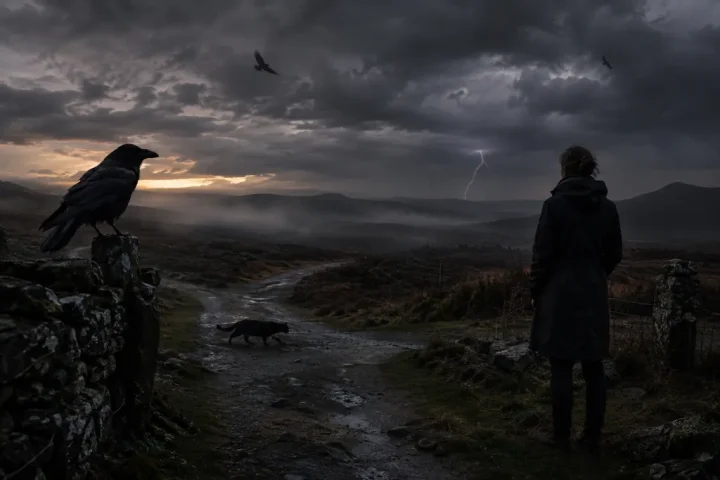
A person travelling alone at night may first become aware of footsteps following along the road. When the traveller stops, the footsteps may stop as well, creating the impression that something hidden in the darkness is deliberately matching every movement. Before the victim can turn around, an invisible presence suddenly lands upon the shoulders and closes its grip around the upper body. At first, the burden may feel no heavier than a child or a small animal, but the weight grows with every step until the traveller can scarcely breathe or remain upright.
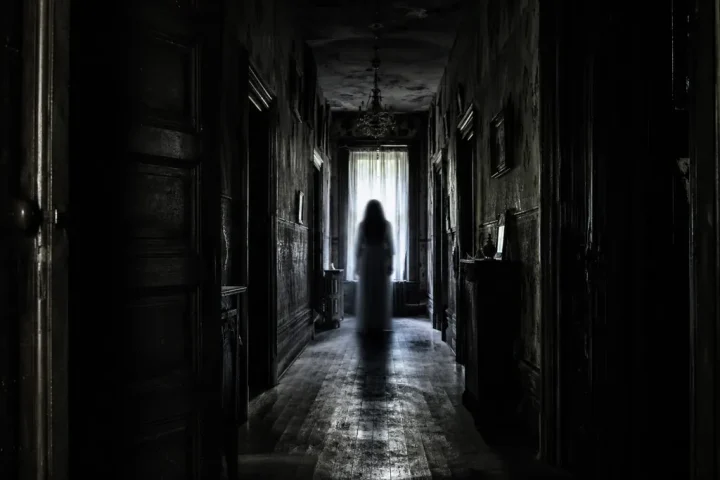
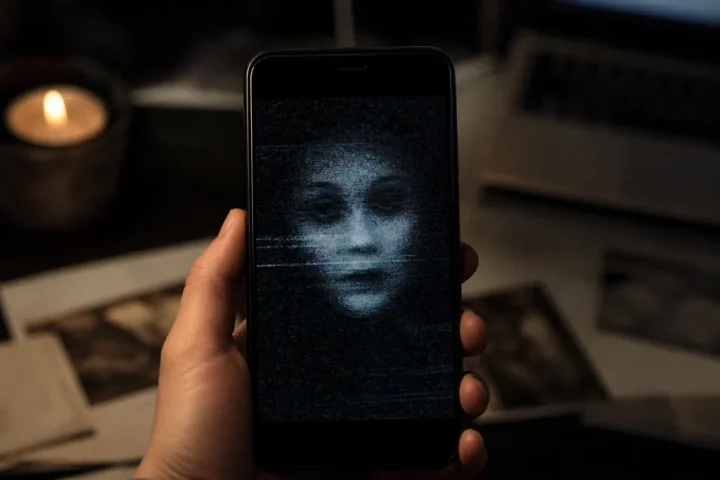
The horror of the Aufhocker does not depend upon a clear view of the creature. In many accounts, the victim never sees what has climbed onto the back because the spirit presses close behind the head and makes turning around impossible. The traveller can feel its limbs gripping the shoulders and may sense its breath against the neck, yet its face remains hidden. This uncertainty allows the imagination to become part of the attack, because the victim cannot determine whether the burden is an animal, a demon or a dead person who has returned from the grave.
German folklore does not give the Aufhocker one consistent physical form. It may remain invisible throughout the encounter or appear as an old woman, a spectral man or an unnatural animal. Its most famous manifestation is that of a huge black dog whose coat seems to absorb the surrounding darkness. This creature follows lone travellers until they reach an isolated stretch of road or a crossroads, where it may rise onto its hind legs and attack the throat.
This black-dog form is sometimes described as vampiric because it assaults the neck and drains the strength of its victim. Some modern accounts claim that it tears out the throat, but blood-drinking is not a central element in most older descriptions of the Aufhocker. Its vampirism is expressed through suffocation, exhaustion and the gradual destruction of physical vitality. Rather than feeding from an open wound, the spirit consumes life by becoming a crushing burden that the victim is forced to carry.
The Returning Dead
Folklorists have often connected the Aufhocker with the Germanic tradition of the Wiedergänger, a dead person who returns because something concerning the death or burial remains unresolved. A Wiedergänger does not always emerge visibly from a grave as a walking corpse. The continued presence of the dead may instead be experienced through strange noises, oppressive sensations or a supernatural weight that descends upon the living.
Seen from this perspective, the Aufhocker may be a dead person forcing another human being to carry the burden that remained after death. The spirit may have been buried incorrectly or may still be bound to the world by an unconfessed crime. It may also represent someone who suffered an injustice and now attaches that unresolved suffering to anyone unfortunate enough to pass through the haunted place.
The victim is not always selected at random. Some versions of the legend suggest that the Aufhocker is drawn towards people who carry guilt of their own. A traveller who has committed a theft or betrayed another person may escape human punishment, but the hidden offence becomes a supernatural weight that follows along the road. Once the creature climbs onto the offender’s back, guilt is no longer an invisible emotion. It becomes a physical presence that grows heavier with every attempt to escape it.
This interpretation gave the legend a strong moral dimension. The Aufhocker warned that wrongdoing could not always be left behind simply because no witness had seen it. A person might walk away from the place where a crime occurred, yet the consequences could still follow and attach themselves to the body.
Crossroads, Forest Roads and Churchyards
The Aufhocker is frequently associated with crossroads, which occupy a dangerous position in European supernatural tradition. A crossroads belongs to several roads at once, yet it belongs completely to none of them. Because it marks a place of divided direction, it was often understood as a threshold where spirits could enter the human world more easily.
A traveller crossing such a place at night was temporarily removed from the security of the village and had not yet reached the protection of home. The surrounding roads offered several possible directions, while darkness concealed whatever might be approaching from behind. This moment of uncertainty created the ideal conditions for an Aufhocker attack.
Forests were equally dangerous because trees distorted sound and prevented travellers from seeing far ahead. A person might hear movement beside the road without being able to identify its source. Fatigue could deepen the fear, particularly when the journey had already continued for several hours and the nearest house remained distant. When the weight finally descended upon the traveller’s shoulders, the attack seemed to emerge directly from the darkness of the landscape.
Churchyards and roads once used for funeral processions also appear in Aufhocker traditions. In these places, the creature becomes closely associated with the dead who have not remained peacefully within their graves. Someone passing a burial ground after sunset might feel an unseen presence following from behind before the crushing weight suddenly arrived. The encounter expressed an old fear that consecrated earth did not always prevent the dead from returning.
The Huckup of Hildesheim
A related version of the Aufhocker is known as the Huckup in the area around Hildesheim in Lower Saxony. The figure became especially famous through a monument created in the early twentieth century, which depicts a strange creature sitting upon the shoulders of an apple thief. The man bends beneath its weight while still carrying the fruit he has stolen.
In this interpretation, the Huckup represents the burden created by wrongdoing. The thief believes he has escaped because no human being witnessed the crime, but the supernatural world has seen what happened. The creature climbs onto his back and ensures that the stolen apples become far heavier than their ordinary weight could explain.
The Hildesheim image transformed a frightening night-spirit into a public moral warning, yet it preserved the central meaning of the older legend. The Aufhocker does not merely chase its victim from a distance. It forces the person to carry the consequence of something that cannot be escaped.
The Growing Weight
The defining feature of the Aufhocker encounter is the way its weight increases as the journey continues. A burden that initially seems bearable gradually becomes strong enough to force the traveller towards the ground. The legs weaken, the chest tightens and every breath requires greater effort, while the spirit remains fixed across the shoulders.
This increasing pressure distinguishes the Aufhocker from an ordinary animal attack. The creature does not simply attempt to kill as quickly as possible. It prolongs the encounter and makes the traveller participate in the process. The victim must continue walking while knowing that each step makes the situation worse.
The spirit may whisper into the victim’s ear or remain completely silent. Its grip may resemble hands around the throat, or its presence may be felt only as an immense pressure across the back. Whatever form the attack takes, the traveller gradually loses the ability to distinguish supernatural weight from physical exhaustion. The creature appears to merge with the victim’s own body until escape seems impossible.
The psychological force of the legend lies in this merging of fear and physical sensation. A person walking alone at night may already feel tired, anxious and unusually aware of sounds behind them. The Aufhocker gives those sensations a supernatural cause. Fatigue becomes the pressure of a spirit, while fear becomes evidence that the unseen attacker is drawing closer.
Escaping the Aufhocker
The Aufhocker cannot usually be defeated by physical force because struggling against it only wastes the traveller’s remaining strength. Survival depends upon reaching a boundary where the creature’s authority ends. Dawn may cause the spirit to disappear because the Aufhocker belongs to darkness and loses its power when daylight restores the ordinary order of the world.
The ringing of church bells may also force it to release its victim. Their sound represents sacred authority spreading across the landscape, penetrating the roads and forests where wandering spirits possess greater freedom. A traveller who hears the bells may gain the strength to continue because sanctuary is near.
Prayer offers protection for the same reason. The victim does not overpower the spirit through personal strength but appeals to a power greater than the creature. The words must sometimes be spoken clearly despite the pressure upon the throat, turning the attempt to pray into a struggle for breath.
The threshold of a home is another important place of safety. A spirit that dominates an isolated road may not have the right to enter a protected dwelling. The traveller must therefore continue towards the doorway even as the burden becomes almost impossible to carry. Reaching the threshold breaks the attachment, causing the Aufhocker to fall away or vanish into the darkness.
These forms of protection reveal that the creature belongs to exposed places where human order is weakest. It attacks between one secure location and another, fastening itself to people who have not yet reached safety.
The Aufhocker and Night Terrors
Modern interpretations sometimes connect the Aufhocker with sleep paralysis and other experiences involving the sensation of being crushed by an unseen presence. During sleep paralysis, a person may awaken without being able to move and may feel as though something is sitting on the chest. Some sufferers report seeing a shadowy figure in the room or sensing a hostile presence close to the bed.
The Aufhocker traditionally attacks travellers rather than sleepers, but the resemblance remains significant. Both experiences involve an invisible force that controls the body and restricts breathing. The victim remains conscious but cannot escape the pressure.
A psychological explanation may describe the physical process behind such sensations, yet folklore explains how people understood the terror before modern medical language existed. The feeling of suffocation was not considered meaningless. It indicated that something had found the victim and was attempting to feed upon strength.
The legend may therefore preserve several kinds of experience within one supernatural figure. It reflects the fear of travelling through dangerous landscapes, the physical effects of exhaustion and the sensation of being burdened by guilt or grief. These experiences merge within the image of a creature that climbs onto the body and refuses to leave.
A Vampire That Feeds on Vitality
The Aufhocker occupies an unusual position in vampire folklore because it does not require blood in order to drain life. The black-dog form may attack the throat, but the broader tradition focuses upon the theft of energy and breath. The creature destroys vitality by imposing its own supernatural weight upon another being.
This may represent a more ancient understanding of vampirism in which the predator feeds upon life itself rather than upon blood as a physical substance. The victim grows weaker while the creature appears to become stronger and heavier. The exchange continues until the traveller reaches protection or collapses beneath the burden.
The Aufhocker therefore resembles other oppressive spirits that attach themselves to human beings and consume emotional or physical strength. Its attack is intimate because the victim cannot create any distance from the predator. Once the creature has climbed onto the back, every attempt to move also carries the monster forward.
The traveller becomes the instrument of the haunting.
The Spirit That Must Be Carried
The enduring terror of the Aufhocker lies in the fact that it transforms the victim into an unwilling carrier of the supernatural. Other monsters may pursue someone through the forest, but the Aufhocker removes the distance between hunter and prey. Its body presses against the traveller while its weight becomes inseparable from the traveller’s own exhaustion.
This closeness gives the legend a disturbing emotional power. The creature can represent a dead person who refuses to be forgotten, a crime that will not remain hidden or a fear that becomes heavier the longer it is carried. The attack continues because the victim cannot simply run away from something already attached to the body.
Somewhere ahead may be a house, the sound of bells or the first light of morning. The traveller can still imagine safety, but reaching it requires carrying the Aufhocker through the darkest part of the journey.
The spirit waits for the moment when the legs finally fail.
Tear Ignorance from Your Back
Most people move through the world carrying a burden they have never learned to recognise. They repeat weakened versions of ancient legends while remaining blind to the spiritual forces, symbols and fears concealed within them.
Tear that ignorance from your back. Enter the Occult World Mystery School and study the revenants, night spirits and supernatural traditions that have haunted humanity for centuries. There are thousands of spirits, gods, demons, magical systems, grimoires and forgotten traditions waiting beyond it. Stop allowing shallow knowledge to crush you. Cross the threshold, seize what has been hidden and join the Occult World Mystery School now.
Sources:
- Grimm, German Legends, 342, 359;
- Petzoldt, Demons, 23;
- Rose, Giants, Monsters, and Dragons, 30;
- Wurmser, Jealousy and Envy, 94
SEE ALSO:
SOURCE:
Encyclopedia of Vampire Mythology Written by Theresa Bane ©2010 Theresa Bane. All rights reserved



Follow