
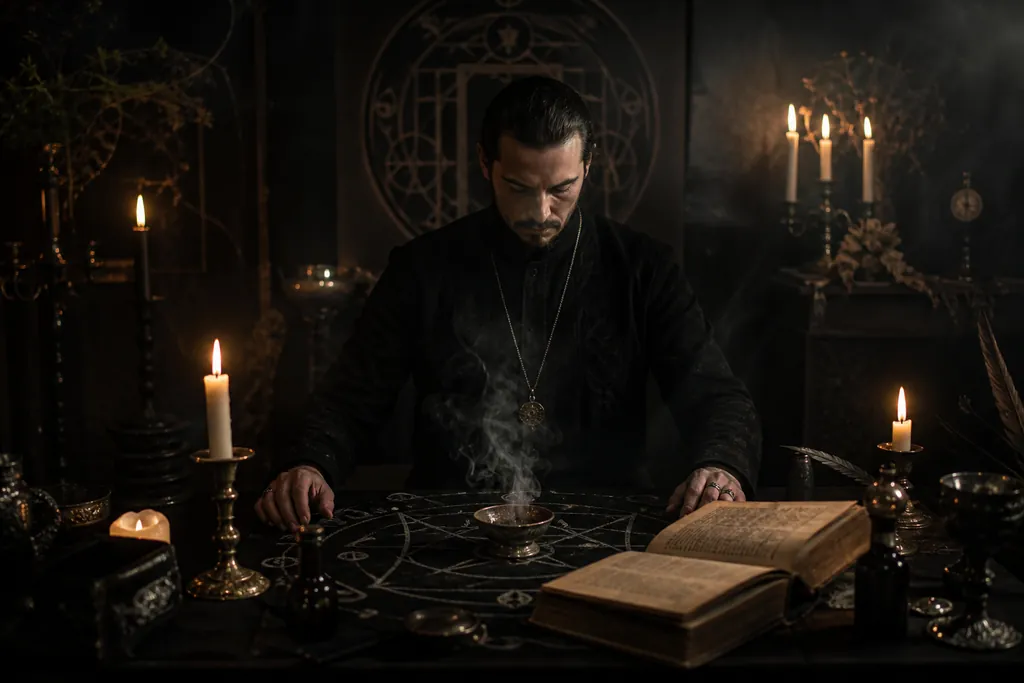
Demonic Work Is Not a Casual Path
There is a reason why demonic work has never belonged to the casual seeker.
It is not an aesthetic. It is not dark spirituality for entertainment. It is not something to experiment with because you are bored, angry, curious, or desperate for power.
Demonic work is serious because it deals with force. Raw force. Transformative force. Confrontational force. The kind of force that does not simply decorate your spiritual life, but challenges it, exposes it, and demands that you become stronger than the parts of yourself that are still weak, scattered, obsessive, or afraid.
This is why demonology has always carried warnings.
Not because every demon should be reduced to a horror story, and not because the subject should be buried beneath superstition, but because real power requires preparation. If you approach demonic work without knowledge, discipline, protection, and emotional control, you do not gain mastery.
You risk losing authority over the very forces you thought you were commanding.
The Truth Most People Will Not Tell You
The modern internet has made demonology look simple, fast, and dangerously accessible. Everywhere, you can find shallow promises about summoning demons in minutes, getting rich through spirits, gaining revenge, attracting lovers, or forcing reality to obey your will without preparation or consequence.
This is not serious demonology.
It is spiritual recklessness.
Historically, demonic work was never presented as a casual exercise. In grimoires, ceremonial systems, temple traditions, and initiatory paths, contact with powerful spirits required preparation, purification, protection, ritual structure, and mental discipline. Practitioners were not expected to rush into the work. They were expected to train themselves first.
Why?
Because demonic forces do not operate inside your comfort zone. They press against your weaknesses. They amplify what is already active inside you. They may bring power, insight, knowledge, and transformation, but they may also intensify obsession, fear, pride, instability, hunger, and illusion if the practitioner is not grounded.
If you are unstable, instability can grow.
If you are obsessive, obsession can deepen.
If you are disciplined, power becomes usable.
This is one of the most important truths in demonic work.
What Demonic Power Really Means
Demonic forces should not be reduced to childish ideas of “evil monsters.” In serious occult study, demons may be understood as spirits, intelligences, archetypal forces, shadow powers, initiatory presences, or embodiments of desire, chaos, knowledge, rebellion, transformation, and forbidden wisdom.
This does not make them harmless.
It makes them complex.
To work with demonic forces is to enter a field where power is rarely gentle. Demons, in magical and symbolic traditions, are often associated with the hidden, the rejected, the feared, the untamed, and the forbidden. They confront the practitioner with what polite spirituality often avoids: ambition, rage, lust, fear, hunger, shadow, control, domination, survival, and the will to transform.
This is why demonic work can be powerful.
It can reveal hidden personal strength. It can expose psychological patterns. It can force deep self-honesty. It can open forbidden areas of knowledge and teach the practitioner how to face energies that most people spend their lives avoiding.
But this kind of transformation is not soft.
It confronts.
It strips illusion.
It reveals weakness.
It does not simply give you power. It asks whether you can hold power without being consumed by it.
Where Beginners Go Wrong
The danger in demonic work is often misunderstood. Many people imagine possession, horror-movie scenes, or dramatic supernatural attacks. While traditional demonology certainly contains frightening warnings, the most common dangers for modern beginners are often more subtle.
The first danger is psychological obsession. A beginner may start interpreting every dream, coincidence, mood change, or random event as a demonic sign. Instead of gaining clarity, they lose discernment. Instead of becoming empowered, they become dependent, anxious, and unstable.
The second danger is energetic exhaustion. Improper ritual work, emotional intensity, lack of grounding, and poor boundaries can leave a practitioner feeling drained, nervous, restless, or spiritually exposed. Power work without recovery and protection is not strength. It is imbalance.
The third danger is loss of boundaries. If a practitioner does not know how to open and close ritual space, define intention, set limits, cleanse energy, and maintain authority, the work can become chaotic. The practitioner may believe they are commanding the force, while in reality they are being pulled by it.
The fourth danger is spiritual inflation. This is when a person begins to feel chosen, superior, special, untouchable, or above ordinary rules. In occult work, this is one of the fastest ways to lose direction. Pride can become a doorway to delusion.
This is why discipline is not optional.
It is the foundation.
Discipline Is the Only Way This Path Works
If one word defines serious demonic work, it is discipline.
Not curiosity.
Not rebellion.
Not emotional intensity.
Discipline.
Demonic work requires ritual structure. You do not improvise blindly with forces you do not understand. It requires protection practices, because protection is not fear; it is authority. It requires mental clarity, because obsession and fantasy can easily disguise themselves as spiritual insight. It requires consistency, because real power is built through repeated practice, not dramatic one-time rituals.
Without discipline, you are not practising demonology.
You are gambling with forces, symbols, and psychological pressures you have not learned to handle.
This is where many beginners fail. They want the intensity of demonic work without the responsibility. They want results without preparation. They want power without purification. They want contact without boundaries.
But demonic work does not reward immaturity.
It tests it.
Protection Comes First
Every serious practitioner should understand this before attempting deeper demonic work: you do not begin with demons. You begin with protection.
Protection is not paranoia. It is not weakness. It is not fear-based spirituality. Protection is the statement that you are entering the work with authority, clarity, and control.
Before invocation, evocation, sigil work, offerings, communication, or deeper ritual practice, the practitioner must learn the basics of energetic shielding, cleansing, grounding, boundary-setting, and closing ritual space. These are not decorative extras. They are the structure that keeps the work stable.
A protected practitioner is not someone who is afraid.
A protected practitioner is someone who understands power.
Protection establishes the field. It defines the boundaries. It tells the unseen world that you are not entering as a victim, a tourist, or a reckless beginner.
You are entering as a practitioner.
Why This Work Should Not Be Done Blindly
Demonic work is one of the areas of occult practice where self-teaching can easily become dangerous, not because the student is incapable, but because beginners often do not know what they do not know.
They may not recognise early warning signs. They may not understand the difference between intuition and obsession. They may not know how to cleanse properly, how to ground after ritual, how to interpret communication, how to maintain boundaries, or when to stop.
This is why traditional systems valued teachers, initiations, structured lessons, ritual preparation, and progressive training. The point was not to frighten students away from the work. The point was to prevent them from entering powerful territory without the tools required to survive it.
Power without structure leads to chaos.
Structure transforms power into mastery.
Demonology and Black Magick Are Not the Same, But They Touch
Demonology and black magick are often mentioned together, but they are not identical. Demonology is the study of demons: their names, classifications, myths, histories, symbols, roles, hierarchies, and spiritual meanings. It teaches the student to understand what demons are believed to be, how traditions describe them, and how practitioners have approached them across cultures and magical systems.
Black magick moves into the practical and darker side of magical intention. It deals with power, influence, shadow, desire, domination, protection, reversal, banishing, taboo currents, and the ethical tension of using magic to affect reality in forceful ways.
Together, these two paths reveal why serious occult training matters.
Demonology teaches you what you are approaching.
Black magick teaches you what power can do when directed.
Neither should be approached carelessly.
Both require discipline.
Continue Your Path Inside the Occult World Mystery School
If this subject calls to you, then you already understand something important.
Demonic work is not a casual interest.
It is a path.
And a path requires structure.
Inside the Occult World Mystery School, you can go deeper through the Demonology Course and the Black Magick Course. These courses are designed for serious students who want to move beyond internet superstition, shallow fear, and reckless experimentation.
In the Demonology Course, you will study demons through a deeper historical, symbolic, spiritual, and occult framework. You will learn how demonic figures have been understood across traditions, how names and sigils function, how hierarchies and classifications work, how communication is approached, why protection matters, and what separates serious study from fantasy.
In the Black Magick Course, you will move further into the darker currents of practical magical power. This course explores intention, ritual force, shadow work, protection, influence, reversal, boundaries, and the responsible study of forbidden magical practices. It is not about childish darkness. It is about understanding power, consequence, and the discipline required to work with intense magical currents.
Do Not Approach Power Without Training
You can keep reading fragments online, collecting names, sigils, warnings, and rumours without ever building real understanding.
Or you can study properly.
Demonic work demands more than curiosity. Black magick demands more than intensity. Both require knowledge, protection, self-control, and a serious relationship with power.
Inside the Occult World Mystery School, you are not left to wander through disconnected information. You can follow a structured path, learn the foundations, build discernment, and approach these subjects with the seriousness they deserve.
Do not enter demonic work blindly.
Do not treat black magick as entertainment.
Do not mistake danger for depth.
Join the Occult World Mystery School and begin your deeper study through the Demonology Course and the Black Magick Course.
Learn the forces.
Learn the structure.
Learn the protection.
Learn the discipline.
Because power without discipline leads to collapse.
But discipline with knowledge leads to mastery.











Follow