

Thought-Forms: Astral Entities, Magical Creations, and the Power of Concentrated Thought
A thought-form is a nonphysical entity, object, structure, or presence created by thought. In occult philosophy, thought-forms exist on the mental plane or the astral plane, where they may take shape, gather force, and sometimes act with surprising independence. They are among the most important concepts in magic, spellcraft, astral work, hauntings, psychic influence, and the occult Law of Attraction.
A thought-form may be deliberately created through ritual, visualisation, concentration, evocation, or spellwork. It may also arise spontaneously from intense emotion, repeated thought, collective belief, trauma, fear, devotion, prayer, or the psychic atmosphere of a place. In some cases, a thought-form may behave like a ghost, a spirit, a guardian, a messenger, a magical servant, or a haunting presence.
Most thought-forms are invisible to ordinary perception, but occult tradition holds that they may be perceived clairvoyantly by those sensitive to subtle energies. They may appear as colours, shapes, symbols, animal forms, humanlike figures, atmospheric impressions, or seemingly independent beings.
Thought-Forms in Esoteric Philosophy
Esoteric philosophy teaches that every thought produces two effects. The first is a radiating vibration, which travels outward from the thinker. The second is a floating coloured form, shaped by the nature, intensity, and emotional quality of the thought.
A weak or passing thought usually produces a weak and temporary form that quickly dissolves. A strong, repeated, emotionally charged, or ritually empowered thought may create a more enduring thought-form. The lifespan of a thought-form depends on the force behind it. Some dissipate almost immediately, while others may endure for days, months, years, or even longer when fed by sustained attention.
Thought-forms that are strongly energised may become anchored not only on the astral plane, but also in relation to the physical plane. This is one reason why certain places may feel charged, heavy, sacred, oppressive, peaceful, or haunted. Human thought and emotion leave impressions. Where enough force accumulates, those impressions may begin to behave like presences.
Thought-forms radiate outward and attract sympathetic essences. This idea forms part of the occult basis of the Law of Attraction: what one repeatedly thinks, imagines, fears, desires, or emotionally feeds on the mental plane may eventually manifest as experience, atmosphere, pattern, or event on the physical plane.
Thought-Forms, Magic, and Spellcasting
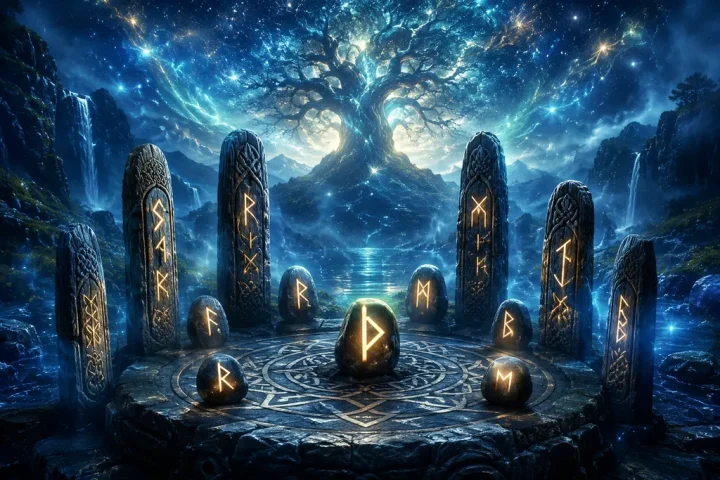
Thought-forms are used in magic and the casting of spells. In magical practice, the magician may create astral structures, objects, places, or symbolic environments for visualisation, ritual, and inner work. These astral creations may serve as temples, sanctuaries, gateways, weapons, shields, tools, containers, or landscapes of power.
Thought-form entities may also be created and summoned through evocation. Such entities can be charged with specific tasks, such as carrying a spell, delivering a message, protecting a person or place, healing, influencing circumstances, or performing what some traditions call “sending.” In darker forms of practice, thought-forms may be used for psychic attack, obsession, energetic interference, or harm.
The effectiveness of a thought-form depends on concentration, clarity, emotional charge, symbolic precision, and the amount of energy invested in its creation. A vague thought produces a vague form. A focused, repeated, ritually charged thought produces a stronger and more coherent form.
In Western occult tradition, thought-forms are created on the astral plane through what is sometimes called the Triangle of Causation, a primary foundation of occult astral work. The magician first forms the idea mentally, then gives it emotional and energetic charge, and finally projects or anchors it into astral substance.
Objects, locations, gods, angels, spirits, goals, and activities may all be recreated or formed in astral matter. In advanced magical practice, the line between visualisation and creation becomes very fine: what begins as an image may become a functioning astral reality.
Artificial Elementals
In magical terminology, some deliberately created thought-forms are called artificial elementals. These are not elemental beings in the traditional sense of spirits of earth, air, fire, or water, but artificially generated astral entities created by ritual and intention.
Artificial elementals may be created to perform low-level tasks or errands. They may be directed toward individuals to protect, heal, attract, repel, warn, confuse, influence, or harm. In this sense, they function as magical servitors: entities created for a defined purpose.
However, thought-forms must have something to attach to in order to affect a recipient. They must find a similar vibration in the aura, emotional field, or psychic condition of the person they are directed toward. If they cannot attach, they may rebound or return to the sender.
This is one reason occult traditions warn against sending destructive thought-forms. The person who projects hatred, obsession, envy, psychic attack, or malice may eventually suffer from the return of their own creation. Evil thought, when unable to find a proper target, may boomerang back to the one who generated it.
Thought-Forms and Hauntings
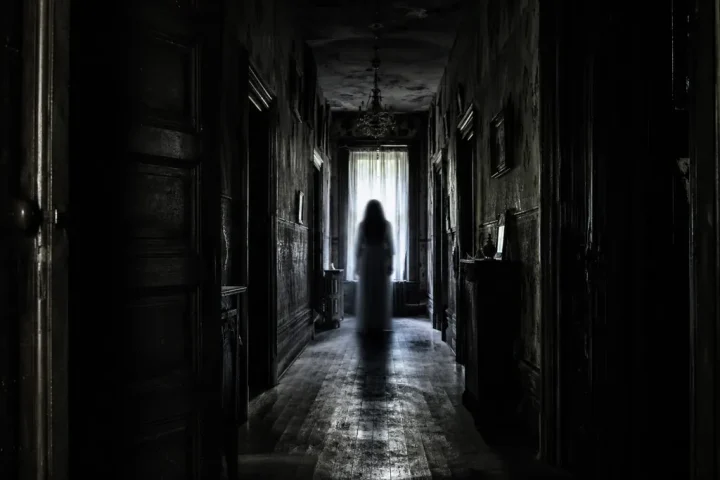
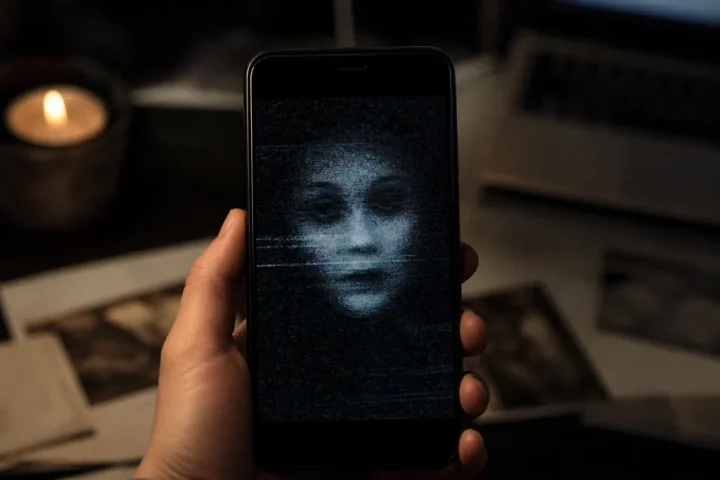
In the study of hauntings, a thought-form is an artificial or semi-artificial presence that may act like a ghost. It is not necessarily the spirit of a deceased person. Instead, it may arise from concentrated human thought, emotion, trauma, fear, grief, violence, or magical intention.
A haunting thought-form may appear in a place where intense emotional energy has been expended. A battlefield, execution site, hospital, prison, murder scene, ritual space, or location of mass death may accumulate enough emotional charge to generate an artificial presence. Such a thought-form may take a human shape, an animal form, a shadowy outline, or an undefined presence that communicates pain, suffering, anger, fear, or negative energy.
A highly energised thought-form may appear to have personality and even a kind of self-awareness. It may repeat certain behaviours, respond to attention, affect the atmosphere of a place, or seem attached to a location. This may explain some hauntings in which no true human ghost is present, yet the phenomenon still feels intelligent or emotionally charged.
In such cases, the haunting is not “nothing.” It is a psychic residue, an astral construct, or an emotional entity created by human energy.
Thought-Forms and the Aura
Thought-forms may accumulate in a person’s energy field or aura. They can influence mood, behaviour, habits, emotional patterns, and even personal characteristics. Repeated negative thoughts may create dense and oppressive forms around the person. Positive, loving, devotional, or spiritual thoughts may create protective and uplifting forms.
Negative thoughts weaken the person who sustains them. Anger, hatred, lust, greed, jealousy, bitterness, fear, and obsession may produce heavy thought-forms that burden the aura and distort perception. Occult philosophy holds that such thought-forms may even contribute to illness or emotional depletion when they become habitual and deeply embedded.
Positive thoughts, especially those rooted in love, compassion, devotion, clarity, courage, prayer, and spiritual aspiration, are said to act as a shield. They energise the aura, refine the mental field, and create protective patterns through which higher influence can enter.
According to Annie Besant and C. W. Leadbeater, selfish thought moves in a curve and eventually returns to the thinker, expending itself on its own level. Unselfish thought, however, moves outward in an open curve, expanding as it goes. It can pierce higher spiritual dimensions and become a channel through which higher planes pour their influence into lower planes.
This is one occult explanation for the power of prayer. Prayer is not merely words spoken into emptiness. It is a directed current of thought, emotion, intention, and devotion that opens a line of contact between planes.
Besant and Leadbeater on Thought-Forms
The Theosophists and clairvoyants Annie Besant and C. W. Leadbeater gave one of the most influential esoteric teachings on thought-forms. They described thought-forms as four-dimensional in nature, which makes them difficult to describe in ordinary three-dimensional language.
They classified thought-forms into three main groups. The first is the image of the thinker. The second is the image of a material object associated with the thought. The third is an independent image expressing the inherent qualities of the thought itself.
According to Besant and Leadbeater, low thoughts such as anger, hatred, greed, lust, and jealousy produce forms that are dense in colour and structure. More spiritual thoughts generate forms of greater purity, clarity, refinement, and beauty.
They described sustained devotion as appearing like a flower with upward-curving petals resembling azure flames. Devotional aspiration might appear as a blue cone, with its apex pointing upward toward the higher planes. Explosive anger may appear as a splash of red or orange, while sustained anger may form a sharp red stiletto. Jealousy might appear as a brown snake.
These images are not meant merely as poetic metaphors. In clairvoyant Theosophical interpretation, they are actual subtle forms perceived on inner planes.
Meditation and Positive Thought-Forms
Besant and Leadbeater stressed the importance of regular meditation in cultivating positive thought-forms. Meditation creates a stream of magnetism that continues to work long after the meditation itself has ended.
A person who meditates regularly builds patterns in the aura. These patterns may become channels for clarity, calm, spiritual protection, and higher influence. In contrast, a person who continually broods on fear, resentment, revenge, or self-hatred may build thought-forms that repeatedly draw them back into the same emotional state.
This is why thought discipline is so important in magical and spiritual practice. The magician does not merely cast spells in ritual. The magician creates all day through thought, speech, emotion, imagination, and repeated inner images.
Every repeated thought is a seed.
Every charged emotion is food.
Every sustained image is a possible form.
Group Minds and Collective Thought-Forms
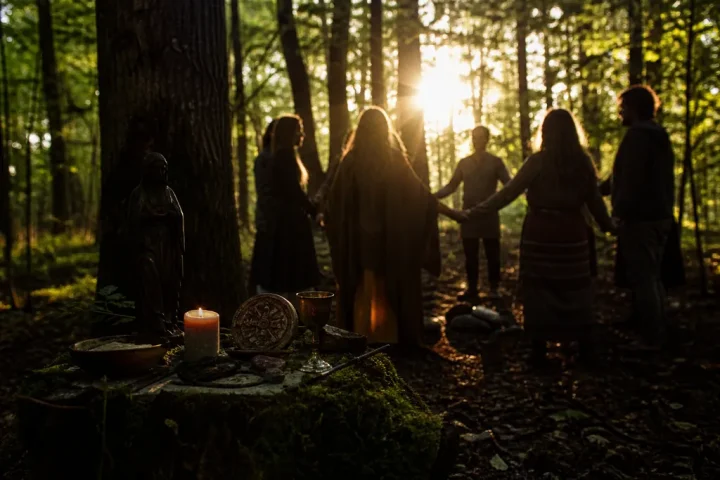
Some thought-forms arise spontaneously from groups. A “group mind” forms whenever a group of people concentrates on the same thoughts, emotions, ideas, fears, hopes, or goals. This may happen in religious gatherings, political demonstrations, crowds, teams, corporations, magical orders, families, communities, or nations.
To some extent, the group mind can possess the group. It influences mood, behaviour, reactions, speech, courage, panic, devotion, rage, loyalty, and collective identity. The psychic bonding and power that coalesces in crowds can be extraordinary. A peaceful gathering may become inspired and uplifted. A frightened crowd may become hysterical. An angry crowd may become dangerous.
A close-knit working group may also develop a group mind that creates synergy, shared intuition, and coordinated action. When the group disperses, the group mind usually loses power unless it is sustained by memory, ritual, repeated meetings, symbols, or ongoing emotional investment.
Characters in myth, legend, folklore, fiction, and even deities may also be understood by some occultists as thought-forms. They continue to exist as long as they are energised by collective thought, devotion, storytelling, fear, worship, art, ritual, and belief. When they fade from interest, they may return to formlessness on the astral plane.
This does not necessarily mean that all gods are “only” thought-forms. Rather, occult philosophy sometimes suggests that collective human attention can build powerful astral vessels through which archetypal or spiritual forces may operate.
Thought-Forms and the Collective Unconscious
Thought-forms may also arise spontaneously from the collective unconscious as archetypes that take phantom or seemingly real form. This may help explain reports of the Devil, supernatural monsters, strange entities, nonphysical beings, otherworldly visitors, and terrifying presences that appear across cultures.
When an archetype is fed by fear, belief, story, and emotional charge, it may manifest as a thought-form capable of being perceived by individuals or groups. Some apparitions may therefore be neither ordinary spirits nor hallucinations, but psychic forms generated by collective human imagination and emotion.
Such forms can feel deeply real because they are not imaginary in the trivial sense. They may possess astral substance, emotional force, and symbolic intelligence.
The Danger of Uncontrolled Thought-Forms
Thought-forms are not always harmless. Those that are not properly dispersed, as well as those that are particularly powerful, may go out of control. They may wander in search of energy, attach themselves to people, behave like vampiric entities, or even turn against their creators.
A thought-form created with obsession, hatred, fear, or intense desire may become difficult to recall or dissolve. If it is repeatedly fed, it may appear increasingly independent. It may begin to influence the creator, intensify the very emotion that created it, or seek new sources of energy.
This is one of the dangers of magical practice without discipline. Creating a thought-form is not merely imagination. In occult terms, it is an act of subtle creation. Anything created should be given structure, purpose, limits, and a method of dissolution.
In magical practice, it is customary to charge a thought-form with a finite lifespan. When its purpose has been completed, it should be consciously reabsorbed into astral matter or dissolved through ritual. A thought-form without limits may linger, feed, mutate, or attach.
The famous explorer and spiritual practitioner Alexandra David-Neel wrote of creating a thought-form that eventually seemed to take on independent life and had to be dissolved with difficulty. Her story is often cited as a warning: the mind creates more powerfully than most people realise.
Working Responsibly with Thought-Forms
Serious occult practice requires ethical awareness. Thought-forms should not be created casually, obsessively, or maliciously. The practitioner must understand that the astral plane responds to clarity, repetition, emotion, and will. What is projected outward may return. What is fed may grow. What is neglected may decay into distortion.
A responsible thought-form should have a clear purpose, a defined form, a limited duration, and a method of release. It should be aligned with protection, healing, clarity, spiritual growth, or constructive magical work. When used in spellcraft, the practitioner should understand what is being created and why.
Thought-forms are not toys. They are subtle constructions of mind, emotion, and energy.
Go Deeper into Thought-Forms, Astral Work, and Occult Practice
Thought-forms are one of the most important subjects in practical occultism. They connect magic, spellcraft, psychic attack, protection, hauntings, servitors, astral work, meditation, the Law of Attraction, group minds, and the invisible power of human imagination. To understand thought-forms is to understand that thought is not passive. Thought creates.
Inside the Occult World Mystery School, you can go much deeper into these subjects. You can explore magic, spirit work, hauntings, demonology, protection techniques, spellcraft, astral practice, occult philosophy, psychic defence, and the hidden mechanics behind manifestation and energetic influence. You will also meet fellow occultists and serious seekers who are studying the unseen world with depth, structure, and purpose.
If thought-forms, astral entities, artificial elementals, magical servitors, haunted places, psychic attack, and the power of focused intention fascinate you, then do not remain at the surface. Step inside the Occult World Mystery School and continue your study where occult theory becomes practical understanding.
Thought-Forms as Living Symbols of the Mind
The thought-form teaches one of the most profound laws of occultism: the mind is creative. Every thought leaves a trace. Every emotion gives colour. Every repeated image gathers force. Every group belief builds atmosphere. Every ritual gives shape to intention.
Most thought-forms fade. Some endure. Some protect. Some haunt. Some heal. Some harm. Some become so powerful that they seem to live.
To study thought-forms is to study the bridge between mind and manifestation, imagination and astral substance, emotion and haunting, spell and result. It is to recognise that the invisible world is not separate from human consciousness. It is constantly being shaped by it.
The occult question is not whether we create thought-forms.
The question is whether we create them consciously.
See also:
- Astral Plane
- Aura
- Evocation
- Artificial Elementals
- Servitors
- Psychic Attack
- Sending
- Hauntings
- Law of Attraction
- Meditation
- Magic
- Spellcraft
- Group Mind
SOURCES:
- The Encyclopedia of Magic and Alchemy Written by Rosemary Ellen Guiley Copyright © 2006 by Visionary Living, Inc.
- The Encyclopedia of Ghosts and Spirits– Written by Rosemary Ellen Guiley – September 1, 2007


Follow