VALAC ( 62)


Valac (also Valak, Ualac, Volac)
Valac is a demon appearing in the Ars Goetia, the first book of the Lesser Key of Solomon, where he is listed as the 62nd spirit summoned by King Solomon. He holds the rank of Great President of Hell and is said to command thirty legions of spirits.
Appearance and Nature
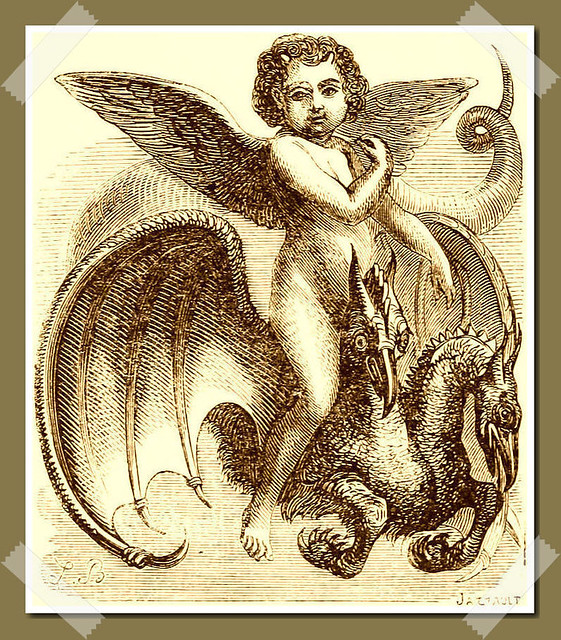
According to the Ars Goetia, Valac manifests as a child with angelic wings, riding upon a two-headed dragon. This unusual imagery combines innocence with latent power, suggesting a spirit that conceals formidable knowledge beneath a deceptively gentle exterior. His appearance differs markedly from the more monstrous depictions common to many Goetic spirits, reinforcing his reputation as subtle rather than overtly violent.
Powers and Attributes
Valac is primarily associated with hidden knowledge. He is said to reveal:
- The locations of hidden treasures, especially those concealed by serpents
- Knowledge concerning serpents and reptiles, including where they may be found and how they may be controlled
Unlike many Goetic spirits, Valac is not chiefly described as a deceiver. Traditional texts state that he answers truthfully when properly constrained within ritual contexts, though—as with all spirits in Solomonic literature—discernment and caution are emphasised.
Rank and Hierarchy
Valac’s title as a President places him among spirits associated with knowledge, learning, and governance rather than raw destruction. Presidents in the Goetic hierarchy are often linked to intellectual or hidden domains rather than overt chaos. His command over thirty legions indicates considerable authority within infernal cosmology.
Symbolism and Interpretation
Symbolically, Valac represents concealed wisdom, especially knowledge guarded by danger or taboo. Serpents, long associated with both wisdom and peril, reinforce his role as a revealer of truths that are not easily obtained. His childlike form may signify beginnings, curiosity, or knowledge in its uncorrupted state, while the dragon suggests ancient power and guardianship.
Cultural Influence
Valac has gained renewed attention in modern popular culture, particularly through fictional adaptations that reinterpret him as a more overtly sinister figure. These portrayals, while visually striking, differ significantly from the classical Goetic descriptions, which present Valac as restrained, informative, and hierarchically bound.
Cautionary Note
In historical grimoires, spirits such as Valac are not approached casually. Medieval and early modern demonology frames these beings within a rigid system of divine authority, seals, and constraints. Modern scholarly and esoteric study treats Valac primarily as a symbolic and mythological figure, representative of humanity’s long-standing fascination with hidden knowledge and forbidden wisdom.
 From the “Pseudomonarchia Daemonum” ( 1583 ) Written by Johann Weyer (Johann Wier)
Valac[Volac] is a great president, and commeth abroad with angels wings like a boie, riding on a twoheaded dragon, he perfectlie answereth of treasure hidden, and where serpents may be seene, which he delivereth into the conjurors hands, void of anie force or strength, and hath dominion over thirtie legions of divels.
Original Text :
Volac magnus Præses: progreditur uti puer alis angeli, super dracone equitans duobus capitibus. De occultis thesauris perfecte respondet, & ubi serpentes videantur, quos & viribus dedestitutos tradit in exorcistæ manus. Dominium habet legionum triginta.
From the “Dictionnaire Infernal” (edition of 1863 ) Written by Jacques Auguste Simon Collin de Plancy
Original Text:Volac, grand président aux enfers ; il apparaît sous la forme d’un enfant avec des ailes d’ange, monté sur un dragon a deux têtes. Il connaît la demeure des planètes et la retraite des serpents. Trente légions lui obéissent.
FURTHER READING: