

Varacolaci
Pronunciation: Va-ROC-o-loc-ee
Variations: Murohy, Strigoii, Varacolici, Varcolac, Velkudlaka, Vercolac, Vercolach, Vircolac, Vulcolaca, Vukodlak, Wercolac
The Varacolaci is one of the most powerful and unsettling beings in Romanian vampire lore. It is a vampiric revenant, a dead being that rises from the grave to feed upon the living.
Unlike some vampires that are created only through infection, curse, or improper burial, the Varacolaci may come into existence in several ways. It may be created when an unbaptised baby dies, when a person dies by suicide, or through a hereditary condition passed down through the bloodline for generations.
Appearance of the Varacolaci
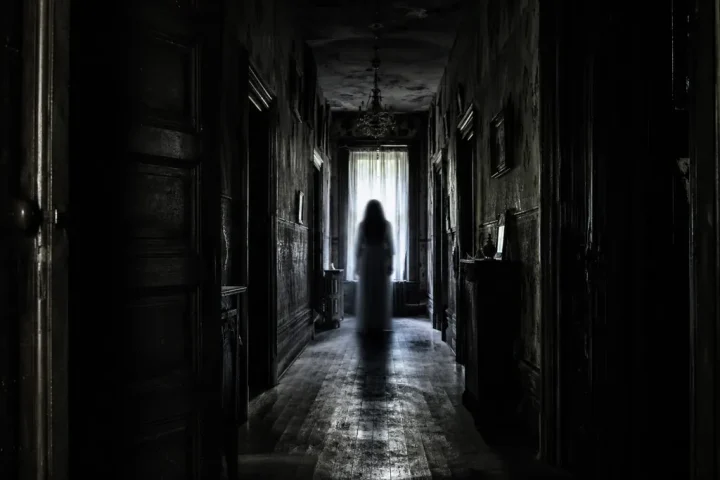
When the Varacolaci rises from the grave, it resembles the person it once was in life. However, its undead nature is visible.
Its skin is pale, dry, and withered. It looks drained, corpse-like, and unnatural, as though life has been removed from the body but the body has not fully surrendered to death.
The Varacolaci is not a glamorous vampire. It is a revenant of the grave: pale, desiccated, hungry, and dangerous.
A Vampire of Romanian Lore
Romanian folklore contains many forms of the undead, including strigoi, moroi, and other revenant beings. The Varacolaci belongs to this wider world of restless dead, blood-drinkers, shape-shifters, and nocturnal spirits.
It is especially feared because it may be one of the strongest of all vampires. Its powers extend far beyond ordinary blood-drinking. It can change shape, travel psychically, affect eclipses, and attack without leaving a visible wound.
The Varacolaci is not merely a corpse that feeds. It is a supernatural force of darkness, trance, blood, and astral movement.
How a Varacolaci Is Created
According to Romanian vampire belief, a Varacolaci may be created when a baby dies without being baptised. In Christianised folklore, baptism protected the soul and helped integrate the child into the spiritual community. Without it, the dead infant could become vulnerable to restless or dangerous transformation.
A person who dies by suicide may also be feared as a possible Varacolaci. In older folk belief, certain deaths outside the accepted religious order were considered spiritually dangerous and could lead to undead return.
The condition may also be hereditary. In this form, the potential to become a Varacolaci passes through the family line, hidden in the blood for generations.
Days of Greatest Danger
Although the Varacolaci may hunt throughout the year, it is especially active on two important feast days.
St George’s Day, 23 April, is one of its dangerous times.
St Andrew’s Day, 30 November, is another.
Both dates are highly charged in Balkan and Eastern European folklore. St Andrew’s Day in particular is widely associated with spirits, vampires, wolves, witchcraft, and supernatural danger.
On these nights, the boundary between the living and the dead is believed to grow thin, and beings like the Varacolaci become especially active.
Feeding and Attack
When the Varacolaci attacks, it drains its victim of blood. However, its bite leaves no visible wound.
This makes the Varacolaci especially terrifying. Its victims may weaken, decline, or die without obvious signs of attack. The absence of a mark suggests a psychic or supernatural form of feeding, not merely physical violence.
The Varacolaci does not need to announce its presence. It can feed in secret.
Shape-Shifting Powers
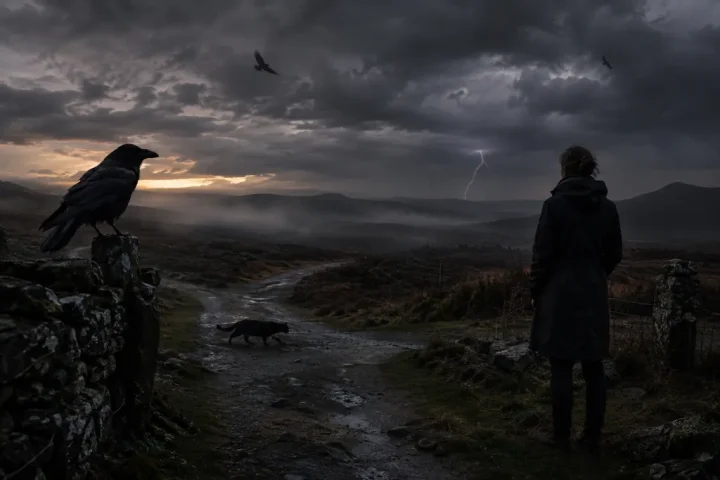
The Varacolaci has the ability to shape-shift into various animals and small creatures.
It may appear as a cat.
It may become a dog.
It may take the form of a flea.
It may transform into a frog.
It may also become a spider.
These forms reveal its ability to move unnoticed through ordinary spaces. As a cat or dog, it may pass among humans. As a flea, spider, or frog, it may enter homes, beds, barns, or hidden places without being recognised.
Eclipses and Trance
One of the strangest powers of the Varacolaci is its ability to enter a deep trance and cause a lunar or solar eclipse.
In folklore, eclipses are often explained as cosmic attacks. A monstrous being may devour the sun or moon, plunging the world into temporary darkness.
The Varacolaci belongs to this terrifying mythic pattern. Through trance, it projects its power beyond the grave and into the heavens.
Midnight Spinning
The Varacolaci can travel by astral projection through a practice known as midnight spinning.
While its physical body remains in a deep trance, its spirit travels freely. In this state, the astral form of the Varacolaci may appear as a dragon or as a monstrous being with many mouths.
This image is deeply symbolic. The many mouths suggest hunger, devouring, and insatiable supernatural appetite. The dragon-like form connects the Varacolaci with eclipse myths, cosmic threat, and ancient monsters that swallow light.
The Danger of Moving the Body
While the Varacolaci is in trance, its spirit is separated from its body. This creates a rare vulnerability.
If the body is moved while the spirit is absent, the Varacolaci may be unable to find its way back. Its spirit becomes lost, and the body remains asleep forever.
This belief reveals an important principle in vampire folklore: even powerful undead beings may be defeated when the link between body and spirit is disrupted.
Preventing the Return of the Varacolaci
If a deceased person is suspected of being capable of returning as a Varacolaci, folklore prescribes protective measures to prevent undead resurrection.
One method is to plant a thorny bush on top of the grave. Thorny plants are widely used in folk magic to block, bind, trap, and repel spirits. The thorns symbolically prevent the dead from rising.
If the person died by suicide, some traditions say the body should be placed in running water as quickly as possible. Running water is often believed to purify, carry away spiritual danger, and prevent restless forces from returning.
These practices belong to historical folklore and should be understood as traditional belief rather than modern instruction.
Destroying a Varacolaci
Romanian lore preserves complex rituals for destroying a Varacolaci once it has risen from the grave. These rites are severe and reflect the deep fear surrounding this vampire.
According to folklore, the Varacolaci must first rise from its grave and be captured.
If the Varacolaci is male, its heart is removed and cut in half. A nail is driven into its forehead, and garlic is placed in its mouth. In some later accounts, quicklime is used instead. The body is then covered with pig fat taken from a pig slaughtered on St Ignatius Day, 31 July. A burial shroud is sprinkled with holy water, wrapped around the body, and the corpse is taken to a secluded place and abandoned.
If the Varacolaci is female, iron forks are driven through the heart and eyes. The body is then buried in an extremely deep grave.
These details are part of vampire folklore and should be read as a record of old belief, not as practical guidance. They reveal how seriously traditional communities feared the restless dead.
Garlic, Iron, Thorns, and Holy Water
The methods used against the Varacolaci involve several classic anti-vampire substances.
Garlic repels evil, vampires, demons, witches, and harmful spirits.
Iron is traditionally used to pierce, bind, and control supernatural beings.
Thorny bushes prevent the dead from rising and keep spirits contained.
Holy water purifies and places the body under sacred protection.
Running water carries away spiritual danger and prevents return.
Together, these elements show how vampire folklore combines Christian ritual, folk magic, natural charms, and older protective symbolism.
The Occult Meaning of the Varacolaci
The Varacolaci represents the fear of unresolved death, dangerous bloodlines, unquiet spirits, and the soul’s failure to rest.
It is also a creature of liminality. It moves between grave and village, body and spirit, human and animal, earth and sky, death and astral projection. Its ability to cause eclipses places it not only among vampires, but among cosmic monsters that threaten light itself.
The Varacolaci is a reminder that in folklore, the dead are not always powerless. Some return with hunger, intelligence, and terrifying supernatural force.
The Legacy of the Varacolaci
The Varacolaci is one of the most fascinating and formidable vampires in Romanian tradition. It is not merely a blood-drinker, but a shape-shifter, astral traveller, eclipse demon, revenant, and hereditary curse.
Its lore brings together themes of baptism, suicide, bloodline, trance, cosmic darkness, grave magic, and traditional protection.
Among the many vampires of Eastern European folklore, the Varacolaci stands apart as one of the strangest and most powerful.
Join the Occult World Mystery School
If you are fascinated by vampires, revenants, Romanian folklore, undead spirits, protection magic, occult creatures, demonology, folk rituals, and the darker side of supernatural tradition, join us inside the Occult World Mystery School.
Inside the community, we explore vampires, ghosts, demons, angels, grimoires, witchcraft, Vodou, Hoodoo, Kabbalah, mythology, protection work, folklore, and practical occult knowledge for serious seekers.
Join the Occult World Mystery School and continue your journey into the hidden, haunted, and mysterious world of the undead.
Source:
- Dundes, Vampire Casebook, 25;
- Mackenzie, Dracula Country, 87;
- Mc Donald, Vampire as Numinous Experience, 124;
- Taylor, Buried Soul, 240
SOURCE:
Encyclopedia of Vampire Mythology Written by :Theresa Bane ©2010 Theresa Bane. All rights reserved



Follow