
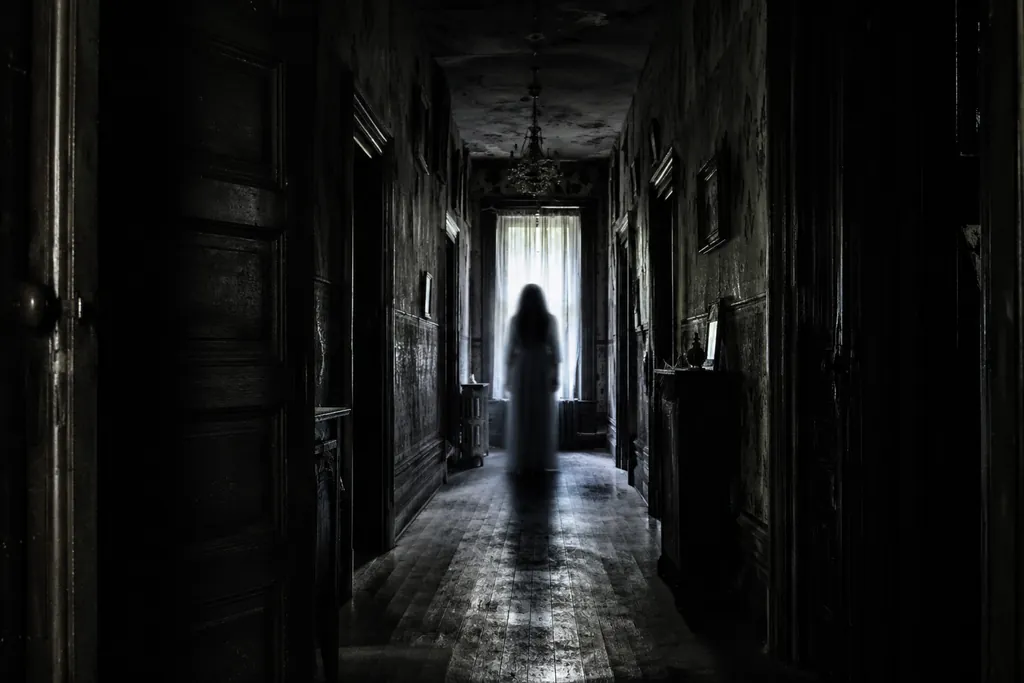
Hauntings have always occupied a strange and powerful place in human imagination. Across cultures, people have told stories of houses that whisper, footsteps heard in empty rooms, cold spots that appear without reason, objects that move, shadows at the edge of vision, and presences that seem to linger long after death.
But hauntings are more than frightening stories. They are part of humanity’s long relationship with the unseen.
A haunting suggests that a place, person, object, or memory has become charged with something unresolved. It may be grief. It may be trauma. It may be spiritual residue. It may be the presence of the dead, or something far older and less human. Whatever the explanation, hauntings challenge the ordinary boundaries between the living and the invisible world.
What Is a Haunting?
A haunting is usually described as repeated paranormal activity connected to a specific location, person, object, or event. This activity may be subtle or dramatic. Some hauntings are little more than a feeling: a sudden heaviness in a room, the sense of being watched, or a shift in atmosphere that cannot be easily explained.
Other hauntings are more active. People report hearing voices, knocks, footsteps, doors opening, lights flickering, objects being displaced, or apparitions appearing briefly before vanishing. In some cases, dreams, nightmares, emotional disturbances, and sudden changes in mood are also connected to haunted spaces.
Not every haunting is hostile. Some seem sorrowful. Some feel protective. Some appear to repeat the same pattern again and again, almost like an echo trapped in time.
Residual Hauntings: Echoes of the Past
One of the most common theories in paranormal study is the idea of a residual haunting. This type of haunting does not necessarily involve an intelligent spirit. Instead, it is believed to be an energetic imprint left behind by powerful emotions or repeated events.
A battlefield, an old hospital, a prison, a family home, or a place of intense grief may hold the emotional weight of what happened there. The haunting repeats like a recording: footsteps on the stairs, a figure crossing a hallway, crying in a room where tragedy occurred.
In this kind of haunting, the presence may not respond to the living. It simply repeats.
Intelligent Hauntings: When Something Responds
An intelligent haunting is different. In these cases, the presence seems aware. It may respond to questions, react to people, move objects intentionally, or appear at meaningful moments.
These hauntings are often associated with spirits of the dead, ancestors, restless souls, or entities attached to a place. Some traditions believe that spirits remain because of unfinished business, attachment, confusion, grief, or a refusal to move on.
This is where hauntings become spiritually complex. A presence may not always be evil simply because it is frightening. Fear often comes from uncertainty. But that does not mean every presence should be trusted, invited, or engaged with casually.
Discernment is essential.
Haunted Houses and Haunted Objects
Many hauntings are connected to houses, especially old homes with long histories. A house can become a container of memory. Every argument, death, birth, illness, ritual, secret, and sorrow leaves a mark. Sensitive people often feel this atmosphere immediately.
Objects can also become spiritually charged. Jewellery, mirrors, dolls, ritual tools, antiques, religious items, and inherited possessions are often said to carry energetic residue. Some objects feel comforting. Others feel heavy, strange, or intrusive.
This is why spiritual traditions across the world use cleansing rituals, blessings, incense, salt, prayer, sound, smoke, water, and protective symbols to clear spaces and objects.
Are Hauntings Dangerous?
Most hauntings are not physically dangerous, but they can be emotionally intense. Fear, sleeplessness, anxiety, obsession, and constant attention can make the experience feel stronger. Whether the cause is spiritual, psychological, environmental, or a mixture of all three, a haunting should be approached calmly and carefully.
The first rule is simple: do not panic.
The second rule is equally important: do not provoke.
Calling out aggressively, challenging a presence, mocking it, or demanding dramatic signs can escalate fear and activity. A serious occult approach is not about thrill-seeking. It is about respect, protection, observation, and boundaries.
If a spirit or presence is believed to be involved, it is usually wiser to set clear spiritual boundaries and encourage peace rather than feed the situation with fear.
Hauntings and the Occult World
In occult study, hauntings sit at the crossroads of spirit work, ancestor veneration, necromancy, psychic sensitivity, energy work, folklore, demonology, ritual protection, and the study of liminal places.
A haunting asks important questions:
What remains after death?
Can emotions imprint themselves on a place?
Can the dead communicate with the living?
How do we protect ourselves spiritually?
When should we engage, and when should we walk away?
These questions have no simple answers. That is why hauntings must be studied with seriousness, humility, and structure. They are not only ghost stories. They are gateways into deeper occult understanding.
How to Approach a Haunting
If you believe you are dealing with a haunting, begin with observation. Keep notes. Record dates, times, locations, emotions, dreams, sounds, and physical details. Look for patterns. Rule out ordinary causes where possible: pipes, wiring, neighbours, animals, drafts, sleep disturbances, stress, or environmental factors.
Then focus on grounding and protection. Clean the space physically. Bring in light and fresh air. Use prayer, smoke cleansing, sound, salt, protective symbols, or whatever practice belongs to your spiritual path. Most importantly, speak clearly and calmly. You do not need to be cruel or fearful. You can simply state that your home is your space, and only peaceful, respectful energy is welcome.
A haunting should never become entertainment at the expense of your peace.
Yes — add this section before the final CTA:
Explore Haunted Places in the Occult World Encyclopedia
If hauntings fascinate you, you can also explore the Occult World Encyclopedia on this website, where you will find haunted places, ghostly legends, mysterious locations, restless spirits, cursed sites, and paranormal stories from around the world.
From ancient castles and abandoned houses to sacred landscapes, battlefields, graveyards, haunted roads, and places marked by tragedy, the encyclopedia allows you to travel through the darker and more mysterious side of folklore and paranormal history.
Use it as a gateway into the haunted world: read the stories, follow the patterns, compare the legends, and discover how different cultures understand ghosts, spirits, curses, apparitions, and the lingering presence of the dead.
And when you are ready to go deeper than reading alone, the Occult World Mystery School is where the study continues. There, we explore hauntings not only as ghost stories, but as part of a larger occult landscape that includes spirit work, protection, necromancy, demonology, folklore, divination, ritual practice, and the mysteries of the unseen.
Enter the Haunted Side of Occult World
Hauntings remind us that the invisible world is never far away. Sometimes it whispers through old walls. Sometimes it speaks through dreams. Sometimes it lingers in objects, memories, places, and shadows.
Inside the Occult World Mystery School, we go deeper than surface-level ghost stories. We explore hauntings, spirits, protection, necromancy, demonology, ancient beliefs, divination, ritual practice, folklore, haunted places, and the mysteries of the unseen with depth, structure, and respect.
Join a community for serious seekers, witches, occult students, mystics, and paranormal explorers who want to understand what hides behind the veil.
Do not just read about the unseen.
Step into the Occult World.


Follow