
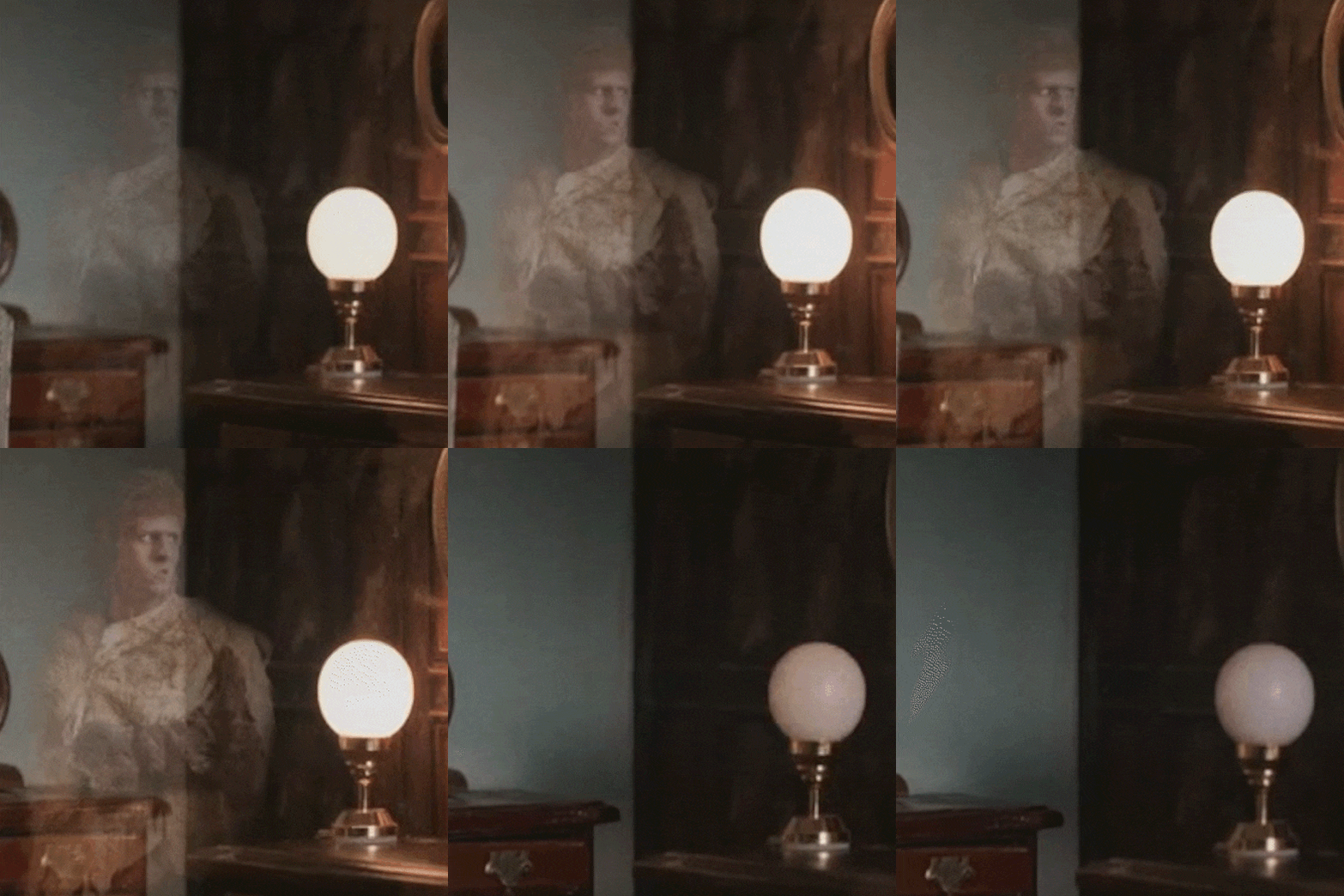
Apparitions: Ghostly Visions, Crisis Spirits, and the Mystery of the Seen Unseen
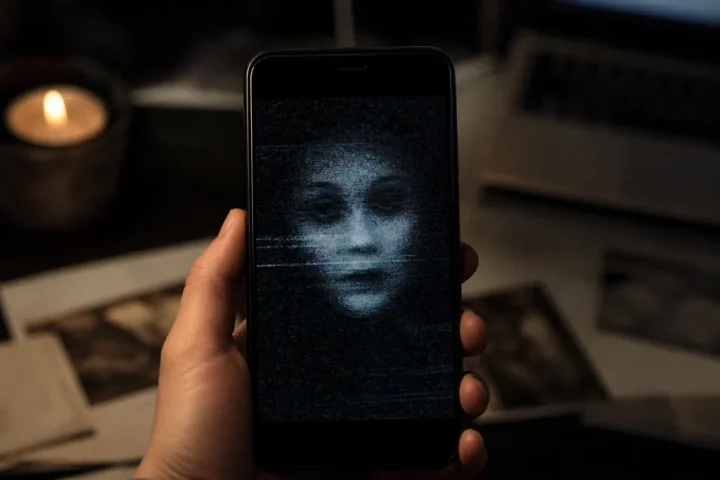
Apparitions are among the most mysterious and widely reported paranormal experiences in human history. They may appear as figures of the dead, images of the living, animals, religious beings, angels, shadowy forms, lights, doubles, or scenes from another time. Some look solid and real. Others are transparent, luminous, mist-like, or barely more than a blur of movement or light.
An apparition is generally understood as the supernormal appearance of a person, animal, place, object, or otherworldly being that is not physically present in the ordinary sense. When the apparition represents a deceased person and appears repeatedly in the same location, it is often described as a ghost. However, not all apparitions are ghosts, and not all ghostly experiences are visual.
Many apparition experiences involve more than sight. People may sense a presence, hear footsteps, chains, raps, knocks, moans, animal sounds, or voices. Others report unexplained smells, sudden coldness, pressure, touch, or the feeling of being watched. In some cases, the apparition is seen clearly. In others, it is felt more than seen.
This makes apparitions difficult to study and even harder to explain. Are they spirits of the dead? Psychic impressions? Telepathic projections? Hallucinations? Recordings in the atmosphere of a place? Glimpses through time? Or evidence that consciousness can exist beyond the physical body?
The mystery remains open.
Apparitions and Ghosts: What Is the Difference?
The words apparition and ghost are often used as if they mean the same thing, but some researchers make a distinction between them.
An apparition may appear only once. It may represent a living person, a dying person, a dead person, an animal, a religious being, or even an object or place. Apparitions often seem to have purpose. They may appear to communicate danger, offer comfort, deliver information, or announce a death.
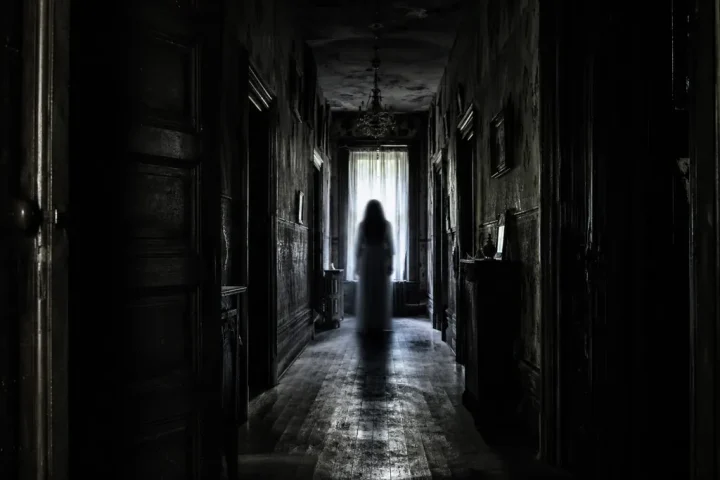
A ghost, in the stricter sense, is usually understood as the apparition of a dead person that returns repeatedly, often in connection with a specific place. Ghosts are frequently associated with hauntings. They may walk the same corridor, repeat the same gesture, appear in the same room, or follow the same route year after year.
Some ghosts seem unaware of the living. They repeat their actions like a recording. Others appear intelligent, reactive, and capable of communication.
This distinction is important because it suggests that “ghost” is only one category within the broader world of apparitions.
How Apparitions Appear
Apparitions vary greatly in form. Some seem completely solid, with recognisable faces, clothing, expressions, and gestures. Witnesses may mistake them for ordinary living people until they vanish, walk through a wall, or are later discovered to have been dead or far away at the time.
Other apparitions are less defined. They may appear as a glowing shape, a shadowy outline, a mist, a patch of light, or a transparent human figure. Some seem to fade away, while others vanish instantly.
In some cases, apparitions cast shadows or appear reflected in mirrors, making them seem unusually physical. Yet the same apparition may pass through doors, walls, furniture, or other solid objects.
Some move naturally. Others have a strange, limited, almost mechanical quality. They may gesture toward a wound, point to an object, or follow a fixed path. A few are reported to speak. Others remain completely silent.
Witnesses who attempt to touch apparitions usually report that their hands pass through empty air. In rare cases, however, people have claimed to feel something light, thin, or fabric-like, almost as if touching a flimsy garment.
Why Apparitions Appear
Many apparition experiences seem to have a purpose. They may appear to warn, comfort, announce a death, communicate unfinished business, or draw attention to a hidden truth.
Crisis apparitions are among the best-known examples. These are appearances of people who are in danger, dying, or have just died, often appearing to loved ones at a distance. The witness may not know at the time that anything has happened. Only later do they learn that the person they saw was dying or already dead.
Other apparitions seem to comfort the bereaved. A grieving person may see, hear, or sense a dead loved one shortly after death. These experiences are often emotionally powerful and may bring peace rather than fear.
Some apparitions appear to provide information. Stories exist of the dead revealing the location of missing documents, hidden objects, wills, or even bodies. In folklore and psychical research, these cases are often considered important because they suggest that the apparition may possess knowledge unknown to the witness.
Haunting apparitions may be tied to emotional intensity, trauma, violent death, sudden death, or unresolved business. Some are believed to be earthbound spirits unable or unwilling to move on. Others may be nothing more than repeated psychic impressions attached to a place.
Apparitions in History and Folklore
Belief in apparitions is found throughout the world. Every civilisation has told stories of spirits, ancestors, ghosts, doubles, messengers from the dead, and supernatural visitors.
In many Asian traditions, ancestral ghosts play an important role in family and religious life. The dead are honoured, fed, remembered, and ritually acknowledged. They may bless the living with prosperity or trouble them when neglected.
In many tribal cultures, spirits of the dead may return as guardians, guides, or warnings. Among some Indigenous traditions, dead relatives or ancestral beings can appear to shamans, medicine people, or family members.
The ancient Egyptians, Greeks, Romans, and Hebrews all had traditions involving the return of the dead. The Roman writer Pliny the Younger recorded one of the most famous early haunting accounts: the apparition of a chained old man in a house in Athens. The figure led a philosopher to a spot where human remains were later discovered. After the bones were properly buried, the haunting ceased.
This story contains several classic motifs: the restless dead, the haunted house, the apparition with chains, the hidden body, and the need for proper burial before peace can be restored.
Apparitions in Christianity and the Middle Ages
During the medieval period, apparitions were often interpreted through Christian theology. Ghosts were frequently understood as souls in purgatory seeking prayers, masses, or spiritual assistance. A haunting might be seen as a sign that the dead required help before they could move on.
After the Reformation, Protestant and Catholic interpretations often differed. Catholic belief allowed for the possibility that souls in purgatory might appear to the living. Protestant views were often more suspicious, sometimes interpreting apparitions as demonic deceptions rather than genuine visits from the dead.
Apparitions of saints, angels, the Virgin Mary, and Christ were treated differently in Catholic tradition, where such visions could be considered holy manifestations permitted by God. Marian apparitions, in particular, became an important category of religious experience.
In popular folklore, however, apparitions were not always comforting or holy. People feared demons, vampires, black dogs, phantom riders, spectral huntsmen, ghostly ships, and wandering dead condemned by sin, violence, or tragedy.
Famous Types of Apparitions
Apparitions can be grouped into several important categories. These categories are not perfect, and many cases overlap, but they help us understand the wide variety of reported experiences.
Crisis Apparitions
Crisis apparitions appear at a moment of danger, severe illness, accident, or death. The apparition usually appears to someone emotionally close to the person in crisis.
The figure may appear silently, gesture, speak briefly, or simply stand in the room before vanishing. Later, the witness learns that the person died or was in danger at the time of the appearance.
These cases have fascinated psychical researchers because they suggest some form of communication across distance at moments of emotional intensity.
Apparitions of the Dead
Apparitions of the dead may appear soon after death or years later. They may comfort the grieving, communicate unresolved matters, or appear during family crises.
Some after-death appearances are peaceful and loving. Others are disturbing, especially when the dead seem restless, angry, or trapped.
In many traditions, the dead return when something has been left undone: a promise broken, a burial neglected, a murder concealed, an inheritance disputed, or a loved one in need of comfort.
Collective Apparitions
A collective apparition is seen by more than one person at the same time. These cases are especially interesting because they challenge the idea that all apparitions are purely private hallucinations.
Different witnesses may see the apparition from different angles or notice different details. Animals are sometimes reported to react as well, barking, hiding, arching their backs, or refusing to enter a room.
Collective apparitions are often reported in hauntings, crisis cases, and religious visions.
Reciprocal Apparitions
A reciprocal apparition involves both the person appearing and the witness having some form of awareness of one another. These cases are usually connected to intense longing, love, worry, or emotional need.
The person whose apparition appears may feel as though they have travelled to the witness, sometimes in a dreamlike or out-of-body state. The witness, meanwhile, sees or senses the person.
These cases blur the boundaries between apparition, telepathy, bilocation, and out-of-body experience.
Deathbed Apparitions
Deathbed apparitions are seen by people close to death. They often involve deceased relatives, angelic beings, religious figures, radiant lights, or presences that seem to come to guide the dying.
Sometimes those attending the dying person also report seeing or sensing something unusual in the room. These experiences are often deeply comforting and are frequently interpreted as evidence that death is a transition rather than an ending.
Doppelgängers
A doppelgänger is the double of a living person. Unlike many apparitions, it usually does not communicate. It may appear beside, near, or ahead of the person it resembles.
The famous case of Emelie Sagee, a 19th-century teacher, describes a double that appeared near her and seemed to mirror her movements. Reports of doppelgängers are often unsettling because the double appears to be a living person’s exact duplicate.
In some cultures, seeing one’s double is considered an omen of death. In other interpretations, doppelgängers may be linked to telepathy, hallucination, bilocation, or psychic projection.
Apparitions and Psychical Research
Serious research into apparitions began in the late 19th century with the Society for Psychical Research in London. Early researchers such as Edmund Gurney, Frederic W. H. Myers, Frank Podmore, and Henry Sidgwick collected thousands of reports and attempted to analyse them systematically.
One major study, published in 1886 as Phantasms of the Living, examined reports of apparitions of living persons, especially crisis apparitions. The later Census of Hallucinations gathered thousands of responses and suggested that a significant minority of people had experienced some kind of apparition-like event while awake.
Later surveys produced similar or sometimes higher numbers, depending on how the questions were asked. Some studies included not only visual apparitions but also auditory, tactile, olfactory, and sensed-presence experiences.
These studies showed that apparition experiences are not rare. They occur across cultures, religions, social classes, and historical periods.
Theories About Apparitions
No single theory explains all apparitions. Different cases may have different causes.
Some researchers have argued that apparitions are hallucinations produced by the mind of the witness. This does not necessarily mean they are meaningless. A hallucination may still be triggered by telepathy, emotional crisis, grief, or unconscious perception.
Others have suggested that apparitions are telepathic impressions sent from one mind to another, especially at moments of danger or death.
Frederic W. H. Myers believed that some apparitions might involve a centre of psychic energy strong enough to affect the consciousness of the witness. This idea helped move apparition research beyond simple hallucination theories.
Another theory suggests that hauntings are psychic recordings or imprints. In this view, intense events leave traces in the atmosphere of a place, and sensitive people occasionally perceive them. Such apparitions do not communicate because they are not conscious. They are replays.
Other theories propose that apparitions are astral bodies, thoughtforms, unconscious projections, personas, fragments of personality, evidence of survival after death, or signs of the nonlocal nature of consciousness.
Some paranormal investigators believe that certain apparitions are genuinely intelligent spirits of the dead who can communicate, respond, and reveal information unknown to the living.
The most reasonable position may be that apparitions are not all one thing. Some may be mental images. Some may be psychic impressions. Some may be spirit communications. Some may be errors of perception. Some may be environmental recordings. Some may be manifestations of the living mind. And some may remain entirely unexplained.
Apparitions as Psychic Recordings
The idea of a psychic recording is one of the most popular explanations for hauntings. According to this theory, powerful emotions or repeated events imprint themselves onto a place. Under certain conditions, these impressions replay like a film.
This may explain ghosts that repeat the same action again and again, seem unaware of the living, and never respond to attempts at communication.
A figure walking down a corridor, a woman descending a staircase, a phantom horse and carriage, footsteps heard at the same hour, or a soldier seen repeatedly on a battlefield may all be interpreted as residual apparitions.
This theory is sometimes connected to the idea of the Akashic records or a psychic ether: an invisible field that records events, thoughts, emotions, and actions. Sensitive individuals may occasionally tune into these records and perceive past scenes.
Apparitions as Spirits of the Dead
The survival theory argues that some apparitions are truly the spirits of the dead. This theory is supported by cases in which apparitions seem to communicate intelligently, reveal unknown information, respond to witnesses, or appear with clear purpose.
Apparitions that comfort grieving family members, announce death, expose hidden facts, or seek proper burial are often viewed as evidence that consciousness may continue after physical death.
This interpretation is central to Spiritualism, mediumship, ancestral traditions, and many occult approaches to spirit communication.
Apparitions and the Mind of the Living
Another major line of thought sees apparitions as connected to the mind of the living. Grief, fear, longing, guilt, trauma, or unconscious desire may produce visionary experiences. A bereaved person may see a dead loved one because the mind seeks comfort. A frightened person may interpret shadows as forms. A guilty person may experience a haunting as the return of the unresolved past.
This does not make the experience unimportant. Apparitions, even when psychological, can reveal deep truths about the human psyche. They may embody memory, grief, desire, fear, conscience, or the need for closure.
Some researchers have observed that apparition experiences often occur when people are relaxed, half-awake, absorbed in routine activity, reading, resting, or waking from sleep. These conditions may allow unconscious material to rise into awareness in visual, auditory, or sensory form.
Apparitions in Modern Paranormal Investigation
Since the late 20th century, much apparition research has moved outside academic institutions and into the work of paranormal investigators, ghost hunters, and independent researchers.
Modern investigators often use cameras, audio recorders, electromagnetic meters, night-vision equipment, motion sensors, temperature devices, and experimental communication tools. They attempt to capture apparitions visually, record voices, or document environmental changes associated with hauntings.
This approach has made ghost research more accessible to the public, but it also raises questions. Equipment can produce false positives. Audio can be misheard. Photographs can be misinterpreted. Dust, insects, light reflections, and camera errors may be mistaken for paranormal phenomena.
Serious investigation still requires patience, historical research, witness interviews, environmental awareness, and sceptical discipline.
Study Apparitions, Ghosts, and Spirit Phenomena Inside Occult World Academy
Apparitions are one of the most important subjects in paranormal and occult study. They stand at the crossroads of ghost lore, psychical research, mediumship, necromancy, spirit communication, folklore, religion, and the mystery of survival after death.
Inside the Occult World Academy on Skool, you can go much deeper into these subjects. We explore ghosts, hauntings, apparitions, spirit communication, mediumship, necromancy, demonology, witchcraft, divination, ancient grimoires, psychic phenomena, and the hidden forces that shape the unseen world.
The Occult World Mystery School is not just a place to read articles. It is a living academy and community for serious occultists, witches, paranormal enthusiasts, seekers, and practitioners who want to study the mysteries with depth and connect with others who share the same fascination.
If you are drawn to apparitions, haunted places, ghostly encounters, crisis visions, doppelgängers, and the possibility that consciousness survives death, join the Occult World Academy on Skool. Step beyond curiosity and enter a community where the unseen world is studied, discussed, and explored with passion, seriousness, and respect.
The Enduring Mystery of Apparitions
Apparitions have never belonged only to superstition. They appear in ancient texts, religious traditions, family stories, psychical research files, haunted houses, deathbed accounts, and modern paranormal investigations.
They comfort, terrify, warn, repeat, vanish, speak, remain silent, and challenge our assumptions about reality.
Some may be spirits. Some may be impressions. Some may be projections of the living mind. Some may be glimpses across time. Some may be mistakes, dreams, or hallucinations. Yet the persistence of apparition reports across cultures and centuries suggests that they answer something deep in human experience.
We long to know whether the dead are truly gone.
We wonder whether consciousness can travel beyond the body.
We sense that places remember.
We fear that the past may return.
An apparition is a figure at the threshold: between life and death, memory and reality, psychology and spirit, time and eternity.
It is the seen form of the unseen question.
SEE ALSO:
FURTHER READING:
- Auerbach, Loyd. ESP, Hauntings and Poltergeists: A Parapsychologist’s Handbook. New York: Warner Books, 1986.
- Cornell, Tony. Investigating the Paranormal. New York: Helix Press, 2002.
- Emmons, Charles. Chinese Ghosts and ESP. Metuchen, N.J.: Scarecrow Press, 1982.
- Green, Celia, and Charles McCreery. Apparitions. London: Hamish Hamilton, 1975.
- Gurney, Edmund, F. W. H. Myers, and Frank Podmore. Phantasms of the Living. London: Society for Psychical Research (SPR)and Trubner & Co., 1886.
- Haraldsson, Erlendur. “Survey of Claimed Encounters with the Dead.” Omega 19 (1988–89): 103–113.
- Finucane, R. C. Appearances of the Dead: A Cultural History of Ghosts. Buffalo, N.Y.: Prometheus Books, 1984.
- Hart, Hornell. “Six Theories About Apparitions.” Proceedings of the Society for Psychical Research (SPR)50 (1956):153–236.
- ———. The Enigma of Survival. Springfield, Ill.: Charles C. Thomas, 1959.
- Hart, Hornell, and Ella B. Hart. “Visions and Apparitions Collectively and Reciprocally Perceived.” Proceedings of the Society for Psychical Research (SPR)16 (1932–33):205–249.
- Haynes, Renée. “What Do You Mean by a Ghost?” Parapsychology Review 17 (1986):9–12.
- Jaffé, Aniela. Apparitions: An Archetypal Approach to Death, Dreams and Ghosts. Irving, Texas: Spring Publications, 1979.
- Lang, Andrew. The Book of Dreams and Ghosts. New York: Causeway Books, 1974. First published 1897.
- MacKenzie, Andrew. Hauntings and Apparitions. London: Heinemann Ltd., 1982.
- Myers, Frederic W. H. Human Personality and Its Survival of Bodily Death. New York: Longmans, Green & Co., 1954. First published 1903.
- Newton, John (ed.) Early Modern Ghosts. Durham, England: Center for Seventeenth-Century Studies, University of Durham, 2002.
- Osis, Karlis. “Apparitions Old and New,” in K. Ramakrishna Rao, Case Studies in Parapsychology. Jefferson, N.C.: McFarland, 1986.
- Sidgwick, Henry. “Report on the Census of Hallucinations.” Proceedings of the Society for Psychical Research (SPR)10 (1894): 25–422.
- Stevenson, Ian. “The Contribution of Apparitions to the Evidence for Survival.” Journal of the American Society for Psychical Research (SPR)76 (1982): 341–356.
- Tyrrell, G. N. M. Apparitions. London: Society for Psychical Research, 1973. First published 1943; revised 1953.
- West, D. J. “A Pilot Census of Hallucinations.” Proceedings of the Society for Psychical Research (SPR)57 (1990):163–207.
SOURCE:
- The Encyclopedia of Ghosts and Spirits– Written by Rosemary Ellen Guiley – September 1, 2007
- The Greenhaven Encyclopedia of Paranormal Phenomena – written by Patricia D. Netzley © 2006 Gale, a part of Cengage Learning




Follow