
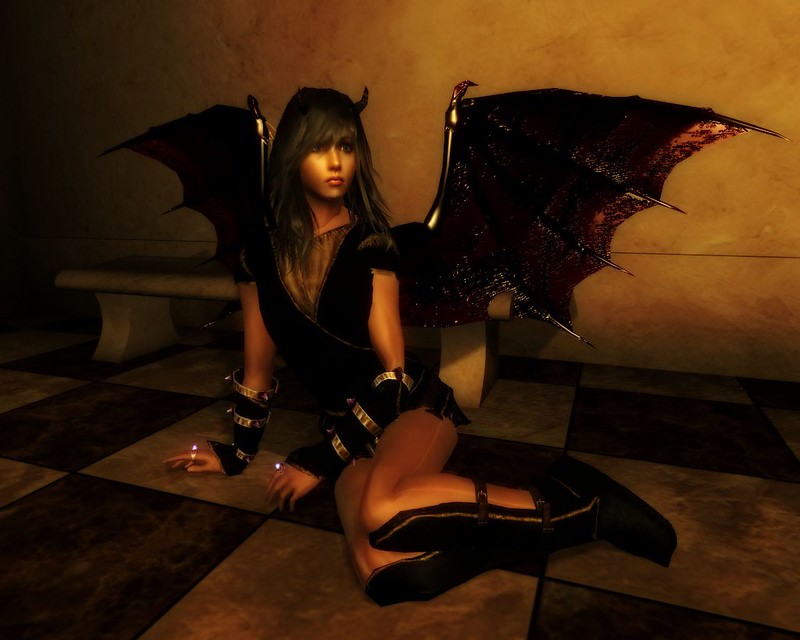
Succubus: The Night Demon of Seduction, Dreams and Forbidden Desire
A Succubus is a female demon who takes the form of a beautiful woman in order to seduce men, usually through dreams, night visitations and erotic temptation. Her male counterpart is the Incubus, and together they appear throughout folklore, demonology, medieval theology and witch-hunt literature as spirits of forbidden sexuality, spiritual danger and nocturnal oppression.
In traditional accounts, the succubus appears as an alluring, voluptuous woman who visits men while they sleep, especially those who sleep alone. Her presence is said to bring erotic dreams, nightmares, exhaustion and nocturnal emissions. During the European witch hunts, succubi were often described as agents of the Devil, sent to tempt men into sexual sin and spiritual corruption. In some stories, they even promised immortality or supernatural favour in exchange for devotion.
Yet in witch-hunt records, succubi appear less often than incubi. Demonologists of the time believed that women were naturally more vulnerable to lust than men, and therefore more likely to be attacked by incubi. If a man claimed to have been assaulted by a succubus, the blame was often shifted away from him and placed upon the demon itself.
Abrahel: The Succubus Who Restored a Dead Child
One of the most disturbing succubus stories was recorded by Nicholas Remy in Demonolatry. The case allegedly took place in 1581 and involved a man named Petrone Armenterious of Dalheim.
According to Remy, Petrone was persuaded by a succubus named Abrahel to murder his own son. Overcome with grief and guilt, he considered suicide. Abrahel then promised that she could restore the boy to life if Petrone worshipped her. He agreed, and the child seemed to return from the dead.
But the miracle was an illusion. The boy soon died again, and his body immediately began to stink horribly. The story reflects one of the central warnings in traditional demonology: demonic promises may appear miraculous, but they are deceptive, corrupting and destructive.
The Ice-Cold Embrace of the Succubus
Medieval demonologists often described intercourse with a succubus as horrifying rather than pleasurable. The experience was said to feel like entering a cavern of ice, suggesting not warmth and passion, but spiritual coldness, death and corruption.
Some writers claimed that a succubus might actually be an incubus in disguise. According to this belief, the demon would collect semen from a man in female form, then use it in male form to impregnate a woman. This idea contributed to the belief that demons could produce hybrid offspring or “demon children.”
In Hebrew demonological tradition, Lilith is often associated with this theme. As a night demon, she was believed to seduce men and bear countless demonic children.
Succubi and the Witch Hunts
During the witch hunts, accusations of sexual relations with demons became part of the broader machinery of persecution. Men accused of witchcraft could be tortured until they confessed to intercourse with demons, along with other supposed demonic crimes.
One striking case occurred in Bologna, Italy, in 1468, where a man was executed for allegedly running a brothel of succubi. Such accusations reveal how deeply fears around sexuality, sin and demonic influence were woven into witch-hunt mentality.
The Malleus Maleficarum of 1487, one of the most infamous inquisitorial handbooks, gave several methods for getting rid of a succubus. These included reciting the Ave Maria, making a sacramental confession, making the sign of the cross, moving to a new home, or having a priest or holy man excommunicate the demon. The Lord’s Prayer and holy water were also believed to help drive the spirit away.
The Aberdeen Succubus
Another alleged succubus case was recorded by Francesco-Maria Guazzo in Compendium Maleficarum in 1608. In this account, a young man near Aberdeen, Scotland, claimed that a succubus visited him in bed every night and remained with him until dawn.
The young man said he tried to free himself from the spirit, but nothing worked. Eventually, the local bishop instructed him to leave the area and devote himself to prayer and fasting. After several days, the young man claimed the succubus no longer visited him.
This story reflects a common pattern in demonological folklore: the demon attaches itself to a place, a person or a repeated habit, and deliverance requires spiritual discipline, removal from the environment and religious intervention.
The Demon Lawsuit of Posen
At the end of the 17th century, an unusual lawsuit was said to have taken place in Posen, Germany. A young man forced his way into the cellar of a locked house and was later found dead on the threshold. Afterwards, demons allegedly began causing disturbances inside the home, terrifying the owners until they fled.
When local exorcists failed, Rabbi Joel Baal Shem of Zamosz was summoned. He managed to communicate with the demons, who claimed the house belonged to them. They demanded the right to prove their claim in court.
According to the demons, a former owner of the house had engaged in intercourse with a succubus, who bore him hybrid children. When a rabbi persuaded the man to end the relationship, the demon demanded that the cellar be given to her and her offspring as an inheritance. Since the man and his heirs were now dead, the demon children claimed ownership of the house.
The new owners argued that they had lawfully purchased the property. The court ruled against the demons, stating that the demon children were not legitimate “seed of men” and therefore had no legal right to the house. It was also argued that demons belonged in deserts and wastelands, not in the homes of human beings. Rabbi Joel then performed exorcisms that drove the spirits away.
The Meaning of the Succubus
The succubus is more than a demon of sexual temptation. She represents the fear of desire, the danger of illusion, the vulnerability of sleep and the belief that spiritual forces could enter through dreams, loneliness and forbidden longing.
In demonology, she stands at the crossroads of sexuality, nightmare, witchcraft, possession and spiritual deception. Whether viewed as a literal demon, a medieval explanation for sleep paralysis, or a symbolic figure of forbidden desire, the succubus remains one of the most enduring and unsettling beings in occult lore.
Enter the World of Demonology
The succubus is only one shadow in a much larger demonic landscape.
Inside the Occult World Mystery School, we go deeper into demonology, grimoires, black magick, spirits, fallen angels, night demons, possession lore, ritual history and the hidden traditions that shaped the Western occult imagination.
This is not just a course. It is a living community where you can meet fellow occultists, ask questions, share insights, study forbidden traditions and walk the darker paths of occult knowledge with others who understand the call of the hidden world.
Join the Demonology Course in the Occult World Mystery School and step beyond the surface of folklore into the deeper mysteries of demons, spirits and ceremonial magic.
FURTHER READING:
- Guazzo, Francesco-Maria. Compendium Maleficarum. Secaucus, N.J.: University Books, 1974.
- The Malleus Maleficarum of Heinrich Kramer and James Sprenger. New York: Dover, 1971.
- Remy, Nicholas. Demonolatry. Secaucus, N.J.: University Books, 1974.
SOURCE:
The Encyclopedia of Demons and Demonology – Written by Rosemary Ellen Guiley – Copyright © 2009 by Visionary Living, Inc.



Follow