

Glasya-Labolas
Glasya-Labolas, also known as Caacrinolaas, Caassimola, and Glasyalabolas, is a Fallen Angel and the twenty-fifth of the 72 Spirits of Solomon. He is usually described as a great president of Hell who commands 36 legions of demons.
Among the spirits of the Goetia, Glasya-Labolas is one of the most dangerous and unsettling figures. His powers are not merely concerned with knowledge, invisibility or prophecy, but with bloodshed, violence and death. He is traditionally called the leader of all homicides and is said to incite people to murder and cruelty.
Appearance
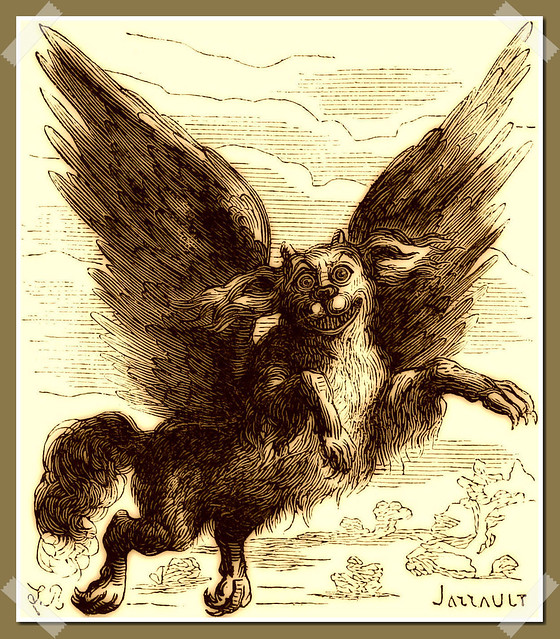
Glasya-Labolas appears in the form of a winged dog.
This image is deeply symbolic. The dog is often connected with guardianship, instinct, death, the underworld and the boundary between the living and the dead. In the case of Glasya-Labolas, however, the dog is not a comforting companion or protector. He is a predatory, infernal creature, winged and unnatural, suggesting speed, violence, supernatural movement and the ability to cross boundaries that ordinary beings cannot cross.
His winged form also reflects his nature as a Fallen Angel. Like many spirits in Solomonic demonology, he is not simply an animalistic demon, but a corrupted intelligence with immense knowledge and dangerous power.
Powers and Abilities
Glasya-Labolas is said to teach all arts and sciences instantly. This makes him a spirit of sudden knowledge, intellectual force and hidden instruction. Unlike demons who teach slowly or through symbolic visions, Glasya-Labolas is traditionally believed to grant knowledge rapidly and intensely.
He can also reveal the past and the future. This gives him prophetic and divinatory power, allowing him to uncover what has already happened and foresee what may come. In this role, he belongs to the class of spirits who can expose hidden histories, secret motives and future dangers.
Glasya-Labolas can make people invisible. In magical symbolism, invisibility is not only the ability to disappear physically, but also the power to move unseen, avoid detection, hide intentions, escape enemies or pass through dangerous situations unnoticed.
But his darker powers dominate his reputation. He is said to cause bloodshed, inspire homicide and stir people toward violence. This makes him one of the more morally dangerous demons in the Goetic hierarchy.
Leader of Homicides
One of the most disturbing titles associated with Glasya-Labolas is “leader of all homicides.”
This does not simply mean that he rules over murderers in a dramatic or mythological sense. It suggests that he governs the spiritual current of violent death, bloodlust, calculated cruelty and destructive impulse. He is connected with the moment when thought becomes violence, when resentment becomes action, and when human anger crosses into irreversible harm.
For this reason, Glasya-Labolas should not be treated as a light or decorative occult figure. In demonological symbolism, he represents the terrible intelligence behind violence: the cold calculation of murder, the intoxication of bloodshed and the unseen forces that push human beings toward brutality.
A Spirit of Dangerous Knowledge
Glasya-Labolas is not only a demon of violence. He is also a demon of knowledge.
This combination makes him especially dangerous. Knowledge without wisdom can become manipulation. Intelligence without morality can become strategy for destruction. Prophecy without restraint can become obsession. Invisibility without ethics can become concealment, deception and predation.
His ability to teach arts and sciences instantly may sound attractive, but in the context of demonology, gifts from such spirits often come with spiritual danger. Glasya-Labolas represents knowledge that arrives too quickly, power that bypasses maturity and information that may be used for harmful ends.
He is the shadow of intellectual brilliance when separated from conscience.
Invisibility and Hidden Action
The power to make men invisible is one of Glasya-Labolas’s most famous abilities.
In old magical traditions, invisibility was a highly desired power. It promised escape, secrecy and the ability to move beyond the eyes of enemies. But in relation to Glasya-Labolas, invisibility takes on a darker meaning. It may symbolise hidden crimes, unseen violence, concealed motives and the ability to act without accountability.
Spiritually, this power can also be read as a warning. Not all hidden things are sacred. Some hidden things are dangerous because they avoid judgement, responsibility and consequence.
Glasya-Labolas therefore stands at the border between occult secrecy and moral corruption.
Prophecy and the Past
Glasya-Labolas can discern both the past and the future.
His knowledge of the past may include hidden crimes, buried histories, forgotten betrayals and events concealed from ordinary awareness. His knowledge of the future may reveal conflict, danger, violence or the likely consequences of present actions.
This makes him a spirit associated with harsh revelation. He does not represent gentle intuition or comforting guidance. His knowledge is sharp, forensic and often terrifying. He sees what has been done and what may yet unfold.
Position in the Goetia
As the twenty-fifth spirit of Solomon, Glasya-Labolas belongs to the famous group of 72 spirits described in Solomonic magical tradition. These spirits are often ranked according to titles such as king, duke, prince, marquis, president, earl or knight.
Glasya-Labolas holds the rank of president. In the infernal hierarchy, a president is a spirit of authority, command and specialised knowledge. His command over 36 legions indicates significant power and influence.
His placement among the 72 Spirits of Solomon reflects the Solomonic idea that even dangerous spiritual forces could be named, classified and constrained through ritual authority. Yet his nature remains volatile and violent.
Symbolic Meaning
Glasya-Labolas symbolises the dangerous union of intelligence, violence and concealment.
He is the winged dog of bloodshed, the teacher of sudden knowledge, the revealer of past and future, and the spirit who can make people invisible. His mythology warns that power without ethics becomes monstrous.
He may represent:
The violent impulse hidden beneath civilisation
Knowledge used without conscience
The attraction of forbidden power
The danger of acting unseen
The shadow side of prophecy and strategy
The transformation of anger into bloodshed
The moral danger of invisibility and secrecy
In a psychological reading, Glasya-Labolas can be understood as the force that appears when rage becomes intelligent. He is not blind fury. He is calculated destruction.
Working with the Image of Glasya-Labolas
For students of demonology, Glasya-Labolas is best approached as a figure of study rather than fascination. His lore belongs to the darker side of Solomonic demonology and should be treated with seriousness.
He is not a spirit of simple empowerment. He represents powers that can easily turn destructive: invisibility, prophecy, rapid knowledge, command, violence and bloodshed. His presence in demonological texts reminds the reader that the occult is not only about wisdom and illumination. It also contains warnings about corruption, obsession and the misuse of power.
To study Glasya-Labolas is to study the question of what happens when hidden knowledge is joined to violent intent.
Glasya-Labolas is one of the more fearsome spirits of the Goetia. As a Fallen Angel, president of Hell and commander of 36 legions, he embodies dangerous intelligence, infernal authority and violent power.
He appears as a winged dog, teaches all arts and sciences instantly, reveals the past and future, grants invisibility and incites bloodshed. His title as leader of all homicides places him among the most ominous figures in Solomonic demonology.
He is not merely a demon of murder. He is the spirit of violence sharpened by knowledge, secrecy empowered by invisibility, and prophecy stripped of mercy.
Glasya-Labolas stands as a warning: not every form of knowledge liberates. Some knowledge, when joined to cruelty, becomes a weapon.
From “The Goetia: The Lesser Key of Solomon the King” (1904) Written by S.L. MacGregor Mathers
GLASYA-LABOLAS. – The Twenty-fifth Spirit is Glasya-Labolas. He is a Mighty President and Earl, and showeth himself in the form of a Dog with Wings like a Gryphon. He teacheth all Arts and Sciences in an instant, and is an Author of Bloodshed and Manslaughter. He teacheth all things Past, and to Come. If desired he causeth the love both of Friends and of Foes. He can make a Man to go Invisible. And he hath under his command 36 Legions of Spirits. His Seal is this, to be, etc.

From the “Pseudomonarchia Daemonum” ( 1583 ) Written by Johann Weyer (Johann Wier)
Glasya Labolas, alias Caacrinolaas, or Caassimolar, is a great president, who commeth foorth like a dog, and hath wings like a griffen, he giveth the knowledge of arts, and is the captaine of all mansleiers: he understandeth things present and to come, he gaineth the minds and love of freends and foes, he maketh a man go invisible, and hath the rule of six and thirtie legions.
Original Text :
Glasya labolas, alias Caacrinolaas vel Caassimolar magnus Præses: Qui progreditur ut canis habens alas gryphi. Artium cognitionem dat, interim dux omnium homicidarum. Præsentia and futura intelligit. Tam amicorum quam inimicorum animos demeretur: Et hominem reddit invisibilem. Imperium habet triginta sex legionum.
From the “Dictionnaire Infernal” (edition of 1863 ) Written by Jacques Auguste Simon Collin de Plancy
Caacrinolaas (aka Caassimolar, Glassia-labolas) is a high president of hell who commands 36 legions. He appears as a dog with griffin wings. He teaches liberal arts, inspires murder, makes men invisible, and predicts the future. In the Great Grimoire, he is called Classyalabolas, a sergeant sometimes mounted to Nebiros or Naberus.
Original Text :
Caacrinolaas, nommé aussi Caassimolar’ ou Glassialabolas, grand président aux enfers. Il se présente sous la forme d’un chien, et il en a la démarche, avec des ailes de griffon. Il donne la connaissance des arts libéraux, et, par unmbizarre contraste, il inspire les homicides. On dit qu’il prédit bien l’avenir. Ce démon rend l’homme invisible et commande trente-six légions Le Grand Grimoire le nomme Classyalabolus, et n’en fait qu’une espèce de sergent qui sert quelquefois de monture à Nébiros ou Naberus.
Continue Your Path in the Occult World Mystery School
If the 72 Spirits of Solomon fascinate you, do not remain at the surface.
Inside the Occult World Mystery School, you can go deeper into demonology, Solomonic spirits, black magick, ancient grimoires, spirit hierarchies, ritual symbolism and the hidden architecture of occult power.
This is where you can study demons such as Glasya-Labolas in context: not as internet horror, not as superstition, but as part of a long magical tradition filled with symbolism, danger, discipline and forbidden knowledge.
Meet fellow occultists. Ask questions. Explore demonology, grimoires, witchcraft, spirit work and ritual practice with people who take the occult seriously.
The gate is open.
Join the Occult World Mystery School and continue your study of demonology, black magick and the deeper mysteries of the 72 Spirits of Solomon.





Follow