
Arafos: The Reluctant Night Demon of Symiel
Arafos is a nocturnal demon named in the Ars Theurgia, the second book of the Lesser Key of Solomon. Within the hierarchy described in this seventeenth-century grimoire, he serves Symiel, an infernal king associated with the northern quarter. His place within that court gives him a defined rank and allegiance, while his temperament distinguishes him from many of the other spirits described in the text.
Arafos is said to be attended by fifty ministering spirits, placing him within the structured supernatural order that characterises the Ars Theurgia. These lesser spirits function beneath him in the same way that servants, officers or retainers might serve a noble within an earthly court. The grimoire repeatedly presents the invisible world in this hierarchical manner, with rulers exercising authority over subordinate beings and those subordinates, in turn, commanding spirits of their own.
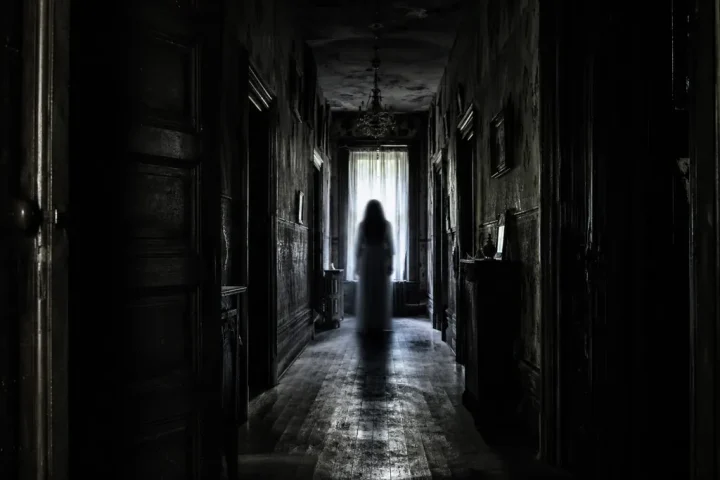
What makes Arafos particularly interesting is his connection with the night. His activity belongs to the hours of darkness, which already gives him a more elusive and secretive character than spirits whose manifestations are connected with daylight. In traditional ceremonial magic, such temporal associations were treated seriously, because the hour in which a spirit was approached was considered part of the conditions governing whether contact could be established.
The Ars Theurgia also preserves the seal of Arafos, giving the magician a symbolic means of identifying and addressing him within the ritual system. In grimoire magic, a seal is far more than decoration. It functions as a magical signature through which the identity of a spirit is represented and distinguished from the many other beings occupying the same hierarchy.
Arafos is described as stubborn and wilful, and the text warns that he is reluctant to manifest before mortals. This reluctance is important because it suggests that spirit evocation was not imagined as an automatic process in which every summoned being simply appeared on command. Some spirits were believed to resist, delay or refuse manifestation, forcing the magician to rely upon ritual authority, persistence and knowledge of the grimoire’s procedures.
The character of Arafos therefore reflects one of the recurring themes of ceremonial demonology: the magician is not merely attempting to contact an unknown presence, but to impose order upon a being that possesses its own will. The tension between command and resistance lies at the heart of many magical texts, and spirits such as Arafos illustrate why the grimoires devote so much attention to seals, names, timing and hierarchical authority.
His position beneath Symiel also reinforces the importance of understanding demons within the larger systems to which they belong. Arafos cannot be properly understood as an isolated name, because his identity is connected with the northern hierarchy, with the nocturnal current of the spirits under Symiel, and with the network of lesser beings said to serve beneath him.
For anyone seriously interested in demonology, this is where the study becomes far more compelling than simply memorising names. A spirit such as Arafos leads directly into questions about magical seals, infernal courts, nocturnal evocation, ritual authority and the way early modern occultists imagined the invisible world as a structured realm populated by beings with rank, personality and intention.
If you want to understand demonology at that level, then stop treating grimoires as catalogues of strange names and start studying the systems that give those names meaning. The Occult World Mystery School takes you into the deeper structure of demonology, spirit hierarchies, ceremonial magic and the texts that preserved these traditions.
If Arafos, Symiel and the spirits of the Ars Theurgia fascinate you, then curiosity alone is not enough.
Join the Occult World Mystery School and enter the Demonology teachings, where you can move beyond superficial descriptions and begin studying the hidden structure behind the infernal names, seals and hierarchies. Stop merely reading about the spirits. Start understanding the world they belong to.
SOURCE:
The Dictionary of Demons written by Michelle Belanger




Follow