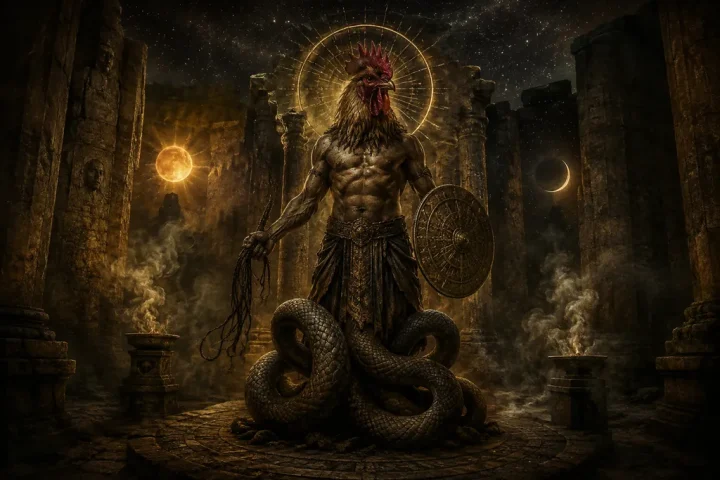
Abraxas: The Gnostic Power Beyond Good and Evil Abraxas, also written as Abrasax, Abraxis, or Abracax, is one of the most mysterious and paradoxical figures in Gnostic, magical, and demonological tradition. He
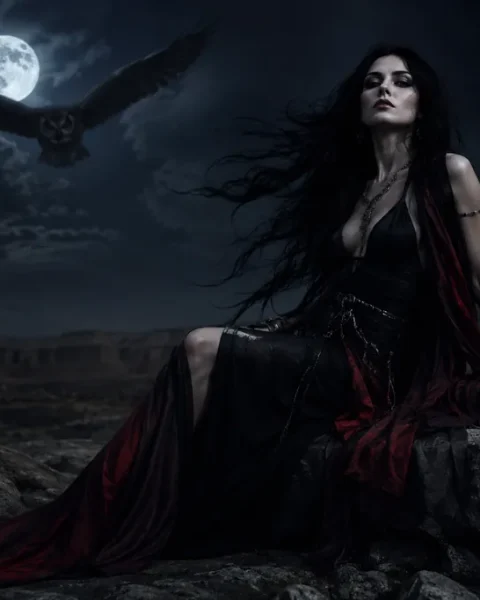
Lilith : Screech Owl; Beautiful Maiden; Dark Maid; Flame of the Revolving Sword; Maid of Desolation; Night Demon; Hand of Inanna; The Night Witch; The Howler Lilith: First Woman, Night Demon and Queen of the Wilderness Few supernatural beings possess
Kambel In Melanesian mythology, a sky god. According to the beliefs of the Keraki Papuans, Kambel cut down a palm tree and heard sounds issuing from it. Within the tree were people.
Hatuibwari In Melanesian mythology, a bisexual creator god of the Arosi, sometimes portrayed as a winged serpent with a human head, four eyes, and four breasts to suckle the young. Hatuibwari’s symbols
Dudugera In Melanesian mythology, the sun, according to a myth from New Guinea. Once a woman played with a fish that rubbed itself against her leg. In time her leg swelled, and
Bego Tanutanu (Bego the maker) In Melanesian mythology, creator god and culture hero who formed the land and taught various arts. Bego’s wife put limits to the sea, but when she was
Bariaus In Melanesian mythology, spirits who inhabit old tree trunks. They are often shy and run away when approached by people. SOURCE: Encyclopedia of World Mythology and Legend, Third Edition – Written
Adiri In Melanesian mythology, the land of the dead, located in the west. SOURCE: Encyclopedia of World Mythology and Legend, Third Edition – Written by Anthony S. Mercatante & James R. Dow
Abere In Melanesian mythology, a wild woman, seducer and often slayer of men. SOURCE: Encyclopedia of World Mythology and Legend, Third Edition – Written by Anthony S. Mercatante & James R. Dow
ziggurat (zikkurat, ziqqurat) (pinnacle) Mesopotamian stepped pyramid usually built of brick and forming part of any temple complex. Because Babylonians believed that the gods lived on mountains, they designed the ziggurat in
Ninurta (Ningirsu, Nimurta, Nimurash) In Near Eastern mythology (Sumero-Akkadian), war god and patron of hunting, son of Enlil or Bel and Innini. He was called “the arrow, the mighty hero.” Some scholars
Enlil (Bel Enlil, Eilil, Illillos) (storm god) In Near Eastern mythology (Sumero-Akkadian), creator god, storm god, god of earth and air; he was also called father of the gods and king of
We're excited to share THIS LIST of spellcraft and witchcraft guides. Whether you're just starting out or deepening your practice, these books cover everything from wicca to hoodoo to demonology.CLICK HERE

Follow