

Moloch: The Demonised God of Sacrifice, Fire and the Valley of Tears
Moloch is one of the most feared and controversial figures in biblical demonology. Originally connected with the religious world of the ancient Near East, he became demonised in Hebrew lore and later entered Western demonology as a terrifying spirit associated with fire, sacrifice, plague, grief and the destruction of children.
Moloch is often described as an Ammonite god who was later transformed into a demon in Hebrew tradition. He was probably identified with Baal, and may also have connections with the Assyrian and Babylonian Malik. In the Bible, King Solomon is said to have built a high place or temple for Moloch, an act condemned as idolatry.
The Hebrews called Moloch “the abomination of the Ammonites” in 1 Kings 11:7, a phrase that fixed him firmly in the imagination as a god of forbidden worship and spiritual corruption.
Moloch and Child Sacrifice
Moloch became infamous through biblical passages that associate him with the sacrifice of children by fire. In 2 Kings 23:10, the text describes how children were consecrated to Moloch and passed through fire as an offering.
According to some traditions, large bronze statues of Moloch were erected in his honour. He was imagined as a bull-headed man with long arms, seated upon a brass or bronze throne. Fires were said to burn within the hollow belly of the statue, and victims were thrown into the flames as part of sacrificial rites.
These rites were believed to protect the community from disaster, plague or divine wrath. In this terrifying religious image, the sacrifice of children was offered in exchange for safety, fertility or protection.
Whether Moloch was originally a deity, a title, or a term connected with sacrifice has been debated. Demonographer Manfred Lurker suggested that the name may come from the Punic root MLK, meaning “offering” or “sacrifice.” If this is correct, Moloch may not originally have been a personal name, but rather a formal term for a type of sacrifice. Over time, however, the name became personified and demonised.
The Sun God and the Plague-Bringer
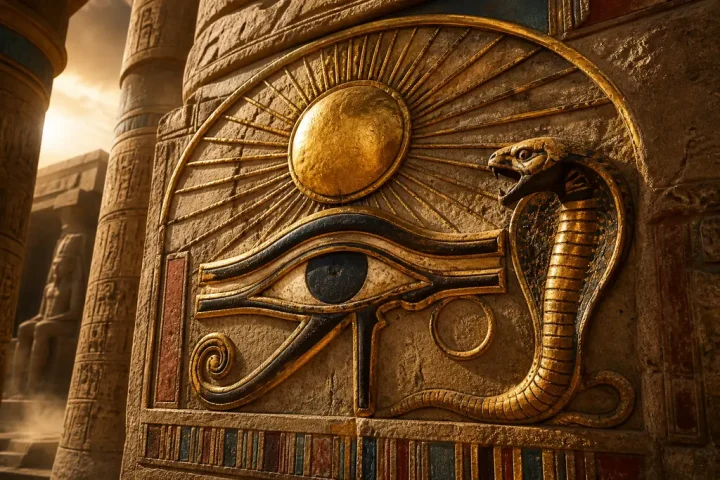
To the Ammonites, Moloch was sometimes understood as a Sun god, but not in a gentle or life-giving sense. He represented the destructive side of solar force: the burning, scorching, plague-bringing power of the Sun’s rays.
This made Moloch a deity of harsh heat, affliction and devastation. He was believed to cause plagues and disasters, and his worship was shaped by fear as much as reverence. The fire associated with him was not only physical flame, but the consuming force of suffering, punishment and spiritual terror.
The Valley of Hinnom and the Prince of the Land of Tears
Moloch was called “the prince of the valley of tears,” a title connected with Topheth in the Valley of Hinnom, where sacrificial rites were said to have taken place. This valley became one of the most powerful symbols of horror in biblical and later religious imagination.
King Josiah defiled Topheth in an effort to end the sacrificial practices associated with Moloch. After this, the rites declined. The Valley of Hinnom later became deeply associated with images of hell, punishment and spiritual ruin.
In later demonological material, Moloch is also called the “Prince of the Land of Tears.” This title appears in hierarchies connected with the Grand Grimoire tradition, although the actual source of some of these titles is not always what later writers claimed. A. E. Waite attributed certain details to Wierus in The Book of Black Magic and of Pacts, but the real source appears to be Charles Berbiguier’s Les Farfadets.
Moloch, Melchom and Milcom
The name Moloch is a Greek transcription of the Hebrew Molech. In other biblical passages, related forms appear as Melchom and Milcom. This has led to confusion and overlap in later demonology.
Interestingly, Berbiguier includes both Moloch and Melchom in his demonic hierarchy, treating them almost as separate beings, even though they may ultimately come from related biblical names. This is common in demonological tradition, where translation, transcription and theological interpretation often created multiple demon names from related sources.
Moloch in Demonology
Once Moloch became associated with child sacrifice, fire and the Valley of Hinnom, his name entered demonology with enormous force. He became one of the great symbols of cruelty, idolatry and infernal sacrifice.
In Kabbalistic lore, Moloch is sometimes placed with Satan among the first of the evil demons associated with the Tree of Life. This gives him a high and deeply sinister role in the structure of spiritual evil.
In the hierarchy connected with the Grand Grimoire tradition, Moloch is associated with Beelzebub’s knightly Order of the Fly and is said to have been awarded the Grand Cross of the Order of the Fly. This links him with a ceremonial and almost aristocratic vision of Hell, where demons hold ranks, honours and infernal titles.
Moloch and Cronos
The ancient Greeks associated Moloch with Cronos, the god of time. Cronos devoured his own children to prevent them from overthrowing him, making the comparison deeply symbolic. Both figures are linked with the destruction of offspring, the terror of succession and the consuming power of time, fear and authority.
This comparison transformed Moloch into more than a biblical demon. He became an archetype of devouring power: the force that consumes the young, demands sacrifice and destroys the future in order to preserve control.
The Meaning of Moloch
Moloch is one of the darkest figures in demonology because he represents sacrifice without mercy, power fed by innocence and worship built upon terror. Whether understood as a demonised deity, a sacrificial term, a biblical warning against idolatry, or an infernal prince of later occult tradition, Moloch embodies the horror of offering life to destructive power.
He is the fire that consumes. He is the idol that demands too much. He is the prince of tears, the lord of sacrifice, the shadow of religion when fear replaces holiness.
To study Moloch is to confront one of the most disturbing themes in the history of religion and demonology: the belief that power can be bought through blood, suffering and the surrender of the innocent.
Enter the Infernal Fire of Moloch
Moloch is not merely a name from ancient religion. He is a doorway into the darker history of demonology, sacrifice, forbidden worship, biblical horror, infernal hierarchy and the terrifying power of the old gods transformed into demons.
Inside the Occult World Mystery School, we explore beings like Moloch in their full occult context: demonology, grimoires, black magick, ancient gods, biblical demons, Kabbalistic lore, infernal hierarchies and the shadowed traditions that shaped Western occultism.
This is where you can go beyond short articles and study with fellow occultists who share your fascination with demons, spirits, forbidden texts and the hidden forces behind religious and magical history.
Join the Occult World Mystery School and step into the fire of Moloch. Discover the demons, dark gods and ancient powers that still burn beneath the surface of occult tradition.
SEE ALSO:
SOURCE:
- The Encyclopedia of Demons and Demonology – Written by Rosemary Ellen Guiley -Copyright © 2009 by Visionary Living, Inc.
- The Dictionary of Demons written by Michelle Belanger.
NOTE:
Edited and revised for the Web by Occult Media, the 23rd of April 2021. We use British English spelling.



Follow