

Imps: Bottled Demons, Witch Familiars and Servants of Magick
An imp is a small supernatural being, usually described as a minor demon or spirit that may be summoned, contained and commanded by a witch or magician. Folklore frequently places imps inside bottles, rings or other enchanted objects, where they remain until released for a particular task.
Imps resemble familiars and are sometimes compared with Djinn because they may be bound to a person or object and required to perform magical services. They are not always described as wholly evil. Some traditions portray them as mischievous, unpredictable or useful, while others present them as dangerous spirits capable of bewitchment, destruction and death.
Within magical lore, an imp might be invoked for spells, divination, charms, protection or the accomplishment of secret errands. Its usefulness depended upon the authority of the magician and the nature of the agreement between spirit and summoner.
Imps as Magical Familiars
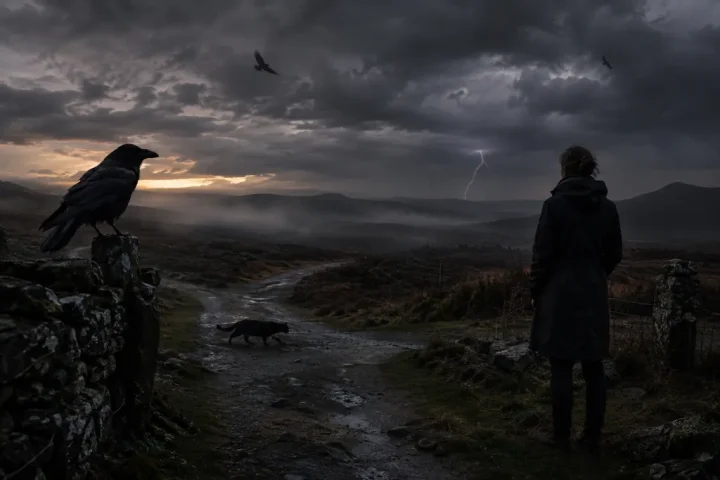
When acting as familiars, imps were believed to assume many different forms. They might appear as toads, cats, rodents, birds, flies, spiders or other insects. Once disguised, the spirit could be sent into another household to observe, disturb, frighten or injure a chosen victim.
In some accounts, the imp acted as the witch’s messenger. In others, it carried the witch’s power directly, bringing illness, misfortune, accidents or death to those against whom it had been sent.
The words imp and familiar were often used interchangeably during the witch trials. Yet the familiar could also be understood more broadly as an animal-shaped spirit, while the imp was more specifically imagined as a small demon that had entered into service.
The relationship was not necessarily one of affection. The spirit might demand payment, attention or nourishment, and failure to provide it could supposedly cause the imp to rebel against its owner.
Blood and the Witch’s Mark
Witch-hunters claimed that witches rewarded their imps by feeding them blood from their own bodies.
The spirit was said to suck blood from a finger, breast, wart, lump or unusual mark upon the skin. These alleged feeding places became known as witches’ marks, witches’ teats or devil’s marks.
During interrogations, the accused were stripped and searched for scars, moles, discolouration, insensitive patches of skin or natural protuberances. Ordinary imperfections could be presented as evidence that the person secretly nourished a demonic familiar.
These examinations were not reliable investigations of supernatural activity. They were part of a persecutory system in which almost any physical difference could be interpreted as proof of guilt.
The image of a witch feeding an imp nevertheless became deeply embedded in European demonology. Illustrations showed small creatures gathered around a witch’s body while she nourished them with blood in return for magical service.
The exchange represented a parody of motherhood. Instead of feeding a human child with milk, the witch was accused of feeding a demon with blood.
Imps in the Prison Cell
Accused witches were sometimes watched closely after imprisonment because guards expected their familiars to visit them.
This created an almost impossible situation for the prisoner. Early modern cells were commonly infested with flies, spiders, mice and other vermin. Any insect or animal entering the cell could be declared an imp in disguise.
Guards sometimes attempted to kill the creature. If it died, it was dismissed as an ordinary animal. If it escaped, however, its survival could be presented as evidence that it possessed supernatural power.
The test was therefore designed to confirm suspicion regardless of the result.
A spider that vanished into a crack, a fly that escaped through the bars or a mouse that disappeared beneath the floor could become supposed proof that the imprisoned woman had summoned her familiar.
Such claims reveal less about the existence of imps than about the fear and irrationality surrounding witchcraft prosecutions.
Imps in Bottles and Rings
The belief that an imp could be confined inside a bottle or ring belongs to a wider magical tradition of binding spirits into physical vessels.
A magician might summon a spirit, command it into an object and seal it there with sacred names, symbols or ritual authority. The object then became both a prison and an instrument through which the spirit could be contacted.
A ring could keep the spirit close to the magician and allow it to be summoned discreetly. A bottle might be hidden, buried or stored within a ritual chamber until its inhabitant was needed.
This idea resembles stories of Djinn sealed inside lamps or vessels, as well as grimoire traditions in which demons are commanded to appear within crystals, mirrors, triangles or other carefully prepared spaces.
The contained spirit could provide knowledge, locate hidden things, influence another person or carry out magical operations. Yet folklore repeatedly warned that a bound entity might be treacherous. The magician who lost control of the spirit risked becoming its victim.
The Mischievous Nature of the Imp
The English word imp has gradually come to mean a mischievous child or troublesome little creature. This reflects the spirit’s traditional personality.
Imps are rarely portrayed as majestic rulers of Hell. They are small, active and disruptive. Their danger lies not in overwhelming power but in their ability to interfere constantly with ordinary life.
They hide objects, create noises, frighten animals, spoil work and provoke confusion. A larger demon might demand worship or destruction, while an imp could exhaust its victims through endless minor disturbances.
This mischievous quality also made the imp useful in stories intended to explain accidents and unexplained misfortune. A broken household object, frightened horse or inexplicable noise might be blamed upon a small invisible intruder.
The Lincoln Imp
The most famous imp in England is carved into the stonework of Lincoln Cathedral.
Known as the Lincoln Imp, the figure sits high upon a column in the cathedral’s Angel Choir. It has a grinning expression and rests with one leg crossed over the other, appearing both defiant and strangely comfortable within the sacred building.
Several legends explain how the creature came to be there.
In one version, the Devil was in unusually good spirits and released several young demons to play. One travelled upon the wind to Lincoln, entered the cathedral and began causing destruction inside the Angel Choir.
The imp broke objects and mocked the sacred space until an angel intervened. As punishment, the angel turned the creature into stone, leaving it trapped forever above the choir.
Another version tells of two imps sent by the Devil to create mischief throughout England. They first visited Chesterfield, where they twisted the spire of the church. They then travelled to Lincoln Cathedral, tripped the bishop and began smashing furniture.
When an angel commanded them to stop, one imp climbed onto a pillar and defiantly threw heavy objects. The angel immediately turned it to stone.
The second imp escaped by hiding among the wreckage. According to the legend, it later attached itself to the broomstick of a passing witch, who transformed it into a black cat and kept it as her familiar.
The Lincoln Imp as a Talisman
Despite its demonic appearance, the Lincoln Imp has become associated with both good and bad luck.
Its image has appeared on jewellery, souvenirs and protective objects. It has been worn by ordinary people and members of royalty, transforming a figure of punishment into a regional emblem and possible talisman.
In 1928, the Prince of Wales, who later became King Edward VIII, was presented with an imp tiepin. The following year, two of his horses won major races: the Grand National and the Epsom Derby.
The victories strengthened the belief that the Lincoln Imp could bring luck to those who carried its image.
This transformation is typical of magical folklore. A frightening being may become protective once it has been controlled, carved into stone or turned into a charm. The same spirit that causes chaos can become a guardian when its power is contained.
Servants, Spirits or Scapegoats?
The imp occupies an uncertain place between demon, familiar and household spirit.
To the magician, it may be a servant. To the witch-hunter, it was evidence of a forbidden pact. To the storyteller, it was a convenient explanation for mischief. To the modern visitor at Lincoln Cathedral, it is a curious and memorable piece of medieval stonework.
The historical accusations involving imps should not be accepted as evidence that persecuted people truly kept demons. Many such stories were created through fear, coercion and the expectations of interrogators.
Yet the concept itself remains important within occult history.
The imp expresses the belief that spiritual power can be compressed into a small and controllable form. It is the hidden servant inside the ring, the creature waiting within the bottle and the animal that may be more than it appears.
Its size is deceptive.
A minor spirit can still become dangerous when summoned without knowledge, bound without authority or fed through fear and obsession.
Stop Calling Yourself a Witch While Refusing to Study Witchcraft
Anyone can repeat a spirit’s name.
Anyone can buy a bottle, draw a symbol and pretend that imagination is the same as invocation.
It is not.
Witchcraft, spirit work and ceremonial magick require more than confidence. They demand knowledge of protection, containment, ritual structure, offerings, boundaries and consequences. Calling something you do not understand is not power. It is reckless curiosity.
Inside the Occult World Mystery School, you can study the traditions behind witch familiars, imps, spirit vessels, demonology, grimoires, evocation, protective magick, spellcraft, Wicca, traditional Witchcraft, black magick and ceremonial ritual.
This is not another shallow online space filled with copied spells and people posing beside candles.
It is for those prepared to understand what they invoke, why magical boundaries matter and how folklore, historical practice and occult technique connect.
You can remain outside the circle, collecting demon names and pretending that scattered information makes you an experienced practitioner.
Or you can stop playing with forces you barely comprehend.
Join the Occult World Mystery School. Study Witchcraft seriously. Learn how spirits are summoned, contained and commanded. Build real occult knowledge before your ignorance becomes the most dangerous entity in the room.
FURTHER READING:
- Kesson, H. J. The Legend of the Lincoln Imp. Lincoln, England: J. W. Ruddock & Sons, 1904.
SOURCES:
The Encyclopedia of Demons and Demonology – Written by Rosemary Ellen Guiley – Copyright © 2009 by Visionary Living, Inc.
The Encyclopedia of Witches, Witchcraft and Wicca – written by Rosemary Ellen Guiley – Copyright © 1989, 1999, 2008 by Visionary Living, Inc.
The Encyclopedia of Magic and Alchemy Written byRosemary Ellen Guiley Copyright © 2006 by Visionary Living, Inc.



Follow