

Leviathan: The Primordial Monster of the Deep
Leviathan is one of the most formidable beings in Hebrew lore, a primordial monster of the sea whose immense power places him far beyond the scale of ordinary creatures. He belongs to that ancient mythological world in which the ocean was not merely a physical body of water but a symbol of chaos, danger and forces that existed beyond the boundaries of human control. His name is commonly connected with a Hebrew root conveying the idea of twisting, coiling or intertwining, an etymology that suits the serpentine character with which he is frequently associated. In later demonological tradition he would become a great infernal being, but his earliest identity is rooted in biblical imagery, where he represents something vast, ancient and almost impossible to subdue.
The most vivid biblical description appears in Chapter 41 of the Book of Job, where Leviathan is portrayed as a creature so powerful that conventional weapons are virtually useless against him. His body is protected like armour, with tightly sealed scales compared to rows of shields, and the text describes his movements in supernatural terms, with light flashing from his sneezes and sparks issuing from his mouth. His physical strength is matched by the terror that surrounds him, creating an image of a being whose presence alone is enough to overwhelm those who encounter him.
The Book of Job describes him in memorable language:
His back is made of rows of shields, Shut up closely as with a seal. . . . His sneezings flash forth light, And his eyes are like eyelids of the dawn. Out of the mouth go flaming torches; Sparks of fire leap forth. . . . In his neck abides strength, And terror dances before him.
This passage firmly establishes Leviathan as something far more extraordinary than an ordinary whale or sea animal. Although attempts have sometimes been made to identify him with a crocodile or another known creature, the biblical imagery deliberately pushes him beyond natural explanation. He belongs to the realm of supernatural symbolism, where his enormous body and apparent invulnerability express the frightening power of the untamed deep.
Leviathan and Divine Authority
A different aspect of Leviathan appears in Psalm 104, where the creature exists within the sea as part of God’s creation. The psalm suggests that Leviathan was created to play or sport within the waters, an image that is striking because it reduces an otherwise terrifying monster to something existing entirely under divine authority. What appears overwhelming from a human perspective is insignificant when measured against the power of the creator.
Later Jewish folklore expanded Leviathan’s destructive potential and transformed him into a creature of unimaginable appetite. One tradition claimed that he could consume an entire whale every day, reinforcing the idea that his scale belonged to a supernatural order rather than the ordinary natural world. The ocean became the only environment vast enough to contain him, and Leviathan gradually came to embody the fear that beneath the visible surface of the world existed powers older and greater than humanity itself.
The Male and Female Leviathan
Jewish tradition sometimes speaks of Leviathan not as a solitary creature but as one member of an original pair. In this mythology, a male Leviathan was created alongside a female counterpart, and some later interpretations connected the pair with the Slant Serpent and the Tortuous Serpent. The female aspect was also associated in certain traditions with Lilith, linking the primordial sea monster with another ancient figure of Jewish demonological lore.
A legend attributed to the eleventh-century commentator Rashi explains why the world contains no race of Leviathans. According to this account, God recognised that if the male and female creatures were allowed to reproduce, their descendants would become so numerous and powerful that the world could not endure them. The female was therefore slain before reproduction could occur, leaving the male Leviathan as the surviving representative of an otherwise impossible species. The legend gives Leviathan an even more terrifying dimension because it suggests that the creature humanity fears is merely the survivor of a potential race that divine intervention prevented from coming into existence.
Leviathan at the End of Time
The Talmud preserves another remarkable tradition in which Leviathan becomes part of the events surrounding the end of the world. His destruction forms part of the final triumph of divine order, after which the flesh of the enormous monster will be prepared as food for the righteous. His hide will then be used to form a vast covering beneath which the eschatological banquet will take place.
This image reverses Leviathan’s symbolic position completely. The creature that once embodied an uncontrollable force of primordial chaos eventually becomes the substance of a sacred feast, demonstrating that even the most terrifying power in creation ultimately remains subordinate to God.
Leviathan is frequently connected with Behemoth, the enormous beast associated with the land. Together they represent immense forces belonging to different regions of creation, with Leviathan dominating the waters while Behemoth embodies the strength of the earth. Later mythology sometimes imagined a confrontation between them, turning their opposition into a cosmic drama in which the great beasts of sea and land become symbols of forces far beyond the human scale.
Jonah and the Great Creature of the Sea
The Book of Jonah contains another famous encounter with a monstrous creature of the deep. Jonah attempts to escape the command of God by travelling toward Tarshish, but a violent storm overtakes the ship and eventually leads to his being cast into the sea. He is swallowed by a great sea creature and remains inside its belly for three days before being released onto dry land through divine command.
Although the biblical text itself does not identify this creature as Leviathan, later tradition sometimes connected the two. Through that interpretation, the story of Jonah becomes another example of the terrifying sea monster being brought entirely under divine control. The creature that could easily destroy a human being instead becomes the instrument through which Jonah is preserved until his journey can continue.
Leviathan in Demonology
As Hebrew supernatural traditions interacted with later Christian demonology, Leviathan gradually acquired a distinctly infernal identity. The ancient sea monster was no longer understood only as a primordial beast but became one of the great demons of Hell, where his association with overwhelming appetite and destructive power could be integrated into increasingly elaborate systems of infernal hierarchy.
Within traditions surrounding the Seven Deadly Sins, Leviathan became associated with Envy, making him the infernal ruler connected with the fourth deadly sin. This transformation demonstrates how dramatically biblical monsters could change as later demonologists attempted to organise the supernatural world into systems of rulers, offices and moral correspondences.
Leviathan also appears in accounts of the infamous Loudun Possessions in seventeenth-century France. His name was among those associated with the demons allegedly possessing the Ursuline nuns of Loudun, and he was also included among the infernal beings said to have signed the supposed pact made by the priest Urbain Grandier. Grandier was eventually executed in 1634 after an extraordinary trial in which claims of demonic possession became intertwined with politics, religion and accusations of sorcery.
Leviathan in Paradise Lost
John Milton transformed Leviathan once again in Paradise Lost, where the creature appears as a gigantic presence lurking in the northern seas near Scandinavia. Milton emphasises the incomprehensible size of the monster by describing sailors who mistake his enormous body for an island and anchor their vessel upon him.
The illusion lasts only until Leviathan moves beneath the waves, carrying the unsuspecting sailors toward the depths. Milton’s image captures one of the oldest and most enduring qualities of Leviathan: the sense that the creature is too immense for human perception to understand correctly. What appears to be part of the landscape may in fact be alive, and what seems solid beneath the traveller may suddenly disappear into the ocean.
Leviathan in Magical Tradition
Leviathan also entered the world of ritual magic and occult literature. He appears in the Sixth and Seventh Books of Moses, where his name is associated with magical operations, showing how thoroughly the biblical monster had become integrated into Western esoteric tradition.
His position becomes even more significant in S. L. MacGregor Mathers’ translation of The Sacred Magic of Abramelin the Mage. There Leviathan is named among the four principal infernal spirits alongside Lucifer, Satan and Belial, placing him at the highest level of the demonic hierarchy presented in that edition. By this stage Leviathan is no longer simply the beast of Job or the cosmic monster of rabbinical legend. He has become an infernal intelligence whose authority belongs to the deepest structures of ceremonial demonology.
Leviathan and the Ancient Chaos Tradition
Scholars have long compared Leviathan with older Near Eastern myths in which divine powers confront enormous beings associated with the primordial sea. One of the most frequently mentioned parallels is Tiamat, the great sea goddess and dragon of Babylonian mythology whose defeat plays a central role in the creation mythology preserved in the Enuma Elish.
The similarity does not necessarily mean that Leviathan is simply another name for Tiamat, but it does place him within a much broader ancient Near Eastern tradition in which the sea represents primordial disorder. Civilisation exists on dry land, where boundaries can be established and human life can be organised, while the ocean remains vast, unstable and resistant to control. Leviathan gives that terrifying uncertainty a living form.
The Enduring Power of Leviathan
Across biblical literature and rabbinical mythology, Leviathan remains one of the greatest expressions of primordial power. Later demonology deepened his sinister character, while occult texts placed him within increasingly sophisticated magical hierarchies. Literature transformed him yet again, but the essential image survived every reinterpretation: beneath the ordered surface of existence lies something immense, ancient and almost impossible to comprehend.
His eventual defeat is therefore central to the symbolism surrounding him. Leviathan may embody chaos, but chaos does not possess ultimate authority. His body can terrify humanity and his strength can make weapons meaningless, yet the traditions repeatedly insist that the power represented by Leviathan remains contained within a greater cosmic order.
Do You Want to Read About Leviathan — or Enter His Current?
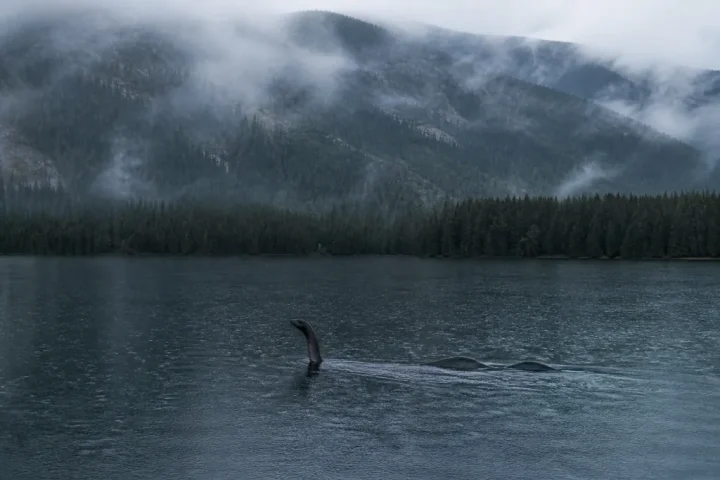
Most people encounter Leviathan, read a few paragraphs about the Book of Job, admire the image of the enormous sea serpent and move on.
That is where ordinary occultism ends.
Inside the Occult World Mystery School, Leviathan is not merely another name in a demon encyclopaedia. Members can explore a specific ritual centred upon Leviathan, entering the symbolism of the abyss and the primordial current represented by this ancient being through practical occult work.
If Leviathan fascinates you, then reading about him should be the beginning rather than the end.
Stop standing on the shore staring into the darkness. Enter it. Join the Occult World Mystery School, access the Leviathan ritual and confront the current of the deep for yourself.
There are thousands of spirits, gods, demons, magical systems, grimoires and forgotten traditions waiting beyond the surface.
You can keep reading about the occult from a safe distance, or you can enter the Mystery School and start working with it. Choose.
FURTHER READING:
- Hyatt, Victoria, and Joseph W. Charles. The Book of Demons. New York: Simon & Schuster, 1974.
- Koltuv, Barbara Black. The Book of Lilith. Berwick, Me.: Nicolas-Hays, 1986.
SEE ALSO:
SOURCES:
- The Dictionary of Demons written by Michelle Belanger.
- The Encyclopedia of Demons and Demonology – Written by Rosemary Ellen Guiley – Copyright © 2009 by Visionary Living, Inc.
NOTE:
Edited and revised for the Web by Occult Media, the 22nd of April 2021. We use British English spelling.



Follow