
Pamersiel: Chief Spirit of the South-East
Pamersiel is a demon named among the thirty-one Aerial Spirits of Solomon. Within the hierarchy of the Ars Theurgia, he serves beneath Carnesiell, the great Emperor of the East, and is described as a chief prince or king of the South-East.
Pamersiel commands 1,000 spirits under his authority. These spirits are said to be called only during the daytime, and with great caution, because they are described as stubborn, arrogant, false, and difficult to trust. Unlike some other aerial spirits who are presented as courteous or willing to obey, Pamersiel and his dukes are given a darker and more dangerous reputation in the grimoire tradition.
His primary dukes are:
Anoyr
Madriel
Ebra
Sotheano
Abrulges
Ormenu
Itules
Rablion
Hamorphiel
Itrasbiel
Nadrel
Pamersiel and His Dangerous Nature
Pamersiel and his dukes are described as evil and false, which makes them spirits that must be approached with discipline, caution, and strict ritual control. The old grimoires often present certain spirits as powerful but unreliable, meaning that the magician must not treat them casually or naively.
Despite this dangerous nature, Pamersiel is also said to have a specific use: he and his dukes can be commanded to drive away other evil spirits that haunt a house, place, or location. This gives Pamersiel a paradoxical role within demonology. He is not portrayed as benevolent, yet he may be compelled to act against other harmful spirits when properly commanded within the ritual framework.
This is one of the fascinating tensions within grimoire magic. A spirit may be feared, mistrusted, and considered dangerous, yet still be part of a magical system where it can be constrained, directed, and used for a specific purpose.
The Ritual Setting of Pamersiel
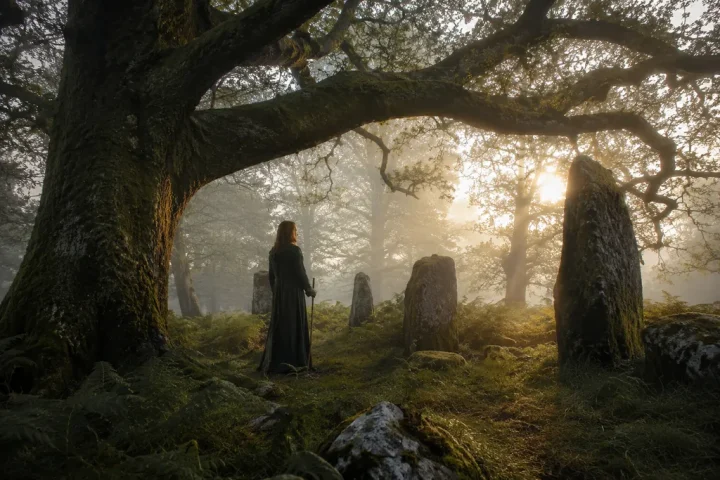
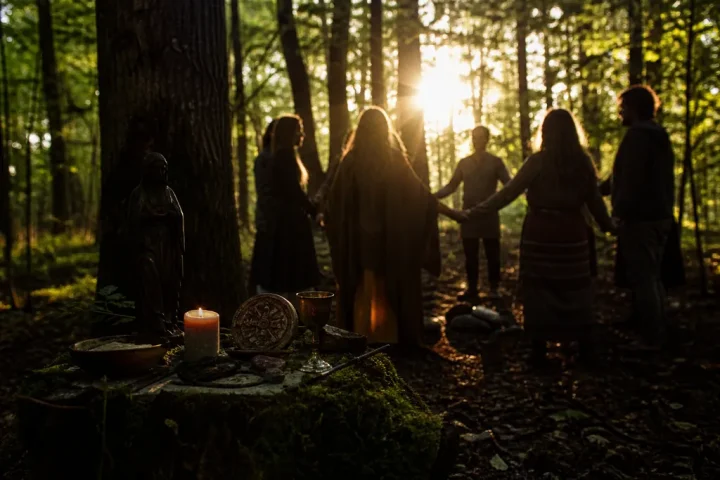
The Lemegeton gives instructions for summoning Pamersiel and his dukes. The ritual is not meant to be performed openly or casually. It must take place in the most secret and private room of a house, or in a hidden grove, wood, island, or occult place where no one is likely to disturb the operation.
The place must be airy, because Pamersiel and his spirits belong to the aerial order. Like many spirits in the Ars Theurgia, they may be called into a crystal stone or glass vessel, which serves as a medium for their manifestation and containment.
The crystal stone is traditionally described as measuring four inches in diameter and placed upon a consecrated table associated with King Solomon. The seal of Pamersiel is worn upon the breast, marking the magician’s authority and connection to the spirit being summoned.
The ritual language used for Pamersiel follows the formal style of Solomonic magic. It calls upon divine names such as Adonay, El, Elohim, Elion, Zebaoth, Tetragrammaton, Saday, and others. These names are used to command the spirit to appear peacefully, visibly, and intelligibly, without harming the magician or any creature.
Pamersiel in the Ars Theurgia
Pamersiel is important because he represents one of the more difficult and morally ambiguous spirits of the aerial hierarchy. He belongs to the eastern current under Carnesiell, yet his specific dominion is connected with the South-East. This places him within the structured spiritual geography of the Ars Theurgia, where spirits are organised according to direction, rank, time, and command.
His role also reveals the practical concerns of old ceremonial magic. These grimoires were not merely lists of demon names. They offered detailed systems for approaching spirits, controlling their manifestation, using seals, preparing ritual spaces, and dismissing spirits safely after the work was complete.
Pamersiel’s reputation as false and arrogant makes him a powerful example of why the old texts place so much emphasis on boundaries, authority, secrecy, protection, and proper dismissal. The magician does not simply invite the spirit; the magician commands, contains, questions, directs, and then formally gives licence to depart.
The Significance of Pamersiel
Pamersiel is not one of the most famous demons in modern occult discussion, but he is a compelling figure for students of demonology and grimoire magic. He belongs to the lesser-known world of the Aerial Spirits of Solomon, where demons are not only classified by name, but also by direction, hierarchy, time of operation, and magical function.
His connection with exorcising or driving away other evil spirits makes him especially interesting. Pamersiel stands at the border between danger and utility: a spirit considered untrustworthy, yet still capable of being used against hostile forces when brought under command.
To study Pamersiel is to look deeper into the old grimoires and their complex understanding of power. These texts do not present the spirit world as simple, safe, or sentimental. They reveal a universe of hierarchy, risk, command, secrecy, and ritual discipline.
Study Pamersiel and the Old Grimoires in the Occult World Mystery School
If Pamersiel fascinates you, the Occult World Mystery School is where you can go deeper.
Inside the community, you can study demonology, explore black magick, examine the old grimoires, and learn how spirits like Pamersiel fit into the greater structure of Solomonic magic. You can access the Demonology course, the Black Magick course, and teachings on grimoires, spirit hierarchies, seals, ritual systems, protection, occult philosophy, and magical practice.
This is a place for serious seekers, practising occultists, students of demonology, and those who want to understand the hidden systems behind names such as Pamersiel, Carnesiell, Demoriel, Amenadiel, and Malgaras.
Join the Occult World Mystery School and step deeper into the world of Pamersiel, demonology, black magick, grimoire study, spirit work, and the living path of occult knowledge.
FURTHER READING:




Follow