

Pixies
Pixies are among the best-known nature spirits of the folklore of Cornwall and Devon. Although the name is now sometimes used as a general term for small fairylike beings, traditional pixies belong to the wild landscape of south-western England. They are associated with ancient hills, secluded groves, sacred wells, rivers and hidden springs, where they are said to dance, play and interfere with unsuspecting travellers.
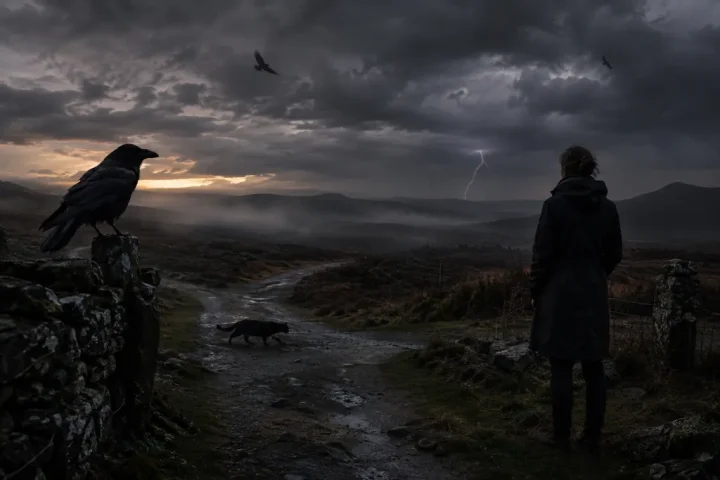
Pixies are not usually described as openly malevolent, but their sense of humour can be exhausting and sometimes dangerous. They delight in confusing people who travel alone after dark, causing familiar paths to twist into strange and unrecognisable routes. A traveller who becomes hopelessly lost, repeatedly returns to the same place or wanders in circles for hours is said to have been pixie-led.
The mysterious lights known as pixie lights are among their most famous tricks. These charming, dancing lights appear in the darkness and seem to invite travellers to follow them. Anyone who does so may be led far from the road, deep into the wilderness or towards marshes, cliffs and other dangerous places. The victim may only realise what has happened when the faint sound of laughter is heard somewhere nearby.
Pixies are also said to gather in large groups and surround solitary travellers. Those caught among them may be compelled to join their dancing, unable to stop until they collapse from exhaustion. The beauty and joy of the dance conceal its danger, reflecting the older folkloric belief that contact with the fairy world can be enchanting, bewildering and potentially fatal.
One traditional method of breaking a pixie spell is to turn an article of clothing inside out. This simple reversal is believed to disrupt the enchantment and restore the victim’s sense of direction. Perhaps the reversed clothing confuses the pixies, or perhaps the sight merely amuses them enough to release their victim.
Pixies and the Will o’ the Wisp
The close relationship between pixie lights and the Will o’ the Wisp suggests that pixies may once have possessed a darker and more mysterious role.
Will o’ the Wisps are strange, disembodied lights traditionally seen after sunset over lonely fields, marshlands and remote roads. They appear to move away whenever approached, drawing people further into dangerous territory. Many legends blame them for leading travellers into swamps, over cliffs or towards their deaths.
Pixie lights and Will o’ the Wisps are sometimes treated as the same phenomenon. In other stories, the lights belong to the pixies themselves and act as lanterns, traps or guides between the human world and the realm of spirits.
Although the lights are usually regarded as deceptive, they do not always lead people into danger. Some traditions claim that they can guide a lost traveller home. This connection with both death and safe passage may indicate that pixies once served as psychopomps, supernatural beings who guided souls between worlds.
Jack O’Lantern and Joan the Wad
Only a small number of pixies are known by individual names. The most famous are Jack O’Lantern and Joan the Wad, who are sometimes described as the King and Queen of the Pixies.
Both figures are associated with light and fire. In Cornish dialect, the word wad can mean a bundle of straw used as a torch, making Joan the Wad a spirit of illumination. Jack O’Lantern is similarly connected with wandering lights, magical flames and the mysterious glow seen in lonely places.
Despite their mischievous reputations, Jack and Joan could be invoked for protection, especially by travellers trying to find their way home during bad weather or after nightfall. A traditional rhyme calls upon them for guidance:
Jack o’ the lantern! Joan the wad,
Who tickled the maid and made her mad;
Light me home, the weather’s bad!
The rhyme captures the contradictory nature of pixies perfectly. They can torment, bewilder and humiliate human beings, yet they may also provide light when the road is dark.
Pixies in Modern Culture
Pixies have survived far beyond the rural folklore of Cornwall and Devon. They continue to appear in fantasy fiction, children’s stories, films and modern pagan traditions, although they are often softened into harmless and cheerful fairy creatures.
Older folklore presents a more complicated image. Traditional pixies are wild beings who follow their own rules. They may help one person and mislead another. They are playful, but their games can become cruel. They inhabit the uncertain boundary between nature, spirit and the dead, reminding travellers that the landscape itself was once believed to be alive with unseen powers.
A piskie also appears in Neil Gaiman’s novel American Gods, where the figure retains something of this older and more dangerous character.
Enter the Hidden World of Spirits and Folklore
Pixies are far more than miniature fairies from children’s stories. Their legends belong to an ancient world in which hills, rivers, crossroads and mysterious lights were believed to conceal living supernatural forces.
Inside the Occult World Mystery School, you can explore the deeper traditions behind fairies, nature spirits, elementals, haunted landscapes, gods, demons and the beings that exist between the human and spirit worlds. Discover how folklore developed, how protective customs were used and why stories of supernatural encounters have survived for centuries.
Join fellow occultists, witches, mystics and seekers who are serious about studying the unseen world. Expand your knowledge, share your experiences and explore the traditions that continue to shape modern magic and occult practice.
Join the Occult World Mystery School and begin exploring the hidden beings that walk beside us, dance beyond the firelight and wait just beyond the edge of the known world.
ALSO KNOWN AS:
Piskies; Pisgies
MANIFESTATION:
A span is an archaic measurement: stretch your fingers out as far as you can. The length from your thumb to the smallest finger is a span. Pixies are as tall as the length of one span. They are generally described as resembling very small people, but images of pixies including those intended as good luck charms often depict them in the guise of an imp or little Demon. Pixies don’t always like to be seen. They are more frequently heard: their irrepressible giggling betrays their presence. “Laugh like a pixie” is an old Cornish saying.
COLOUR:
Green
SACRED SITES:
Various wells in Cornwall and Devon are known as pixie wells and reputedly possess healing and magical powers.
OFFERINGS:
Leave dishes of cream outside for them. They also like ale, hard cider, bread, Cornish pasties, and small, pretty things. Be discreet: don’t talk to them or make too much of a fuss over them. They are not effusive spirits.
SEE ALSO:
- Fairy;
- Joan the Wad;
- Psychopomps
SOURCE:
Encyclopedia of Spirits: The Ultimate Guide to the Magic of Fairies, Genies, Demons, Ghosts, Gods & Goddesses– Written by Judika Illes Copyright © 2009 by Judika Illes.


Follow