

Rusalka: The Drowned Spirits of Slavic Waters
The rusalka is one of the most mysterious and contradictory spirits in Slavic folklore. She may appear as the ghost of a young woman who drowned before her time, yet she may also emerge as an ancient nature spirit who blesses the land with fertility. In some traditions she is gentle and protective. In others she is a seductive killer who draws the living into deep water and refuses to let them return.
The plural form is rusalki.
Although they are most strongly associated with rivers and lakes, rusalki are not confined entirely to water. They are also linked with wet meadows, forests, fields and healing springs. Their presence is felt wherever water nourishes the earth and where the boundary between the living world and the realm of spirits becomes uncertain.
The true origin of the rusalka remains disputed because Slavic tradition preserves several very different explanations. One of the most enduring claims identifies rusalki as the spirits of young women who died through drowning. Some are said to have fallen into the water by accident. Others were murdered or driven to suicide. Their deaths were sudden, unnatural and unresolved, leaving them trapped near the place where life was taken from them.
Christian folklore altered this idea by describing rusalki as the damned souls of girls who died without baptism. Stories of this kind were often told as warnings to young women. The rusalka became an example of what might happen to someone who died outside the protection of the Church.
This explanation may have been imposed upon an older tradition. Rusalki appear to possess qualities that reach far beyond ordinary ghost lore. They influence vegetation, fertility and the seasonal growth of crops. They emerge from water when the earth becomes green. Their dances are believed to stimulate the fields, while their presence may bring abundance if they are treated with respect.
Some interpretations therefore regard them as ancient female spirits of the land and water rather than restless human dead. According to this view, the rusalka is a surviving form of a pre-Christian goddess or ancestral power whose identity was later transformed into something dangerous and demonic.
The rusalka resists any single explanation because she is a shape-shifter. She reflects the expectations of those who approach her. A person seeking a healing spirit may encounter a beneficent presence. Someone entering her territory carelessly may instead discover a remorseless predator.
This uncertainty is central to her power.
The Beauty of the Rusalka
Rusalki are usually described as exceptionally beautiful young women. Their hair is long and often imagined as green, pale gold or dark with river water. They wear white garments or appear unclothed beneath the moonlight. Their faces may seem gentle from a distance, but their beauty conceals something that does not belong entirely to the human world.
In southern Russian traditions, rusalki inhabit small alluvial islands formed within rivers. There they may secretly assist poor fishermen who work honestly and endure hardship. A fisherman who receives their favour may find the water unusually generous, as though the river itself has chosen to reward him.
These benevolent accounts contrast sharply with stories in which rusalki tempt men towards death. Their voices may be heard across the water at night. A traveller who follows the sound may find a beautiful woman waiting near the riverbank. Once he approaches, she draws him into the current and drowns him.
The rusalka does not always kill through seduction. Some traditions claim that rusalki seize their victims and tickle them until they can no longer breathe. Others suggest that merely witnessing their forbidden dances may be enough to provoke a fatal attack.
Water is their natural home, but it is also their weapon.
Rusalki in the Trees
During the winter, rusalki are sometimes said to inhabit underwater palaces hidden beneath rivers and lakes. When the weather becomes warmer, they leave these submerged dwellings and move into the trees.
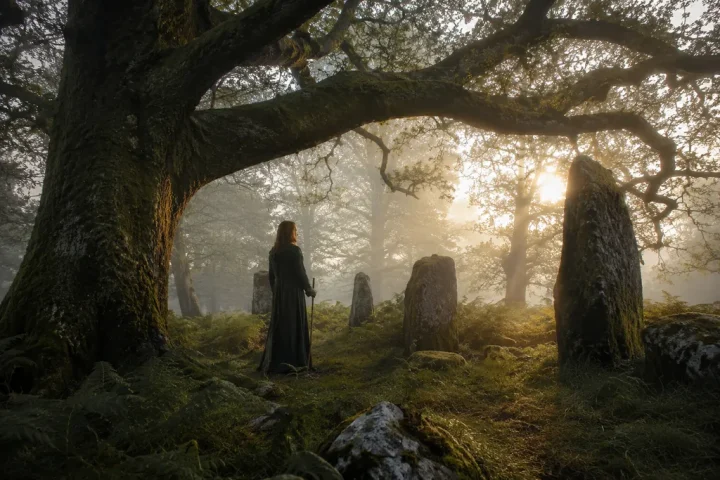
Ukrainian folklore often places them among birches and willows. They perch upon the branches like strange birds while washing and combing their long hair. They weave linen garments and hang them from the trees to dry. These domestic actions make them appear almost human, yet they unfold within an eerie world where the dead imitate the routines of the living.
At night, the rusalki descend from the branches and gather beneath the moon. They form circles and dance upon the grass. Their movements are believed to leave the vegetation greener and more fertile, revealing their older connection with agricultural abundance.
A person who comes upon the dance must remain hidden. Rusalki do not welcome witnesses. Anyone caught watching them may be dragged towards the nearest river and drowned.
Their circle dances express both life and death. The earth is renewed beneath their feet, but the human observer risks never seeing daylight again.
Rusalka Week
Rusalki are believed to become especially active during the period surrounding Pentecost. This season is known in various Slavic regions as Rusalka Week, Green Week or Trinity Week.
The festival occurs when spring gives way to summer and the natural world reaches a state of intense growth. During this period, the boundaries separating water, vegetation and the spirit realm are thought to weaken. Rusalki leave their hidden dwellings and wander more freely through the countryside.
Communities once observed special customs to honour them and protect themselves from their attention. Songs were sung near rivers and fields. Young women wove garlands and cast them upon the water. The movement of the garland could be interpreted as an omen concerning love, marriage or death.
These offerings were not simply decorative. They acknowledged the presence of the female spirits who controlled fertility and the dangerous abundance of the season.
People were often warned not to swim during Rusalka Week. Entering the water could be interpreted as an invitation. A person who ignored the prohibition might be seized by a rusalka and pulled beneath the surface.
The festival reveals how the rusalka could be feared and honoured at the same time. She was not merely an evil ghost to be banished. She represented a power that had to be respected because the same force capable of drowning a human being could also awaken the land.
Servants of Baba Yaga
Some traditions connect rusalki with Baba Yaga, the formidable witch of the Slavic forest. They are said to attend her and guard her rye fields.
This association places them within a larger supernatural landscape governed by ancient female power. Baba Yaga rules over thresholds, death and transformation. The rusalki who serve her occupy a similar boundary between the human world and the wilderness.
Their guardianship of rye fields also strengthens their connection with agriculture. Although rusalki are often presented as water spirits, they participate directly in the fertility of the earth. Moisture rises from rivers and enters the soil. Crops grow where water and land meet.
The rusalka belongs to both realms.
She may emerge from the river and hide among the grain. She may dance through a meadow before returning to the depths. Her movement between these environments reflects the natural cycle that connects rain, vegetation and harvest.
Healing, Fertility and Love
Despite their sinister reputation, rusalki were sometimes approached for healing and assistance. Their association with springs and living water allowed them to become guardians of places believed to possess restorative power.
A respectful petition might seek recovery from illness. A woman could ask for fertility or protection during childbirth. Someone longing for a partner might appeal to the rusalka for true love.
Such requests were never made casually. A rusalka might grant what was asked, but she remained unpredictable. Her wicked humour could turn a poorly phrased desire into a curse. A request for irresistible beauty might attract dangerous attention. A plea for eternal love could bind someone to a relationship that becomes impossible to escape.
The rusalka is a trickster as well as a spirit of nature. She does not necessarily interpret human wishes in the manner the petitioner intends.
This quality explains why encounters with rusalki demand caution. Their benevolence is real, but it is never tame. They cannot be treated as sentimental fairies who exist merely to help the living. Their gifts belong to the same power that controls the river and the grave.
Ghost, Goddess or Demon?
The rusalka changed as Slavic religion changed.
Before Christianisation, female water spirits may have been honoured as part of the natural and agricultural world. Their seasonal appearance reflected the return of life to the fields. Their dances encouraged growth, while offerings maintained harmony between the community and the waters upon which it depended.
Under Christian influence, these spirits became increasingly associated with unbaptised souls, suicide and damnation. Their beauty was interpreted as temptation. Their waters became places of spiritual danger.
The older fertility spirit gradually merged with the image of the restless drowned woman.
This transformation did not erase the earlier tradition. It created the contradictory being found in later folklore. The rusalka may bless fishermen because she remembers her role as a spirit of abundance. She may heal because water has always been a source of renewal. She may also drown the living because she carries the anger and sorrow of those who died without justice.
She is therefore neither entirely ghost nor goddess.
She is both.
The Rusalka’s Dangerous Laughter
Rusalki possess a cruel and playful sense of humour. They may imitate human voices or appear in forms designed to awaken desire and curiosity. A traveller may hear his name spoken from the riverbank. A young man may see a woman who resembles someone he once loved. A lonely person may encounter the perfect companion waiting among the trees.
The illusion lasts only until the victim enters the rusalka’s domain.
Her laughter may then be heard above the water.
This trickster quality separates the rusalka from the ordinary mournful ghost. She does not always seek sympathy. She may enjoy confusion and fear. She understands human weakness and uses it as a path into the mind.
Her shape-shifting nature also allows her to adapt to changing beliefs. Those who expect a river nymph may see one. Those who fear a drowned corpse may encounter a pale and dripping woman. Those who seek a goddess may experience a powerful presence rising from the living water.
The rusalka becomes what the observer is prepared to recognise.
That does not make her unreal.
It makes her more dangerous.
The Spirit Beneath the Water
The enduring terror of the rusalka lies in the familiarity of her appearance. She resembles a young woman who should have lived. She may look vulnerable or lonely. Her beauty invites compassion.
Yet she belongs to the water now.
The river has transformed her into something older than grief. She inhabits the place where life emerges and where bodies disappear. She blesses the land while claiming those who violate her domain.
To encounter a rusalka is to face the double nature of water itself. Water heals and nourishes. It carries fertility into the fields. It also conceals depth, cold and death beneath a shining surface.
The rusalka is that contradiction given human form.
She combs her hair beneath the birch trees. She dances where moonlight falls across the meadow. She listens to songs sung during Pentecost and watches garlands drifting upon the current.
Then she waits for someone to come too close.
Stop Watching from the Riverbank
Most people will read about the rusalka as though she were merely a beautiful figure from an old folktale. They will admire the image, ignore the danger and remain completely blind to the spiritual traditions concealed beneath the story.
Do not remain one of those ignorant spectators. Enter the Occult World Mystery School and study the spirits, gods and forgotten powers that still move beneath the surface of the modern world. There are thousands of spirits, gods, demons, magical systems, grimoires and forgotten traditions waiting beyond it. Stop consuming diluted folklore written for frightened outsiders. Cross the threshold, seize the hidden knowledge and join the Occult World Mystery School now.
MANIFESTATION:
Rusalka tend to travel in packs: girl gangs of marauding spirits. They are shape-shifters who may appear benevolent and beautiful or scary and fierce. They are described as beautiful, wild-haired, and big-breasted, quite apparent as they’re usually naked when encountered. Sometimes they wear white linen shifts with no belts (in Russian cosmology, belts are a sign of civilization as is braided or bound hair. The Rusalka’s hair is always loose.) Rusalka may appear as incredibly beautiful mermaids or as animated pale, bloated, drowned corpses, essentially zombies of the water.
Spirit ally:
Baba Yaga, Bereginy
ELEMENT
Water
COLOUR:
White
Tree:
Birch
Animal:
Wolf
Plants:
Rye, poppies, flax
Ritual:
Rusalka ornament trees with beautiful handiwork as an example of what they expect from women. Traditionally, women weave and embroider special cloths which are draped on birch trees as gifts to the Rusalka and the trees.
ALTAR:
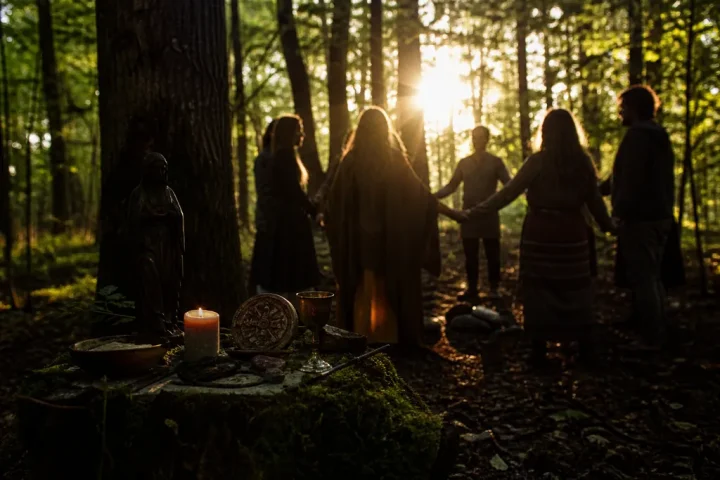
Although Rusalka may accept offerings on home altars, offerings are traditionally draped onto tree branches for them, especially birch trees. A temporary altar erected in a forest or beside a source of fresh water is ideal. If you would rather venerate the Rusalka closer to home, an altar in the backyard is generally more effective than one constructed indoors. Incorporate tree imagery into indoor altars and maintain them with a steady supply of clean fresh water in order to encourage the Rusalka to venture within.
OFFERINGS:
Rusalka expect veneration and offerings from women as their due. Rusalka perched in trees call out to girls passing by to give them gifts. Traditional offerings include ribbons, flower garlands, hand-embroidered ritual cloths, and tea towels.
SEE ALSO:
SOURCES:
- Encyclopedia of Spirits: The Ultimate Guide to the Magic of Fairies, Genies, Demons, Ghosts, Gods & Goddesses– Written by Judika Illes Copyright © 2009 by Judika Illes.
- The Encyclopedia of Ghosts and Spirits– Written by Rosemary Ellen Guiley – September 1, 2007


Follow