

Sius
Sius is the Hittite sun god, a deity of light, justice, divine order, and cosmic awareness. In some traditions, he is also listed as king of the gods, placing him among the highest powers of the Hittite pantheon.
As a solar deity, Sius sees what others do not. He observes the world from above, notices danger, reveals hidden threats, and acts as a guardian of divine justice. His role is not only to shine, but to witness, warn, and preserve order.
God of the Sun and Justice
Sius is closely associated with justice. Like many ancient sun gods, he represents the light that exposes wrongdoing and the clarity that allows truth to be seen.
The sun sees all things. Nothing is fully hidden from its gaze. This makes Sius a natural god of judgement, law, and moral order.
His solar power is not merely physical warmth or daylight. It is also spiritual illumination: the force that reveals what is concealed and restores balance when chaos threatens the world.
Sius and Teshub
Sius is an ally of Teshub, the great Hittite storm god.
Teshub is a powerful deity of storms, thunder, battle, and kingship. Sius, as sun god, complements him. Together, they represent different but essential forms of divine power: storm and sun, force and clarity, action and vision.
In Hittite mythology, Sius often appears as the god who recognises danger and gives warning. He may not always be the central warrior of the myth, but his perception is crucial.
Sius and Ullikummi
In the myth of Ullikummi, Sius is the first to notice the giant rising in the sea.
Ullikummi is a terrifying stone giant created to challenge Teshub and threaten the divine order. When Sius sees this immense danger, he immediately goes to warn Teshub.
So urgent is his message that Sius refuses to eat until he has delivered it. This detail reveals his seriousness and sense of duty. The sun god does not delay when the balance of the world is at risk.
Sius’s role in this myth is that of divine watcher and messenger. He sees the threat before others do and brings the warning that allows the gods to respond.
Sius and the Missing Telepinu
In another myth, Teshub’s son Telepinu disappears. His absence causes famine, disorder, and suffering. The land becomes barren, food disappears, and the people are left hungry.
Sius attempts to restore order by arranging a feast, but even this cannot relieve the hunger caused by Telepinu’s disappearance. The missing god must be found before fertility and abundance can return.
At Teshub’s request, Sius sends an eagle to search for Telepinu. The eagle, powerful and far-seeing, seems an appropriate messenger for a sun god. Yet the bird fails to find him.
Eventually, it is a bee who discovers Telepinu. After the lost god is found, Sius has the people perform a ritual, presumably one of thanksgiving, restoration, and magical significance.
The Ritual of Restoration
The ritual ordered by Sius after Telepinu is found suggests his role in re-establishing cosmic and social balance.
In ancient religion, ritual was not merely symbolic. It helped restore harmony between gods, humans, land, weather, fertility, and divine order.
When Telepinu vanishes, the world suffers. When he is found, ritual seals the restoration. Sius, as a god of justice and order, ensures that the proper sacred response is made.
He is not only a witness to divine events. He is also a guardian of correct ritual action.
Sius as the Missing God
In another version of the missing-god myth, it is Sius himself who disappears.
In this version, the sea god kidnaps Sius by catching him in a net as he sinks below the horizon. This image is profoundly symbolic: the sun descends, is trapped beneath the sea, and vanishes from the world.
During Sius’s absence, Hahhimas, or frost, takes hold. Without the sun, warmth disappears and the land falls under cold, sterility, and danger.
Sius is eventually rescued by Telepinu, reversing the roles found in the other version of the myth.
The Sun Beneath the Sea
The image of Sius being caught by the sea god as he sinks below the horizon reflects an ancient cosmological mystery.
Every evening, the sun appears to descend into the waters or underworld. Every morning, it returns. Myths often explain this daily disappearance and return as a journey, battle, imprisonment, or resurrection.
Sius’s abduction by the sea god may preserve this ancient solar pattern. The sun is swallowed, captured, or hidden, and the world suffers until it returns.
Sius and Hahhimas
When Sius is absent, Hahhimas, the frost, takes hold.
This detail shows the practical and spiritual importance of the sun. Without Sius, the world becomes cold. Fertility is threatened. Life weakens. The land falls into a state of danger.
Hahhimas is not merely weather. In mythic terms, frost represents stagnation, deathliness, and the suspension of life.
Sius’s return restores warmth, movement, and order.
The Occult Meaning of Sius
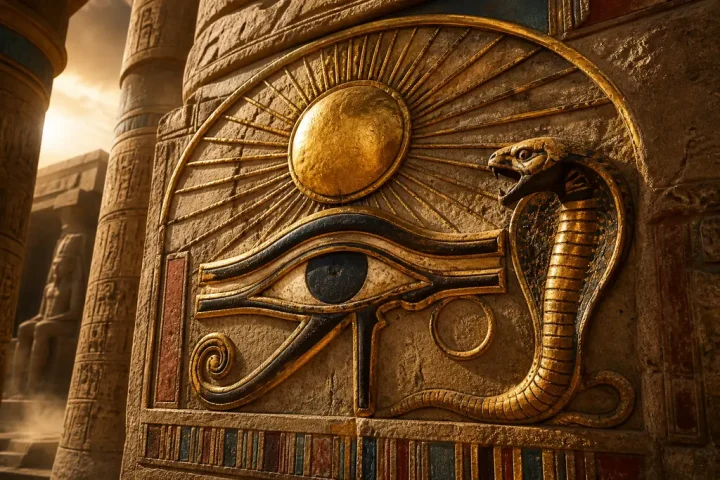
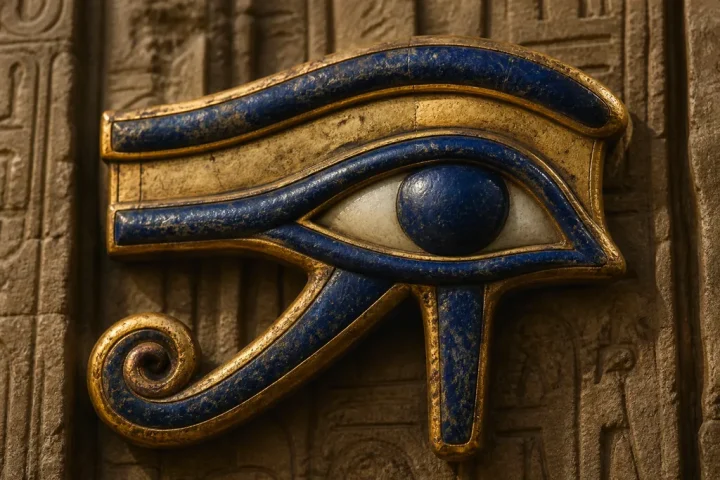
Sius represents the power of divine sight. He is the eye of the heavens, the witness of danger, the revealer of hidden threats, and the guardian of justice.
His myths show that solar power is not only radiant but vigilant. The sun watches. The sun warns. The sun restores.
Sius also embodies the fragile balance between light and darkness, warmth and frost, order and chaos. When the sun disappears, the world is endangered. When the sun returns, life can continue.
Sius’s Legacy
Sius stands as one of the important solar figures of Hittite mythology. Though not as widely known today as some other ancient sun gods, his myths preserve powerful themes: justice, warning, ritual restoration, cosmic balance, and the life-giving necessity of light.
He is the god who sees the giant in the sea.
He is the god who sends the eagle.
He is the god whose absence allows frost to seize the world.
He is the sun as witness, judge, and restorer.
Join the Occult World Mystery School
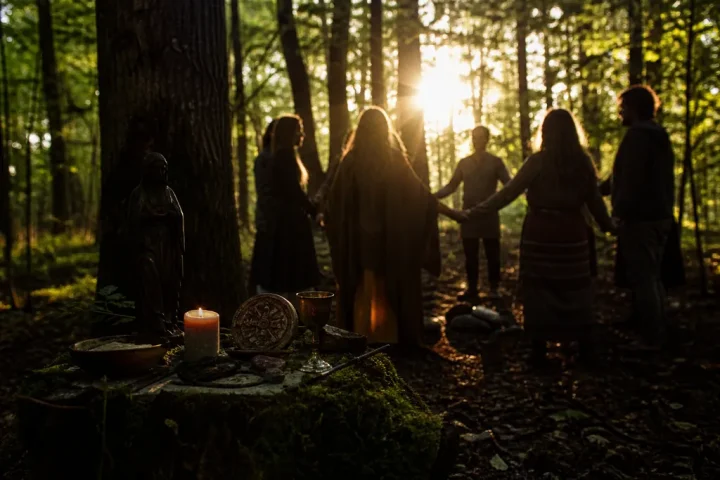
If you are fascinated by ancient gods, solar deities, Hittite mythology, storm gods, missing-god myths, ritual magic, mythic symbolism, and the hidden spiritual meanings behind ancient traditions, join us inside the Occult World Mystery School.
Inside the community, we explore mythology, gods, spirits, demons, angels, ancient grimoires, witchcraft, protection magic, Vodou, Hoodoo, Kabbalah, folklore, and the deeper occult structures behind sacred stories.
Join the Occult World Mystery School and continue your journey into the ancient, mysterious, and unseen worlds of myth and magic.
Written by
Ira Spar
Sources
- Gurney, O.R. The Hittites. Rev. ed. New York: Penguin, 1990.
- Hoffner, Harry A. Hittite Myths. 2nd ed. Atlanta: Scholars, 1991.
- Hooke, S.H. Middle Eastern Mythology. Mineola, NY: Dover, 2004
SEE ALSO:
SOURCE:
Storytelling: an encyclopedia of mythology and folklore – Edited by : Josepha Sherman – © 2008 by M.E. Sharpe, Inc.





Follow