

Temple of Set: Michael Aquino, Black Magic and the Left-Hand Path
The Temple of Set is one of the most influential and controversial magical orders to emerge from modern Satanism. Founded in 1975 by Michael A. Aquino following his departure from Anton LaVey’s Church of Satan, the organisation developed an intellectually demanding system centred on personal transformation, black magic, individual sovereignty and the pursuit of a form of self-created godhood.
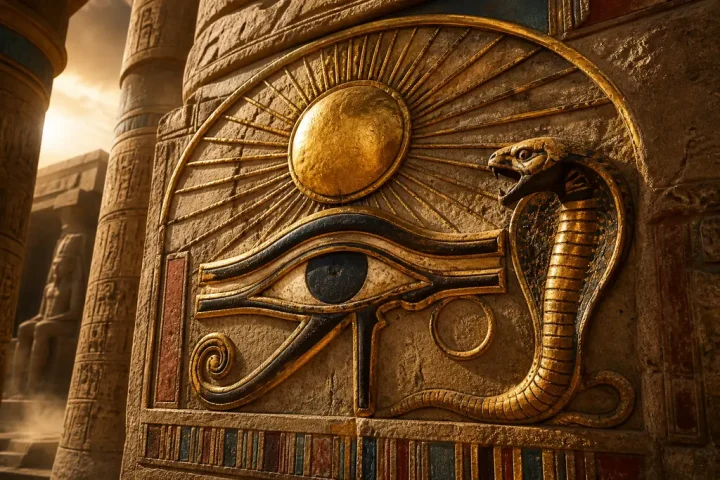
Although frequently classified as a Satanist organisation, the Temple of Set gradually distinguished its philosophy from LaVeyan Satanism. Its members did not merely treat Satan as a symbol of rebellion, instinct or material existence. Instead, they identified the ancient Egyptian god Set as an actual metaphysical principle of isolated consciousness, opposition and self-directed becoming.
At the heart of Setian philosophy lies a single commanding idea: the initiate must cease living as an unconscious product of society, religion and nature and deliberately create a higher, independent form of being.
Michael Aquino and the Church of Satan
Michael Aquino was a United States Army officer whose professional career included work connected with military intelligence and psychological operations. He joined the Church of Satan with his first wife in 1968 and soon became an important figure within Anton LaVey’s expanding organisation.
After returning from service in Vietnam in 1970, Aquino was ordained as a Satanic priest. He regarded Satanism as more than theatrical provocation or social rebellion. For him, it represented a serious magical and philosophical challenge to the psychological authority of conventional religion.
Aquino opposed what he saw as the power of organised religion to govern human behaviour through fear, guilt and superstition. His objective was not necessarily to convert the entire world to Satanism, but to weaken the influence of religious systems that encouraged submission to external gods and inherited moral codes.
Over time, however, he became increasingly dissatisfied with the direction of the Church of Satan. Aquino believed that LaVey placed too much emphasis on spectacle, public image and personal authority, while neglecting the deeper initiatory and magical possibilities of the movement.
The disagreement eventually became irreconcilable.
The Schism of 1975
In 1975 Aquino resigned from the Church of Satan and renounced the priesthood he had held within LaVey’s organisation. Together with Lilith Sinclair, who had led the New York Lilith Grotto, he established the Temple of Set in San Francisco.
The new organisation was not intended to be merely another branch of the Church of Satan. Aquino sought to create a structured initiatory order devoted to the serious study and practice of black magic.
According to Aquino’s account, the decisive revelation occurred on the eve of the summer solstice, during the night of 21 June 1975. After separating from LaVey, he performed a magical working intended to summon the Prince of Darkness and seek guidance regarding the future of his initiatory mission.
Aquino claimed that the being who answered did not present himself simply as Satan. Instead, he appeared as Set, the ancient Egyptian god associated with isolation, disorder, strength, the desert and opposition.
This encounter became the spiritual foundation of the Temple of Set.
The Aeon of Set
Aquino declared that the ritual had inaugurated the Aeon of Set, a new magical age intended to replace the earlier Aeon of Satan proclaimed by Anton LaVey in 1966.
Within Aquino’s interpretation of occult history, LaVey’s Satanic movement had served as an intermediary stage. It had broken the psychological authority of Christianity and prepared certain individuals for a more advanced understanding of the Prince of Darkness.
The Aeon of Set was presented as an age of awakening in which exceptional individuals could develop an independent consciousness and move beyond the limitations imposed by nature, society and conventional religion.
Aquino also connected this revelation with Aleister Crowley. He maintained that the entity Aiwass, who allegedly dictated The Book of the Law to Crowley in Cairo in 1904, had been another manifestation or expression of Set.
Crowley had announced the Aeon of Horus. LaVey had declared the Age of Satan. Aquino now proclaimed the Aeon of Set.
Aquino accepted the title of the “Second Beast” and had the number 666 tattooed on his scalp, consciously identifying himself with the apocalyptic symbolism of the Beast from the Book of Revelation.
Setianism and the Nature of Consciousness
The Temple of Set divides religions into two broad categories.
The first consists of traditions that worship nature, cosmic order or divine powers believed to exist within the universe. From the Setian perspective, these systems ultimately encourage human beings to surrender their individuality to something greater than themselves.
The second category consists of traditions centred on consciousness itself. Setianism places itself within this category because it treats individual self-awareness as something distinct from the mechanical processes of nature.
Set is understood as the principle that separates the conscious self from the unconscious universe.
This separation is not regarded as a spiritual defect. It is the source of individuality, intelligence and magical power. The initiate is therefore not expected to dissolve into nature, submit to a universal deity or seek union with an all-encompassing cosmic consciousness.
The Setian seeks differentiation.
Through discipline, knowledge and magical practice, the individual attempts to become more fully and permanently himself or herself.
Xeper: The Process of Becoming
One of the most important concepts within Setian philosophy is expressed by the Egyptian term Xeper, commonly interpreted as “to come into being” or “to become”.
Xeper does not describe ordinary personal development. It refers to a deliberate transformation of the self through knowledge, experience, initiation and magical practice.
The Setian is expected to identify the forces that have shaped his identity, including family expectations, social conditioning, political ideology, religious morality and biological instinct. Rather than passively accepting these influences, the initiate studies them, challenges them and gradually creates a more conscious identity.
The goal is not conformity to a predetermined Setian personality. Each initiate is expected to discover and strengthen what makes him or her unique.
Through Xeper, the self becomes a work of magical creation.
The Left-Hand Path
The Temple of Set identifies its tradition with the Left-Hand Path.
In popular culture, this term is often treated as a synonym for evil, cruelty or forbidden ritual. Within Setian philosophy, however, the Left-Hand Path refers primarily to the deliberate preservation and intensification of individual consciousness.
Where many spiritual systems teach surrender, humility and union with a divine source, the Left-Hand Path seeks autonomy, distinction and self-deification.
Setian initiation is therefore understood as a movement away from unconscious participation in collective existence. The practitioner attempts to develop what the Temple describes as a powerful individual essence capable of existing beyond ordinary animal life.
Its ultimate ambition is personal immortality, not necessarily in the conventional religious sense of entering heaven, but as the continued existence of an independent and self-created consciousness.
Critics have observed that this ideal of eternal isolation outside nature resembles what some religions would describe as damnation. Setians, however, interpret it as liberation from the unconscious universe.
Black Magic in the Temple of Set
Black magic occupies a central position within the Temple’s teachings, but it is not defined merely as the casting of harmful spells.
In Setian thought, black magic is the deliberate use of consciousness and will to create change in accordance with self-determined goals. It begins with the transformation of the magician and extends outward into the magician’s environment.
The Temple distinguishes between lesser and greater forms of black magic. Lesser black magic concerns the manipulation of circumstances, appearances, emotions and human behaviour through psychological knowledge, symbolism, communication and personal presence.
Greater black magic concerns the transformation of the self through ritual and direct interaction with the deeper levels of consciousness.
Magic is treated as potentially dangerous. The Temple has warned that occult practice can be as hazardous to an inexperienced person as volatile chemicals are to an untrained laboratory technician. It is not presented as entertainment for the unstable, emotionally immature or undisciplined.
Before attempting serious magical work, the initiate is expected to develop judgement, self-control and a coherent ethical system.
Ethics and Individual Responsibility
The Temple of Set rejects the idea that black magic provides an excuse for uncontrolled cruelty, criminality or impulsive behaviour.
Using magic to satisfy every trivial desire is not considered evidence of advancement. Such behaviour suggests that the magician remains controlled by appetite, insecurity and emotional reaction.
The Setian ideal demands responsibility because the magician claims personal authority over his or her actions. There is no external god to forgive failure and no universal moral law upon which the initiate can place the burden of decision.
This does not mean that Setians necessarily follow conventional morality. They may challenge accepted social values in order to examine whether those values possess genuine meaning or merely reflect collective conditioning.
The purpose of this confrontation is not mindless transgression. It is the development of discernment.
An initiate who cannot govern his own behaviour has not achieved sovereignty. He remains governed by impulse.
Initiatory Degrees
The Temple of Set developed a hierarchical system containing six initiatory degrees.
These are Setian I, Adept II, Priest or Priestess of Set III, Magister or Magistra Templi IV, Magus or Maga V, and Ipsissimus or Ipsissima VI.
Advancement is not intended to function merely as a reward for loyalty or years of membership. Each degree represents a particular level of recognition, responsibility and initiatory development.
To be recognised as an Adept, for example, the initiate is expected to demonstrate an effective understanding and application of the fundamental principles of black magic.
The priesthood represents a deeper relationship with Set and the initiatory current of the Temple. The higher degrees are associated with major contributions to the philosophical or magical development of the tradition.
Ultimate executive authority is held by the Council of Nine, which appoints senior officers, including the High Priest or High Priestess and the organisation’s executive director.
Pylons and Orders
The Temple has historically organised members into groups known as Pylons. Some Pylons functioned as local bodies in which members could meet and conduct work together, while others operated as networks connected across distance.
The organisation also developed specialised Orders devoted to particular magical, historical or cultural currents.
The best-known and most controversial of these has been the Order of the Trapezoid. Its work drew upon Germanic symbolism and the darker magical imagery associated with National Socialist esotericism.
Aquino conducted ritual work at Wewelsburg Castle, the site used by Heinrich Himmler and senior members of the SS. He also interpreted Himmler as possessing a significant initiatory or occult role.
These activities generated lasting controversy. The Temple rejected antisemitism and was reported to include Jewish members, yet its engagement with SS symbolism, Wewelsburg and the occult dimensions of National Socialism remained deeply disturbing to many outside observers.
This tension illustrates one of the persistent dangers of occult transgression: the attempt to study dark historical symbolism can become morally compromised when fascination overwhelms critical judgement.
The Literature of the Temple
The Temple of Set developed a substantial internal body of magical and philosophical literature.
Its periodical, The Scroll of Set, circulated essays, initiatory discussions, organisational material and commentary on magical practice.
Another important collection was known as the Jeweled Tablets of Set. These writings gathered material concerning Setian philosophy, ritual, magical theory and the specialised work of the Temple’s Orders.
Much of the Temple’s deeper instruction was reserved for recognised initiates. This reflected its identity as an initiatory school rather than an entirely public religious movement.
The initiate was expected to study, experiment and contribute rather than simply accept a fixed creed.
Satanism or Setianism?
The Temple of Set originated in a schism from the Church of Satan and retained many concepts associated with Satanism, including opposition to conventional religion, personal sovereignty and the use of black magic.
Nevertheless, Setianism gradually presented itself as something distinct.
LaVeyan Satanism generally treated Satan as a symbol of individualism, rebellion and carnal existence. Aquino’s Temple treated Set as an objectively meaningful metaphysical intelligence or principle connected with consciousness itself.
This difference transformed the role of ritual.
In LaVeyan Satanism, ritual could operate as psychodrama and emotional release. Within the Temple of Set, ritual was understood as a genuine initiatory technology capable of changing the magician’s consciousness and relationship with reality.
The split was therefore not simply personal. It represented two different understandings of what Satanism and black magic could become.
The Legacy of the Temple of Set
The Temple of Set became a significant influence within modern Satanism and the wider Left-Hand Path.
Its importance lies less in its membership numbers than in the intellectual structure it brought to contemporary black magic. It created a system in which occultism, psychology, personal sovereignty and initiatory discipline were combined into a coherent path.
The Temple rejected the passive worship of external gods and demanded that the initiate become the central authority within his own existence.
Its path is deliberately severe. It offers no comforting promise that everyone will be saved, enlightened or transformed. It assumes that genuine initiation is rare and that many people prefer obedience, distraction and collective identity to the burden of freedom.
For the Setian, the question is not whether a god will rescue humanity.
The question is whether the individual possesses the strength to create himself.
Enter the Occult World Mystery School
You can continue reading disconnected fragments about Satanism, magical orders and secret societies while never understanding the systems behind them.
You can collect names, symbols and sensational stories and still remain completely uninitiated.
Or you can step beyond the surface.
The Occult World Mystery School opens the gates to serious study of demonology, ritual magic, ancient grimoires, necromancy, angels, Kabbalah, Hoodoo, divination, mythology and the forbidden traditions of the Left-Hand Path.
This is not spiritual entertainment for passive spectators. It is a growing body of occult knowledge for people who are prepared to study, question and confront the hidden forces that have shaped magical history.
Stop allowing shallow articles, social-media occultists and recycled superstition to define the mysteries for you.
Join the Occult World Mystery School now. Claim the knowledge, develop the discipline and enter the hidden tradition before another year of your life disappears in ignorance.
SOURCES:
The Element Encyclopedia of Secret Societies : the ultimate a-z of ancient mysteries, lost civilizations and forgotten wisdom written by John Michael Greer – © John Michael Greer 2006
Conspiracies and Secret Societies : The Complete Dossier – Written by Brad Steiger and Sherry Steiger– Copyright 2006 by Visible Ink Press®
Arthur Lyons, Satan Wants You: The Cult of Devil Worship in America, Mysterious Press, 1989.
Arthur Lyons, The Second Coming: Satanism in America, Award Books, 1970.





Follow