

Toad-Witch: The Toad-Bone Witches of East Anglia
The Toad-Witch belongs to one of the strangest and most unsettling traditions of English rural witchcraft. Known variously as a Toadman, Toadwoman or Toad-Witch, the practitioner was believed to acquire extraordinary magical authority through a secret initiation involving a toad, its bones and running water at night. The tradition became particularly associated with East Anglia, where horses remained essential to agricultural life and where certain horsemen developed reputations for possessing knowledge that ordinary labourers did not understand. In local memory, the most powerful among them were not simply skilled handlers of animals. They were people who had crossed a supernatural threshold and returned carrying a bone that could bend animals, influence human beings and perhaps bring ruin upon anyone foolish enough to provoke them.
Unlike the witch portrayed in early modern demonology, who supposedly entered into a formal pact with Satan or joined a secret coven, the Toad-Witch was essentially self-initiated. The power was not bestowed by a priesthood or inherited through an established occult order. It had to be deliberately sought through an ordeal in which death, decay and flowing water became the instruments of transformation. The initiate approached the rite alone and accepted the danger that came with it, because the same folklore that promised unusual command over animals and people also warned that the power of the Toad-Witch could destroy the person who possessed it.
The tradition survived primarily through oral accounts before folklorists and regional writers began recording it in the nineteenth and early twentieth centuries. By then, the great agricultural horse culture that had sustained Toadman lore was already beginning to disappear. What remained was a mixture of professional horsemen’s secrets, rural witchcraft, stories of the Evil Eye and memories of individuals whose neighbours believed they possessed powers that should never have belonged to ordinary people.
The Toad as a Creature of Witchcraft
The toad had been associated with magic in Europe long before the East Anglian Toadmen appeared in written folklore. Its strange appearance, nocturnal habits and tendency to inhabit wet ground gave it an uneasy place between ordinary animal life and the supernatural imagination. It moved close to earth and water, disappeared into mud and emerged unexpectedly after darkness, while its secretions and reputed poisonous nature encouraged centuries of medicinal and magical speculation.
Toads appeared repeatedly in charms, magical recipes and accusations of witchcraft. Their bodies were credited with powers capable of healing disease, harming enemies and influencing desire. Bones taken from toads were treated as especially potent, and classical sources already preserve beliefs that particular bones from frogs or toads possessed unusual properties.
This older background does not prove that East Anglian Toad-Witchcraft survived unchanged from antiquity, but it demonstrates that the magical bone was not an isolated invention. By the time rural English horsemen began telling stories about it, the toad had already accumulated centuries of occult symbolism.
The East Anglian tradition transformed that symbolism into something more personal. The bone ceased to be merely a charm obtained from a magical animal. The process of obtaining it became an initiation that separated the Toad-Witch from ordinary society.
Tilly Baldry: The Toad-Witch of Huntingtoft
The best-known individual associated with the tradition is Tilly Baldry, whose story was published in the Eastern Counties Magazine in 1901. Baldry was connected with Huntingtoft and was remembered locally as a woman whose reputation for witchcraft inspired both fear and fascination.
Her account provides one of the most vivid descriptions of how a Toad-Witch supposedly acquired power.
According to Baldry, the prospective witch first captured a hopping toad and carried it close against the body until decomposition reduced the creature to its backbone. This intimate contact with decay was part of the ordeal. The animal was not simply killed and discarded. Its death accompanied the initiate physically until only the bones remained.
The bones were then taken to running water at midnight.
At this point, the rite crossed from unpleasant folk practice into supernatural initiation. Baldry described strange forces acting upon the candidate as the bones were held over the stream. In later reproductions of her account, the Devil himself appears and attempts to drag the initiate across the water. The candidate must endure the encounter and consciously accept the transformation.
Baldry gave the moment of self-initiation in a characteristically blunt form. The initiate declares, in effect, that from this point forward she is a witch.
No coven grants permission. No ceremonial officer places a robe around her shoulders. The authority is claimed directly through the ordeal.
This is what makes the Toad-Witch tradition so unusual. The initiate does not ask to join witchcraft. She proves that she is willing to cross into it.
The Bone Chosen by the Water
Other versions of the rite place even greater emphasis upon the bones themselves. A dead toad could be buried in an anthill and left until ants stripped away the flesh. The clean skeleton was then taken to running water, usually at midnight, and thrown into the stream.
Most of the bones behaved naturally and moved with the current. One, however, was expected to behave differently. It might refuse to drift away or appear to move against the flow.
That was the magical bone.
The symbolism is difficult to miss. Ordinary matter obeys the direction imposed upon it, while the magical bone resists. The initiate who takes possession of it likewise steps outside the ordinary current of human experience.
The water becomes the judge of the rite. The candidate does not simply select whichever bone seems most impressive. The correct bone reveals itself through behaviour that should not occur.
Some later descriptions identify the magical piece as a small forked bone whose shape resembles a horse’s hoof. Folklore varies considerably over the exact anatomical fragment, which suggests that the principle mattered more than the scientific identification of a particular bone. Something had to resist the current.
The Toad-Witch then recovered and carried that object as an amulet, often concealing it in a pouch or keeping it close to the body. Its possession was believed to account for the practitioner’s extraordinary authority over animals.
The Horse That Would Not Move
The strongest and most persistent power attributed to the Toadman was control over horses. This ability must be understood within the world in which the folklore developed. Before the tractor transformed British agriculture, horses were indispensable. They ploughed fields, carried goods and pulled vehicles through landscapes where the failure of one animal could stop an entire day’s work.
A person who could control horses therefore possessed genuine economic importance.
The Toadman was said to be capable of calming animals that violently resisted other handlers, but his power could supposedly work in the opposite direction as well. A perfectly obedient horse might suddenly refuse to move when the Toadman wished it to remain still. No amount of whipping, pulling or persuasion could force the animal forward until the charm had been removed.
Stories of this sort created a formidable reputation around particular horsemen. An employer might own the land and the animals, but the horseman who supposedly possessed the Toad Bone could demonstrate that ownership did not necessarily equal control.
Some of what appeared magical may have depended upon closely guarded practical knowledge. Skilled horsemen understood scents, handling techniques and animal behaviour that inexperienced observers did not recognise. Professional secrecy encouraged them to preserve this advantage, and rumours of supernatural abilities made the difference between ordinary knowledge and specialist skill even more intimidating.
Yet practical explanation does not erase the folklore. The secret knowledge and the magical reputation strengthened one another until the horseman became a figure who stood somewhere between agricultural specialist and witch.
Power Over Animals and People
The Toad-Witch’s influence was not always confined to horses. Norfolk traditions extended the reputed power to pigs and cattle, while later accounts claim that Toadmen could exert supernatural influence over women and that Toadwomen exercised corresponding power over men.
The rigid division according to sex is less consistently documented than the tradition of horse control, but it reflects the larger belief that the Toad-Witch possessed a force capable of overriding another being’s will.
This reputation made the practitioner socially dangerous. Someone who could stop a horse might also stop a person. The same unseen force that brought livestock under control could be turned against a rival or neighbour.
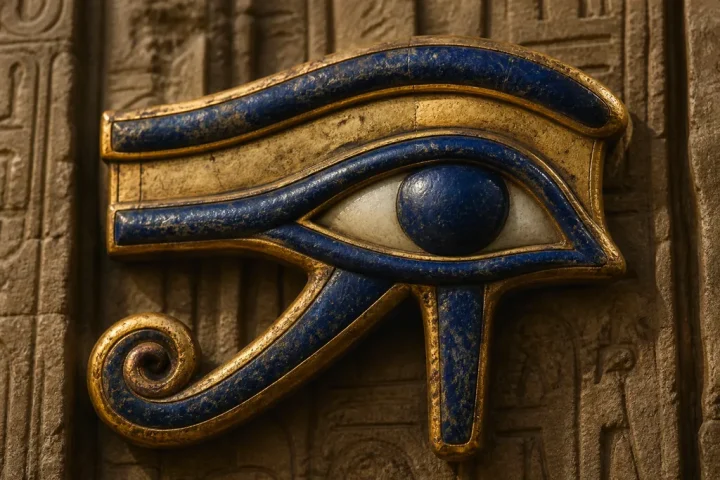
The old English concept of overlooking became particularly important here. To overlook someone was to harm that person through the Evil Eye or another form of directed witchcraft. Illness, weakness and repeated misfortune could all be interpreted as evidence that someone had been magically targeted.
East Anglian folklore even preserved expressions involving “putting the toad” upon another person, suggesting that the creature’s name itself became shorthand for malignant magical influence.
A Toad-Witch did not therefore need to perform spectacular magic in public. Reputation alone could be enough to produce fear. Once neighbours believed that a particular person possessed the power to overlook them, every unexpected illness or accident could become evidence that the witch had acted.
Tilly Baldry and the Man Who Walked Backwards
The legends surrounding Tilly Baldry became considerably darker when they moved from animal magic into her personal relationships.
According to later reproductions of the 1901 account, Baldry’s husband abandoned her for another woman living approximately sixteen miles away. Baldry supposedly refused to accept the desertion and used her magical power to force him to return.
The extraordinary detail preserved in the story is that he was compelled to travel the entire distance backwards.
Several people were said to have witnessed the impossible journey.
Whether an event remotely resembling this ever occurred cannot now be established, but the story reveals how Baldry’s reputation operated. Ordinary marital conflict was transformed into evidence of supernatural domination. A husband who attempted to escape a Toad-Witch discovered that distance itself offered no protection.
The story also perfectly expresses the symbolic character of her alleged powers. Baldry did not merely make him return home. She reversed his movement and forced him to retrace his path in the wrong direction, turning physical movement into a magical humiliation.
The Curse of the Burned Hair
Baldry’s alleged revenge upon her husband’s lover became even more sinister.
The woman is identified in later accounts as Neoma Cason. Baldry supposedly obtained a lock of her hair and burned it during a ritual intended to curse her.
Hair has an ancient place within sympathetic magic because it remains physically connected, at least symbolically, with the person from whom it was taken. A magical practitioner who possessed another person’s hair therefore possessed something that could represent the entire individual within a spell.
When Cason learned what Baldry had supposedly done, she became terrified and sought help from a cunning man. He reportedly told her that the curse could only be broken if she recovered the ashes of her burned hair.
That was impossible because Baldry still possessed them.
Cason subsequently became ill and died. The story reaches its darkest point at the funeral, where Baldry was said to have watched the coffin descend into the grave before throwing the ashes of the burned hair upon it.
The scene is almost certainly shaped by folklore, and it cannot be presented as evidence that Baldry magically caused a woman’s death. Its importance lies in what people believed about her. She had become the kind of witch whose anger supposedly continued beyond the victim’s death and whose magical token followed the corpse into the grave.
For a village storyteller, little more was required to establish that Tilly Baldry possessed dangerous power.
The Evil Eye
Overlooking represented one of the most feared abilities attributed to rural witches because no elaborate ritual needed to be visible. A hostile glance, spoken curse or deliberate act of magical concentration might supposedly be sufficient to begin the victim’s decline.
The Toad-Witch’s possession of the bone was believed to intensify this capacity. The object represented a pact with powers beyond ordinary nature, meaning that an angry practitioner was not merely an unpleasant neighbour but someone capable of turning invisible forces against another person.
Fear of overlooking created complex social behaviour. People might avoid offending someone reputed to possess the Evil Eye or seek assistance from another cunning practitioner if unexplained problems began after an argument.
In such communities, witchcraft operated partly through social expectation. Once a curse had been pronounced, the victim knew about it, feared it and interpreted subsequent experiences through that fear. The psychological power of a reputation could therefore operate alongside whatever supernatural power people believed the witch possessed.
This relationship between belief and experience made overlooking extraordinarily difficult to challenge. If nothing happened, the victim had escaped. If something went wrong, the curse had worked.
The Nine Toads
A darker variation of Toad-Witchcraft claims that extraordinary destructive power could be obtained through the deaths of nine toads. The animals were supposedly tied together and left to die before being buried as part of a magical procedure associated with overlooking and killing.
This form of the tradition is less securely documented than the classic bone-and-water initiation and should be treated as a variant rather than as an essential requirement of Toad-Witchcraft.
The number nine nevertheless fits easily within the larger symbolic environment of European folk magic. Nine appears repeatedly in charms, healing rites and magical repetitions, while the binding together of living creatures creates an obvious image of domination.
The rite also reveals the darker reputation that accumulated around Toad-Witches. The horse charmer who controlled an unruly stallion could be useful to the community, but the witch who manipulated death belonged to another category entirely.
The same secret knowledge that made a practitioner valuable also made that person potentially terrifying.
The Devil at the Stream
Christian influence transformed the initiation into a direct confrontation with the Devil. When the bones entered the water, the supernatural adversary might appear and demand the magical bone or attempt to drag the initiate into the current.
The candidate had to resist.
This element resembles countless initiation legends in which occult power cannot be obtained without first surviving fear. The initiate approaches a boundary where ordinary religious protections no longer apply and deliberately enters contact with whatever inhabits the forbidden side.
From a Christian perspective, this made the Toad-Witch obviously dangerous. The power could only have been acquired through an association with evil.
From an occult perspective, the story can be read differently. The Devil functions as the terrifying guardian of the threshold, appearing precisely when the candidate attempts to cross from ordinary life into forbidden knowledge.
The initiate who panics abandons the rite.
The initiate who continues claims the bone.
Either interpretation preserves the same central idea: power has a price, and the candidate discovers that price only after it is too late to pretend that the ritual is merely a game.
Madness and Violent Death
The power of the Toad-Witch was reputedly dangerous not only to enemies but also to the person who possessed it. Several later collections warn that Toadmen could become psychologically disturbed or suffer extreme misfortune after acquiring the bone.
The Norfolk archival material preserves stories in which possession of the object was followed by personal tragedy. Some informants regarded the practice as fundamentally evil and refused to experiment with it despite knowing the stories.
Later writers developed this warning further, claiming that the tremendous supernatural force granted through the initiation could eventually cause madness or lead the Toad-Witch towards violent death.
Such claims should not be treated as a universal rule of the tradition, but they fit the moral logic surrounding forbidden power. The magical bone grants control while simultaneously threatening its owner.
The initiate becomes capable of influencing animals and human beings but cannot guarantee control over the force that made those powers possible.
The Toad-Witch acquires mastery and danger at the same moment.
The Horseman’s Secret World
Toadman folklore overlaps with the secret culture of British horsemen, although it should not be treated as identical to the Society of the Horseman’s Word. The latter is particularly associated with Scotland and northern Britain, while the toad-bone traditions became famous in East Anglia.
Both traditions nevertheless developed among agricultural workers whose specialised knowledge gave them unusual authority over horses. Professional secrets could include techniques for calming difficult animals, methods of training and substances that affected behaviour.
An outsider unable to reproduce these results might naturally conclude that magic was involved.
Horsemen sometimes encouraged the impression because secrecy enhanced status. A labourer who appeared to command supernatural power could negotiate social relationships differently from one regarded as completely replaceable.
The magical reputation therefore occupied a space where genuine expertise and supernatural belief became inseparable.
The Toad-Witch could know things that other people did not.
That alone was enough to make the countryside nervous.
The Bone Against the Current
At the centre of every version of the tradition stands the same haunting image: dead bones entering black water at midnight while one refuses to move in the expected direction.
The entire mythology of the Toad-Witch is contained within that moment.
The toad has died. Its flesh has disappeared and the candidate has approached a threshold where ordinary daylight rules no longer apply. The stream receives the bones and carries most of them away, but one appears to resist.
The initiate reaches for it.
Whether anyone ever possessed a bone with supernatural powers is ultimately less important to folklore than the meaning assigned to that act. The Toad-Witch becomes someone willing to seize the object that ordinary nature itself seems unable to control.
That power can calm horses or terrify enemies, protect a livelihood or destroy a neighbour. It can provide independence while isolating the practitioner from everyone frightened by what the bone represents.
English folklore did not imagine powerful witches as harmless eccentrics. Power made them useful precisely because it also made them dangerous.
The Toad-Witch embodied that contradiction perfectly.
Witchcraft Was Never Meant to Be Harmless
Modern culture has worked very hard to make witchcraft safe, decorative and meaningless. It sells the image while stripping away the discipline, fear, transformation and confrontation with the unknown that gave traditional witchcraft its power. The old Toad-Witches would scarcely recognise a spirituality reduced to aesthetic accessories and comforting slogans.
If you are serious about Witchcraft and Wicca, then stop hovering at the edge of the Craft and pretending that collecting correspondences makes you a witch. Enter the Occult World Mystery School and study the history, ritual, spirit traditions, protection, divination, folk magic and deeper currents from which modern witchcraft emerged. Learn why the old practitioners worked with thresholds, bones, animals, herbs, charms and altered states of consciousness, and learn how modern Wicca transformed those older currents into a living magical religion. Stop letting social media teach you fragments while the real tradition remains untouched. Develop discipline, understand the Craft and build a practice that actually belongs to you. The door is open. Enter the Occult World Mystery School and start taking your witchcraft seriously.
FURTHER READING:
- Pennick, Nigel. Secrets of East Anglican Magic. London: Robert Hale, 1995.
- The Norfolk Record Office manuscript Folklore: Veterinary Cures and Recipes – The Horseman’s Words and Charms, NRO MS 21630/147 502X2, compiled around 1958, preserves important testimony concerning Toadmen, Toadwomen, horse magic, the anthill method of exposing toad bones and the belief that the magical bone could resist the current.
- The account of Tilly Baldry was originally published in the Eastern Counties Magazine and Suffolk Note-Book in 1901 and was subsequently preserved in regional folklore collections. The Norfolk Record Office confirms Baldry’s initiation account, while later retellings preserve the stories concerning her husband, his alleged backward return and the curse involving her rival’s hair.
- George Ewart Evans, The Horse in the Furrow, The Pattern Under the Plough and Horse Power and Magic, preserves oral history concerning East Anglian horsemen and the disappearing magical culture associated with working horses.
- Andrew D. Chumbley, The Leaper Between: An Historical Study of the Toad-Bone Amulet, examines the wider history of magical toad and frog bones and traces parallels between classical references and later British folk magic.
- Nigel Pennick, Secrets of East Anglian Magic, Witchcraft and Secret Societies of Rural England and The Toadman, preserves later traditions concerning Toadman initiation, overlooking, horse magic and the dangerous consequences associated with possessing the bone.
- Pliny the Elder, Natural History, preserves much earlier classical traditions concerning unusual magical properties attributed to the bones of frogs and toads, providing valuable historical context without establishing a direct uninterrupted line of descent to the East Anglian Toad-Witch tradition.
SOURCE:
The Encyclopedia of Witches, Witchcraft and Wicca – written by Rosemary Ellen Guiley – Copyright © 1989, 1999, 2008 by Visionary Living, Inc.


Follow