
Magic: The Art of Will, Power and Transformation
Magic is the ability or power to manifest change by aligning inner forces with natural and supernatural forces. The inner forces are will, thought and imagination. Natural forces are found in nature, such as the elements, herbs, stones, planets and stars. Supernatural forces include spirits, deities, angels, demons and the Godhead.
Magic has existed since the earliest stages of human history. The first evidence reaches back to the cave paintings of the Palaeolithic Age, some of which suggest ritual acts intended to secure successful hunts. Since then, magical systems have appeared across cultures and religions, always reflecting humanity’s desire to understand, influence and participate in the hidden powers of existence.
The word magic may come from the Greek megus, meaning “great”, as in “great science”; from magein, referring to the science and religion of Zoroaster; or from magoi, a Median tribe in Iran known to the Greeks for its magical skills. Many definitions have been offered, but magic resists a single, precise explanation. It is both a system and an experience. Every magician, witch, sorcerer or occultist may understand it differently.
Definitions of Magic
The Goetia portion of the Lemegeton of King Solomon defines magic as:
“. . . the Highest, most Absolute, and most Divine knowledge of Natural Philosophy, advanced in its works and wonderful operations by a right understanding of the inward and occult virtue of things; so that true Agents being applied to proper Patients, strange and admirable effects will thereby be produced. When magicians are profound and diligent searchers into Nature, they, because of their skill, know how to anticipate an effect, the which to the vulgar shall seem to be a miracle.”
Aleister Crowley gave one of the most famous modern definitions of magic as “the science and art of causing change to occur in conformity to the will.” He also wrote that “any required Change may be effected by the application of the proper kind of degree of Force in the proper manner through the proper medium to the proper object.” For Crowley, “every intentional act is a magical Act.” If the magical act failed, it meant that the magician had not fulfilled all the necessary requirements.
Dion Fortune defined magic as “the art and science of changing consciousness according to the Will.”
P. E. I. Isaac Bonewits, in Real Magic, described magic in terms of energy as:
“. . . a science and an art of comprising a system of concepts and methods for the build-up of human emotion, altering the electrochemical balance of the metabolism, using associational techniques and devices to concentrate and focus this emotional energy, thus modulating the energy broadcast by the human body, usually to affect other energy patterns, whether animate or inanimate, but occasionally to affect the personal energy patterns.”
These definitions show that magic is not only about changing the outer world. It also changes the magician.
Magic, Morality and Intention
Magic is neutral and amoral. It has no colour in itself. It can be used for healing, protection, spiritual growth, material gain, manipulation or harm, depending on the intention of the practitioner.
The distinction between white magic and black magic is relatively modern. Occultist A. E. Waite argued that this distinction depends on sharp contrasts between good and evil spirits, whereas in ancient times the boundaries were less clear.
Anthropologist Bronislaw Malinowski stated that magic has three functions: to produce, to protect and to destroy. It also has three elements: the spell or incantation, the rite or procedure, and the altered state of the practitioner. This altered state may be achieved through fasting, meditation, chanting, dancing, visualisation, inhaling fumes, sleep deprivation, drugs or other methods.
Magic exists in a liminal realm, a threshold space between the material and spiritual worlds. The term liminality comes from limen, meaning “threshold”. Magical ritual opens the ordinary world to the unstable and unpredictable forces of the unseen. For this reason, magicians have often been viewed as powerful, dangerous or ambiguous figures.
Sorcery, Sympathy and Correspondence
The simplest form of magic is mechanical sorcery, in which a physical act is performed to create a result. A wax image may be melted to harm an enemy. Blood may be scattered on a field to encourage fertility. Knots may be tied in a cord to store wind for a sea voyage. These actions are often accompanied by charms, spells or incantations.
James G. Frazer, in The Golden Bough, argued that magic is based on the Law of Sympathy, the idea that all things are linked by invisible bonds. Sympathetic magic includes two main principles. Homeopathic magic works through similarity: like produces like. Contagious magic works through contact: things once connected continue to influence each other, even at a distance.
These principles form the basis of magical correspondences. Everything in the universe responds to something else. Colours, herbs, planets, stones, spirits, emotions and symbols may all be linked through hidden relationships. In many mystical traditions, thoughts themselves are seen as real forces. “Thoughts are things” and “thoughts create reality” are fundamental occult ideas.
Egyptian Magic
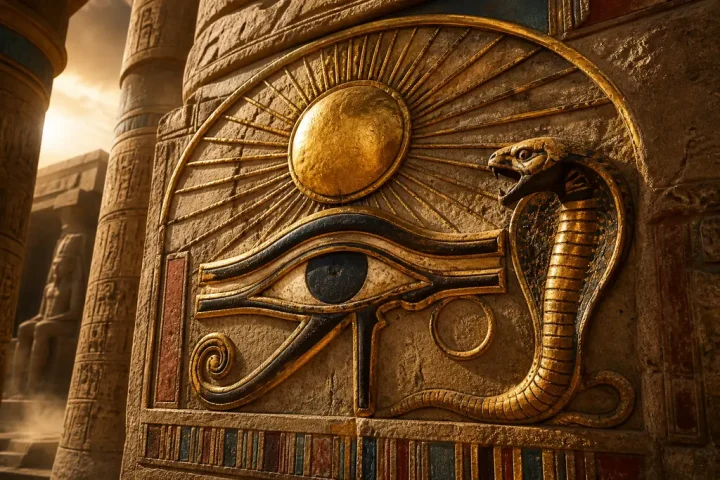
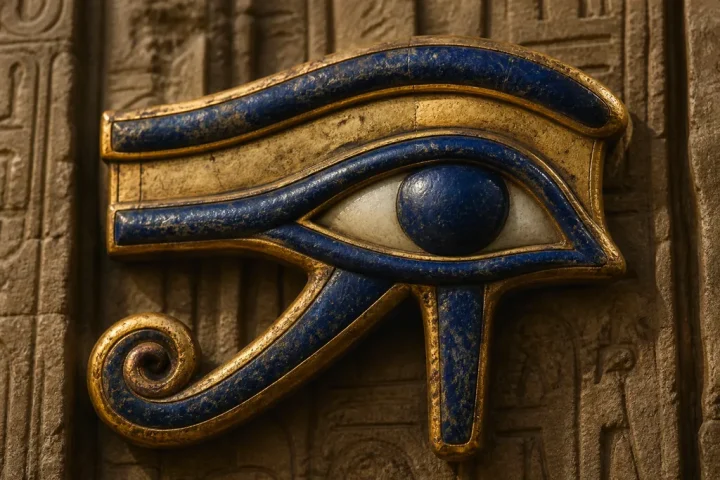
Magic played an important role in ancient Egypt and strongly influenced Western ritual magic. Egyptian priests practised spell casting, divination, necromancy, the making of amulets and talismans, dream magic, healing magic and the use of magical figures similar to poppets.
Illness was often believed to be caused by demons or hostile forces, so cures could involve exorcism. Mummification was performed according to precise ritual magic to ensure safe passage into the afterlife. The Egyptian Book of the Dead functioned as a magical guide for navigating the underworld realm of Osiris.
Especially important in Egyptian magic was the correct use of sacred words and names of power. This idea would later become central to European ceremonial magic.
Greek and Roman Magic
Greek magic drew from Egypt, the Middle East and the wider ancient world. The Greeks distinguished between high and low magic. High magic, or theurgy, involved divine powers and spiritual ascent. Low magic, or mageia, was associated with sorcery, spell casting, potions, charms and hired practitioners.
The Neoplatonists favoured theurgy, believing that divine powers could be summoned and that the soul could rise toward the heavens. The Hermetic principle “As above, so below” also shaped magical thought, teaching that the microcosm reflects the macrocosm.
The Romans practised sorcery and counter-sorcery, especially curses, for political and personal advantage. Although magic was popular among the public, authorities feared its private use. The Cornelian Law declared:
“Soothsayers, enchanters, and those who make use of sorcery for evil purposes; those who conjure up Demons, who disrupt the elements, who employ waxen images destructively, shall be punished by death.”
Jewish and Christian Magic
Jewish magical traditions absorbed influences from Canaanite, Babylonian, Egyptian and Hellenistic-Gnostic sources. Much of this magic concerned protection from demons and the securing of blessings. By the first century C.E., magical lore was already associated with King Solomon, whose wisdom later formed the legendary foundation of the Key of Solomon, one of the most important grimoires in Western magic.
According to Jewish lore, magical arts were taught to humanity by angels, especially the Watchers, who fell from grace after leaving heaven to unite with human women. Later Jewish magic placed great emphasis on divine names, angelic names, sacred letters, numbers, amulets, seals and talismans.
The Kabbalah did not simply forbid magic, but warned of its dangers. Only the virtuous were considered fit to practise it, and then only in times of genuine need.
Christianity inherited a conflicted attitude toward magic. It condemned pagan and manipulative magic, especially divination, necromancy and conjuration, yet absorbed magical elements into its own rites through the use of relics, holy water, the cross, the Eucharist, sacred names and prayers of healing.
By the medieval period, Europe was filled with folk practitioners, cunning men and women, wizards, healers, alchemists and ritual magicians. Grimoires circulated widely. The Church tolerated certain Christianised forms of folk magic, but increasingly condemned sorcery and witchcraft. In 1484, Pope Innocent VIII declared witchcraft heretical, helping to ignite the witch persecutions that spread across Europe and later the American colonies.
Alchemy and Medieval Ceremonial Magic
From the seventh to the seventeenth century, alchemy flourished. Although alchemy is not simply a branch of magic, many alchemists were also theurgic magicians. They pursued the transmutation of base metals into gold, the discovery of the elixir of life and the creation of the homunculus. On a deeper level, alchemy was concerned with spiritual regeneration.
Medieval ceremonial magic developed from Neoplatonism, Hermeticism, Kabbalistic doctrines and traditions brought into Europe through contact with the East. Magicians worked with consecrated tools, sacred names, magical symbols and protective circles. The Tetragrammaton, the unspeakable name of the Hebrew God, was considered the most powerful name of all.
By the Renaissance, magic reached a high point through figures such as Agrippa, Paracelsus, John Dee and Robert Fludd. Agrippa wrote on divine names, natural magic and cosmology. Paracelsus emphasised “As above, so below.” John Dee and Edward Kelley developed Enochian magic. Fludd defended the Kabbalah, magic and alchemy.
The Occult Revival and Modern Magic
In the nineteenth century, magic experienced a powerful revival. Francis Barrett’s The Magus renewed interest in ceremonial magic, while Eliphas Lévi became one of the most influential occult writers of the modern era.
Lévi described the importance of will, astral light and the Hermetic principle “As above, so below.” He also defined black magic in The History of Magic as:
“Black Magic may be defined as the art of inducing artificial mania in ourselves and in others; but it is also above all the science of poisoning.”
In the late nineteenth century, the Hermetic Order of the Golden Dawn became one of the most important magical societies in the Western tradition. Its rituals drew upon the Kabbalah, Hermeticism, astrology, Tarot, Rosicrucianism and ceremonial magic. The Golden Dawn influenced much of modern occultism, including the work of Aleister Crowley.
Crowley’s most significant magical teaching was the Law of Thelema:
“Do what thou wilt shall be the whole of the Law.”
This did not mean crude selfishness, but the discovery and fulfilment of one’s True Will. In Crowley’s system, magic became a path of self-sovereignty, spiritual power and transformation.
The Ordo Templi Orientis also influenced modern magic, especially through sex magic derived partly from Tantra. Ritual sexual energy was used as a source of magical force. Crowley contributed to its rituals, and the O.T.O. later spread into different countries.
Components of Magical Ritual
To be effective, magic is often performed in an altered state of consciousness. Sounds, gestures, colours, scents, symbols and visual images help shift awareness from ordinary perception into magical focus.
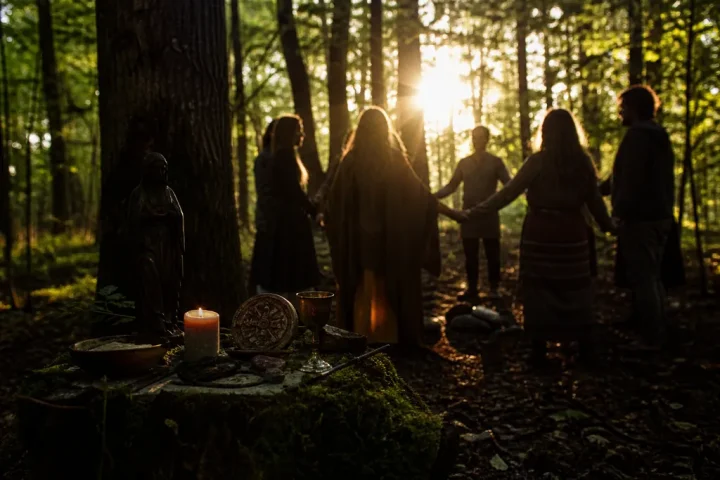
Ritual timing may be chosen according to astrological conditions. The magician may prepare through fasting, abstinence, prayer, meditation and purification. Magical robes, consecrated tools, incense, candles and a magic circle may be used.
Common ritual tools include the wand, sword, dagger, pentacle and chalice. The magician invokes spirits through names of power, incantations and gestures, directing will and energy into the work.
A central part of ceremonial magic is pathworking, a form of deep visualisation or meditation intended to reveal truth, unite the self with the divine and open contact with spiritual realms. The Kabbalistic Tree of Life and the Tarot are often used for this purpose.
Magic in Witchcraft and Paganism
Contemporary Witchcraft blends folk magic, ceremonial magic, theurgy, goetia and nature-based spirituality. The Witch works within a magic circle and often uses four primary tools linked to the elements: the athame or sword for fire, the pentacle for earth, the chalice for water and the wand for air.
Witches may call upon the forces of nature, the elements, elemental spirits, the Goddess, the Horned God or other deities. Many spells are based on folk magic and Frazer’s Law of Sympathy. Colours, scents, sounds, movement, symbols and visual images all play important roles.
Gerald Gardner, founder of modern Gardnerian Witchcraft, described eight ways to raise magical power: meditation or concentration; chants, spells and invocations; trance or astral projection; incense, wine and drugs; dancing; blood control and cords; scourging; and the Great Rite. The Great Rite may be performed symbolically or literally and represents the union of divine masculine and feminine powers.
For many Witches and Pagans, magic is part of everyday life. The world itself is magical, woven through with unseen forces, spirits and correspondences. Most modern practitioners emphasise ethics, healing, protection, spiritual development and personal growth. Harmful magic is widely seen as spiritually dangerous, because harm sent outward may return to the practitioner.
Types of Magic
Magic may be divided into many forms. Folk magic consists of local spells and remedies for healing, luck, love, protection and everyday concerns. Natural magic works with herbs, stones, crystals, elements, planets and stars. Sympathetic magic operates through resemblance or contact, such as poppets, footprints, hair, nail clippings or personal objects.
Ceremonial magic, also called high or ritual magic, is a structured path of spiritual development, self-mastery and contact with angels, demons, deities and otherworldly beings. Composite or practical magic combines religious and folk elements and is often found in grimoires.
Black magic is generally understood as magic used for harmful or selfish purposes. White magic is used for healing, blessing, protection, abundance and benevolent aims. Yet these categories remain subjective, because magic itself is a force. The moral weight lies in the will and intention of the practitioner.
The Living Power of Magic
Magic has never belonged to only one culture, religion or age. It has moved through caves, temples, mystery schools, grimoires, monasteries, witchcraft traditions, occult lodges and modern spiritual communities. It has been feared, forbidden, celebrated, hidden and revived.
At its heart, magic is the art of transformation. It is the meeting point of will, imagination, spirit, symbol and hidden law. Whether practised as folk spellcraft, ceremonial ritual, witchcraft, theurgy, spirit work or inner alchemy, magic continues to ask the same ancient question: what happens when human consciousness learns to cooperate with the unseen forces of the universe?
Continue Your Magical Path inside the Occult World Mystery School
Magic is not only something to read about. It is something to study, question, practise and understand with discipline, respect and depth.
Inside the Occult World Mystery School, you can explore magic together with fellow occultists, witches, spiritual seekers and students of the hidden arts. This is a place for people who want to go beyond surface-level occultism and enter the deeper world of ritual, grimoires, demonology, black magick, spirit work, symbolism, divination and magical transformation.
If you feel called to the old paths, the forbidden books, the ritual circle, the mysteries of spirits and the power of the awakened will, then the Occult World Mystery School is where your journey can continue.
Join us, meet your fellow occultists, and step deeper into the living current of magic.
Further Reading:
- Cavendish, Richard. The Black Arts. New York: Putnam, 1967.
- Crowley, Aleister. Magic in Theory and Practice. 1929. reprint, New York: Dover Publications, 1976.
- Flint, Valerie I. J. The Rise of Magic in Early Medieval Europe. Princeton: Princeton University Press, 1991.
- Harvey, Graham. Contemporary Paganism: Listening People, Speaking Earth. New York: New York University Press, 1997.
- Luhrmann, T. M. Persuasions of the Witch’s Craft: Ritual Magic in Contemporary England. Cambridge: Harvard University Press, 1989.
- Malinowski, Bronislaw. Magic, Science and Religion. Garden City, N.Y.: Doubleday Anchor Books, 1948.
- Seligmann, Kurt. The Mirror of Magic. New York: Pantheon Books, 1948.
- Thomas, Keith. Religion and the Decline of Magic. New York: Charles Scribner’s Sons, 1971.
SOURCE:
The Encyclopedia of Witches, Witchcraft and Wicca – written by Rosemary Ellen Guiley – Copyright © 1989, 1999, 2008 by Visionary Living, Inc.


Follow