

Isaac Bonewits was one of the most influential figures in modern American Paganism, contemporary Druidry, magical theory and public Pagan activism. Author, lecturer, ritualist, singer, organiser and polemicist, Bonewits helped shape the vocabulary, structure and public identity of late twentieth-century Neopaganism. He is best remembered as the author of Real Magic, founder of Ár nDraíocht Féin: A Druid Fellowship, and one of the few occult writers of his generation who attempted to treat magic as a disciplined, comparative and intellectually serious field of study.
Philip Emmons Isaac Bonewits was born on 1 October 1949 in Royal Oak, Michigan. He spent much of his childhood in Ferndale, a suburb of Detroit, before his family moved to San Clemente, California, when he was almost twelve. His religious background was shaped by contrast. His mother was a devout Roman Catholic, while his father, a convert from Presbyterianism to Catholicism, brought a more sceptical and questioning attitude to religious life. This combination — religious seriousness on one side and intellectual doubt on the other — would strongly influence Bonewits’ later approach to magic, Paganism and ritual.
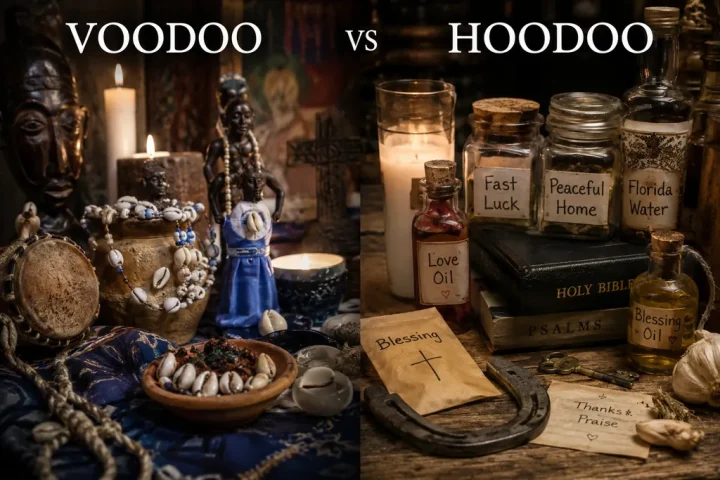
Bonewits’ early interest in magic began in adolescence. At the age of thirteen, he encountered a young Creole woman from New Orleans who practised a form of “voodoo.” According to later accounts, she demonstrated magical and divinatory practices that deeply impressed him. During his teenage years he read widely in magic, parapsychology, psychic research and science fiction. These interests formed the foundation of a lifelong attempt to understand magic not merely as superstition or fantasy, but as a system of symbols, psychology, ritual structure and human intention.
During his ninth-grade year, Bonewits briefly entered a Catholic high school seminary, intending to become a priest. He soon realised that the Catholic priesthood was not his path. He returned to public school, graduated early, completed foreign-language requirements at junior college, and enrolled at the University of California, Berkeley, in 1966.
Berkeley in the late 1960s was a centre of political rebellion, countercultural experimentation, religious exploration and intellectual dissent. It was there that Bonewits began practising magic more deliberately, designing his own rituals by studying religious services, occult texts and ceremonial structures. His interest was not casual. He approached ritual as something that could be analysed, built, improved and tested.
At Berkeley, Bonewits met Robert Larson, a self-professed Druid and alumnus of Carleton College, where the Reformed Druids of North America had begun in 1963. Larson introduced Bonewits to Druidism and initiated him into the RDNA. Together, they established a grove in Berkeley. Bonewits was ordained as a Druid priest in October 1969. The Berkeley grove developed in a more explicitly Pagan religious direction, while some other RDNA groves continued to understand the movement more as a philosophy or campus protest tradition.
One of the most unusual features of Bonewits’ academic life was his degree. At Berkeley, he created an individual study programme focused on magic, ritual and occultism. In 1970, he graduated with a Bachelor of Arts degree in Magic, a rare and controversial academic distinction. The publicity surrounding the degree reportedly embarrassed university administrators, and similar programmes in magic, witchcraft and sorcery were later restricted within that individual study framework.
Bonewits’ first major book, Real Magic, was published in the early 1970s. It became one of his most important works. Rather than presenting magic simply as spellcraft or folklore, Real Magic attempted to analyse magical belief and practice through systems, principles and categories. It discussed ritual, psychic ability, religious experience, symbolism and the mechanics of magical thinking. For many modern Pagans, occultists and students of ritual magic, the book became a bridge between countercultural spirituality and more organised magical theory.
During his college years, Bonewits also spent a short period associated with the Church of Satan. This involvement began partly as satire. At Berkeley, where religious and political speakers often addressed students in public spaces, Bonewits performed a mock “Devil’s evangelist” lecture. His performance attracted attention and eventually led to contact with representatives of Anton LaVey’s Church of Satan. Bonewits attended meetings and contributed ideas to ritual structure, but he later distanced himself from the organisation after conflicts with LaVey and with what he perceived as the political and social attitudes of some members.
In 1973, Bonewits moved to Minneapolis with Rusty Elliot, whom he married. There he worked as editor of Gnostica, a Pagan and occult journal published by Carl Weschcke of Llewellyn Publications. His editorial style was scholarly, analytical and sometimes confrontational. While this approach helped distinguish him from more romanticised occult writers, it was not always popular with readers who preferred a softer or more mystical tone.
In Minneapolis, Bonewits founded the Schismatic Druids of North America, a breakaway formation related to the RDNA. He also participated in the creation of the Hasidic Druids of North America, a humorous and experimental grove whose brief existence reflected the playful, eclectic and sometimes irreverent atmosphere of 1970s American Paganism. In 1974–1975, he wrote, edited and self-published The Druid Chronicles (Evolved), a collection of texts, rituals, history and commentary related to the reformed Druid movements.
Bonewits was also active in Pagan civil-rights work. He founded the Aquarian Anti-Defamation League, commonly abbreviated AADL, as a public-relations and civil-liberties organisation for members of minority religious and esoteric communities. The AADL sought to defend Pagans, Witches, occultists, astrologers, Theosophists, Rosicrucians and other alternative spiritual practitioners against discrimination and public misunderstanding. Although short-lived, it was significant as an early attempt to organise legal and social advocacy for people outside mainstream religion.
One often-cited example of the AADL’s work involved an astrologer who had allegedly been evicted after a neighbour described her astrology classes as “black magic séances.” The organisation helped challenge such prejudice and worked to present minority spiritual practices as legitimate belief systems rather than dangerous superstition. In this respect, Bonewits anticipated later Pagan anti-defamation and religious-freedom efforts.
After his divorce from Rusty in 1976, Bonewits returned to Berkeley. He rejoined the Druid community there and was elected Archdruid of the Berkeley grove. In 1978, he established The Druid Chronicler, later known as Pentalpha Journal, as a national Druid publication. However, conflicts within the organisation eventually led him to leave, and the publication folded.
Bonewits’ personal and spiritual life remained complex. He was married several times and moved through many overlapping Pagan, occult and magical communities. His involvements included Druidry, Wicca, Santeria, ceremonial magic, the Caliphate line of the Ordo Templi Orientis, Gardnerian Wicca, and the New Reformed Orthodox Order of the Golden Dawn. This breadth of experience made him one of the more cross-disciplinary figures in modern Paganism, though it also made him difficult to classify neatly.
In 1983, Bonewits moved to New York City with Sally Eaton, an actress known for creating the role of the hippie witch in the Broadway musical Hair. Around the same time, he entered the computer technology field, working as a technical writer and later as a self-employed computer consultant. This combination of occult scholarship and technical thinking was characteristic of Bonewits. He often approached magic as a system: something with structure, process, feedback and design.
The same year, Bonewits met Shenain Bell, another Pagan practitioner, and discussed the creation of a new Druidic religious organisation. This led to the founding of Ár nDraíocht Féin, often abbreviated ADF and usually translated as “Our Own Druidism.” Unlike groups that claimed direct survival from ancient Druids, ADF was conceived as a modern Pagan Druid fellowship. It sought to build a public, organised, intellectually serious form of Druidry rooted in scholarship, ritual practice, Indo-European studies and contemporary Pagan religious life.
Bonewits became the first Archdruid of ADF, while Bell became Vice Archdruid. ADF developed as one of the most significant Druid organisations in North America. It aimed to create trained clergy, liturgical structure, public ritual, local groves and a coherent theological framework. Bonewits envisioned a Paganism capable of standing publicly beside other religions: organised, educated, ethical and ritually competent.
The growth of ADF was slower than Bonewits had hoped, but its importance was considerable. It helped move modern Druidry beyond private study groups and festival circles into a more formal religious structure. A clergy training programme was developed, and ADF became an important institution for those seeking a reconstructionist or semi-reconstructionist approach to Pagan worship.
Bonewits resigned as Archdruid of ADF in 1996 because of the debilitating effects of eosinophilia-myalgia syndrome, a serious illness that affected his health and ability to work. He retained a life connection to ADF and continued to write, teach and influence Pagan thought. At the time of his death, he was widely recognised as one of the major voices of modern Druidry and Neopagan religious theory.
His later books included Rites of Worship, The Pagan Man, Bonewits’ Essential Guide to Druidism, Bonewits’ Essential Guide to Wicca and Witchcraft, Neopagan Rites, and Real Energy, co-written with Phaedra Bonewits. He also wrote Authentic Thaumaturgy, a work designed partly for fantasy role-playing contexts but grounded in his broader theories of magic and ritual systems.
Bonewits was not only an author and organiser. He was also a bard, singer and songwriter who performed at Pagan gatherings. His public style was known for intelligence, humour, irreverence and sharp criticism. He could be inspiring, difficult, entertaining, controversial and deeply influential, sometimes all at once. He believed Paganism should not remain vague, escapist or intellectually lazy. For Bonewits, magic and Pagan religion deserved seriousness, structure and public legitimacy.
One of his enduring contributions was the “Advanced Bonewits’ Cult Danger Evaluation Frame,” a tool designed to assess potentially harmful religious, magical or spiritual groups. It examined factors such as authoritarian leadership, secrecy, sexual manipulation, financial exploitation, violence, paranoia and surrender of personal judgement. This framework reflected Bonewits’ broader concern that alternative religion should not be exempt from ethical scrutiny.
His work also helped articulate distinctions within Pagan history and terminology. Bonewits used and popularised terms such as Paleo-Paganism, Meso-Paganism and Neo-Paganism to describe different historical and cultural forms of Pagan religion. While not all scholars or practitioners accept his categories without criticism, they became influential within Pagan discourse and helped modern practitioners think more carefully about continuity, reconstruction, revival and invention.
Isaac Bonewits’ final years were marked by illness. In 1990, he had been diagnosed with eosinophilia-myalgia syndrome, and in October 2009 he was diagnosed with a rare form of colon cancer. He underwent treatment, but his condition worsened. Bonewits died on 12 August 2010, reportedly peacefully in his sleep, at his home in New York, surrounded by family and friends. Contemporary memorial notices described him as a seminal figure in the Druid movement and a major voice in modern Paganism.
His death was widely mourned across Pagan and Druid communities. Obituary notices and tributes emphasised his role as founder of ADF, author, ritual theorist, public speaker and “Archdruid Emeritus.” They also noted his long work in explaining Paganism and minority religions to journalists, students, researchers and the wider public.
Bonewits’ legacy is complex but substantial. He was not merely a “famous witch” or a colourful occult personality. He was one of the architects of modern Pagan self-definition in North America. He helped give contemporary Paganism a language with which to discuss itself: as religion, as ritual technology, as social movement, as scholarship, as spiritual practice and as public identity.
For readers of occult history, Bonewits represents an important transitional figure. He stood between the underground occult revival of the 1960s and the more organised Pagan institutions of the late twentieth and early twenty-first centuries. He inherited the experimental energy of the counterculture, but he also demanded intellectual discipline. He was fascinated by magic, but suspicious of fantasy. He defended Paganism, but also criticised Pagan communities when he believed they lacked rigour.
In this sense, Isaac Bonewits remains one of the essential figures for understanding modern Paganism, Druidry and magical thought. His work continues to be read not only because it explains ritual and magic, but because it asks a more difficult question: what would it mean for magic to become mature, responsible and intellectually honest?
Continue Your Path in Witchcraft and Pagan Studies
Isaac Bonewits belongs to the generation of occult thinkers who helped move Paganism from secrecy, stereotype and scattered practice into public religious identity. His life shows how modern Witchcraft, Druidry and Paganism were not simply “invented overnight,” but built through books, rituals, organisations, arguments, experiments and lived communities.
If you are interested in the deeper history of Witchcraft, Pagan religion, ritual structure and magical practice, continue exploring the Occult World encyclopedia. Read more about modern Paganism, Druidry, Wicca, ceremonial magic, folk magic and the figures who shaped contemporary occult thought.
For a more guided path, explore the Occult World courses and membership. Inside the Digital Coven, you can go beyond scattered articles and begin studying magic, ritual, symbolism and spiritual practice in a structured way.
Enter the Digital Coven.
Study the old paths with seriousness.
Build your practice with discipline.
And learn the difference between fantasy and real occult knowledge.
Bibliography
- Real Magic: An Introductory Treatise on the Basic Principles of Yellow Magic. (1972, 1979, 1989) Weiser Books
- The Druid Chronicles (Evolved). (1976 Drunemeton Press, 2005 Drynemetum Press) (With Selene Kumin Vega, Rusty Elliot, and Arlynde d’Loughlan)
- Authentic Thaumaturgy. (With others) (1978, 1998) Steve Jackson Games
- Rites of Worship: A Neopagan Approach. (2003) Earth Religions Press
- Witchcraft: A Concise Guide or Which Witch Is Which?. (2003) Earth Religions Press
- The Pagan Man: Priests, Warriors, Hunters, and Drummers. (2005) Citadel
- Bonewits’s Essential Guide to Witchcraft and Wicca. (2006) Citadel
- Bonewits’s Essential Guide to Druidism. (2006) Citadel
- Real Energy: Systems, Spirits, And Substances to Heal, Change, And Grow. (2007) New Leaf – Co-authored with Phaedra Bonewits.
- Neopagan Rites: A Guide to Creating Public Rituals that Work. (2007) Llewellyn
SOURCE:
The Encyclopedia of Witches, Witchcraft and Wicca written by Rosemary Ellen Guiley – Copyright © 1989, 1999, 2008 by Visionary Living, Inc.





Follow