
Alfadir: Odin as the All-Father
Alfadir, also written Alfadur and derived from the Old Norse Alfǫðr, is one of the ancient titles of Odin, the mysterious ruler of the Æsir and one of the most complex gods of Norse mythology. Traditionally translated as “All-Father,” the name evokes Odin not merely as a king among gods, but as a primordial patriarch whose authority reaches across creation, death, wisdom, war and the unseen worlds beyond mortal existence.
Within the mythology preserved in medieval Iceland, Odin stands above the other Æsir as ruler, magician, wanderer, seeker of forbidden knowledge and lord of the dead who fall in battle. He is the one-eyed god who sacrificed part of himself for wisdom, the god who hung upon the World Tree to seize the secret of the runes, and the hidden traveller who walks through the human world beneath countless names and disguises. Alfadir is one of those names, but it carries a particularly powerful implication. It presents Odin as the father behind the divine order itself.
The All-Father
In the Prose Edda, Odin is described as the foremost and eldest of the Æsir. His position is not simply ceremonial. The other gods acknowledge his authority, and he presides over a cosmic order in which gods, human beings, giants, spirits and the dead inhabit different regions of an immense and dangerous universe.
The title Alfadir therefore expresses something deeper than ordinary kingship. Odin is not simply the ruler of Asgard. He is associated with origins, ancestry and the mysterious force from which divine authority descends. His connection with humanity is especially important because Norse tradition credits Odin, together with other gods, with participating in the creation of the first human beings.
Yet the All-Father is no comforting paternal deity. Odin is a god who demands sacrifice, pursues knowledge regardless of its cost and manipulates battles so that chosen warriors will die and enter his hall. His wisdom is inseparable from death, and his gifts frequently carry hidden dangers. To approach Odin as Alfadir is therefore to encounter fatherhood in an ancient and unsettling form: the father as creator, ruler, initiator, sacrificer and keeper of secrets.
Alfadir in the Prose Edda
The Prose Edda, composed in medieval Iceland and traditionally attributed to Snorri Sturluson, preserves some of the most important surviving descriptions of Odin and the world of the Norse gods. It presents Alfadir as a being whose power stretches back towards the beginning of existence itself, describing him as responsible for heaven, earth, the air and the things belonging to them.
Also in the Prose Edda it is said:
“Odin is the foremost and eldest of the aesir; he rules all things, and as powerful as the other gods are, they serve him as children do a father. . . . Odin is called Alfadir.” He is credited with the creation of man and is said to have “given him a soul which shall live and never perish though the body shall have moldered away, or have been burnt to ashes. And all that are righteous shall dwell with him in a place called Gimli, or Vingolf; but the wicked shall go to Hel, and thence to Niflheim, which is below, in the ninth world.”
This passage transforms Alfadir into something far greater than the familiar image of Odin as a wandering god with a spear, ravens and wolves. Here he approaches the role of cosmic creator and guardian of the human soul, standing over creation itself and determining the ultimate destiny of the dead.
Yet this is also where the shadows surrounding the surviving Norse sources become especially important.
A Pagan God Seen Through Christian Eyes
The Prose Edda was written long after the official conversion of Iceland to Christianity. Snorri and the other medieval writers who preserved Norse mythology inhabited a Christian intellectual world, even when they were recording stories inherited from pagan ancestors. For that reason, descriptions of Alfadir sometimes appear strikingly close to Christian ideas concerning God the Father.
The claim that the supreme deity existed from the beginning of time, created heaven and earth, gave humanity an immortal soul and separated the righteous from the wicked after death sounds remarkably different from many of the older and more chaotic myths surrounding Odin. It resembles the language of medieval Christian theology almost as much as it resembles pagan mythology.
This does not make the passage unimportant. On the contrary, it makes Alfadir one of the most fascinating names in the entire surviving Norse tradition. Through this title we glimpse the strange boundary where an older religion survived inside the manuscripts of a newer one. Odin remained visible, but the eyes through which medieval writers viewed him had changed.
Behind the Christianised image of an eternal All-Father still stands the far darker Odin of the pagan world: the god of ecstatic inspiration, sorcery, runes, sacrificed kings, hanged men, battlefield slaughter and the relentless pursuit of hidden knowledge.
Father of Gods and Father of the Slain
Odin’s paternal titles extend beyond Alfadir. He is also known as Valfadir, the Father of the Slain, because warriors chosen from the battlefield become part of his supernatural host. Those selected by the Valkyries are taken into Valhalla, where they join the Einherjar and prepare for the final catastrophe of Ragnarök.
This reveals the darker meaning hidden inside Odin’s fatherhood. His children are not merely beings he creates or protects. They are also the dead whom he gathers.
Odin desires the greatest warriors because he knows that the gods themselves are doomed. Ragnarök waits somewhere beyond the horizon of myth, when wolves will break their chains, ancient enemies will rise, the forces of chaos will advance upon the gods and Odin himself will meet the monstrous wolf Fenrir.
The All-Father therefore rules beneath the shadow of his own death.
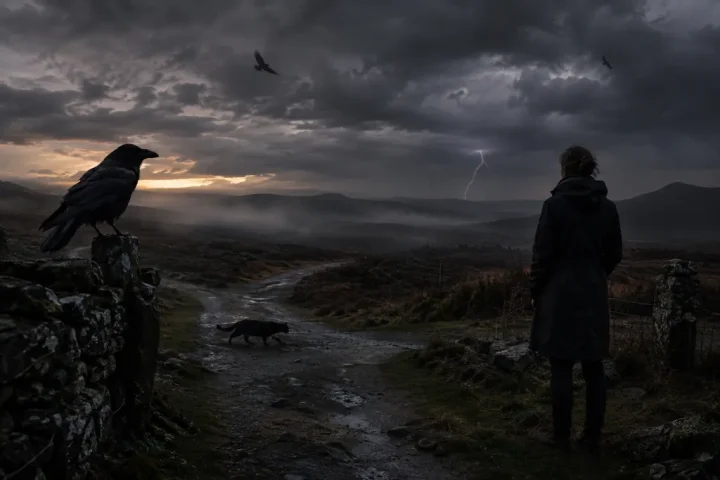
His endless search for wisdom can be understood partly through this knowledge. Odin knows that destruction is coming, yet he continues gathering knowledge, magical power and fallen warriors. He sends his ravens Huginn and Muninn across the world to bring him information. He consults seers and the dead. He sacrifices an eye at Mimir’s well. He hangs wounded upon Yggdrasil for nine nights to obtain the runes.
Alfadir may be father of gods and men, but he is also a god desperately seeking knowledge in a universe whose final secrets remain beyond even his grasp.
The Many Faces of Odin
The title Alfadir belongs to a vast network of names attached to Odin. Norse poetry and mythology rarely imprison him within a single identity. He appears as king, wanderer, sorcerer, poet, warrior, deceiver, necromancer and seeker of wisdom. His countless names reflect these changing manifestations.
This multiplicity is essential to understanding him. Odin is a god who conceals himself.
He wanders beneath a broad hat and cloak. He speaks in riddles. He tests kings and heroes without revealing his identity. He grants victory and withdraws it. He inspires poets and drives warriors into frenzy. He communicates with the dead and possesses knowledge that ordinary beings were never intended to obtain.
Seen within this larger pattern, Alfadir is not necessarily Odin’s ultimate or exclusive identity. It is one mask among many, but it is a mask of enormous power because it places him at the centre of divine genealogy and cosmic authority.
The name tells us how Odin could be imagined when viewed from the summit of the Norse supernatural hierarchy. He becomes the ancient father seated above gods and humans, watching the worlds beneath him while his ravens return carrying whispers of everything that has occurred.
Alfadir and the Mystery of Odin
There is an enduring occult fascination in Odin precisely because he refuses simple interpretation. He is neither entirely benevolent nor entirely terrible. He is capable of blessing and betrayal, wisdom and deception, creation and destruction. His pursuit of knowledge repeatedly carries him into regions associated with death, sacrifice and forbidden magic.
The title Alfadir adds another dimension to this mystery. It suggests an Odin who stands behind the order of the gods themselves, yet the surviving description of that supreme figure may contain echoes of Christianity layered over much older pagan traditions.
For students of mythology and the occult, this uncertainty is not an inconvenience to be discarded. It is part of the mystery.
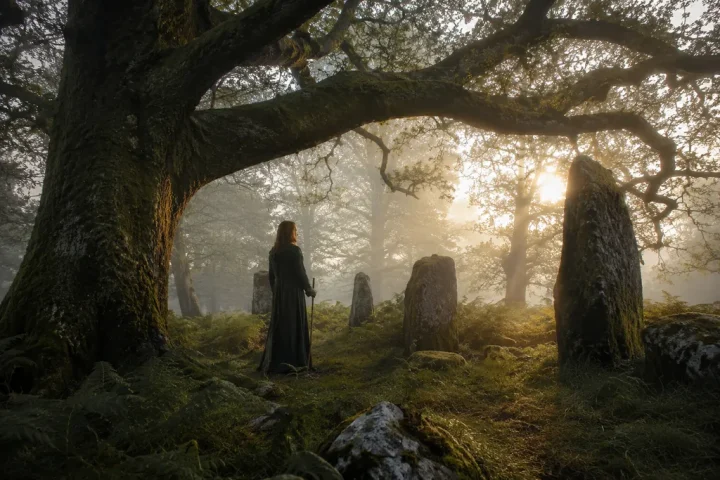
The manuscripts through which the old gods survived are themselves thresholds between worlds. Behind the Christian scribes stand pagan poets. Behind the medieval words lie traditions that had already passed through generations of memory. Behind Alfadir stands Odin, and behind Odin lies a figure whose origins disappear into the religious darkness of ancient Germanic Europe.
The All-Father watches from that darkness still.
Enter the Occult World Mystery School
Reading about Alfadir is only the surface. Odin’s many names, the runes he seized through sacrifice, the spirits of Norse cosmology, the hidden structure of Yggdrasil, the magic of seiðr and galdr, the mysteries of the dead and the ancient traditions preserved inside grimoires, folklore and forbidden texts all lead much deeper than a single mythology article can take you.
If you are content merely collecting strange names and reading legends, remain outside the gate. But if you want to understand the systems behind the stories, recognise the powers hidden beneath mythology and explore the demons, spirits, gods, magical traditions and occult philosophies that most people never study seriously, then enter the Occult World Mystery School.
There are thousands of spirits, gods, demons, magical systems, grimoires and forgotten traditions waiting beyond it. Stop standing at the threshold. Join the Occult World Mystery School and begin studying what lies behind the myths, because the deeper mysteries were never meant for those who are afraid to enter the darkness.
SOURCE:
Encyclopedia of World Mythology and Legend, Third Edition – Written by Anthony S. Mercatante & James R. Dow – Copyright © 2009 by Anthony S. Mercatante






Follow