
Ár nDraíocht Féin, commonly abbreviated as ADF, is one of the most important modern Druid organisations in the contemporary Pagan world. Its name is usually translated from Irish as “Our Own Druidry” or “Our Own Magic”, although the organisation itself is formally known as Ár nDraíocht Féin: A Druid Fellowship. The phrase is Irish rather than simply “Gaelic” in a broad sense, and it reflects the organisation’s intention to create a living, modern, public form of Druidry rather than merely imitate the past.
Founded in 1983 by the American Pagan writer, scholar, and ritualist Isaac Bonewits, ADF developed as a response to what Bonewits saw as the weaknesses of some forms of modern Paganism: vague romanticism, poor scholarship, excessive secrecy, and a lack of durable religious institutions. ADF presents itself not as a closed magical order, but as a public religious fellowship devoted to modern Neopagan Druidry, ritual practice, study, priesthood training, and community worship. The official ADF website describes its vision in terms of public temple worship, accessible religious training, relationship with the Earth, sustainable Pagan institutions, and a flourishing family and community Pagan culture.
Origins and Founder
The founder of ADF, Isaac Bonewits — also known as P. E. I. Bonewits — was already a significant figure in the American Pagan revival before creating the organisation. He was known for his intellectual approach to magic, ritual, comparative religion, and Pagan theology. Bonewits wanted ADF to become more than a loose gathering of spiritual seekers. His ambition was to build a serious Pagan religious structure with trained clergy, public rites, theological reflection, and educational standards.
ADF was founded in 1983, and later incorporated as a non-profit religious organisation. Its early development belongs to the broader rise of modern Paganism in North America during the late twentieth century, a period in which Wicca, Druidry, Heathenry, Goddess spirituality, ceremonial magic, and reconstructionist religious movements were all developing new forms. Unlike some groups that claimed unbroken ancient lineage, ADF placed stronger emphasis on reconstruction, scholarship, and creative religious revival.
Bonewits was particularly interested in creating a form of Druidry that could function openly in the modern world. This meant that ADF would not simply be a private occult society or mystery school. It would be a religious body, with rituals, congregations, study programmes, priestly training, and a recognisable organisational structure.
Meaning of the Name
The name Ár nDraíocht Féin is significant. It is often rendered as “Our Own Druidry”, though it can also be understood as “Our Own Magic.” The phrase suggests ownership, identity, and religious self-definition. This is not Druidry inherited as a museum relic, nor Druidry presented as fantasy. It is a deliberate attempt to create a modern Druid path rooted in ancient inspiration but adapted to contemporary life.
The abbreviation ADF also stands for A Druid Fellowship, making the name both Irish and English in function. This dual identity reflects the organisation’s broader method: it draws from ancient Indo-European religious traditions while organising itself in a modern, accessible, public form.
A Public Form of Druidry
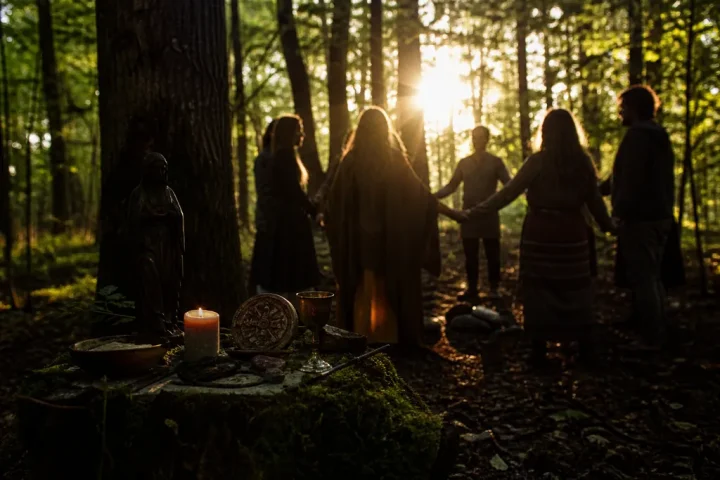
One of ADF’s defining principles is its commitment to public Pagan religion. Many occult and magical traditions rely heavily on secrecy, initiation, private covens, or closed teaching circles. ADF took a different approach. It sought to create visible Pagan religious communities that could gather, worship, study, train clergy, and serve members openly.
This is one of the reasons ADF became influential. It offered an alternative to the idea that Paganism had to remain hidden, informal, or purely individual. Local ADF groups are known as groves, echoing the sacred groves associated with ancient Celtic and Druidic imagination. These groves may perform seasonal rites, offer public rituals, organise study, and provide community for members. The organisation has also included solitary members, especially those who do not live near an established grove.
Religious Focus and Indo-European Reconstruction
Although ADF uses the language of Druidry, it is not limited only to Celtic traditions. One of its distinctive features is its broader Indo-European orientation. This means that ADF has drawn inspiration not only from Celtic myth and ritual, but also from related ancient religious cultures such as Germanic, Hellenic, Roman, Slavic, Baltic, Vedic, and other Indo-European traditions.
This does not mean that ADF treats all cultures as identical. Rather, it works from the idea that many ancient Indo-European societies shared certain religious patterns, including reverence for gods, ancestors, nature spirits, sacred fire, offerings, ritual order, poetic tradition, and the role of religious specialists. In this framework, “Druid” becomes not only a Celtic term, but also a symbolic name for the learned ritual specialist: the priest, poet, seer, scholar, and mediator between human beings and the sacred.
This wider reconstructionist approach helped distinguish ADF from purely romantic or fantasy-based Druid movements. Its goal was not merely to evoke a vague Celtic atmosphere, but to build a serious religious practice informed by comparative mythology, archaeology, linguistics, folklore, and historical study.
Ritual Structure and Practice
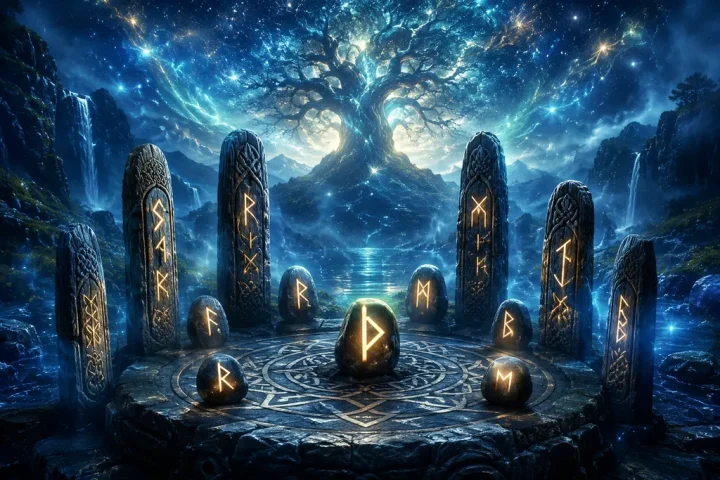
ADF ritual is often built around relationship: relationship with the gods, the ancestors, and the spirits of nature. Many ADF rites include offerings, invocations, praise, sacred fire, waters, tree symbolism, and formal ritual sequences. The sacred centre is often imagined through the Fire, Well, and Tree — a cosmological pattern representing connection between the human world, the heavens, the underworld, and the living powers of nature.
ADF’s ritual system is not simply spellcraft. It is devotional, liturgical, and communal. Its ceremonies are often designed to honour the Kindreds: deities, ancestors, and nature spirits. The ritual act is understood as reciprocal. Human beings give offerings, praise, memory, and attention; the spirits may return blessing, wisdom, protection, fertility, or spiritual presence.
This structure places ADF within the wider category of modern Pagan religion rather than merely occult technique. Magic may be present, but worship, piety, study, and community are central.
Study, Training, and Clergy
One of ADF’s most important contributions to modern Paganism is its emphasis on organised study. Bonewits wanted Pagan clergy who were not merely charismatic personalities, but educated, disciplined, and capable of serving real communities. This led to the development of structured study programmes, including training in ritual, mythology, Indo-European studies, ethics, liturgy, pastoral work, and religious leadership.
The existence of study programmes marked a major step in the institutional development of modern Paganism. ADF was not content with spontaneous spirituality alone. It attempted to create systems through which practitioners could deepen their knowledge and demonstrate competence. This gave the organisation a more formal character than many looser Pagan circles. The Druid Network notes that ADF’s study programmes were reorganised in the early 2000s into several categories of study, showing the continuing importance of education within the organisation.
Relationship to Ancient Druidry
ADF does not claim to be an unbroken survival of the ancient Druids. This distinction is essential. The ancient Druids of Gaul, Britain, and Ireland were religious specialists, legal authorities, poets, philosophers, ritualists, and keepers of sacred knowledge. Much of what is known about them comes from classical writers, later medieval Irish and Welsh literature, archaeology, and comparative study. There is no simple continuous line from ancient Druid priesthoods to modern organisations.
ADF therefore belongs to modern Druidry, not ancient Druidry. Its work is reconstructive, inspired, comparative, and devotional. It studies the past, but it does not pretend that the past can be perfectly restored. Instead, it asks how ancient Indo-European religious patterns can be respectfully reimagined as living practice in the present.
This is one of the more serious aspects of ADF’s identity. It stands between historical scholarship and religious creativity. It is neither purely academic nor purely imaginative. It attempts to make the past ritually meaningful without claiming impossible certainty.
ADF and the Wider Pagan Movement
ADF occupies an important place in the history of modern Paganism, especially in North America. It helped show that Pagan religion could be organised publicly, legally, educationally, and ritually. It also helped normalise the idea of trained Pagan clergy and public Pagan liturgy.
Its influence extends beyond its membership. Many modern Druids, Heathens, reconstructionists, ritualists, and Pagan clergy have been shaped by ADF’s language, ritual structure, and insistence on excellence. Its motto, often associated with Bonewits, was “Why not excellence?” This phrase captures the organisation’s desire to raise standards within Pagan practice.
ADF’s model also highlights a larger question within modern occult and Pagan culture: should spiritual practice remain private, personal, and loosely defined, or should it develop institutions, priesthood, training, and public theology? ADF answered by choosing structure.
Criticism and Limitations
Like many modern religious organisations, ADF has not been without criticism. Some practitioners feel that its structure can be too formal, too academic, or too institutionally focused. Others may prefer more mystical, folkloric, traditional, or culturally specific forms of Druidry. Because ADF draws from many Indo-European traditions, some critics may question whether such a wide framework risks becoming too broad.
There is also the larger challenge faced by all reconstructionist or revivalist traditions: the ancient evidence is incomplete. Modern practitioners must make choices. They must interpret, adapt, and sometimes create new forms where the historical record is silent. ADF’s strength lies in admitting this process rather than pretending that every ritual detail has survived unchanged from antiquity.
Significance
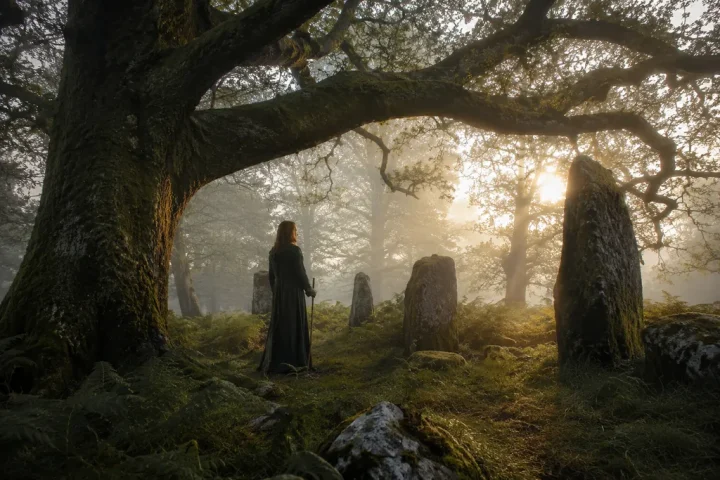
Ár nDraíocht Féin is significant because it represents one of the most deliberate attempts to build a modern Pagan religious institution rooted in Druidic and Indo-European inspiration. It is not merely a fantasy of robed figures in misty forests. Nor is it simply a magical order. It is a structured religious fellowship that has tried to combine scholarship, ritual, devotion, training, community, and public Pagan identity.
Its importance lies in its seriousness. ADF helped move modern Druidry from romantic imagination towards organised religious practice. It gave modern Pagans a model for liturgy, clergy, study, and community. Whether one agrees with its methods or not, its influence on contemporary Druidry and North American Paganism is considerable.
Ár nDraíocht Féin — “Our Own Druidry” — is a modern Druid fellowship founded by Isaac Bonewits in 1983 with the aim of creating a public, scholarly, and ritually grounded form of Neopagan Druidry. It draws from ancient Indo-European traditions while openly acknowledging its modern character. Its focus on groves, study programmes, priesthood, public ritual, and relationship with gods, ancestors, and nature spirits has made it one of the most recognised Druid organisations in the contemporary Pagan world.
ADF is best understood not as a survival of ancient Druidry, but as a serious modern reconstruction and religious creation. It asks what Druidry can become when treated not as costume, nostalgia, or vague nature spirituality, but as a living path of worship, discipline, learning, and sacred relationship.
Continue Your Path into Druidry
If you are interested in Druidry, Pagan religion, ancient sacred landscapes, ritual practice, Celtic spirituality, or the reconstruction of old European traditions, continue exploring the Druidry and Paganism sections of Occult World.
Druidry is not only about the past.
It is about how human beings remember the sacred relationship between land, spirit, ancestry, knowledge, and responsibility.
For deeper study, explore more articles in the Occult World Encyclopedia, follow the path into modern Pagan practice, and continue your journey through the hidden traditions that shaped the magical imagination of Europe.
FURTHER READING:
- Ar nDrmocht Fein Web site. URL: https://www.adf.org. Accessed July 15, 2008.
- Bonewits, Isaac. “Ar nDroiocht Fein: A Druid Fellowship.” Witchvox.com. Available online. URL: https://www. witchvox.com/va/dt_va. html/a=usny&c=trads&id=3209. Downloaded August 14, 2007.
See also
SOURCE:
The Encyclopedia of Witches, Witchcraft and Wicca written by Rosemary Ellen Guiley – Copyright © 1989, 1999, 2008 by Visionary Living, Inc.




Follow