
Brotherhood of the Snake: Serpent Symbolism, Secret Society Myth, and Modern Conspiracy Lore
The Brotherhood of the Snake is the name given by some late twentieth-century conspiracy writers to an alleged ancient secret society said to be older than civilisation itself. According to these theories, the Brotherhood was founded in prehistoric times to carry out a long-term plan of world domination, spiritual deception, and human enslavement. In its most extreme versions, the Brotherhood is said to have originated, or to have been taken over by hostile forces, in Mesopotamia around 300,000 BCE.
There is no reliable historical evidence that such an organisation ever existed. The Brotherhood of the Snake belongs primarily to the world of modern conspiracy literature, occult speculation, anti-secret-society polemic, and apocalyptic interpretations of history. It is often presented as the hidden root behind every secret society, mystery school, occult order, political movement, religious institution, and elite network in history. According to this view, all secret societies are merely branches of the same ancient serpent cult, working together behind the scenes while pretending to be separate or even opposed to one another.
The claim is dramatic, but historically unsupported. The Brotherhood of the Snake is better understood as a modern myth of hidden control: a symbolic conspiracy narrative in which the serpent becomes the emblem of secret knowledge, forbidden power, deception, and rebellion against divine order.
The Serpent and the Tree of Knowledge
The name “Brotherhood of the Snake” immediately evokes the serpent in the biblical Garden of Eden. In the Book of Genesis, the serpent tempts Eve to eat from the Tree of Knowledge of Good and Evil. Within orthodox Christian interpretation, this serpent is often associated with deception, sin, Satan, and humanity’s fall from grace.
Because of this association, modern conspiracy theories about a “Brotherhood of the Snake” often draw upon fundamentalist Christian fears of Satanism, secret knowledge, occult initiation, and hidden anti-Christian forces. The serpent becomes the symbol of forbidden wisdom, rebellion, and spiritual corruption.
However, serpent symbolism is far older and far more complex than this single interpretation. In many ancient traditions, the serpent represents wisdom, healing, immortality, fertility, renewal, magic, divine feminine power, underworld knowledge, and transformation. The serpent sheds its skin and therefore becomes a symbol of rebirth. It moves between earth, water, caves, and hidden places, becoming a creature of thresholds. It can poison, but it can also heal.
This complexity is often flattened in conspiracy literature, where the serpent is treated almost exclusively as a satanic sign. In occult studies, however, the serpent must be understood through many cultural lenses, not reduced to one theological meaning.
Mesopotamia and the Myth of Ancient Control
Some conspiracy writers place the origin of the Brotherhood of the Snake in ancient Mesopotamia, the land between the Tigris and Euphrates rivers. Mesopotamia was indeed one of the earliest centres of urban civilisation, writing, temple culture, priesthood, kingship, astrology, and complex religious symbolism. It produced powerful myths involving gods, serpents, dragons, divine kingship, sacred knowledge, and the descent of wisdom from heaven.
Because Mesopotamia is so ancient and spiritually rich, it has become a favourite location for speculative theories about hidden origins. In conspiracy literature, historical complexity is often transformed into a single secret plot. Ancient priesthoods, temple rituals, myths of divine beings, and serpent symbolism are reinterpreted as evidence of one continuous hidden organisation.
Yet the leap from ancient serpent symbolism to a single prehistoric world-controlling brotherhood is not supported by evidence. There were many ancient cults, priesthoods, religious systems, mystery traditions, and political elites. They were not all one organisation. They did not all share a single agenda. The idea that every later secret society descends from one Mesopotamian serpent brotherhood is a modern construction, not a demonstrated historical fact.
Secret Societies and the Conspiracy Imagination
The Brotherhood of the Snake theory is part of a wider pattern in conspiracy thought. Secret societies have long fascinated the public because they appear to hide knowledge, rituals, symbols, initiations, and internal hierarchies from outsiders. Groups such as the Freemasons, Rosicrucians, Illuminati, Hermetic orders, magical lodges, and mystery schools are often woven into elaborate theories of hidden control.
In these theories, historical difference disappears. Orders with different origins, teachings, goals, rituals, and philosophies are merged into one vast conspiracy. Groups that were rivals, unrelated, or separated by centuries are treated as masks worn by the same hidden power.
This style of thinking creates a seductive but misleading image of history. It offers one explanation for everything: wars, revolutions, religions, economic systems, cultural shifts, occult revivals, political movements, and spiritual traditions all become part of a single serpent agenda.
The problem is that such theories usually rely on association rather than proof. A shared symbol, similar ritual structure, or common interest in hidden knowledge is treated as evidence of direct organisational continuity. But symbols travel. Ideas mutate. Ritual forms are borrowed, adapted, and reinterpreted. The presence of serpent imagery in many traditions does not prove that all those traditions belong to one secret brotherhood.
The Serpent as Occult Symbol
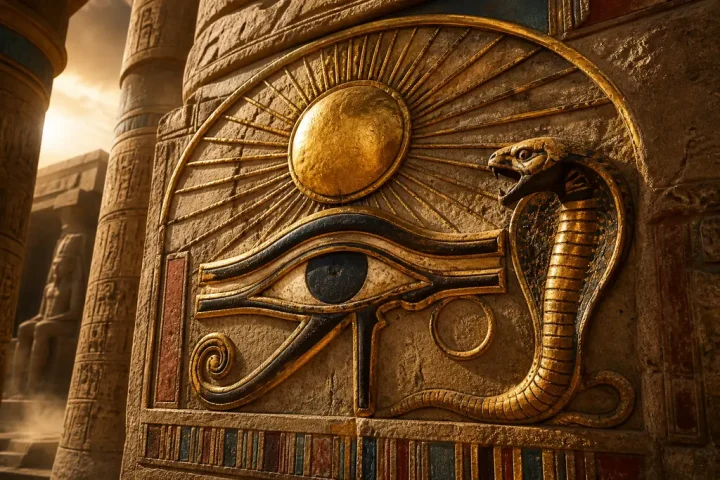
In occultism, the serpent is one of the most powerful and ambiguous symbols. It may represent the life force, hidden wisdom, kundalini, sexual energy, magical power, healing, underworld initiation, and the cycle of death and rebirth. The ouroboros, the serpent biting its own tail, symbolises eternity, return, alchemy, and the unity of opposites. In Greek tradition, serpents are associated with healing and prophecy. In Egyptian religion, the cobra may signify royal power, divine protection, and solar force. In Gnosticism, the serpent may even appear as a bringer of knowledge rather than a villain.
This means that a “Brotherhood of the Snake,” whether fictional, symbolic, or conspiratorial, touches a much deeper current: the fear and fascination surrounding hidden wisdom. The serpent is never neutral. It provokes. It disturbs. It suggests that knowledge may liberate, corrupt, heal, poison, awaken, or destroy depending on how it is approached.
For this reason, the Brotherhood of the Snake can be read less as a historical organisation and more as a mythic image of secret knowledge itself. It represents the suspicion that behind visible society lies an older current of power, one connected to initiation, forbidden knowledge, and the manipulation of human consciousness.
Fundamentalism, Satanism, and the Fear of Hidden Knowledge
Many claims about the Brotherhood of the Snake appear to have roots in fundamentalist Christian fantasies about Satanism and occult conspiracy. In these narratives, nearly all non-orthodox spiritual traditions are treated as branches of the same satanic deception. Paganism, witchcraft, Freemasonry, Gnosticism, Hermeticism, Theosophy, ceremonial magic, and modern occultism may all be grouped together as signs of one demonic plot.
This approach tells us more about the fears of the writers than about the actual traditions being discussed. It reflects anxiety about pluralism, secret knowledge, sexuality, ritual, symbolism, and spiritual systems outside orthodox religious control.
Historically, the accusation of secret satanic conspiracy has often been used to demonise minority religions, occultists, esoteric orders, political enemies, and cultural outsiders. The Brotherhood of the Snake continues this pattern by imagining a single hidden enemy behind every form of alternative spirituality and secret initiation.
A serious occult approach must do better. It must distinguish between evidence, myth, symbolism, polemic, and fantasy. Not every secret society is part of a global conspiracy. Not every serpent is Satan. Not every occult symbol is a sign of evil.
The Brotherhood as Modern Myth
Although there is no evidence for the Brotherhood of the Snake as a real prehistoric organisation, the idea has value as a modern myth. It expresses several powerful themes: the fear of hidden rulers, the suspicion that history is manipulated, the anxiety that spiritual knowledge can be abused, and the belief that humanity has been separated from truth by ancient forces.
In this sense, the Brotherhood of the Snake belongs beside other modern conspiracy myths such as the New World Order, hidden Illuminati legends, reptilian ruler theories, secret bloodline stories, and apocalyptic claims of global enslavement. These narratives create a dramatic symbolic universe in which history becomes a battle between hidden knowledge and hidden control.
For occult students, the challenge is not simply to dismiss such stories, but to study why they are so compelling. What do they reveal about fear, power, religion, secrecy, and the human need to find meaning behind chaos? Why does the serpent return again and again as the symbol of both wisdom and danger? Why do secret societies attract both fascination and suspicion?
These are more useful questions than asking whether every occult order in history belongs to one imaginary brotherhood.
Go Deeper into Secret Societies, Serpent Symbolism, and Occult History
The Brotherhood of the Snake may not be an established historical society, but it opens the door to important occult themes: serpent symbolism, secret societies, Gnosticism, forbidden knowledge, conspiracy myth, Satanic panic, mystery traditions, the New World Order narrative, and the fear of hidden power.
Inside the Occult World Mystery School, you can explore these subjects with more depth, seriousness, and structure. We study secret societies, demonology, ancient symbolism, Gnosticism, Kabbalah, grimoires, mythology, witchcraft, occult history, and the difference between genuine esoteric tradition and modern conspiracy fantasy. You will also meet fellow occultists and serious seekers who want to go beyond fear-based stories and understand the hidden world with clarity.
If the Brotherhood of the Snake, serpent wisdom, forbidden knowledge, secret societies, and the shadow side of occult history fascinate you, do not remain trapped in rumours and fragments. Step inside the Occult World Mystery School and continue your study where myth, symbolism, history, and occult practice are explored with depth and discernment.
The Occult Lesson of the Brotherhood of the Snake
The Brotherhood of the Snake is best approached as a warning about how symbols can be weaponised. The serpent is ancient, sacred, dangerous, healing, and transformative. It belongs to many traditions and cannot be reduced to a single conspiracy claim.
The myth of a prehistoric serpent brotherhood reveals the power of hidden knowledge in the human imagination. It shows how easily mystery becomes fear, how easily symbolism becomes accusation, and how easily secret societies become screens onto which people project their deepest anxieties.
For the occultist, the serpent is not merely a sign of evil. It is a threshold. It asks whether the seeker can handle knowledge without paranoia, power without domination, and mystery without losing discernment.
The real question is not whether one secret brotherhood controls all of history.
The real question is whether the seeker can recognise the difference between wisdom and fear.
See also:
- New World Order
- Secret Societies
- Serpent Symbolism
- Gnosticism
- Satanism
- Fundamentalism
- Illuminati
- Freemasonry
- Ouroboros
- Mystery Traditions
- Occult Conspiracy Lore
SOURCE:
The Element Encyclopedia of Secret Societies : the ultimate a-z of ancient mysteries, lost civilizations and forgotten wisdom written by John Michael Greer – © John Michael Greer 2006




Follow