

Djinn
Also known as: Jinn, Jinni, Genie, Genii, Ginn, Jann
Plural forms: Djinn, Jinn; in Morocco, jnoun
Djinn are among the oldest and most enduring supernatural beings of the Middle East and North Africa. Their traditions predate Islam and developed within cultures that existed long before Judaism, Christianity and Islam assumed their later forms in the region. When Islam emerged, belief in Djinn was not simply discarded. Instead, older traditions were absorbed, transformed and incorporated into Islamic cosmology, where Djinn became a distinct order of beings possessing intelligence, personality, free will and supernatural abilities.
Western popular culture eventually transformed the Djinn into the familiar wish-granting “genie” of folktales such as those associated with The Book of One Thousand and One Nights. That image captures only a tiny portion of a much larger and considerably stranger tradition.
Djinn are not simply demons, nor are they equivalent to angels, ghosts or human spirits. They form their own vast community of beings, with different personalities, loyalties, religions and degrees of power. Some are described as helpful and protective, while others are deceptive, dangerous or openly hostile. Many appear indifferent to humanity unless disturbed.
The name itself is generally connected with an Arabic root associated with concealment or that which is hidden from sight. This fits the traditional character of the Djinn perfectly, because they are normally invisible to human beings even when occupying the same environment.
The Djinn Before Islam
Pre-Islamic Arabian tradition already knew Djinn as inhabitants of deserts, wildernesses, ruins and isolated places. They were associated particularly with those landscapes where ordinary human society seemed to end and another kind of world began.

Some early traditions describe them as beings created from fire and capable of moving rapidly or assuming different forms. They were not immortal, although their lives could greatly exceed those of humans.
Older cosmologies sometimes placed Djinn and other supernatural beings in connection with Mount Qaf, the mythical emerald mountain range believed to encircle the world.
The desert became one of their characteristic landscapes. Empty valleys, caves, abandoned settlements and isolated crossroads were regarded as places where encounters were more likely because they existed beyond the protective order of ordinary community life.
Djinn could be dangerous, but their danger did not necessarily arise from pure evil. Like humans, they could possess individual temperaments. A Djinn might react violently because a person had entered its territory, disturbed its dwelling or unknowingly harmed it.
This ambiguity distinguishes Djinn from the simplified Western idea of demons as beings whose entire purpose is evil.
Created from Smokeless Fire
Islamic tradition gave the Djinn a defined place within creation.
Human beings are described as having been created from clay, while angels are traditionally associated with light. Djinn, by contrast, were created from smokeless fire, sometimes understood as a subtle or essential form of flame.
According to some traditions, Djinn existed on Earth long before humanity, perhaps thousands of years before Adam.
Like humans, they possess free will and are capable of recognising good and evil. They are responsible for their actions and will ultimately face divine judgement.
This means that Djinn are not automatically evil.
Islamic traditions speak of believing Djinn as well as unbelieving ones. Some accept Islam, while others belong to different religious traditions or reject religion altogether.
The Qur’an itself preserves the idea of Djinn hearing its recitation and responding to it, confirming their status as morally responsible beings rather than mindless monsters.
Iblis and the Rebellious Djinn
The most famous supernatural rebel in Islamic tradition is Iblis, also known as Shaytan.
In many interpretations, Iblis belongs to the Djinn rather than the angels. When commanded to bow before Adam, he refused because he considered his fiery nature superior to humanity’s creation from clay.
His rebellion led to his expulsion and transformation into the great adversarial figure of Islamic tradition.
Later folklore consequently distinguishes ordinary Djinn from shayatin, the rebellious or demonic spirits associated with Iblis.
This distinction is important because popular translations frequently flatten several different categories of supernatural beings into the single Western word “demon.”
The traditional cosmology is more complicated.
King Solomon and the Djinn
Few human figures are as closely associated with Djinn as King Solomon.
Jewish, Islamic and later magical traditions portray Solomon as possessing extraordinary authority over spirits. One famous legend says that he controlled Djinn through a magical ring bearing a supernatural stone or seal.
With this ring, Solomon could compel spirits to obey him.
Stories describe him commanding Djinn to perform enormous tasks, construct buildings and transport him across great distances. Islamic tradition connects supernatural beings with the construction of monumental works during Solomon’s reign, while later magical literature expanded these stories until Solomon became the archetypal master of spirit conjuration.
One famous legend tells how a jealous Djinn, sometimes identified with Asmodeus, stole Solomon’s ring while the king was bathing in the Jordan.
The spirit assumed Solomon’s position and occupied his throne, forcing the true king into exile.
Eventually, divine intervention compelled the impostor to throw the ring into the sea. Solomon recovered it and regained authority over the supernatural beings that had temporarily escaped his control.
The story later developed into the familiar folklore motif of powerful spirits imprisoned inside bottles or vessels.
Solomon’s supposed authority over Djinn became especially influential in ceremonial magic and grimoires, where seals, divine names and ritual constraints were used to compel spirits according to a Solomonic model.
The Society of the Djinn
Djinn are not described as an undifferentiated mass.
They possess their own social worlds, families, rulers and hierarchies, often imagined as parallels to human societies.
Some traditions speak of kings of Djinn, such as Chemharouch, while powerful individual spirits may rule territories or command other beings.
Djinn can be male or female, marry and have children. Their lives are much longer than human lives, although they eventually die.
They eat, sleep and maintain their own forms of social existence.
Their food is sometimes said to include meat, bones or even the remains of animal waste, depending upon the tradition.
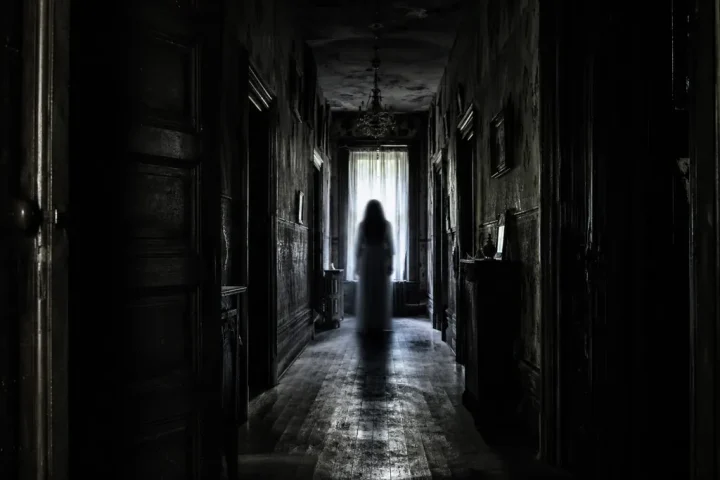
The idea that Djinn maintain an invisible civilisation alongside humanity is one of the most intriguing aspects of the folklore. Human beings may occupy a house, desert or market without realising that another population considers the same place its territory.
Conflict begins when the two worlds collide.
Where Djinn Live
Djinn are traditionally associated with liminal or neglected places.
Deserts, ruins, cemeteries, caves, abandoned buildings, garbage dumps and other locations outside normal social order frequently appear in Djinn lore.
Bathhouses and bathrooms are also associated with them in some traditions because such spaces are connected with impurity, nudity and water.
Djinn may inhabit ordinary homes as well.
Particular caution surrounds thresholds, because the threshold is neither completely inside nor outside. It forms a boundary, exactly the sort of ambiguous space supernatural beings frequently occupy in folklore.
Traditional advice therefore warns against sitting unnecessarily on thresholds, stepping heavily upon them or throwing liquids and waste onto the ground without warning.
The belief behind such customs is simple: an invisible being may be there.
If a person unknowingly harms or scalds a Djinn, the spirit may retaliate.
Heat, Desert and Darkness
Djinn are strongly associated with heat.
Their fiery origin makes deserts, hot springs and heated bathhouses natural environments for them. Folklore sometimes suggests that they dislike cold climates and become especially irritable when forced to inhabit them.
They are also primarily nocturnal.
Many traditions advise particular caution around sunset and during the first hours of darkness, when Djinn are believed to move more freely.
Islamic folklore includes warnings about bringing children indoors at nightfall, covering food vessels and closing doors.
Such customs combine religious observance, supernatural belief and practical household behaviour into a single traditional system.
Shape-Shifting Djinn
One of the most characteristic powers of Djinn is shape-shifting.
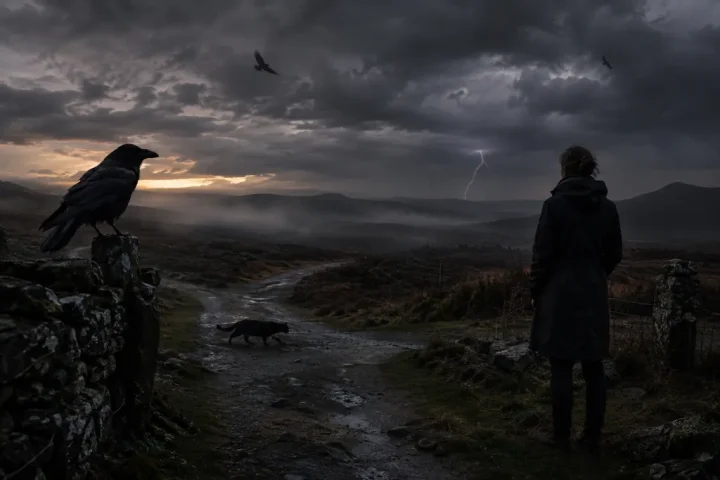
They may appear as humans, animals or unusual supernatural forms.
Snakes are particularly strongly associated with Djinn, and traditional Islamic lore contains warnings against immediately killing a snake found inside a house because it may represent a Djinn temporarily assuming animal form.
Cats and dogs also appear frequently in Djinn stories, particularly black dogs, which may be associated with more threatening spiritual forces.
Because of this belief, harming an unusual animal could potentially have supernatural consequences.
The danger lies not in the animal itself but in uncertainty concerning what may be concealed behind its appearance.
The Appearance of Djinn
Descriptions of Djinn vary enormously.
Some traditions portray them as extraordinarily tall beings, while others describe bodies possessing animal characteristics, unusual eyes, tails or goat-like legs.
Their ability to change form means that no single appearance can define them.
This fluidity is part of what makes Djinn disturbing within folklore. A ghost usually resembles a dead human, while a monster possesses recognisable characteristics.
A Djinn may look like almost anything.
The real creature remains hidden behind whatever form it chooses.
Djinn and Human Food
Djinn are sometimes believed to consume the spiritual essence or energy of food rather than the food itself.
Islamic custom consequently emphasises saying the name of God before eating, partly because food properly blessed is believed to be protected from unwanted supernatural participation.
Food, blood and sacrifice recur throughout Djinn folklore.
Some traditions associate Djinn particularly with slaughterhouses because of their attraction to blood.
This does not mean every Djinn is bloodthirsty. Rather, powerful smells, heat, death and bodily fluids belong to the liminal environments with which these spirits are traditionally connected.
Salt, Iron and Protection
Folkloric traditions frequently describe Djinn as disliking salt, while iron and steel are also said to repel them.
Similar protective beliefs occur in many unrelated cultures, particularly regarding iron, which has long been used against fairies, spirits and supernatural beings.
Djinn folklore also strongly emphasises respectful behaviour.
Because these spirits may retaliate when insulted, harmed or deceived, caution is often presented as more effective than unnecessary confrontation.
Djinn are also described as possessing a strong concept of honour. Even dangerous spirits may respect agreements, promises or vows, provided humans keep their side of the arrangement.
Djinn and Stories
One of the more fascinating folkloric traditions describes Djinn as lovers of stories.
They may gather unseen to listen to exciting tales and can supposedly be distracted, pacified or entertained through storytelling.
The connection immediately recalls Scheherazade, whose survival in The Thousand and One Nights depends upon her ability to keep a listener fascinated by stories that never quite reach their conclusion.
Whether interpreted as folklore or symbolism, the idea contains an elegant insight into the nature of these beings.
The hidden spirit can be held by imagination.
Marriage Between Humans and Djinn
Stories of Djinn falling in love with human beings are widespread.
Like European fairies, Djinn may become attracted to humans, form relationships with them or interfere with existing marriages.
Traditional Islamic discussions even debate whether marriage between humans and Djinn is religiously permissible, although most jurists historically rejected or discouraged the idea.
Folklore nevertheless contains stories of families claiming Djinn ancestry. One clan in the United Arab Emirates, for example, has been described as claiming descent from a female Djinn.
Traditions differ regarding whether human-Djinn unions can produce children. Some say such children inherit characteristics depending upon whether the mother is human or Djinn.
These stories belong to folklore rather than established biological reality, but their persistence demonstrates how thoroughly Djinn are imagined as beings whose lives parallel those of humans.
Jealous Djinn and Human Relationships
A Djinn who becomes romantically attached to a person may become intensely jealous.
Traditional explanations sometimes attribute inexplicable romantic difficulties, disrupted marriages or obsessive supernatural experiences to a Djinn who believes a human belongs to it.
This theme appears repeatedly across North African and Middle Eastern spirit traditions.
Love becomes dangerous because the invisible lover does not recognise ordinary human boundaries.
Such stories also overlap with broader traditions concerning spirit spouses found throughout Africa and Asia.
Djinn Possession
Belief in possession by Djinn remains widespread in some communities.
Traditional explanations often hold that possession may occur after a human unknowingly harms a Djinn. Someone might pour boiling water onto a place where a spirit is resting, urinate in its territory, strike it accidentally or disturb a hidden dwelling.
The injured Djinn then retaliates by entering or afflicting the offender.
Loneliness is sometimes considered another source of vulnerability because Djinn are said to dislike or exploit isolation.
Symptoms historically attributed to possession include dramatic changes in mood or voice, unexplained physical distress and behaviour interpreted as abnormal. These traditional descriptions should not be confused with modern medical diagnosis; many conditions once attributed to supernatural possession are understood today through neurological, psychological or other medical frameworks.
Within communities where Djinn possession is accepted religiously, treatment may involve prayer, Qur’anic recitation or forms of exorcistic practice conducted by experienced religious specialists.
Related possession traditions include the Zar, especially in parts of North-East Africa and the Middle East.
The Companion Djinn
Some Islamic traditions describe human beings as accompanied by spiritual beings that whisper suggestions toward good or evil.
This concept resembles other religious ideas concerning guardian and tempting spirits.
The supernatural influence is traditionally understood as affecting thoughts and emotions rather than possessing ultimate control over the human soul.
The individual therefore remains morally responsible.
Djinn may tempt, whisper or confuse, but they do not remove human free will.
Djinn, Magic and Forbidden Knowledge
Djinn have long been associated with sorcery.
Some traditions claim that knowledge of magic originally came to humanity through supernatural beings, including Djinn.
Their supposed ability to travel quickly, observe hidden places and communicate information naturally made them attractive within magical traditions.
A sorcerer who could command a Djinn might theoretically obtain knowledge unavailable through ordinary means.
This idea lies behind countless tales of magicians summoning spirits to reveal treasure, carry messages, identify enemies or uncover secrets.
Islamic theology traditionally treats attempts to obtain forbidden supernatural knowledge with profound suspicion, particularly claims concerning the future or knowledge belonging only to God.
Djinn may claim to possess such information, but folklore repeatedly warns that they are deceptive.
Djinn and the Dead
Djinn can also complicate beliefs about ghosts.
Some Islamic traditions maintain that the dead cannot simply return to communicate freely with the living. Apparitions claiming to be deceased relatives may therefore be interpreted as Djinn impersonating them.
A Djinn could imitate a familiar voice or appearance and convince humans that they were speaking with the dead.
This possibility became particularly important in religious critiques of mediumship, divination and spirit communication.
The entity may know things.
That does not necessarily mean it is who it claims to be.
Guardians of Tombs
Djinn are closely associated with graves, ruins and ancient monuments.
Egyptian folklore in particular developed stories concerning supernatural guardians protecting pharaonic tombs.
Opening a sacred burial site could therefore involve more than violating the dead. It might disturb invisible beings assigned to defend it.
These beliefs contributed to later stories concerning the supposed curse of the pharaohs, although nineteenth- and twentieth-century popular culture greatly exaggerated and transformed older traditions.
The underlying concept is ancient: treasure and sacred places require guardians.
Djinn as Religious Beings
Djinn themselves are understood as possessing religious identities.
Folklore speaks of Muslim Djinn, Jewish Djinn, Christian Djinn and Djinn belonging to older or Pagan traditions.
Some traditions suggest that spirits are more sympathetic toward humans sharing their religion, while particularly benevolent Djinn may assist anyone and particularly hostile ones may attack regardless of faith.
This variety reinforces the central idea that Djinn constitute a population rather than a single species of uniformly evil spirit.
Among them are believers, rebels, rulers, wanderers, tricksters and dangerous beings.
Their supernatural nature does not erase personality.
Modern Belief in Djinn
Djinn are not merely figures from medieval manuscripts.
Belief in them remains alive across parts of the Middle East and North Africa, although attitudes differ sharply according to education, location, religious interpretation and personal experience.
Urban middle-class communities may dismiss many traditional stories as superstition, while rural or isolated communities may continue to regard Djinn as an ordinary part of the supernatural landscape.
This difference does not necessarily correspond neatly with religious belief. Someone may accept the existence of Djinn as part of Islamic theology while rejecting folkloric stories concerning haunted valleys, magical attacks or spirit marriages.
Djinn therefore occupy a fascinating position between theology, folklore and lived supernatural belief.
David Morehouse and Baten el Ghoul
One of the strangest modern accounts involving Djinn comes from David Morehouse, a former U.S. Army officer who later became associated with military remote viewing.
Morehouse described an experience that allegedly occurred while American troops were conducting training exercises with Jordanian forces in a desolate region of Jordan known as Baten el Ghoul, a name translated as “Belly of the Beast.”
The Jordanian soldiers reportedly considered the valley haunted and believed supernatural beings emerged there after dark. Morehouse described hearing frightened soldiers screaming during the night and later insisting that they had encountered demons.
Baten el Ghoul itself was an isolated desert valley stretching toward Saudi Arabia, characterised by barren terrain and very little visible life.
Morehouse was accidentally shot in the helmet, an injury that left a huge lump on his head. After this, he experienced Djinn:
Sometime in the night, my eyes opened to a surreal light outside the tent. It was like the light of an eclipsed sun and wasn’t coming from any stove. It filled the night sky. The entire Baten el Ghoul and the hills beyond were bathed in the strange bluish gray light; I walked to the edge of the bluff and stared into the valley. Dark figures moved effortlessly across its floor, like apparitions. They poured from the rocks in various heaps and shapes and moved about the clusters of tents.
I could hear muffled cries from the Jordanian encampment, and momentarily I thought we were being overrun by thieves or Israelis. Panicked, I turned to run for help. Colliding with one of the figures, I reflexively closed my eyes, except I didn’t collide. I walked right through it. Turning around I watched the figure disappear over the edge of the bluff. After that, the lump on his head disappeared.
Morehouse later interpreted this experience within the wider supernatural transformation he believed followed his injury.
From a sceptical perspective, the head trauma itself obviously offers another possible explanation for an extraordinary visual experience. Within Djinn lore, however, the setting could hardly have been more appropriate: a haunted desert valley, darkness, terrified soldiers and shadowy beings moving through barren terrain.
The account therefore became one of the more unusual modern additions to centuries of stories concerning encounters with Djinn.
Djinn Beyond the Middle East
Although their origins belong to the Middle East and North Africa, Djinn travelled far beyond those regions through migration, trade, literature and the spread of Islam.
Today the idea of the Djinn exists throughout large portions of Africa and Asia and has become familiar globally through film, fantasy fiction and popular culture.
Neil Gaiman’s American Gods, for example, imagines a Djinn working as a taxi driver in modern New York City.
The setting is fictional, but the underlying idea is perfectly consistent with the historical movement of supernatural traditions.
People migrate.
Stories travel with them.
And the spirits of those stories acquire new homes.
From Djinn to Genie
The Western “genie” represents one of the most dramatic simplifications of a supernatural tradition.
Popular children’s stories tend to portray genies as colourful spirits trapped inside lamps, eagerly awaiting someone to make three wishes.
Older Djinn traditions are considerably less reassuring.
A Djinn might indeed grant requests or perform tasks, particularly within magical stories involving constrained spirits, but such relationships are rarely portrayed as straightforward.
A wish may carry an unexpected consequence, the spirit may seek freedom or revenge, and supernatural bargains demand precision.
The genie of modern fantasy is therefore the domesticated descendant of a much older being.
Behind the lamp stands the desert spirit.
Understanding the Djinn
The Djinn cannot be reduced to a single definition because their traditions have developed for thousands of years across different cultures and religions.
They existed before Islam but became an important part of Islamic cosmology. They may appear as dangerous wilderness spirits in one story and devout supernatural believers in another. Some fall in love with humans, while others avoid them completely. They may guard tombs, haunt ruins, assume animal forms or become involved in stories of magic and possession.
Their contradictions are not defects in the tradition.
They are evidence of its enormous age.
The Djinn survived because each generation inherited them and interpreted them again.
Beneath all those variations remains the same unsettling possibility: humanity may not be alone even in places it believes are empty.
The desert may look deserted.
The ruined house may look abandoned.
The crossroads may appear silent.
According to Djinn lore, invisible inhabitants may already be there.
Go Deeper into Demonology
Djinn are a perfect example of why demonology becomes far more interesting once you move beyond simple labels such as “demon,” “spirit” or “genie.” Their traditions stretch across pre-Islamic religion, Islamic theology, folklore, magic, possession beliefs, spirit conjuration, Solomonic legend and centuries of attempts to understand what may exist beyond the visible world. To study Djinn seriously is therefore to enter a much larger territory in which religion, fear, ritual, mythology and the occult constantly overlap.
That is exactly the territory explored inside the Occult World Mystery School.
If Demonology genuinely fascinates you, reading isolated descriptions of spirits will eventually stop being enough. The real questions begin when you ask where these beings came from, how different cultures classified them, why some spirits were considered dangerous while others became protectors, how possession traditions developed, why Solomon became the archetypal master of spirits, and how ancient beliefs eventually entered grimoires and ceremonial magic.
Inside the Demonology course, you can go deeper into the hierarchies, histories and traditions surrounding demons and other powerful spirits, while also exploring the grimoires, magical systems and religious ideas that shaped the way Western occultism understands the unseen world.
Djinn are only one doorway into that vast subject.
Behind them stand the spirits of the Ars Goetia, the demons of medieval and Renaissance grimoires, fallen angels, infernal hierarchies, possession traditions, exorcism lore, Solomonic magic and countless supernatural beings whose names have survived for centuries.
There are thousands of spirits, gods, demons, magical systems, grimoires and forgotten traditions waiting beyond it.
You can keep collecting names without understanding what connects them, or you can start studying the systems that gave those names meaning.
Join the Occult World Mystery School and enter the Demonology course. Stop skimming the surface of the infernal tradition and begin studying the hidden world in depth.
ALSO KNOWN AS:
Jinn; Genie; Jinni
Manifestations:
Djinn famously manifest as snakes, cats, or dogs. It’s considered dangerous to injure, kill, or even annoy any of these creatures as it may be a Djinn in disguise.
The most powerful individual Djinn have personal preferences in terms of offerings as well as colours. Please see individual entries for more details.
OFFERINGS:
The traditional offering involves pouring oil over flour. Jewish Djinn like fruit jam. Christian Djinn have the reputation of eating anything, but that may just be from the Islamic perspective. Djinn tend to like alcoholic beverages, candles, and incense, especially benzoin.
They hate salt. Make sure anything given to them was prepared without salt, or it will be rejected and their enmity earned.
SEE ALSO:
- Afrit
- Aisba Qandisba
- Bagblet el Qebour
- Bori
- Chemharouch
- Genie
- Jezibaba
- Kel Asuf
- Lalla Malika
- Lalla Mira
- Lalla Mkouna
- Maezt-Dar L’Oudou
- Bent Mkoun
- Lalla Rekya Bint El Khamar
- Mimoun, Sidi
- Mimouna, Lalla
- Zagaz
- Zar
SOURCES:
Encyclopedia of Spirits: The Ultimate Guide to the Magic of Fairies, Genies, Demons, Ghosts, Gods & Goddesses– Written by Judika Illes Copyright © 2009 by Judika Illes.
The Encyclopedia of Demons and Demonology – Written by Rosemary Ellen Guiley – Copyright © 2009 by Visionary Living, Inc.
FURTHER READING:
- Ahmad, Salim. Revealing the Mystery behind the World of Jinn. Booksurge.com: 2008.
- al-Ashqar, Umar Sulaiman. The World of the Jinn and Devils. Translated by Jamaal al-Din M. Zarabozo. New York: Al-Basheer Company for Publications and Translations, 1998.
- de Givry, Emile Grillot. Witchcraft, Magic and Alchemy. 1931. Reprint, New York: Dover Publications, 1971.
- Frieskens, Barbara. Living with Djinns: Understanding and Dealing with the Invisible in Cairo. London: Saqi Books, 2008.
- Morehouse, David. Psychic Warrior: Inside the CIA’s Stargate Program: The True Story of a Soldier’s Espionage and Awakening. New York: St. Martin’s Press, 1996.



Follow