

Zar : Spirits of Possession, Desire and Ecstatic Ritual
The Zar, also known in different regions as Asaid, Asyad or Sar, belongs to one of the most fascinating and complex spirit traditions of North-East Africa and the Middle East. Older Western demonological literature frequently described the Zar as a dangerous possessing spirit, sometimes identifying it as a type of Djinn or even simply as a Demon. Yet the living traditions surrounding Zar are considerably more complicated. A Zar may torment, weaken or possess a person, but the same spirit may eventually become a guardian, healer and source of supernatural knowledge once an appropriate relationship has been established.
The word Zar may refer not only to the spirits themselves but also to the ceremonies performed for them and, in some regions, to the specialists who communicate with them. The tradition has been particularly associated with Ethiopia, Sudan and Egypt, although related practices spread throughout parts of East Africa, North Africa and the Middle East. Despite centuries of religious condemnation and periodic attempts by governments to suppress it, Zar practice survived because it fulfilled spiritual, social and psychological functions that official institutions often could not.
Women have traditionally occupied the centre of this mysterious world.
The Origins of Zar
The precise origins of Zar remain uncertain. Written descriptions became more common during the nineteenth century, although the tradition itself is probably considerably older. Ethiopia is often suggested as one of its principal points of origin, with the practice perhaps reaching Egypt through Ethiopian slaves or through cultural exchanges between Egypt, Sudan and the Horn of Africa.
Once established in Egypt, Zar traditions developed their own local character while continuing to absorb influences from surrounding religions and cultures. Zar devotees could be Muslim, Christian, Jewish or adherents of traditional African religions, and the spirits themselves were likewise understood as possessing different religious identities.
This diversity is important because Zar cannot easily be placed inside a single theological system.
Some traditions associate them with Djinn. Others treat them as a separate category of spirits. In Egypt, where openly describing them as Djinn could create religious problems, they have sometimes been euphemistically called Malayka Ardiyya, meaning “underground angels.”
Even the origin of the name remains debated. It has been connected with the Arabic za’er, meaning a visitor, while other explanations trace it to Ethiopian languages or compare it with Semitic words connected with princes or spiritual powers. None of these explanations has been conclusively established.
What remains consistent is the idea of an unseen presence that arrives, attaches itself to a human being and demands recognition.
When the Zar Arrives
Older demonological accounts often portray Zar possession as beginning with illness. A woman might suffer unexplained weakness, lethargy, convulsions, infertility, emotional distress or repeated accidents. When ordinary explanations failed, the possibility of Zar involvement could be considered.
The Egyptian expression traditionally associated with this state does not necessarily mean possession in precisely the Western Christian sense. The person may instead be described as being “covered” or “clothed” by the spirit, suggesting that the Zar surrounds or envelops the individual rather than simply entering the body.
This distinction reveals something important about the tradition.
The Zar is not always treated as an invading Demon that must immediately be expelled. In many Zar traditions, attempting to remove the spirit entirely is either impossible or undesirable. Instead, the objective is to discover who the spirit is, understand what it wants and negotiate a relationship that transforms hostility into cooperation.
The victim may therefore become a devotee.
What begins as spiritual affliction can evolve into a lifelong relationship with the supernatural.
The Women of Zar
Zar traditions have historically been especially associated with women, and married women in particular. Older writers sometimes interpreted this almost entirely as social manipulation, arguing that women living under restrictive conditions used Zar possession as a culturally acceptable means of demanding things otherwise denied to them.
There is undoubtedly an important social dimension.
A woman whose Zar demanded jewellery, perfume, fine clothing or luxurious food could receive gifts without having to request them directly. A woman speaking while possessed might express anger toward her husband that would ordinarily have been considered unacceptable. Through the voice of the spirit, frustrations that could not safely be spoken in everyday life suddenly became legitimate.
Some anthropologists consequently interpreted Zar as a mechanism through which socially restricted women could acquire attention, material goods and temporary freedom.
Yet reducing the entire tradition to manipulation ignores the spiritual reality understood by practitioners themselves.
Within Zar belief, the spirit genuinely desires these things.
The Zar may be attracted to someone whose emotional state mirrors its own desires, particularly a person experiencing unhappiness, frustration or longing. The relationship between human and spirit therefore becomes one of shared appetite. The Zar craves through the person it has chosen, and the human experiences those desires as part of the supernatural relationship.
The woman does not merely receive a beautiful dress.
The Zar wears it through her.
The perfume offered to the woman is simultaneously enjoyed by the spirit surrounding her, while food and drink consumed by the devotee may likewise be understood as reaching the Zar.
Human body and spirit become intertwined without necessarily becoming identical.
Identifying the Spirit
Once Zar involvement is suspected, a ritual specialist may be consulted. Depending upon region and language, this specialist may be called a Sheikha, Kodya, Ba’alat Zar or by another local title.
Traditionally, this role has frequently been occupied by an experienced woman who understands the personalities, rhythms and demands of the spirits. She attempts to determine which Zar has attached itself to the afflicted person and why.
Identification is essential because Zar are not imagined as an anonymous mass of interchangeable Demons.
They possess individual personalities.
A particular spirit may favour certain perfumes, clothing, colours, foods or music. Another may require an entirely different form of attention. Some have names and reputations extending across large geographical regions, while others may be known only within a single family or ritual community.
The spirit may reveal its identity during trance, speak through the possessed person or communicate with the ritual specialist through dreams.
Once its identity becomes known, negotiation begins.
What the Zar Wants
Zar are famous for their appetites.
They are frequently depicted as spirits that desire beauty, sensual pleasure and luxury. Fine clothing, jewellery, perfume, incense and carefully prepared foods may become essential parts of the relationship.
The seemingly extravagant demands have contributed greatly to the Zar’s reputation in older literature. Husbands could find themselves expected to provide expensive objects because refusing might supposedly provoke further illness or supernatural retaliation.
Yet the gifts were not understood merely as payment for departure.
In many traditions the objective is not to bribe the Zar into disappearing forever. The spirit may instead demand recognition and regular attention. Once satisfied, it can cease causing illness and become a source of protection.
The relationship consequently resembles a contract.
The Zar receives honour, offerings and participation in ceremonies, while the devotee receives relief from spiritual affliction and potentially gains the assistance of a supernatural ally.
The dangerous possessing spirit becomes a guardian.
The Zar Ceremony
The most dramatic element of the tradition is the Zar ceremony itself.
Music occupies the heart of the ritual because individual spirits may be associated with particular rhythms and songs. Drumming, chanting and repetitive movement gradually alter the atmosphere until participants enter states of ecstatic trance.
These ceremonies may last for several hours, several days or, in elaborate circumstances, an entire week.
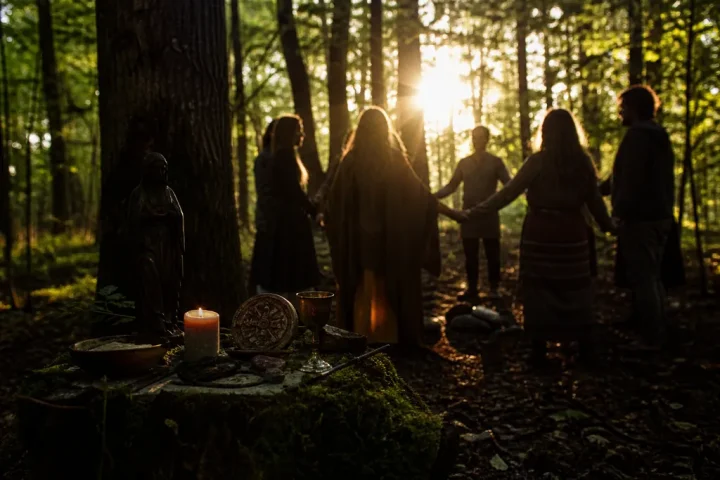
Candles traditionally illuminate the ritual space even where modern electric lighting is available. Incense fills the room while rhythmic music grows increasingly intense. Participants dance, sway and whirl until altered states of consciousness emerge.
The arrival of the spirit may be recognised through changes in movement, voice or behaviour.
The ritual specialist then communicates with the Zar.
The spirit may explain what has offended it or describe what it expects from its human partner. Negotiation can continue until an agreement is reached.
Older descriptions sometimes call these events exorcisms, but this terminology can be misleading. Some ceremonies certainly seek to expel troublesome spirits, particularly within Islamic healing traditions influenced by Qur’anic exorcism, but classical Zar practice more often seeks accommodation.
The spirit is not necessarily driven away.
It is pacified.
Blood and Sacrifice
Animal sacrifice has historically appeared in some Zar ceremonies.
A bird, lamb or other animal may be dedicated to the spirit before being killed, after which the meat is prepared and shared among participants. Some accounts describe the blood being placed upon the forehead or body of the afflicted person as part of the ritual relationship with the Zar.
Blood possesses obvious symbolic importance because it represents vitality, life and embodiment.
The Zar itself has no physical body through which it can participate in ordinary human existence. Through the devotee and through offerings, however, it enters the sensory world.
This idea helps explain why the Zar tradition is so deeply connected with music, perfume, food, clothing and physical movement.
It is an intensely embodied spirituality.
The unseen spirit encounters the material world through sensation.
Ecstatic Possession
Descriptions of Zar ceremonies frequently emphasise dancing until the participant becomes exhausted, collapses or enters trance. To an outside observer, the scene may resemble violent possession.
Within the tradition, however, the behaviour possesses meaning.
Music summons specific spirits because each Zar may have its own rhythm. When that rhythm is played, a devotee connected with the spirit may begin responding physically until consciousness shifts and the Zar becomes manifest.
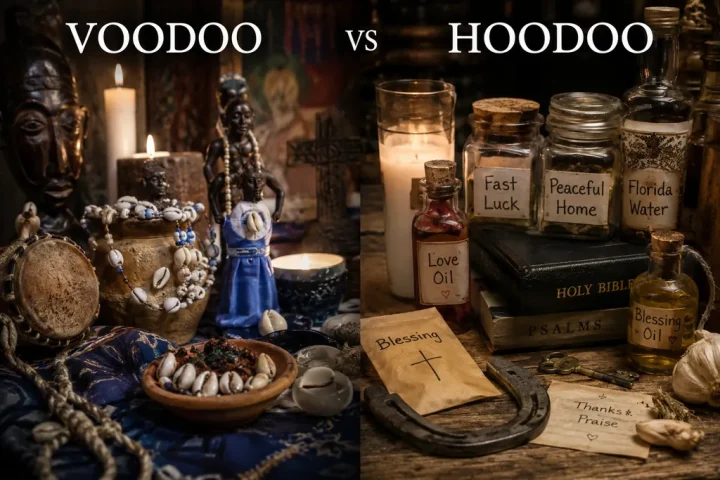
This principle resembles possession traditions found elsewhere, including Vodou, Santería and Bori practice, although Zar possesses its own history and cultural structure.
The human participant becomes a point of contact between worlds.
For a period of time, the invisible becomes visible through the body.
Zar as Guardian Spirits
One of the most misunderstood aspects of Zar is what happens after the original crisis has passed.
A successfully appeased Zar may remain permanently associated with the person it once afflicted. Rather than being treated solely as an enemy, it can become a protective spirit whose presence accompanies the devotee throughout life.
In some regions this transformed spirit may even be passed through family lines.
A mother who maintained a relationship with a Zar might therefore transmit elements of that relationship to a daughter. What began as possession can gradually become part of family spirituality and identity.
This transformation from persecutor to protector is central to understanding Zar.
The person who was once considered a victim becomes a devotee, while the dangerous spirit becomes a supernatural ally.
The relationship remains conditional because the spirit’s requirements must continue to be respected. Neglect may provoke renewed illness, misfortune or distress.
The alliance is therefore powerful but never entirely casual.
The Spirits Have Their Own Religions
Zar cosmology becomes even more complex because the spirits themselves may possess religious identities.
Some are considered Muslim, while others may be associated with Christianity, Judaism or older African religious traditions. Their spiritual identity can influence what offerings they accept and how they respond to ritual treatment.
A Muslim Zar, for example, would not traditionally be offered alcohol, whereas another spirit might specifically request it.
This characteristic also complicates attempts to identify Zar simply as Djinn or Demons. They inhabit a spiritual universe in which supernatural beings possess their own personalities, affiliations and preferences.
The relationship between humans and spirits is therefore not governed by one universal formula.
Every spirit must be known.
Zar, Djinn and Demonology
From a demonological perspective, Zar occupies a fascinating borderland.
Older Western sources often classified Zar as Demons because they could produce illness, possess human beings and resist attempts at removal. Islamic interpretations could likewise identify troublesome spirits as dangerous Djinn whose influence should be broken through Qur’anic recitation and religious healing.
Yet Zar tradition itself complicates that classification because many practitioners do not seek destruction or banishment of the spirit.
They seek relationship.
This places Zar within one of the most intriguing questions in comparative demonology: when does a dangerous spirit become a Demon?
A being may terrify one religious tradition while becoming a guardian within another. A spirit condemned by orthodox authorities may simultaneously receive devotion from people who believe it protects them.
The word Demon therefore tells us as much about the worldview of the person using it as it does about the supernatural being being described.
Zar demonstrates precisely why serious demonology must go beyond cataloguing frightening entities.
It must investigate the cultures that encountered them, the rituals created to communicate with them and the changing boundary between possession, worship, propitiation and exorcism.
The Survival of Zar
Despite official hostility, Zar survived.
Governments and religious authorities periodically attempted to suppress it, particularly during the twentieth century. In Egypt, President Gamal Abdel Nasser’s government attempted to eradicate Zar practices, while Sudan later imposed restrictions that drove ceremonies further underground.
Yet suppression rarely destroyed the tradition.
Zar rituals continued privately and sometimes publicly because they provided something their practitioners considered essential. They offered spiritual healing, communal identity and a place where experiences ignored elsewhere could be recognised.
For many women, especially, the ritual space created a temporary world governed by different rules.
Music could become prayer.
Possession could become communication.
Illness could become initiation.
A feared spirit could become a companion.
This ambiguity is exactly what makes Zar one of the most compelling spirit traditions encountered within demonology.
It refuses to fit comfortably inside the simple categories of good and evil.
Enter the Study of Demonology
Reading about Zar is only the surface.
Demonology becomes truly fascinating when you begin comparing traditions and discover that the beings casually labelled “Demons” are rarely as simple as popular culture suggests. Some attack human beings, some deceive them, some demand offerings and some establish relationships lasting generations. What one civilisation attempts to exorcise, another may negotiate with, honour or transform into a guardian.
If you genuinely want to understand Demons, possession, Djinn, spirit pacts, exorcism and the terrifyingly complicated relationships humanity has developed with unseen beings, then stop treating demonology as entertainment.
Enter the Occult World Mystery School and study Demonology as an actual occult discipline. Go deeper than sensational stories and learn how different magical and religious traditions understood the entities they feared, summoned, appeased and attempted to control.
Anyone can read another story about possession and call themselves interested in the occult. That is not mastery.
If you want to become an occultist, then study like one. Join the Occult World Mystery School, enter the Demonology course and begin learning what waits behind the names, rituals and forbidden traditions that most people are too afraid to investigate.
Stop standing outside the circle. Enter it.
Ritual:
Candles are crucial to Zar ceremonies. Rituals must be held by candlelight even if electric lights are available.
ALTAR:
Zar altars usually include henna, incense, and flowers, especially roses.
OFFERINGS:
Each Zar has personal preferences, so the following are generalities:
• Zar usually like fruit, cheese, olives, and beer plus perfume and incense, especially frankincense.
• Ethiopian Zar are allegedly inordinately fond of coffee.
• Muslim Zar demand soft drinks, as do most female Zar.
• Non-Muslim Zar may demand alcoholic beverages.
• Ethiopian Zar like magical scrolls and talismans, even those traditionally used to banish spirits. (This may also be their way of bragging about their inability to be exorcised.) A scroll is made from skin of an animal dedicated to a Zar spirit, then slaughtered and eaten. Once created, the scroll must be worn by the devotee.
Koranic healing is sometimes prescribed for Zar (and Djinn) but the goal is exorcism, not propitiation. The possessing spirit is perceived as a Demon, not a potential ally. Although based on the Koran, not on Christianity, methods used are not dissimilar from traditional Christian Fairy exorcisms in Ireland, including beating the possessed human in an attempt to drive out the spirit.
SEE ALSO:
SOURCES:
Encyclopedia of Spirits: The Ultimate Guide to the Magic of Fairies, Genies, Demons, Ghosts, Gods & Goddesses – Written by : Judika Illes Copyright © 2009 by Judika Illes.
The Encyclopedia of Ghosts and Spirits – Written by Rosemary Ellen Guiley – September 1, 2007
The Encyclopedia of Demons and Demonology – Written by Rosemary Ellen Guiley – Copyright © 2009 by Visionary Living, Inc.
FURTHER READING:
- Ebon, Martin. The Devil’s Bride, Exorcism: Past and Present. New York: Harper & Row, 1974.
- Lewis, I. M. Ecstatic Religion: An Anthropological Study of Spirit Possession and Shamanism. Middlesex, England: Penguin Books, 1971.
- Oesterreich, Traugott K. Possession and Exorcism. Secaucus, N.J.: University Books, 1966.




Follow