

Séance: Spirit Communication, Mediumship, and the Search for the Dead
A séance is a sitting organised for the purpose of receiving spirit communications or paranormal manifestations through a medium. The word séance is French for “sitting,” a term that became widely used during the rise of Spiritualism in the nineteenth century, especially through the private spirit-contacting sessions of the famous Fox sisters.
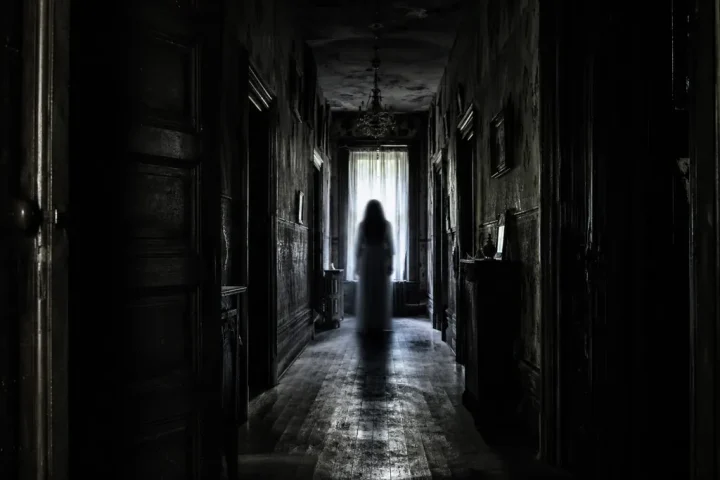
Séances are meetings centred around the work of a medium, who attempts to contact spirits of the dead. They may be held for personal communication, spiritual inquiry, or paranormal investigation. In haunted locations, séances are sometimes conducted in an attempt to produce evidence of a haunting or to obtain information about ghosts believed to be present.
References to spirit communication go back as far as the writings of Porphyry in the third century C.E. In 1659, Reverend Meric Casaubon published A True and Faithful Relation of What Passed Between Dr. Dee and Some Spirits, one of the earliest recorded accounts of organised spirit communication. However, séances did not become widely known until the rise of the Fox sisters in the mid-nineteenth century, when Spiritualism spread rapidly through Europe and America.
Early Spiritualist séances were often dramatic and theatrical. They usually took place in darkened parlours around circular tables and featured physical mediumistic phenomena. These might include table levitation, rapping sounds, mysterious lights, sudden cold breezes, bells ringing without visible cause, musical instruments sounding on their own, or objects appearing from nowhere, known as apports. In some cases, spirits were said to communicate through knocks, altered voices, trance speaking, or physical manifestations.
Most modern séances are more informal and usually involve mental mediumship rather than dramatic physical effects. A medium may enter trance, speak in an altered voice, begin automatic writing, use a Ouija board, or simply announce the presence of a spirit and relay messages. In some séances, one spirit known as the control acts as an intermediary, delivering messages from other spirits in the spirit world.
Séances are most often held in the home of the medium or one of the sitters, but they can take place anywhere two or more people gather for that purpose. Haunted houses, castles, catacombs, old churches, country houses, and other places with strong historical or emotional atmosphere have often been considered favourable locations for séances.
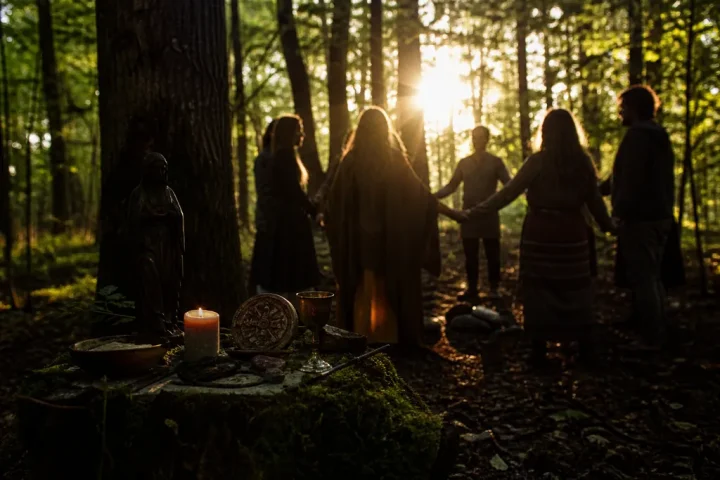
Traditionally, séances work best with a small group of six to eight sitters seated around a circular table. Participants may place their hands flat on the table with fingers touching, or they may hold hands. Older instructions recommend a near-equal balance of men and women, and some Spiritualists believed younger sitters often produced stronger results. Sitters who are anxious, hostile, or excessively sceptical are said to dampen the atmosphere and reduce the possibility of phenomena.
The séance circle is traditionally treated with care. Strangers should not be introduced too quickly, especially before the same group has sat together several times. In older practice, no more than two or three séances were recommended per week, and each sitting was usually limited to no more than two hours unless the spirits requested an extension. Mediums were also advised to avoid stimulants and to guard against extreme emotional states.
This careful structure is part of what makes the study of séances so fascinating. It is not merely ghost hunting, nor is it only theatre. It belongs to the larger world of mediumship, spirit communication, haunted places, Spiritualism, trance work, automatic writing, Ouija boards, and the long human desire to speak with the dead. If you want to explore these traditions more deeply, the Occult World Mystery School is the place to continue your journey. Inside the community, you can meet fellow occultists, study ghosts, haunted places, spirit contact, mediumship, necromancy, ritual practice, demonology, and the wider hidden world with people who take these subjects seriously.
Music and conversation have long been considered important elements of the séance. Many sittings open with hymns and prayers, often including the Lord’s Prayer, and may include songs or prayers throughout. William Stainton Moses believed that music helped harmonise and soothe the atmosphere. Critics, however, argued that music and conversation could also cover noises produced by fraudulent mediums. At the same time, conversation helped break the fear and tension created by unusual manifestations.
The furnishings of the séance room traditionally helped set the tone. The room was usually simple, with wooden furniture and few ornaments, cushions, or hangings. In the era of physical mediumship, some mediums used a so-called cabinet, an enclosure thought to gather or attract spiritual energy. This might be an armoire, but more often it was simply a corner of the room hung with black curtains. The medium might sit inside the cabinet for manifestations or remain outside it. Most modern mental mediums rarely use such props.
Lighting also played an important role. Early séances were often held in darkness or in very subdued light, because spirits were said to avoid bright light. Some mediums used moonlight or red light. Critics argued that darkness made fraud easier. Yet not all mediums required darkness. D. D. Home, one of the most famous physical mediums, often worked in full light, and many modern mental mediums do the same.
Séances have always attracted both believers and sceptics. In the nineteenth century, several mediums were caught faking phenomena, while others were never conclusively exposed despite repeated scrutiny. Sceptics argue that table movements, rapping, bells, apports, Ouija messages, and automatic writing can be explained by trickery, suggestion, unconscious movement, or psychological expectation. Believers argue that some séances produce information, atmosphere, and manifestations that cannot easily be dismissed.
In the days of physical mediumship, sitters often recognised the arrival of spirits through a rush of cold air, strange lights, rapping sounds, or movements of the table. In modern séances, the signs may be subtler: a shift in the atmosphere, a change in the medium’s voice, automatic writing, impressions, names, images, emotions, or messages from the dead.
Not every séance is successful. Sitters should not expect a specific result, a particular spirit, or dramatic phenomena. First-time participants may be disappointed, and some sitters may perceive things that others miss entirely. The séance is unpredictable by nature. It stands between ritual, investigation, faith, theatre, psychology, and the unknown.
A séance remains one of the most recognisable forms of spirit communication in the occult and paranormal world. Whether viewed as sacred practice, psychic experiment, ghost investigation, or Spiritualist ritual, it reflects a timeless human question: can the dead speak, and if so, who is truly listening?
For those who feel drawn to this mystery, the path does not have to end with reading. Inside the Occult World Mystery School, you can go deeper into spirit communication, haunted places, ghost lore, mediumship, necromancy, paranormal investigation, and the occult traditions surrounding contact with the unseen. Join the community, meet fellow seekers and occultists, and continue your study of the hidden world beyond the veil.
SEE ALSO:
FURTHER READING:
- Chaney, Rev. Robert G. Mediums and the Development of Mediumship. Freeport, N.Y.: Books for Libraries Press, 1972.
- Fodor, Nandor. An Encyclopaedia of Psychic Science. Secaucus, N.J.: The Citadel Press, 1966. First published 1933.
- Pearsall, Ronald. The Table-Rappers. New York: St. Martin’s Press, 1973.
- Somerlott, Robert. “Here, Mr. Splitfoot”: An Informal Exploration into Modern Occultism. New York: The Viking Press, 1971.
SOURCES:
- The Encyclopedia of Ghosts and Spirits– Written by Rosemary Ellen Guiley – September 1, 2007
- The Greenhaven Encyclopedia of Paranormal Phenomena – written by Patricia D. Netzley © 2006 Gale, a part of Cengage Learning



Follow