

Ointments
Ointments, also known as unguents, occupy a strange and dangerous territory between medicine, magic, poison, prophecy and witchcraft. Long before European demonologists imagined witches greasing their bodies before flying into the night, oils and salves were already being used in ritual healing, divination, religious ceremony and magical transformation. Their power was believed to lie not merely in the substances from which they were made, but in the way those substances crossed the boundary of the body. An ointment penetrated the skin, entered the flesh and altered the person who received it. In magical thought, that made it an ideal vehicle for transformation.
Some ointments were intended to heal. Others were believed to induce visions, summon dreams, protect against supernatural forces, provoke love, produce invisibility, transform human beings into animals or carry witches through the night to the Sabbat. Still others belonged to the darker imagination of curse magic and poisoning.
By the time of the European witch trials, the magical ointment had become one of the most sinister objects associated with witchcraft. Demonologists described cauldrons filled with secret greases made from poisonous plants, animal substances and even the bodies of murdered children. Accused witches were said to smear these preparations upon themselves, upon staffs or other objects, and then rise through the air towards their nocturnal assemblies with the Devil.
Whether such journeys were believed to occur physically, spiritually or only within the altered consciousness of the witch became one of the great arguments of early modern demonology.
Sacred Unguents and Ancient Magic
The magical history of ointments reaches far beyond European witchcraft.
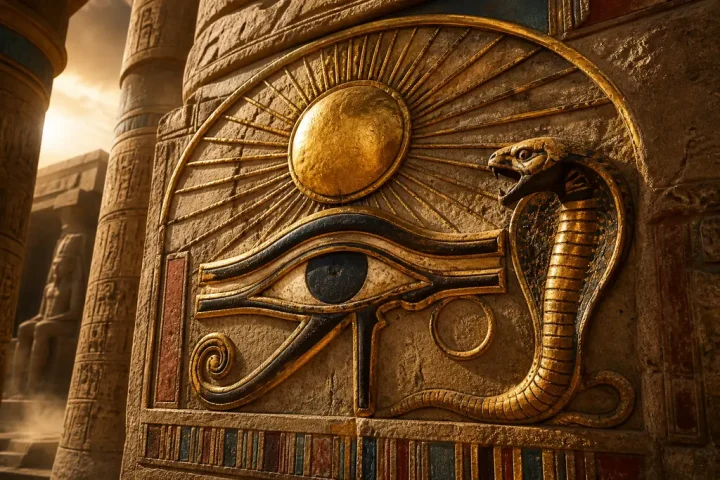
Ancient cultures used perfumed oils and sacred unguents in medicine, burial rites, temple ceremonies and religious consecration. In Egypt, oils were employed in funerary ritual and the preservation of the dead, but surviving magical texts reveal another world in which substances applied to the body could also facilitate divination and supernatural vision.
One of the strangest examples survives in the Demotic Magical Papyrus of London and Leiden, a Roman-period Egyptian magical text dating from approximately the third century AD. This extraordinary collection contains rites involving divination, healing, love magic, visions and encounters with divine beings.
In one operation, flowers of the plant described as the “Greek bean” were placed inside a sealed glass vessel and hidden in darkness. According to the text, after a period of concealment a phallus and testicles were expected to appear mysteriously within the container. The vessel was then sealed again, after which the strange manifestation was said to become bloody.
The resulting substance formed part of a visionary operation connected with the eyes and lamp divination. The magician sought not ordinary sight, but supernatural perception, allowing a divine presence to appear and answer questions.
Here, centuries before the witch trials, the basic occult principle is already visible. The body could become a doorway. Something applied to the flesh might alter ordinary perception and open the magician to another world.
Ointments of Transformation
Classical literature also preserves one of the oldest famous images of magical transformation through ointment.
In Apuleius’s The Golden Ass, written during the second century AD, the character Pamphile uses a magical preparation before transforming into an owl and flying into the night. The episode is literary rather than documentary evidence of ancient magical practice, but its imagery is remarkable because it anticipates motifs that would later become inseparable from European witchcraft.
The magical salve, the transformation into a nocturnal creature and the flight through darkness all appear centuries before the stereotype of the Sabbat witch reached its mature form.
By the later Middle Ages, such themes had become entangled with Christian demonology. Transformation no longer belonged merely to the mysterious world of classical magic. It could now be interpreted as evidence of Satanic power.
The Flying Ointment
Few objects in the history of witchcraft are more famous than the flying ointment.
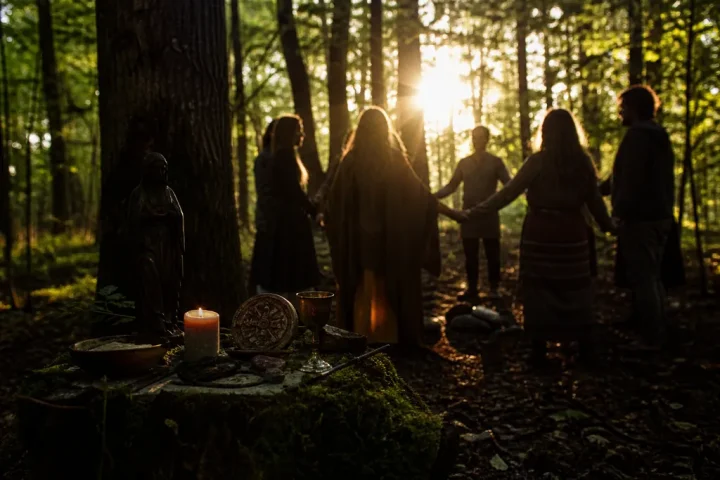
According to demonological literature and witch-trial testimony, witches prepared special salves that allowed them to travel through the air towards secret nocturnal gatherings. These preparations were sometimes called witches’ grease or sorcerers’ grease.
The ointment might be rubbed directly onto the body. In other accounts, it was applied to a staff, rod, broom, chair or other object upon which the witch supposedly travelled. The later image of the witch riding a broomstick belongs to this wider mythology of supernatural transportation.
Many supposed recipes contained substances associated with poison, delirium and altered consciousness. Belladonna, henbane, mandrake, aconite and related plants appear repeatedly in the literature surrounding witches’ ointments.
These plants are not harmless pieces of occult folklore. Several contain powerful toxic compounds capable of producing delirium, confusion, hallucinations, memory disturbance, extreme agitation, unconsciousness and death.
For this reason, some historians, physicians and folklorists have suggested that at least part of the flying-ointment tradition may have developed from genuine experiences of drug-induced altered consciousness.
Yet this theory must be approached carefully.
Most surviving recipes were recorded by physicians, sceptics, demonologists and writers rather than securely documented communities of practising witches. Witch-trial confessions were also shaped by interrogation, theological expectation and, in many cases, torture. The existence of psychoactive recipes therefore does not prove that the thousands of people accused of witchcraft across Europe were secretly manufacturing hallucinogenic flying salves.
The myth of the ointment and the historical use of psychoactive plants overlap, but they are not the same thing.
The Witches of Arras
One of the earliest important descriptions of witches using ointment for flight appeared during the notorious Vauderie d’Arras persecutions in France in 1460.
Accused persons were said to have received a magical ointment from the Devil. According to the surviving account, five women confessed that they rubbed the substance upon small rods, positioned the rods between their legs and then flew wherever they wished, passing above towns, forests and waters while the Devil guided them towards the place of their assembly.
The imagery is startlingly close to the witch stereotype that would dominate European imagination for centuries.
Yet the context is essential. Arras was not a neutral observation of an underground magical society. It was a witch persecution in which authorities believed that Satanic conspiracies existed and interrogated prisoners accordingly.
The testimony nevertheless remains historically important because it reveals how firmly the connection between witches, ointment, supernatural flight and the Devil had already entered the European imagination by the fifteenth century.
The Question of Flight
Not every demonologist agreed about what flying ointments actually did.
Some authorities insisted that witches physically travelled through the air with demonic assistance. Others argued that Satan deceived them through dreams, visions and illusion. According to this interpretation, the witch might lie unconscious while believing herself to have crossed mountains, entered distant houses, attended the Sabbat or copulated with demons.
The problem was theological as much as physical. Could demons truly transport human bodies through the air, or could they only manipulate the senses?
The debate produced a disturbing possibility. A witch could describe an experience with complete sincerity while never having physically left the room.
This uncertainty helped transform the flying ointment into one of the great occult mysteries of the witch trials. Was the Sabbat a real gathering, a demonic illusion, a chemically altered dream, a vision shaped by cultural expectation, or something that existed somewhere between all of these?
Early modern Europe never reached a single answer.
Reginald Scot and the Recipes of the Witches
The English writer Reginald Scot included famous descriptions of supposed witches’ ointments in The Discoverie of Witchcraft, published in 1584.
Scot was deeply sceptical of many supernatural claims made against accused witches. He reproduced recipes associated with magical flight not because he accepted that witches literally soared through the sky, but because he believed natural substances could explain experiences mistakenly attributed to supernatural transportation.
One preparation included ingredients such as aconite, poplar leaves and other materials combined with fat. Another contained plants and substances including cinquefoil, bat’s blood and a plant called Solanum somniferum. The preparations were described as being rubbed vigorously into the skin until the body became hot.
Scot’s source for some of this material was the Neapolitan scholar and natural magician Giambattista della Porta, whose writings explored the ambiguous territory between natural philosophy, medicine and magic.
Scot believed the ointments could confuse the senses and produce experiences that witches interpreted as supernatural.
This was a dangerous idea in an age when many authorities treated testimony concerning the Sabbat as evidence of literal demonic activity.
The Witch Who Slept While She Flew
Among the stories associated with flying ointments is the account of a woman who claimed she could demonstrate supernatural travel.
After applying an ointment, she fell into an unusually deep sleep. Observers remained beside her and watched as she lay motionless.
When she awoke, however, she reportedly insisted that she had travelled across great distances, passing mountains and seas before returning.
To sceptical writers, stories of this kind appeared to explain the entire mystery. The witch had not physically flown anywhere. She had experienced the journey inside an altered state of consciousness so convincing that she believed it to have been real.
To believers in demonic witchcraft, however, the question remained open. The Devil was thought capable of creating visions powerful enough to imitate reality itself.
Whether the body travelled or remained behind, Satan could still be blamed.
Belladonna, Henbane and the Devil’s Garden
The plants associated with flying ointments belong to some of the darkest corners of European herbalism.
Belladonna, also known as deadly nightshade, became especially associated with witchcraft. Henbane, mandrake and datura belonged to the same sinister botanical family and acquired reputations as plants of sorcery, death, prophecy and transformation.
Their effects help explain why later researchers became fascinated by the possibility of pharmacological witch flight.
Certain compounds within these plants can produce a state very different from ordinary dreaming. A person may become unable to distinguish hallucination from physical reality. Impossible events can be experienced as completely real. Memory becomes unreliable. The sense of the body may change. Perceived movement through strange environments can occur.
For someone living within a culture saturated with stories of witches, demons, nocturnal spirits and Satanic assemblies, such an experience could easily acquire supernatural meaning.
Yet the same plants could also kill.
The romantic modern image of the flying ointment therefore conceals a lethal reality. The herbs celebrated in modern occult folklore were among the most dangerous substances available to historical herbalists.
They should be studied as part of the history of magic, not casually recreated.
Werewolves and the Ointment of the Beast
Flying was not the only transformation attributed to magical ointments.
Early modern demonological literature also connected salves with lycanthropy and other forms of shapeshifting. Some alleged werewolves claimed that magical preparations allowed them to assume the form of wolves before roaming the countryside.
The French physician Jean de Nynauld, writing in the early seventeenth century, discussed lycanthropy, witches’ ecstasy and magical transformation. He examined preparations containing powerful plants and argued that such substances could so disrupt perception that people believed themselves transformed into animals.
The body might remain human while the consciousness became wolf.
Within demonological thought, however, natural explanation did not necessarily eliminate the Devil. Satan could still be imagined as manipulating the victim through poisonous substances, dreams and sensory deception.
The werewolf ointment therefore belonged to the same terrifying borderland as the flying salve. Transformation could be physical, imagined, demonic or visionary, and those living inside the worldview of early modern witchcraft could not always distinguish among them.
The Ointment of Death
Not all magical ointments promised flight or transformation.
Some were associated with harmful magic, poisoning and curses. Early modern texts attributed mixtures containing toxic plants and gruesome substances to witches who supposedly intended to cause illness or death.
Ingredients such as aconite and belladonna were genuinely poisonous, which allowed demonological imagination and real toxicology to reinforce one another. A magical salve containing deadly plants could be both a supposed curse and an actual poison.
Other ingredients belonged more clearly to the mythology of the Satanic witch.
Recipes involving the fat of murdered children appear in witchcraft literature, reinforcing the accusation that witches inverted every principle of Christian morality. The innocent child, symbol of purity and baptism, was transformed into an ingredient of diabolical magic.
Such claims should not be mistaken for reliable evidence that historical witches routinely murdered infants to manufacture magical grease. Infanticide, cannibalism and the desecration of children belonged to the nightmare mythology projected onto alleged witches.
But myth could kill as effectively as poison.
People were tortured and executed because authorities believed such horrors were real.
Ointments of Invisibility
Magical literature also preserves traditions surrounding ointments intended to make the user invisible.
Invisibility has always occupied a special place in magic because it represents freedom from ordinary human restriction. The invisible magician could supposedly move unseen, enter forbidden places, escape enemies and perform secret rites without discovery.
Later traditions associated plants such as vervain with invisibility and magical concealment. Twentieth-century Witchcraft writer Gerald Gardner discussed recipes in which herbs were steeped in oil or fat to create preparations supposedly connected with magical disappearance.
Claims that such recipes were routinely used by medieval witches should be treated cautiously. Much of the surviving material comes from later magical and folkloric traditions rather than securely documented medieval practice.
The idea itself, however, is ancient and persistent.
To vanish from ordinary sight is one of humanity’s oldest magical dreams.
Gerald Gardner and the Lost Ointments
Gardner, one of the most influential figures in the development of modern Wicca, stated that he knew of no contemporary witches in his circle regularly using the famous flying ointments described by earlier writers.
He speculated about more practical purposes for historical anointing, suggesting that oils might have helped protect naked ritual participants from cold weather, made the body slippery or released perfume as dancing heated the skin.
These explanations remain speculative and should not be treated as established history.
What they reveal more clearly is the difficulty modern occultists faced when confronting the terrifying literature of the witch trials. Were the old stories fragments of genuine magical practice, fantasies created by persecutors, memories of psychoactive ritual or symbolic legends that later became literalised?
Gardner inherited the same mystery that had troubled demonologists centuries earlier.
Will-Erich Peuckert and the Return of the Flying Ointment
During the twentieth century, German folklorist Will-Erich Peuckert became associated with one of the most famous modern attempts to investigate flying ointments experimentally.
Peuckert reported preparing a reconstruction based upon historical descriptions containing psychoactive plants. After using the preparation with another participant, he described entering an extended altered state accompanied by extraordinarily vivid experiences.
Later accounts attributed to the experiment describe sensations of flying, travel to a mountain and participation in an erotic gathering populated by supernatural or monstrous beings.
The resemblance to descriptions of the Witch’s Sabbat was striking.
Yet Peuckert’s experiment should not be treated as scientific proof that medieval witches travelled to imagined Sabbats under the influence of drugs. Details vary between later retellings, and the experiment did not meet modern standards of controlled scientific research.
Its significance lies elsewhere.
Peuckert demonstrated how frighteningly convincing chemically altered consciousness can become.
If someone enters an experience in which flight, demons, erotic encounters and impossible landscapes are perceived as reality, the question “Did you really go there?” becomes much more difficult than it first appears.
The Weapon-Salve
Ointments also entered one of the strangest medical controversies of the Renaissance and seventeenth century: the weapon-salve.
According to the theory of sympathetic medicine, a wound remained invisibly connected to the weapon that caused it. Instead of placing medicine directly into the injury, the practitioner might treat the weapon itself, or another object bearing the patient’s blood.
Healing was supposed to pass mysteriously across the distance separating weapon and wound.
The famous weapon-salve became closely associated with Paracelsus, although the relationship is more complicated than older occult works often suggest. A formula appears in the Archidoxis magica, a work published under Paracelsus’s name after his death and now regarded as pseudo-Paracelsian rather than securely written by him.
The salve was nevertheless deeply compatible with the wider Paracelsian world of occult correspondences, invisible forces and sympathetic relationships within nature.
Its reputed ingredients could include human remains, fats, blood and mineral or botanical substances, creating a preparation suspended somewhere between medicine and necromantic symbolism.
The treatment of the weapon rather than the wound horrified critics.
To supporters, however, it revealed an invisible structure connecting things that had once touched.
Sir Kenelm Digby and the Powder of Sympathy
The sympathetic principle reached another extraordinary form through the seventeenth-century English philosopher, courtier and alchemical thinker Sir Kenelm Digby.
Digby became famous for promoting a preparation known as the Powder of Sympathy. Rather than placing the medicine upon the wound, the practitioner applied it to a bloodstained bandage or related object associated with the injury.
Digby claimed to possess the secret of this mysterious cure and connected its origin with knowledge supposedly obtained from a Carmelite friar who had travelled in the East.
His most famous story concerned James Howell, whose wounded hand was allegedly healed through the sympathetic treatment.
The powder itself was associated with vitriol, but the theory surrounding it was far more important than its chemical ingredients.
Blood that had left the body supposedly maintained a hidden connection with the person from whom it came. By acting upon the blood at a distance, the practitioner could therefore influence the wound itself.
Critics regarded such medicine as witchcraft.
Supporters spoke instead of sympathy, magnetic virtue and hidden forces within nature.
In practice, there may have been an unexpected reason why some patients appeared to improve. A wound left relatively clean and undisturbed could fare better than one treated repeatedly with harsh contemporary substances. The magical treatment might therefore have appeared successful because the injury itself was being left alone.
Occult theory and accidental medical wisdom had crossed paths.
The Body as an Occult Threshold
The history of magical ointments reveals an idea that appears repeatedly across occult traditions: the human body is not a sealed object but a threshold.
Substances placed upon the skin were believed capable of changing consciousness, influencing spirits, transforming identity, healing wounds, producing visions or altering the relationship between the physical and invisible worlds.
That belief could be symbolic, magical, pharmacological or all three simultaneously.
The ancient magician anointed the eyes to see what ordinary people could not see. The witch supposedly greased her body before rising into the night. The werewolf rubbed on a salve before becoming a beast. The healer treated a weapon and expected the wound to respond across space.
Each practice emerged from a different historical world, yet all shared the conviction that matter possessed hidden relationships and that the body could be manipulated through them.
The ointment therefore became far more than grease mixed with herbs.
It became a medium between worlds.
The Dark Legacy of the Flying Witch
Modern popular culture has made the flying witch almost harmless. She sits upon a broom and crosses the moon as a familiar Halloween silhouette.
The history behind that image is considerably darker.
Behind the broom lies the ointment. Behind the ointment lie toxic plants, demonological treatises, accusations of infanticide, confessions extracted under pressure, visions of the Sabbat, theological disputes over whether demons could transport bodies and centuries of uncertainty about where imagination ended and supernatural experience began.
Perhaps the most unsettling possibility is that some people genuinely experienced something.
Whether those experiences resulted from poisonous plants, dreams, trauma, suggestion, ritual trance or forces they themselves understood as supernatural, the people who described them could experience them as completely real.
The witch who awoke believing that she had flown over mountains could not be convinced by the simple observation that her body had never moved.
In the occult world, physical distance is not always the only kind of distance that can be travelled.
Sometimes the journey occurs through consciousness.
And sometimes consciousness becomes a place more terrifying than any forest, mountain or Sabbat supposedly waiting beneath the midnight moon.
Stop Reading About Power and Start Claiming It
You can spend the rest of your life collecting entertaining fragments about witches, demons, forbidden herbs and ancient grimoires while remaining completely powerless, or you can finally cross the threshold and learn how occult systems actually work. Enter the Occult World Mystery School and study Demonology, Power, Black Magick, ritual knowledge and the hidden structures through which occultists have sought to influence themselves and the world around them. Stop surrendering control of your life to circumstances, institutions, fear and other people’s decisions. Powerful occultists have always understood that knowledge changes perception, perception directs action and disciplined action changes reality. If you want control over your own world, then stop standing outside the temple admiring the darkness. Walk inside, learn what others refuse to learn, develop the discipline to command yourself first, and become the force shaping your life instead of the person waiting helplessly for someone else to shape it.
FURTHER READING:
- Ashley, Leonard R. N. The Amazing World of Superstition, Prophecy, Luck, Magic & Witchcraft. New York: Bell Publishing Company, 1988.
- Guiley, Rosemary Ellen. The Encyclopedia of Witches and Witchcraft. 2d ed. New York: Facts On File Inc., 1999.
SOURCES:
The Encyclopedia of Magic and Alchemy Written by Rosemary Ellen Guiley Copyright © 2006 by Visionary Living, Inc.
The Encyclopedia of Witches, Witchcraft and Wicca – written by Rosemary Ellen Guiley – Copyright © 1989, 1999, 2008 by Visionary Living, Inc.




Follow