
Ordo Templi Astarte
The Order of the Temple of Astarte
The Ordo Templi Astarte, also encountered under the Latinised form Ordo Templi Astartes and commonly abbreviated OTA, is an American ceremonial magical order founded in 1970 by the magician and writer Carroll “Poke” Runyon. Emerging during the occult revival that transformed the American esoteric landscape in the late 1960s and 1970s, the OTA developed into a distinctive synthesis of Solomonic magic, Hermeticism, reconstructed mystery religion, the initiatory symbolism of the Crata Repoa, Golden Dawn ceremonialism and the gods of the ancient Canaanite and Phoenician world. At its centre stands Astarte, the great goddess whose name gives the Order its identity, while behind its temple work lies a much darker concern: the possibility that the spirits of the old grimoires can still be summoned and made visible through carefully controlled states of altered perception.
The organisation is closely associated with the Church of the Hermetic Sciences, incorporated in 1971, of which the OTA functions as a religious and fraternal magical order. Runyon has continued to describe himself under the magical name Frater Thabion and as Magister of the Order. More than half a century after its foundation, the OTA remains one of the more unusual survivals of the American magical renaissance, preserving a system that deliberately combines ancient-looking ritual structures with twentieth-century experimentation in hypnosis, psychology, scrying and ceremonial evocation.
Carroll “Poke” Runyon
Carroll Runyon was already deeply involved in occult experimentation by the time the OTA emerged. According to his own later account, a serious illness in 1968 led him into intensive work with self-hypnosis while he simultaneously studied Tibetan Tantra, Jungian psychology and Hermetic magic. He came to believe that some of the visionary techniques described in older magical literature could be understood and deliberately reproduced through alterations of consciousness rather than being dismissed either as fraud or uncontrolled hallucination.
Runyon subsequently earned a master’s degree in cultural anthropology from California State University, Northridge, in 1980, with magic as his area of specialisation. His approach to occultism consequently developed along two parallel paths. He treated ceremonial magic as a living spiritual discipline while also attempting to understand the mechanisms through which magical visions might be produced. This combination of ritual belief, experimental practice and psychological interpretation became one of the defining characteristics of the OTA.
The OTO Connection
The beginnings of the Order were entangled with the complicated history of the Ordo Templi Orientis in America. John Michael Greer records that Runyon received what he describes as an irregular OTO charter from the occultist Louis T. Culling in 1970. Runyon himself later confirmed that Culling had given his group an OTO charter and recalled that Gerald Yorke supplied OTO ritual material associated with Aleister Crowley.
The relationship did not develop into a lasting identification with the OTO. According to Runyon’s later account, Grady McMurtry offered a further arrangement that would have required the dissolution of existing organisations, including the Church of the Hermetic Sciences. Runyon refused. More importantly, the developing OTA was becoming increasingly uncomfortable with aspects of Thelema itself. Runyon wrote that the group eventually ceased calling itself Thelemite and chose to pursue its own magical path.
That decision was crucial. Rather than becoming another branch within the sprawling and frequently disputed history of twentieth-century OTO succession, the OTA constructed its own mythology, initiatory system and magical identity.
The Crata Repoa
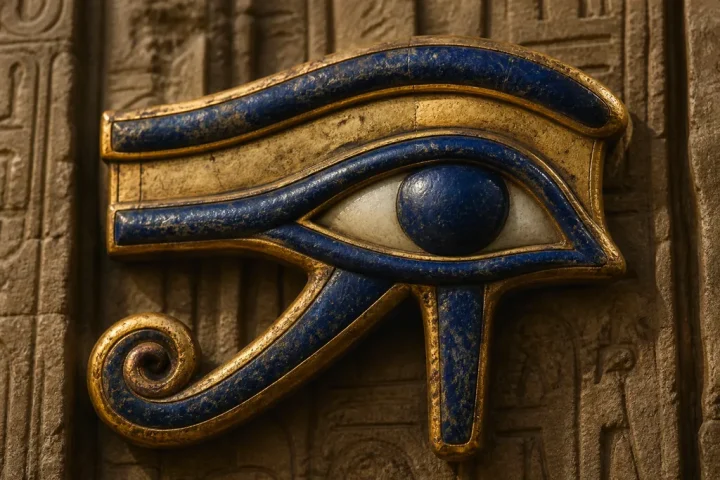
One of the strangest foundations of the OTA is the Crata Repoa, an eighteenth-century initiatory text first published in Germany in 1770. The document claimed to reveal the initiations of the ancient Egyptian priesthood through a progression of seven degrees involving ordeals, symbolic death, sacred instruction and increasing access to hidden wisdom.
Modern historical study gives little reason to accept these rituals as genuine survivals of Pharaonic Egypt. The text appeared decades before Egyptian hieroglyphs were successfully deciphered, and its ceremonies resemble the high-degree Freemasonry and pseudo-Egyptian initiatory speculation of eighteenth-century Europe much more closely than anything known from actual Egyptian temple practice. Nevertheless, the Crata Repoa exerted a considerable influence upon later occultism, precisely because it presented readers with an elaborate vision of what an ancient mystery initiation might have been.
Runyon adapted this material into what he calls Crata Repoa Reformado, using its degree structure as the initiatory framework of the OTA. The Order did not simply reproduce the eighteenth-century document, but reshaped it through Hermetic, Qabalistic, Rosicrucian and Neo-Phoenician symbolism. Runyon has publicly identified himself as VII° within this system.
This creates one of the more intriguing paradoxes of the Order. Its initiatory structure derives from a ritual that imagined ancient Egyptian mysteries rather than authentically preserving them, yet that imagined tradition became the foundation for an actual magical order that has continued to practise ceremonial initiation for decades.
Astarte and Baal
The name of the Order reveals another of its distinguishing features. Rather than placing itself solely beneath the Christian, Rosicrucian or Qabalistic symbolism common to many descendants of the Golden Dawn, the OTA deliberately reached towards the religious world of ancient Canaan and Phoenicia.
Astarte became the patron goddess of the Order, paired with Baal as her divine consort. Within OTA ritual these deities are not merely historical subjects to be studied but figures within an evolving magical mythology. Runyon’s published Seasonal Rites of Baal and Astarte presents four Neo-Phoenician ceremonies associated with the solstices and equinoxes, which the organisation states have been performed in Southern California since 1974. These ceremonies were constructed as sacred myth-dramas inspired by ancient Near Eastern texts and later Hermetic interpretation.
The result is not an attempt to reconstruct Phoenician religion with archaeological purity. It is a modern mystery religion created from surviving ancient texts, comparative mythology and Western ceremonial magic. Within the higher degrees, according to Runyon’s own description, Baal and Astarte are eventually interpreted through a wider current in which older pagan gods, Jesus, Mary Magdalene, planetary deities, angels and the Hermetic Qabalah become parts of an evolving spiritual pattern.
The OTA therefore treats religious history less as a succession of dead faiths than as a chain of masks through which recurring sacred powers reveal themselves.
The Dark Mirror
If the Crata Repoa provides the initiatory skeleton of the OTA, dark-mirror evocation is arguably its most famous practical contribution to modern ceremonial magic.
Runyon became convinced that an important element had been lost from later understanding of the Solomonic grimoires. Traditional Goetic ritual calls for a spirit to appear within a Triangle of Art outside the magician’s protective circle. Generations of magicians interpreted “visible appearance” in different ways, sometimes expecting an apparition within incense smoke or some other physical manifestation.
Runyon placed a dark mirror within the Triangle.
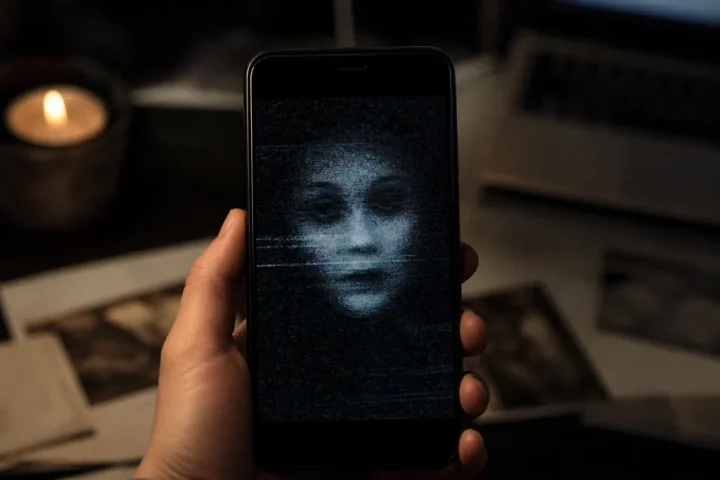
His method depends upon the strange transformations that can occur when a person gazes continuously at a dimly illuminated reflection. Features may blur, distort, disappear or assume unfamiliar forms. Runyon connected this phenomenon with hypnotic suggestion and believed that, within the highly charged environment of ceremonial evocation, the altered reflection could become the visual field through which the traditional image of the summoned spirit emerged.
This is an important aspect of Runyon’s philosophy because he does not require the apparition to be interpreted as a material creature physically standing inside the room. His published description characterises the visions produced by the system as hypnotic and subjective, while still treating them as meaningful magical encounters. For Runyon, calling something subjective does not necessarily make it unreal. The mirror becomes an interface between ritual symbolism, the unconscious mind and whatever deeper level of consciousness the magician believes the spirits inhabit.
This idea gives OTA evocation its peculiar atmosphere. The magician performs the old conjurations, establishes the circle, displays the sigils and calls upon the hierarchy of spirits, yet the expected manifestation occurs inside a black surface in which the magician’s own face is already waiting.
The thing summoned from the darkness may therefore appear through the magician’s reflection itself.
Solomon’s Spirits
Runyon developed these techniques most fully in his work with the Lemegeton, particularly the Ars Goetia and its seventy-two spirits. His Book of Solomon’s Magick presents a system in which angelic invocation and Goetic evocation are intended to balance one another. Within OTA practice, archangelic forces and Shemhamphorash angels are integrated into work with the corresponding spirits of the Goetia.
The Order’s approach to Astarte produces an especially provocative reinterpretation of the grimoire tradition. Runyon identifies the Goetic spirit Astaroth with a demonised survival of the ancient goddess Astarte and has used Astaroth or Astarte in ceremonial evocations as a manifestation of the Order’s patron goddess. A documented presentation of the OTA system describes a complete Goetic operation in which Astaroth, interpreted as Astarte, is called to visible appearance within the dark mirror positioned in the Triangle of Art.
Here the Order enters one of the darkest territories of Western esotericism: the idea that some demons preserved in Christian grimoires may conceal the broken names and distorted memories of older pagan gods.
Hermetic Yoga and the Interior Stars
The OTA’s magical system extends beyond evocation. Runyon developed what he calls Hermetic Yoga, an internal system in which Qabalistic and planetary centres are awakened within the body in a manner he compares to the chakras of Eastern Tantra.
Runyon regards this system, sometimes described as the Interior Stars, as one of the OTA’s most important contributions to modern Hermeticism. He has linked it with Pythagorean, Qabalistic, Rosicrucian and Tantric ideas and argues that Western esoteric traditions possessed their own forms of internal spiritual anatomy. The system was already being published through The Seventh Ray during the 1970s and continued to be developed over subsequent decades.
This internal work gives the Order a second dimension that can easily be overlooked when attention is focused solely upon demons and black mirrors. The ultimate objective is not simply to see spirits, but to transform the magician into a consciously ordered image of the Hermetic cosmos.
The Seventh Ray
The OTA’s influence has always extended beyond the number of people actually passing through its temple initiations. One of the principal reasons is its journal, The Seventh Ray, originally published in pamphlet form during the early 1970s and later revived as a series of substantial books devoted to Western magic and occultism.
Its pages have preserved material on the Crata Repoa, Hermetic Yoga, ceremonial magic, occult history and other esoteric subjects. Later collections have also reproduced material from the original 1970s issues, providing a glimpse into the formative period of the American magical revival. The journal therefore serves not merely as an internal publication but as a record of a period when Wicca, ceremonial magic, Thelema, neo-paganism, reconstructed mystery traditions and revived grimoire magic were colliding and recombining throughout the United States.
The Order Today
Older accounts described the OTA as a very small organisation centred upon only a handful of California lodges. The historical characterisation is plausible, but precise membership figures should not be treated as current without contemporary evidence.
What can be said is that the Order has continued to present itself publicly as an operating magical body more than fifty years after its foundation. Runyon’s official materials describe the OTA as a continuously functioning ritual-magical lodge, and its ceremonies, publications and teachings have continued into the twenty-first century.
Its continued existence became unusually visible in 2025 with the release of the four-part documentary series American Magick, which follows the Ordo Templi Astarte and the Church of the Hermetic Sciences. Individual episodes explore the Order’s origins, hierarchy and ritual structure, the Crata Repoa and higher teachings involving subjects including sacred elixirs, sex magic, dark-mirror pathworking and the psychological phenomenon associated with mirror gazing.
For an organisation born from the secret-society culture of the twentieth-century occult underground, this willingness to place portions of its ritual world before cameras is itself a striking development. The temple has not ceased to be secret, but some of its doors have been deliberately opened.
The Mystery of the Ordo Templi Astarte
The importance of the Ordo Templi Astarte lies less in its numerical size than in the strange synthesis it created. The Order took an eighteenth-century fantasy of Egyptian initiation, passed it through Rosicrucianism and the Golden Dawn, joined it to reconstructed Phoenician gods, combined it with Solomonic grimoires, Jungian ideas, hypnotic techniques and mirror scrying, then transformed the whole mixture into an initiatory tradition of its own.
Purists may regard such eclecticism with suspicion, but modern ceremonial magic has always evolved through precisely this kind of reconstruction. Ancient fragments are discovered, misunderstood, translated, reinterpreted and eventually placed back upon an altar in forms their original authors could never have imagined.
The dark mirror may be the most appropriate symbol of the OTA for exactly this reason. It presents the magician with something ancient and something intensely personal at the same time. The ritual calls upon gods, angels and spirits whose names may be thousands of years old, but when the darkness begins to change, the first face waiting inside the mirror is always the magician’s own.
Whether what eventually emerges is understood as spirit, archetype, hypnotic vision or some presence for which none of those words is adequate remains the central mystery.
Enter the Temple Beyond the Mirror
The Ordo Templi Astarte demonstrates what happens when occultism stops being something merely read about and becomes a living system of initiation, ritual, symbolism and confrontation with the unseen. If black mirrors, forgotten gods, secret orders, Solomonic spirits, magical initiations and the hidden machinery of ceremonial magic fascinate you, then endlessly collecting disconnected articles will only carry you so far. Enter the Occult World Mystery School and begin studying the systems behind the mysteries. Go beyond names and legends into grimoires, demonology, ritual magic, spirit traditions and the secret currents that have survived beneath the surface of history. There are thousands of spirits, gods, demons, magical systems, grimoires and forgotten traditions waiting beyond it. Stop looking at the temple from outside and cross the threshold.
SOURCE:
The Element Encyclopedia of Secret Societies – Paperback – February 1, 2009 – Written by John Michael Greer


Follow