

Abigor / Eligos: The Grand Duke of War, Strategy and Hidden Knowledge
Abigor, also known as Eligos, Eligor or Abigor, is a demon named in traditional demonological lore as a Grand Duke of Hell. He is one of the spirits associated with the hierarchy of the Goetia and is often described as a powerful infernal noble who commands sixty legions of demons.
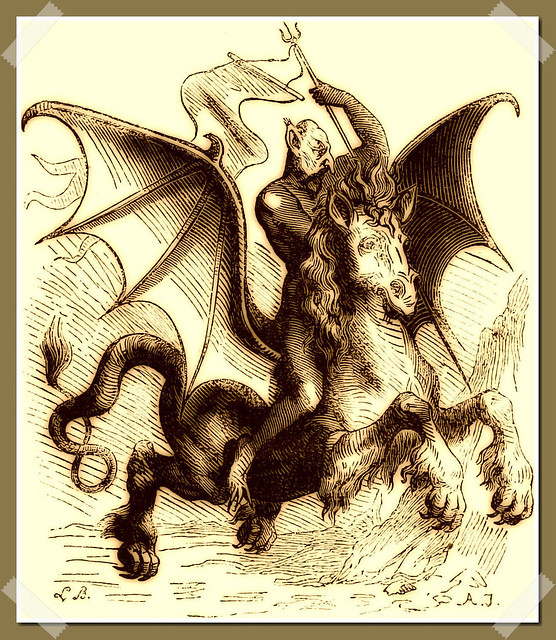
Unlike some demons who appear in monstrous or terrifying forms, Abigor is usually described as appearing in the form of a handsome knight or nobleman on horseback. He may carry a standard, lance, sceptre or emblem of command, reflecting his association with warfare, leadership, authority and military strategy.
His image is not chaotic or bestial. Abigor is a demon of discipline, tactics and command. He belongs to the world of battlefields, rulers, soldiers, oaths of loyalty and the hidden forces that move armies and leaders.
The Appearance of Abigor
Abigor is traditionally said to appear as a handsome man mounted on a horse. This is an important detail, because the horse symbolises nobility, movement, conquest, status and controlled power. A demon who appears on horseback is not merely a wandering spirit; he is a figure of rank, direction and command.
The standard or sceptre he carries also reflects his authority. A standard is a symbol of allegiance, identity and war. Soldiers followed banners into battle, and rulers used them to display power. A sceptre, on the other hand, represents sovereignty and command. Both symbols show Abigor as a demon connected to leadership, loyalty and organised force.
He is not simply a demon of violence. He is a demon of strategy.
Abigor and the Secrets of War
Abigor is said to know all the secrets of war. This includes not only weapons and battle tactics, but also the psychology of command. War is never only about strength. It is about timing, morale, deception, discipline, courage, fear and loyalty.
This is where Abigor becomes especially interesting. He is said to teach leaders how to win the loyalty of soldiers. In occult symbolism, this makes him a spirit of influence, command and persuasion. He understands why people follow, why they rebel, why they remain loyal and why they betray.
For this reason, Abigor may be seen not only as a demon of warfare, but also as a demon of leadership, hierarchy and power dynamics.
The Gift of Foresight
Abigor is also said to see the future. In demonological tradition, this ability connects him to prediction, strategy and the reading of hidden outcomes. A leader who can foresee the likely result of a conflict has an enormous advantage.
His foresight is not usually presented as gentle prophecy. It is practical, tactical and connected to action. Abigor’s knowledge concerns what is coming, what must be done, and how power may be gained or defended.
In this sense, he represents the darker side of wisdom: knowledge used for victory, influence and control.
Abigor as a Demon of Command
As a Grand Duke of Hell, Abigor commands sixty legions of demons. This places him among the more powerful and organised spirits of the infernal hierarchy. His title suggests rank, discipline and responsibility within the demonic order.
The number of legions attributed to him also reinforces his martial nature. A legion is a military term, and in demonology it symbolises vast spiritual forces arranged under command. Abigor is therefore not an isolated spirit. He is a commander within a structured infernal army.
This makes him especially relevant for those who study the Goetia, demonic hierarchies, infernal nobility and the symbolic relationship between demons and human power structures.
The Symbolism of Abigor
Abigor can be understood as a figure of controlled aggression. He is not rage without purpose. He is war with intelligence. He represents the sharpened mind behind conflict, the commander behind the army, the strategist behind the victory.
His symbolism includes:
Leadership and authority
Military strategy
The loyalty of followers
Foresight and prediction
Power through discipline
The psychology of command
Hidden knowledge of conflict
In a broader occult sense, Abigor may also represent the inner warrior: the part of the self that must learn when to fight, when to wait, when to lead and when to withdraw. His mysteries are not only about outer war, but also about the battles of will, fear, ambition and self-mastery.
Studying Abigor in Demonology
For students of demonology, Abigor is an important figure because he shows that demons are not always presented as chaotic beings of destruction. Many are highly specialised spirits associated with knowledge, skill, power, transformation or forbidden wisdom.
Abigor’s domain is war, but his deeper lesson concerns strategy. He teaches that power without discipline collapses, and that victory often belongs not to the strongest, but to the one who understands timing, loyalty and hidden movement.
If you are fascinated by spirits like Abigor, the Occult World Mystery School is the perfect place to continue your study. Inside the community, you can explore demonology, Goetic spirits, magical history, witchcraft, ritual practice and the hidden symbolism behind figures like Abigor. You are not just reading isolated articles; you are entering a space where fellow occultists gather, learn, question and deepen their understanding together.
Abigor, War and the Shadow of Leadership
Abigor’s association with war should not be understood only in a literal military sense. In occult interpretation, war often represents struggle, conflict, ambition and the confrontation between opposing forces.
Every person faces inner battles. Fear battles desire. Discipline battles chaos. Vision battles doubt. Abigor’s symbolism can therefore be read psychologically as well as demonologically.
He is the force that asks:
Can you command yourself before you command others?
Can you understand the battle before you enter it?
Can you recognise loyalty, betrayal and strategy?
Can you turn conflict into power without being consumed by it?
This is what makes Abigor a compelling figure. He is not merely a demon of bloodshed. He is a demon of command, calculation and the hidden laws of victory.
Abigor in the Occult Imagination
The image of Abigor as a mounted nobleman carrying a standard or sceptre remains powerful because it combines beauty, danger and authority. He is not a crude monster but a refined infernal commander. His appearance suggests that power can be elegant, persuasive and disciplined.
This is often the most unsettling kind of demonic imagery. Abigor does not terrify through grotesque form. He unsettles because he appears controlled, intelligent and noble. His danger lies in his knowledge.
He knows war.
He understands loyalty.
He sees what is coming.
And he commands legions.
Enter the Deeper World of Demonology
Abigor is only one figure in the vast and mysterious world of demonology. Each demon carries a history, a symbolism, a hierarchy and a set of powers that reveal something about magic, fear, authority and the hidden side of the human psyche.
Inside the Occult World Mystery School, you can go far beyond short descriptions. You can study demons, spirits, grimoires, witchcraft, magic, ritual practice and occult symbolism in a deeper and more structured way. You can also meet fellow occultists who share your fascination with the unseen world.
If Abigor calls your attention, let that curiosity become a doorway.
Join the Occult World Mystery School and explore demonology, magic and witchcraft with others who are walking the same hidden path.
From “The Goetia: The Lesser Key of Solomon the King” (1904) Written by S.L. MacGregor Mathers
ELIGOS. – The Fifteenth Spirit in Order is Eligos, a Great Duke, and appeareth in the form of a goodly Knight, carrying a Lance, an Ensign, and a Serpent. He discovereth hidden things, and knoweth things to come; and ofWars, and how the Soldiers will or shall meet.
He causeth the Love of Lords and Great Persons. He governeth 60 Legions of Spirits. His Seal is this, etc.

From the Luciferian Goetia ( 2007 ) – Written by Michael Ford
“Eligos is a Duke who appears as a Knight, whom carries a lance and a serpent. Eligos may reveal hidden secrets i.e. within the self, outer as well. Eligos is also a divinatory spirit as well, who may reveal the coming of wars, unrest and battles. It is suggested the Eligos also causes Love of people as well. He governs 60 Legions of Spirits. “

From the “Pseudomonarchia Daemonum” ( 1583 ) Written by Johann Weyer (Johann Wier)
Eligor, alias Abigor, is a great duke, and appeereth as a goodlie [handsome] knight, carrieng a lance, an ensigne, and a scepter: he answereth fullie of things hidden, and of warres, and how souldiers should meete: he knoweth things to come, and procureth the favour of lords and knights, governing sixtie legions of divels.
Original Text :
Eligor, alias Abigor, Dux magnus, apparet ut miles pulcherrimus, lanceam, vexillum and sceptrum portans. Plene de occultis respondet atque bellis, and quomodo milites occurrere debeant: Futura scit, and gratiam apud omnes dominos and milites conciliat. Præsidet sexaginta legionibus
From the “Dictionnaire Infernal” (edition of 1863 ) Written by Jacques Auguste Simon Collin de Plancy
Abigor presents himself as a horseman carrying a lance, a standard, or a scepter. He commands sixty legions and is a grand duke of hell. He knows of the secrets of warfare, of the future, and can instruct leaders of the ways to earn their soldiers’ respect.
Original Text :
Abigor, démon d’un ordre supérieur, grandducdans la monarchie infernale. Soixante légionsmarchent sous ses ordres. Il se montresous la figure d’un beau cavalier portant la lance l’étendard ou le sceptre; il répond habilementsur tout ce qui concerne les secrets de la guerre,sait l’avenir, el enseigne aux chefs les moyens dese faire aimer des soldats.












Follow