

Count Alessandro Cagliostro
The Divine Cagliostro; Magician, Alchemist and Master of Egyptian Freemasonry
Count Alessandro di Cagliostro was one of the most celebrated, mysterious and controversial occult figures of the eighteenth century. To his admirers, he was a gifted healer, alchemist, prophet and spiritual adept who possessed knowledge inherited from the ancient mystery schools. To his enemies, he was an impostor, confidence trickster and theatrical adventurer who exploited the fascination of Europe’s aristocracy with magic and secret societies.
Cagliostro moved through royal courts, Masonic lodges and occult circles with extraordinary confidence. He practised divination, magnetic healing, scrying, ritual magic and alchemy while claiming access to spiritual teachings preserved since the age of ancient Egypt.
Even after his identity was exposed and his reputation destroyed, rumours persisted that the mysterious count had never truly died.
From Giuseppe Balsamo to Count Cagliostro
Cagliostro was born Giuseppe Balsamo on 2 June 1743 in the Albergheria district of Palermo, Sicily. His family possessed little wealth, but the young Giuseppe appears to have demonstrated intelligence, imagination and a talent for persuasion from an early age.
Stories of his youth describe him experimenting with fortune-telling, treasure hunting, medicine, chemistry and various schemes for earning money. Some accounts portray him as an unusually gifted child; others depict him as a clever young fraud who quickly learned how easily people could be influenced by promises of hidden wealth and supernatural assistance.
The historical Giuseppe Balsamo is difficult to separate from the legendary Cagliostro. Much of what is known about him comes from hostile investigators, enthusiastic followers or stories that he invented about himself.
This uncertainty eventually became part of his power. Cagliostro did not merely conceal his past. He replaced it with a mythology.
Malta and the Occult Sciences
During the 1760s, Balsamo travelled to Malta, where he became associated with the Sovereign Military Order of Malta. Later accounts claim that he studied medicine, chemistry, alchemy, Kabbalah and occult philosophy while on the island.
Cagliostro would later describe a mysterious teacher named Althotas, who supposedly instructed him in the secret sciences. According to his own extraordinary account, he had been raised in the East and travelled through Medina, Mecca, Cairo and other centres of ancient wisdom.
Historians remain sceptical of these claims. His stories may have combined genuine travels with deliberate invention, Masonic symbolism and the eighteenth-century European fascination with Egypt and the Middle East.
Whether Althotas was a real occult teacher, an embellished memory or a completely fictional character remains unknown.
The Creation of Cagliostro
Giuseppe Balsamo gradually transformed himself into Count Alessandro di Cagliostro. The surname may have been borrowed from a relative connected with his family, but the title of count was part of the identity he created for himself.
Cagliostro presented himself not as a poor Sicilian adventurer but as a cosmopolitan nobleman, initiate and traveller in possession of ancient secrets.
He also used the title Marquis di Pellegrini.
His carefully cultivated image included expensive clothing, mysterious jewels, exotic stories and claims of hidden wealth. He moved confidently among aristocrats, presenting himself as someone who required neither conventional employment nor an ordinary source of income.
The mystery surrounding his wealth strengthened his reputation. Cagliostro sometimes claimed that distant protectors or secret Eastern patrons ensured that money was always available to him.
Lorenza Feliciani
In Rome, Cagliostro met Lorenza Serafina Feliciani, whom he married in 1768. She became known as the Countess Cagliostro and accompanied him throughout much of his extraordinary career.
Lorenza was more than a passive companion. She participated in the performances, ceremonies and social networks through which the couple built their reputation. In different accounts, she appears as Cagliostro’s partner, ceremonial priestess, victim, accomplice and eventual betrayer.
Together they travelled through Europe, moving between Italy, France, England, Germany, Poland, Russia and other countries.
Their marriage was reportedly turbulent. Nevertheless, Lorenza remained an essential figure in the creation of the Cagliostro legend.
Freemasonry and Secret Initiation
Cagliostro became involved with Freemasonry during his travels in England. His documented Masonic activity began during the 1770s, a period when European Freemasonry contained numerous competing rites, degrees and esoteric systems.
Masonic symbolism deeply influenced his spiritual philosophy. He adopted the lodge structure, initiation ceremonies, passwords, sacred names and hierarchical degrees of Freemasonry, combining them with alchemy, ceremonial magic, biblical symbolism and imagined Egyptian mysteries.
Cagliostro claimed that ordinary Freemasonry preserved only fragments of a far older tradition.
He presented his own system as a restoration of the original sacred science.
Egyptian Freemasonry
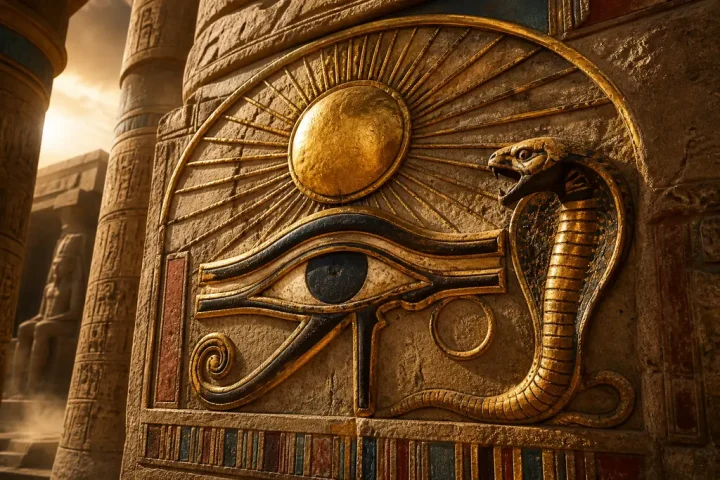
Cagliostro’s greatest occult creation was his Egyptian Rite of Freemasonry.
The rite was not Egyptian in the modern archaeological sense. Instead, it reflected the eighteenth-century belief that Egypt had been the original source of magic, religion, philosophy and initiation.
His system promised moral purification, spiritual regeneration and the recovery of humanity’s divine potential. Its ceremonies incorporated invocations, sacred names, ritual clothing, incense, fasting, prayer and visionary practices.
Both men and women could participate, although they were initiated through slightly different ceremonies. Cagliostro presided over the male initiates as Grand Copht, while Lorenza held authority within the women’s lodges under a title associated with the Queen of Sheba.
This admission of women distinguished his Egyptian Rite from many other Masonic systems of the period.
Cagliostro claimed that the purpose of initiation was not merely to obtain secret passwords or social status. The initiate was expected to undergo a complete spiritual transformation.
The Forty Days of Spiritual Regeneration
One of the most remarkable elements of Cagliostro’s system was a programme of spiritual and physical regeneration.
The initiate was instructed to withdraw from ordinary life for a period of forty days. During this retreat, the individual followed a strict discipline involving prayer, fasting, ritual purification and contemplation.
The ultimate goal was to restore the human being to a state of original innocence and divine perfection.
Some interpretations suggest that Cagliostro promised more than symbolic renewal. His teachings appear to have offered the possibility of rejuvenation, extended life and direct communication with angelic or spiritual beings.
The initiate might become capable of receiving supernatural knowledge, discovering hidden treasures and understanding the secrets of nature.
Healer and Wonder-Worker
Cagliostro developed an enormous reputation as a healer.
He offered remedies to rich and poor alike, sometimes refusing payment from those who could not afford it. His treatments included medicines, dietary instructions, herbal preparations, magnetic techniques and the laying on of hands.
Supporters reported remarkable recoveries. Critics argued that his success depended upon suggestion, theatrical performance and the natural improvement of illnesses that were not as serious as they appeared.
Whatever the explanation, Cagliostro understood the importance of hope. His presence, confidence and ceremonial behaviour may have produced powerful psychological effects upon his patients.
At a time when conventional medicine was frequently dangerous, an impressive healer who offered reassurance and simple remedies could appear miraculous.
Scrying and Spirit Communication
Cagliostro was also associated with crystal gazing and visionary divination.
Some accounts describe him using young, innocent children as seers. The child would gaze into a crystal, bowl of water or reflective surface while Cagliostro conducted prayers and invocations.
These young visionaries were sometimes called doves or pupils.
Through them, Cagliostro claimed to receive messages from angels, spirits and distant persons. The seer might describe events occurring elsewhere, reveal hidden information or answer questions about the future.
His séances and magical ceremonies were dramatic performances filled with suspense. Incense, sacred symbols, ritual gestures and carefully controlled surroundings created an atmosphere in which extraordinary experiences seemed possible.
Alchemy and the Elixir of Life
Cagliostro’s name became inseparable from alchemy.
He was reputed to understand the transmutation of base metals into gold, the preparation of the Philosopher’s Stone and the creation of an elixir capable of restoring youth or extending life.
He sold medicines, powders, essences and other preparations that were said to possess unusual powers.
Legends claimed that he could enlarge precious stones, transform metals and manufacture gold. No reliable evidence proves that he accomplished literal metallic transmutation, but his reputation as an alchemist opened the doors of wealthy households throughout Europe.
The promise of gold attracted patrons. The promise of youth made him irresistible.
Saint-Germain and the Immortal Adepts
Later occult tradition frequently connected Cagliostro with the mysterious Comte de Saint-Germain.
Both men appeared in European aristocratic circles surrounded by rumours of alchemy, secret knowledge and unnatural longevity. Both concealed their origins and allowed others to believe that they possessed wealth and wisdom accumulated over several lifetimes.
Cagliostro has sometimes been described as Saint-Germain’s friend, pupil or spiritual successor. Historical evidence for a close relationship between them is limited, but the association became an important part of later occult mythology.
Some esoteric writers regarded both men as members of an invisible brotherhood of adepts who quietly directed humanity’s spiritual development.
The Divine Cagliostro
Cagliostro’s successful predictions earned him the title “The Divine Cagliostro”.
His admirers believed he could foresee political changes, personal misfortune and future events. He was consulted about health, marriage, money and the ambitions of influential people.
He and Lorenza were also accused of selling magical talismans, predicting lottery numbers, invoking the dead, performing exorcisms and hypnotising participants during their ceremonies.
Many of these claims came from enemies and sensational accounts. Yet Cagliostro did little to discourage them.
Mystery was his greatest advertisement.
Ritual Theatre and Ancient Traditions
Cagliostro’s ceremonies combined elements from numerous spiritual and magical systems.
His rituals drew upon Freemasonry, alchemy, ceremonial magic, Kabbalah, Christianity, Greek and Roman mystery traditions and an idealised vision of ancient Egyptian religion.
Biblical figures such as Moses, Elijah and Enoch occupied important positions within his spiritual universe. These prophets were presented as initiates who had achieved extraordinary wisdom and communion with the divine.
Cagliostro did not attempt to reconstruct an academically accurate ancient religion. He created a new initiatory system using symbols that his contemporaries associated with sacred antiquity.
His ceremonies were colourful, dramatic and emotionally powerful. Participants did not merely listen to philosophical teachings. They entered a carefully constructed world of mystery.
Success and Suspicion
Cagliostro’s fame attracted wealthy patrons, aristocrats and influential Freemasons. It also attracted enemies.
Physicians resented his success as a healer. Church authorities viewed his magical and Masonic activities with suspicion. Political officials feared the secrecy and international connections of Masonic organisations.
Sceptics accused him of exploiting the gullible, seducing wealthy patrons and hiding criminal activities behind the language of occult initiation.
Yet even some of those who doubted his supernatural powers acknowledged his unusual charisma.
Cagliostro had created a personality so compelling that people struggled to decide whether they were witnessing a saint, a magician or a criminal.
The Affair of the Diamond Necklace
Cagliostro’s downfall began with one of the greatest scandals of the French royal court: the Affair of the Diamond Necklace.
The affair erupted in 1785 and centred upon an enormously expensive necklace that Cardinal Louis de Rohan was deceived into acquiring in the belief that he was secretly acting on behalf of Queen Marie Antoinette.
Jeanne de Valois-Saint-Rémy, Countess de La Motte, orchestrated the fraud. She and her associates used forged letters and an impersonator posing as the queen to manipulate the cardinal.
Because Cagliostro was a friend and spiritual adviser of Cardinal de Rohan, he and Lorenza were arrested and imprisoned. Cagliostro spent months in the Bastille while the case was investigated.
No evidence established that he had participated in the fraud, and he was acquitted on 31 May 1786. Nevertheless, King Louis XVI ordered him to leave France.
The affair made him internationally famous, but it permanently damaged his position.
Exposure in England
After leaving France, Cagliostro travelled to England.
There, the journalist Théveneau de Morande publicly identified him as Giuseppe Balsamo and published damaging accounts of his early life.
The revelation stripped away the noble and exotic identity Cagliostro had created. His enemies now presented him not as an Eastern initiate or mysterious count, but as a poor Sicilian adventurer with a history of deception.
Cagliostro fought back through letters and public statements, but the damage had been done.
The Divine Cagliostro had been forced to confront Giuseppe Balsamo.
Prophecy of Revolution
Cagliostro was later credited with predicting the French Revolution and the destruction of the Bastille.
Some of these prophecies may have been attributed to him after the events occurred. However, his experiences in France gave later writers an irresistible image: the imprisoned magician foreseeing the collapse of the monarchy that had expelled him.
The Bastille fell on 14 July 1789, only a few years after Cagliostro had been confined within its walls.
His name consequently became associated with the approaching end of the old European order.
Arrest by the Roman Inquisition
Despite the dangers surrounding him, Cagliostro returned to Rome and attempted to establish his Egyptian Masonic system there.
Freemasonry had been condemned by the Catholic Church, and his activities attracted the attention of the Roman Inquisition.
He was arrested on 27 December 1789 and imprisoned in Castel Sant’Angelo. His papers, rituals and Masonic teachings were seized and examined.
Cagliostro was charged with heresy, impiety, magical practices and the establishment of a forbidden Masonic organisation.
The proceedings were not simply a trial of one man. They represented the Church’s confrontation with secret societies, religious experimentation and occult systems that claimed access to divine knowledge outside ecclesiastical authority.
Condemnation and Imprisonment
In 1791, Cagliostro was condemned to death.
Pope Pius VI commuted the sentence to life imprisonment, and Cagliostro was transferred to the Fortress of San Leo in the Papal States.
He was initially confined in a subterranean cell known as the Pozzetto, or little well. The cell was entered through a trapdoor and designed to make escape nearly impossible.
He was later moved to another cell above ground, where he remained under strict confinement.
Lorenza was placed in a Roman convent. Her eventual fate is uncertain, although she is generally believed to have died during the 1790s.
The Death of Cagliostro
Cagliostro died inside the Fortress of San Leo on 26 August 1795.
The official explanation was that he suffered an apoplectic attack, a term historically used for a sudden stroke or cerebral haemorrhage. Other rumours suggested poisoning, strangulation, murder or deliberate neglect.
He was buried without the elaborate ceremony that had characterised his life.
Yet stories soon circulated that he had escaped, substituted another body for his own or used secret alchemical knowledge to survive.
For a man who had built his identity upon mystery, an ordinary death seemed impossible.
The fortress records his death on 26 August 1795, but the legends of his survival continued across Europe, Russia and America.
Hélène Smith and the Spirit of Cagliostro
Cagliostro returned to occult attention during the nineteenth century through the celebrated Swiss medium Hélène Smith, whose real name was Catherine-Élise Müller.
During trance séances, Smith claimed to communicate with a spirit guide called Léopold. This entity eventually identified himself as Giuseppe Balsamo, Count Cagliostro.
Witnesses reported that Smith’s posture, expression and voice changed dramatically when Léopold appeared. Her eyelids seemed to droop, her face appeared heavier and she spoke in a deep, masculine voice.
The Swiss psychologist Théodore Flournoy studied Smith extensively. Rather than accepting Léopold as an independent spirit, he interpreted the personality as a product of Smith’s subconscious mind.
From a Spiritualist perspective, she channelled the surviving spirit of Cagliostro. From a psychological perspective, Léopold was a secondary personality created through trance and unconscious imagination.
Fraud or Genuine Adept?
The central question surrounding Cagliostro remains unresolved: was he a fraud or a genuine occult master?
There is strong evidence that Giuseppe Balsamo invented parts of his identity, exaggerated his travels and understood how to manipulate wealthy and impressionable people.
However, this does not necessarily mean that every aspect of his career was fraudulent.
He possessed knowledge of chemistry, medicine, ritual symbolism and Masonic organisation. He appears to have sincerely believed in at least some of his spiritual teachings. He treated poor patients without demanding payment and created an initiatory system that promised moral improvement rather than simple material wealth.
Cagliostro may have been both charlatan and visionary.
The two identities are not mutually exclusive.
He could exaggerate his powers while also possessing unusual healing ability, psychological insight and genuine knowledge of esoteric traditions.
The Legacy of Cagliostro
Cagliostro became the model of the wandering occult master: mysterious, wealthy, charismatic and pursued by hostile authorities.
His Egyptian Rite influenced later forms of esoteric Freemasonry. His name appeared in occult literature, novels, plays and Spiritualist séances. He became associated with Rosicrucianism, alchemy, magical brotherhoods and the hidden masters said to guide humanity from behind the scenes.
His life also demonstrates the dangerous attraction of secrecy.
By concealing Giuseppe Balsamo beneath the magnificent identity of Count Cagliostro, he gained access to the most powerful circles in Europe. Yet the same mystery that created his fame made every accusation appear believable.
Cagliostro lived between history and legend, never entirely belonging to either.
Enter the Secret World of Alchemy, Freemasonry and Ritual Magick
Count Cagliostro’s extraordinary life opens the door to a much larger world of alchemy, secret societies, ceremonial magick, spirit communication and forbidden initiatory traditions.
Inside the Occult World Mystery School, you can explore these subjects far beyond the surface.
Discover structured courses covering ancient grimoires, practical magick, demonology, divination, Kabbalah, necromancy, Freemasonry, alchemy, spirits and the hidden traditions that shaped Western occultism.
You will also gain access to an expanding occult library and a community where you can ask questions, exchange knowledge and receive personal guidance as your studies deepen.
Do not remain an outsider looking through the locked doors of the mystery schools.
Join the Occult World Mystery School today and begin exploring the rituals, personalities and secret teachings that transformed the history of the occult.
SEE ALSO:
FURTHER READING:
- Dumas, F. Ribadeau. Cagliostro. London: George Allen and Unwin, 1967.
- Flournoy, Theodore. From India to the Planet Mars: A Study of a Case of Somnambulism with Glossolalia. New York: Harper & Bros., 1900.
- McCalman, Iain. The Last Alchemist: Count Cagliostro Master of Magic in the Age of Reason. New York: HarperCollins, 2003.
- Seligmann, Kurt. The History of Magic and the Occult. New York: Pantheon Books, 1948.
- Wilson, Colin. The Occult. New York: Vintage Books, 1971.
SOURCE:
The Encyclopedia of Magic and Alchemy Written by Rosemary Ellen Guiley Copyright © 2006 by Visionary Living, Inc.





Follow