

Faceless Woman
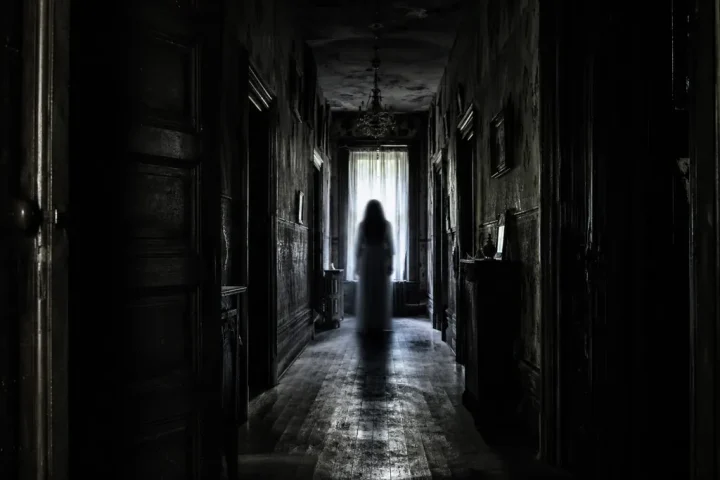
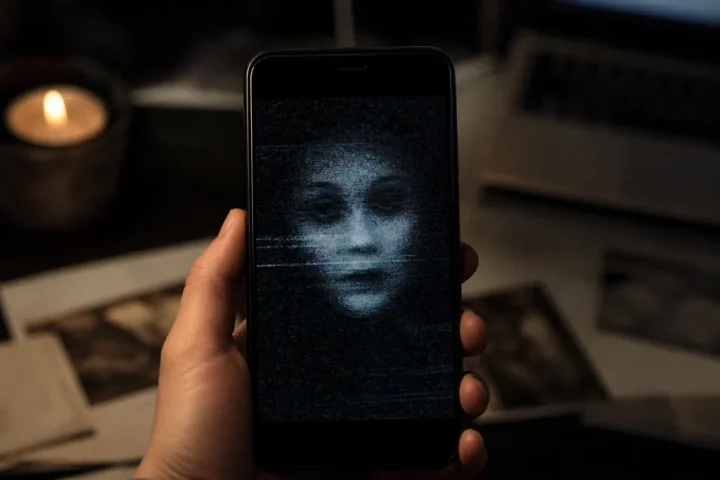
The Faceless Woman is a type of ghost found in haunting legends and folklore around the world. She usually appears as a beautiful woman, often seen first from behind. At first, she may seem vulnerable, elegant, sorrowful, or mysterious. The terror comes when the witness sees her face and discovers that she has none.
Often classed as an urban legend, the Faceless Woman has much older roots. She belongs to a widespread supernatural pattern: the alluring or sorrowful female apparition who becomes horrifying when her true form is revealed.
The Terror of No Face
The Faceless Woman is frightening because she violates one of the most basic expectations of human encounter. A face is identity. A face carries emotion, recognition, memory, and personhood.
When a ghost has no face, the effect is deeply disturbing. She is human and not human. Beautiful and monstrous. Familiar and impossible.
The absence of a face suggests erased identity, spiritual emptiness, hidden trauma, or a being that cannot be fully known.
The Mujina of Japan
One of the most famous early accounts of a faceless ghost comes from Japanese folklore.
Lafcadio Hearn, one of the first Western writers to study Japanese folklore and traditions in depth, recorded stories of the Mujina in his book Kwaidan, also known as Weird Tales, published in 1904.
The Mujina is a faceless ghost or supernatural being that may appear in either male or female form. In some stories, it appears as an ordinary person before revealing a smooth, blank face.
The Kii-no-kuni-zaka Story
One of Hearn’s stories came from a merchant and took place in Tokyo on the Kii-no-kuni-zaka, a slope on the Akasaka Road.
Late one night, the merchant was hurrying up the slope when he saw a woman crouching by the moat, weeping bitterly. She was young, slender, well dressed, and wore her hair in a style suggesting that she came from a wealthy family.
Moved by concern, the merchant stopped to offer help. The woman continued to weep, hiding her face in the long sleeves of her garment. He pleaded with her not to cry and urged her to allow him to assist her.
Suddenly, she turned towards him and stroked her face.
She had no face.
The merchant screamed and ran up the slope, too terrified to look behind him.
The Soba Man
The merchant did not stop running until he saw the light of a lantern. It belonged to a soba man, a seller of buckwheat noodles, who was resting at the roadside.
Out of breath, the merchant collapsed beside him and tried to explain what he had seen. He said that he could not describe what the woman had shown him.
The soba man asked whether it looked like this.
Then he stroked his own face.
The merchant saw that the soba man had no face either.
At that moment, the lantern went out.
The Faceless Woman in Hawaii
In Hawaii, the Faceless Woman entered local ghost lore in the twentieth century.
In 1959, reports began circulating about a Faceless Woman at the Waialae Drive-In in Honolulu. A newspaper article mentioned rumours that a girl had encountered such a ghost in the drive-in restroom.
According to one version, the girl entered the restroom and saw another woman standing before the mirror, combing her long, beautiful hair. When the girl approached, the woman turned slightly.
She had no face.
The girl was said to have been so frightened that she suffered a breakdown and had to be hospitalised.
The Restroom Mirror Legend
Another version of the Waialae Drive-In story says that a girl entered the restroom around midnight to refresh her lipstick.
In the mirror, she saw a figure behind her. The figure had long hair and no face. Then the girl noticed something even more terrifying: the apparition had no legs.
When she turned around, no one was there.
She screamed and fainted.
Whether these stories were literal events, rumours, or urban legend, they quickly became part of Hawaiian ghost lore.
Sightings Around Oahu
After the Waialae Drive-In was demolished to make way for a housing development, stories of the Faceless Woman did not disappear.
Instead, she was said to appear elsewhere around Oahu. In some versions, she is not only faceless but also legless, floating or gliding rather than walking.
She has reportedly been seen at a wedding reception in a Waikiki hotel, in a shopping mall, and at Kapi’olani Community College.
Over time, the Faceless Woman became one of Hawaii’s most recognisable modern ghost figures.
Urban Legend and Ancient Fear
The Faceless Woman is often described as an urban legend, but her emotional power is much older.
She belongs to the ancient category of ghosts who reveal a hidden horror at the moment of recognition. She may first appear as a woman in distress, inviting sympathy or curiosity. Then the witness comes too close and discovers that something essential is missing.
The story works because it reverses compassion into terror. The witness approaches to help and becomes the victim of revelation.
The Mirror Motif
Many Faceless Woman stories involve mirrors.
The mirror is a powerful object in ghost lore. It reflects identity, reveals hidden presences, and often serves as a doorway between the visible and invisible worlds.
To see a faceless figure in a mirror is especially disturbing. The witness is looking into a space meant to show the self, but instead sees the absence of self in another.
The mirror becomes a threshold where the living encounter the erased dead.
The Occult Meaning of the Faceless Woman
The Faceless Woman represents the terror of lost identity. She is a ghost without expression, without recognition, without the human features that allow communication.
In occult symbolism, a missing face may suggest a soul stripped of identity, a spirit trapped between worlds, or an apparition that cannot fully manifest.
She may also represent the fear of the unknown feminine: beautiful, hidden, sorrowful, and dangerous when approached too closely.
Her horror is not blood or violence. It is absence.
Faceless Spirits and the Uncanny
The Faceless Woman is powerful because she belongs to the uncanny.
She resembles a person, but something essential is wrong. She has hair, clothing, posture, and human form, yet no face. The mind recognises her as human while simultaneously rejecting what it sees.
This contradiction creates fear. She is almost human, and that almost is what makes her terrifying.
The Legacy of the Faceless Woman
The Faceless Woman continues to appear in ghost stories, urban legends, films, folklore, and modern paranormal accounts.
From the Mujina of Japan to the Waialae Drive-In ghost of Hawaii, she crosses cultures and centuries. Her form changes, but the central horror remains the same: a beautiful or sorrowful woman turns towards the witness, and there is nothing where her face should be.
She is the ghost of erased identity, hidden grief, and supernatural terror.
The Faceless Woman reminds us that sometimes the most frightening thing is not a monstrous face, but no face at all.
Join the Occult World Mystery School
If you are fascinated by ghosts, haunted places, urban legends, Japanese folklore, Hawaiian hauntings, apparitions, spirit encounters, and the deeper occult meaning behind supernatural stories, join us inside the Occult World Mystery School.
Inside the community, we explore ghosts, spirits, demonology, angelology, witchcraft, grimoires, folklore, mythology, protection magic, Vodou, Hoodoo, Kabbalah, psychic development, and the hidden forces behind the unseen world.
Join the Occult World Mystery School and continue your journey into the haunted, mysterious, and shadowed realms of spirit lore.
FURTHER READING:
- Grant, Glen. Obake Files: Ghostly Encounters in Supernatural Hawaii. Honolulu: Mutual Publishing, 1996.
- Hearn, Lafcadio. Kwaidan. Rutland, Vt.: Charles E. Tuttle Co., 1971. First published 1904.
SOURCE:
The Encyclopedia of Ghosts and Spirits – Written by Rosemary Ellen Guiley – September 1, 2007


Follow