

Oxalá: The Brazilian Form of Obatala, Spirit of Peace, Purity and Divine Wisdom
Oxalá, pronounced oh-sha-lah, is the Brazilian name and form of the great Yoruba Orisha Obatala. The name Oxalá developed in Brazil from Orisha-Nla, meaning the Great Orisha, another title of Obatala.
Oxalá and Obatala are essentially the same divine being, although the details of his worship, imagery, songs, offerings and syncretic associations may differ depending on the spiritual tradition, region and lineage. In Yoruba religion, Candomblé, Umbanda and other Afro-diasporic traditions, he remains one of the highest and most revered spirits of creation, purity, wisdom, peace and sacred order.
Oxalá is the spirit of the cool head. He is calm, cerebral, intellectual and deeply serene. He dislikes violence, chaos, cruelty, disorder and unnecessary conflict. His presence brings peace where there is tension, patience where there is anger, and clarity where confusion has taken over.
Oxalá and Obatala
In Yoruba tradition, Obatala is the Orisha of creation and the owner of white substances. He is associated with the creation of human bodies, the human head, the mind, intelligence, dreams, wisdom and moral balance.
In Brazil, especially in Candomblé, Oxalá carries these same core qualities. He is connected with whiteness, purity, age, wisdom, calmness, mercy and spiritual elevation. He is often seen as an elder, a fatherly figure, a divine peacemaker and a ruler of sacred order.
The difference between Obatala and Oxalá is not one of identity, but of cultural expression. Obatala is the Yoruba name most commonly used in West African and Lukumí/Santería contexts, while Oxalá is the Brazilian form, shaped by the history of Candomblé, Umbanda and Afro-Brazilian spirituality.
The Meaning of White
Oxalá owns white substances. White is his colour, his vibration and his spiritual signature. It represents peace, purity, coolness, clarity, wisdom, patience and divine cleanliness.
White cloth, white beads, white flowers, white foods and cool white substances are all connected with him. In ritual, white may be used to honour his serenity and invoke his peaceful presence.
White is not emptiness. In the mysteries of Oxalá, white is fullness. It contains silence, wisdom, restraint and the calm power of creation. It is the colour of the cool mind and the peaceful spirit.
To approach Oxalá is to approach stillness. He asks for dignity, sincerity and self-control. His energy does not respond well to rage, arrogance, violence or spiritual impatience.
Oxalá as a Spirit of Peace
Oxalá is often invoked when peace is needed. His energy cools arguments, softens emotional heat and brings order to situations that have become tense or chaotic.
He is not a spirit of battle. He is not associated with loudness, aggression or dramatic force. His power is quieter and more enduring. He brings balance through wisdom. He restores harmony through patience. He teaches that true authority does not always need to shout.
In this way, Oxalá is a profound spiritual teacher. He shows that peace is not weakness. Calmness can be a sacred force. Silence can be powerful. Patience can be a form of mastery.
Oxalá in Candomblé
In Brazilian Candomblé, Oxalá is one of the most important Orixás. He is deeply respected and often associated with creation, fatherhood, purity and the highest spiritual order.
There are different paths or qualities of Oxalá, and these may vary according to nation, house and lineage. Some forms emphasise his ancient, elderly and wise nature, while others reveal a younger, more active or more dynamic aspect. Yet all remain connected with the same essential themes: whiteness, creation, peace, dignity and divine authority.
His rituals are often marked by solemnity, reverence and purity. White clothing, clean offerings, coolness and respectful conduct are central to his worship.
Oxalá in Bahian Tradition
In Bahian tradition, Oxalá is identified with Our Lord of Bonfim. This syncretism is especially important in Bahia, where Afro-Brazilian religion and Catholic imagery became deeply interwoven through history.
The Church of Nosso Senhor do Bonfim in Salvador, Bahia, is one of the most famous sacred places connected with this syncretic relationship. For many devotees, Our Lord of Bonfim became a Catholic mask through which the presence of Oxalá could continue to be honoured.
This syncretism should not be understood as simple replacement. Oxalá did not disappear into Catholicism. Rather, his presence survived through layered devotion, hidden continuity and spiritual resilience.
Oxalá in Umbanda
In Umbanda, Oxalá is commonly syncretised with Jesus Christ. This connection reflects shared qualities of peace, compassion, purity, divine love, mercy and spiritual authority.
Oxalá leads the first line of the Seven Lines of Umbanda spirits. This gives him a place of great spiritual importance. He is often seen as the highest vibration within Umbanda’s spiritual structure, representing divine light, faith, peace and the connection between humanity and the sacred.
In Umbanda, Oxalá is not approached only as a distant creator. He is a living spiritual force who brings healing, calm, guidance and elevation.
The Seven Lines of Umbanda
Umbanda teaches that spiritual forces are organised through great lines or currents of divine energy. Oxalá leads the first line, often associated with faith, divine order, peace and spiritual illumination.
As head of this first line, Oxalá represents the highest spiritual principle of harmony between the human soul and the divine. His line supports prayer, humility, moral clarity, inner cleansing and spiritual growth.
For devotees, Oxalá’s presence reminds them to cultivate peace not only in ritual, but in daily life. He calls for honesty, patience, compassion and respect.
The Cool Head of Oxalá
One of the most important teachings of Oxalá is the value of a cool head. In many African and Afro-diasporic traditions, the head is spiritually sacred. It carries destiny, thought, consciousness, intuition and personal alignment.
A hot head acts in anger. A cool head sees clearly.
Oxalá helps cool the head. He brings the mind back into balance. He encourages reflection before action and patience before judgement. His devotees may call upon him when they need calm, mercy, healing, wisdom or spiritual steadiness.
This makes Oxalá especially important in times of conflict, grief, anxiety or moral confusion. His energy does not inflame. It settles. It soothes. It clears.
Symbols and Offerings of Oxalá
Oxalá is associated with white cloth, white beads, white flowers, clean water, cool foods and peaceful offerings. Depending on the tradition, offerings may include white foods, rice, coconut, milk, white candles, white flowers or other pure and cooling substances.
Salt, alcohol and heated or aggressive offerings are generally avoided in many traditions connected with Obatala and Oxalá, although exact ritual rules depend on lineage and should always be learned from properly initiated elders or qualified religious guides.
His offerings should be made with respect, humility and cleanliness. Oxalá is not a spirit to be approached carelessly. His mysteries are peaceful, but they are also deeply sacred.
The Spiritual Lesson of Oxalá
Oxalá teaches restraint, wisdom and sacred peace. He reminds us that the highest spiritual power is not always dramatic. Sometimes the greatest power is calmness. Sometimes the deepest magic is purity. Sometimes the strongest person in the room is the one who refuses to be pulled into violence, chaos or emotional disorder.
His path asks for patience. It asks for self-control. It asks for dignity. It asks the devotee to become cleaner in thought, kinder in action and more aligned with divine order.
Oxalá is the white cloth that covers conflict. He is the cool hand on the heated head. He is the quiet authority of peace.
Explore Oxalá, Orishas and Afro-Diasporic Spirituality Inside Occult World
If Oxalá fascinates you, there is so much more to discover.
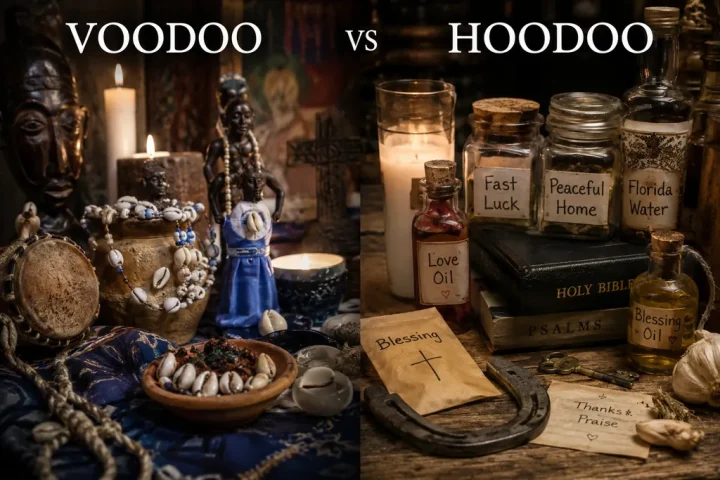
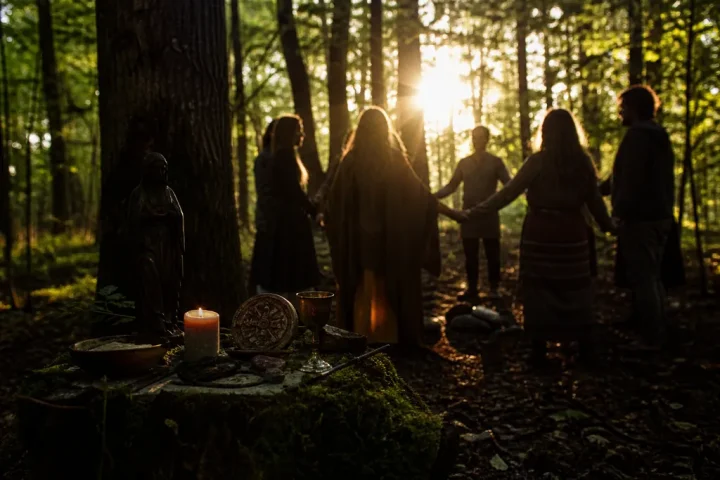
Inside the Occult World Mystery School, you can explore Orishas, Voodoo, Hoodoo, Umbanda, Candomblé, folk magic, Witchcraft, spirit work, ritual practice and the deeper world of occult spirituality.
This is not just a place to read articles. It is a living occult community where you can learn, ask questions, follow structured courses and meet fellow occultists who are also drawn to spirits, magic, ritual and the mysteries of the unseen world.
Whether you are curious about Oxalá, Obatala, the Orishas, the Lwa, ancestral spirits, magical practice or the sacred traditions of the African diaspora, the Occult World Mystery School gives you a place to go deeper.
Join us inside the Occult World Mystery School and continue your journey into magic, spirit wisdom and the living mysteries of the occult.
CLASSIFICATION:
Orisha
ICONOGRAPHY:
Oxala is portrayed wearing sparkling white clothing and a silver crown.
DAY:
Friday or Sunday
COLOUR:
White
RITUAL:
Place his offerings on a clean, white cloth.
OFFERINGS:
Spring water, white candles, white flowers, rice cooked with milk or water but no salt
If you cook for Oxala, omit all spices. Keep food bland, cool, and white: white rice, white bread, sour cream, milk, shredded coconut, and so forth.
SEE ALSO:
SOURCE:
Encyclopedia of Spirits: The Ultimate Guide to the Magic of Fairies, Genies, Demons, Ghosts, Gods & Goddesses– Written by: Judika Illes Copyright © 2009 by Judika Illes.








Follow