
Psychokinesis: Mind Over Matter and the Power of Will
Psychokinesis, often abbreviated as PK, refers to the alleged ability of the mind to affect the external world without physical contact. It is commonly described as “mind over matter”: the power of consciousness, intention, emotion or will to influence objects, physical systems, living bodies or environmental conditions.
Psychokinesis may occur spontaneously, without conscious control, or through a deliberate projection of will. In occult traditions, it has often been associated with magical power, spiritual force, concentrated intention, ritual discipline and the mysterious ability of consciousness to shape reality.
In modern parapsychology, PK is studied as one of the major categories of psi phenomena, closely related to extrasensory perception. While ESP involves receiving information beyond the ordinary senses, PK concerns the mind acting outwardly upon the world.
Ancient Roots of Psychokinesis
Reports of psychokinetic phenomena are ancient. Across cultures, stories have been told of holy people, mystics, saints, shamans, magicians and wonder-workers who could affect the material world through spiritual power.
These accounts include levitation, miraculous healing, invisibility, luminosity, apports, the movement of objects without visible contact, and strange manifestations that appear to break ordinary physical rules. In religious settings, such phenomena were often interpreted as miracles. In magical traditions, they were seen as evidence of spiritual mastery, occult force or the trained power of will.
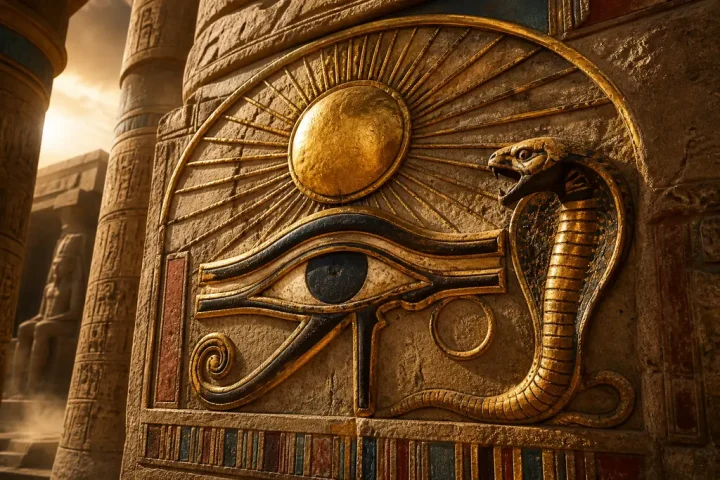
The Evil Eye may also be understood as a form of psychokinesis. In folk belief, certain individuals are said to harm, weaken, curse or even kill through the power of a glance. Whether interpreted magically, psychically or symbolically, the Evil Eye belongs to the wider idea that human intention can affect the world beyond ordinary physical means.
Psychokinesis in Physical Mediumship
In the history of Spiritualism and psychical research, psychokinesis was often associated with physical mediumship. Unlike mental mediumship, which centres on messages, trance communication or clairvoyant impressions, physical mediumship produces external phenomena in the séance room.
These phenomena may include rapping sounds, table-tilting, levitation, apports and asports, ectoplasm, materialisations, direct writing, psychic photography and the unattended playing of musical instruments.
In traditional Spiritualist interpretation, these effects were often attributed to spirits acting through the medium. However, psychical researchers increasingly considered another possibility: perhaps the living medium, consciously or unconsciously, was producing the effects through PK.
This question remains central to the study of physical mediumship. Are the phenomena caused by spirits, by the unconscious powers of the living, by fraud, or by some combination of all three?
Inside the Occult World Mystery School, this is exactly the kind of deeper question we explore. We do not reduce séance phenomena, spirit contact, psychic ability or occult power to one simple explanation. We study the history, the evidence, the fraud, the symbolism and the mystery with discernment.
Poltergeists and Recurrent Spontaneous Psychokinesis
Poltergeist cases are often linked to psychokinesis. In many such cases, objects move, stones are thrown, furniture shifts, lights flicker, electrical equipment malfunctions, water appears, fires start, or unexplained knocks and bangs are heard.
Traditionally, poltergeists were seen as noisy spirits or troublesome ghosts. However, many researchers have suggested that some poltergeist cases may be caused by living people rather than the dead. In these cases, the activity may centre around a particular individual, often someone under emotional pressure, stress, repression or inner conflict.
When this kind of activity repeats over time, it is often called recurrent spontaneous psychokinesis, or RSPK. The idea is that powerful unconscious emotion may somehow discharge into the physical environment.
This does not mean all poltergeist cases are explained. But it does offer an important occult and psychological possibility: the mind, especially under pressure, may have effects that extend beyond the body.
Psychic Healing and Biological PK
Psychokinesis does not only concern objects. It may also involve biological systems. Psychic healing, spiritual healing and energy healing can be understood as possible forms of PK directed towards the body.
In this view, the healer’s intention, prayer, energy, ritual focus or altered state may influence living tissue, pain, recovery, vitality or emotional balance. Such claims are controversial, but they belong to a long history of belief in healing through invisible force.
Many traditions speak of life energy, subtle power, spiritual current or divine force flowing through the healer. Modern parapsychology may describe similar ideas in terms of mind affecting biological systems.
For occult students, this connection matters because it links PK to healing work, ritual intention, spellcraft, prayer, energy manipulation and the focused use of consciousness.
Fraud and the Decline of Large-Scale PK Research
Early psychical researchers, including members of the Society for Psychical Research, investigated many physical mediums. They uncovered a great deal of fraud. False materialisations, hidden tools, trick tables, staged raps and deceptive séance-room methods were common enough to damage the reputation of physical mediumship.
Because of this, interest in large-scale PK effects declined for a time. Many researchers became wary of dramatic phenomena, especially those produced in darkness or under weak controls.
Yet some physical mediums continued to attract serious attention, including Eusapia Palladino and the Schneider brothers. Their cases remained controversial, but they kept alive the question of whether genuine macro-PK might sometimes occur.
This is one of the essential lessons of psychical research: mystery and fraud can exist side by side. The serious student must neither believe everything nor dismiss everything. Real occult study requires discipline, historical knowledge and the courage to examine uncomfortable evidence.
J.B. Rhine and Laboratory PK
In the 1930s, psychokinesis research moved into the laboratory through the work of J.B. Rhine at Duke University. Rhine became famous for controlled tests in which subjects attempted to influence the outcome of tossed dice.
Instead of waiting for tables to levitate in séance rooms, Rhine tried to measure whether intention could influence chance. If a person could consistently affect dice throws beyond what probability allowed, this might suggest a measurable form of PK.
This shift was important. It moved psychokinesis away from dramatic physical manifestations and towards repeatable experimental conditions.
Later research used random number generators and random event generators. In these experiments, subjects attempt to influence computerised or mechanical systems that produce random outcomes. The effects, when claimed, are usually small and require statistical analysis.
Micro-PK and Macro-PK
Modern parapsychology often distinguishes between micro-PK and macro-PK.
Micro-PK refers to small effects that cannot be seen directly with the naked eye and must be detected statistically. These may include attempts to influence random number generators, random event generators, temperature shifts, magnetic fields or even molecular changes in water.
Macro-PK refers to large-scale, observable phenomena. This includes moving objects, levitation, visible materialisations, apports, bending objects, or dramatic poltergeist-like effects.
The difference between the two is important. Macro-PK is the kind of phenomenon found in folklore, séance rooms and dramatic occult accounts. Micro-PK belongs more to laboratory research, where the question is not whether an object visibly flies across a room, but whether consciousness can slightly influence probability.
ESP, PK and the Birth of Psi
J.B. Rhine concluded from his experiments that ESP and PK were closely connected. In many cases, it became difficult to separate them.
For example, if a person correctly predicts the outcome of a random event, is that precognition? Or did the person psychokinetically influence the event to match the prediction? If someone identifies a hidden card, are they receiving information through ESP, or subtly influencing the selection process through PK?
Because the boundary between receiving and influencing became difficult to define, researchers began using the term psi. Psi refers broadly to psychic functioning, whether it appears as ESP, PK or a mixture of both.
This idea is deeply relevant to occult practice. In ritual, divination, spellcraft, mediumship and magical work, the practitioner may not always be simply receiving information or simply projecting intention. Both processes may be intertwined.
What Affects PK Performance?
Laboratory research and occult practice both suggest that psychic functioning may be affected by state of mind. Emotions, belief, doubt, fear, confidence, altered states, hypnosis, expectation and attitudes towards the paranormal may all influence performance.
Some people appear to do better when relaxed. Others seem to produce results under emotional pressure. Some results may improve when the person believes success is possible, while scepticism, anxiety or over-effort may interfere.
This is important for anyone studying psychic development. The mind is not a machine. Intention, mood, symbolic meaning, emotional charge and inner resistance may all play a role.
Inside the Occult World Mystery School, we explore these themes not only as theory, but as part of the wider study of psychic development, ritual focus, manifestation, spellcraft, energy work and the disciplined training of consciousness.
Psychokinesis and the Occult Will
From an occult perspective, psychokinesis is closely related to the magical will. The idea that consciousness can influence matter lies behind many forms of ritual magic, spellcasting, healing, sigil work, prayer, curse traditions, blessing practices and manifestation systems.
The magician does not merely wish. The magician focuses, directs, charges and releases intention.
Whether one interprets this psychologically, spiritually, energetically or psychically, the principle is similar: consciousness is not passive. It participates in reality.
This does not mean that every thought instantly changes the physical world. Serious occult work is not fantasy. But PK points towards the possibility that mind and matter may be more deeply connected than ordinary materialism allows.
Psychokinesis and Reality
Some modern occult and speculative interpretations suggest that psychokinesis may operate at a subtle level, perhaps influencing probability, chance, biological systems or the fine structure of events. Some writers have connected this idea to quantum-level reality, although such claims remain debated and should be approached carefully.
What matters for the occult student is the deeper question: is consciousness merely produced by matter, or can consciousness act upon matter?
Psychokinesis challenges the idea that the mind is locked inside the skull. It suggests that thought, emotion, intention and will may extend outward, touching the world in ways not yet fully understood.
Why Psychokinesis Still Matters
Psychokinesis remains one of the most provocative ideas in parapsychology and occultism. It appears in ancient miracle stories, magical traditions, Spiritualist séances, poltergeist cases, laboratory experiments, healing practices and modern discussions of consciousness.
It asks us to consider whether the boundary between inner and outer is as solid as we assume.
Can the mind move matter?
Can emotion disturb the environment?
Can intention influence chance?
Can healing thought affect the body?
Can ritual will shape events?
These questions remain open, but they are too powerful to ignore. Psychokinesis sits at the heart of the occult vision of reality: the belief that consciousness is not powerless, and that the visible world may respond to invisible force.
Study the Hidden Powers of Consciousness Inside Occult World
Psychokinesis is not merely a paranormal curiosity. It is one of the deepest questions in occult study: can consciousness affect reality?
Inside the Occult World Mystery School, we explore psychic phenomena, ESP, telepathy, clairvoyance, precognition, psychokinesis, mediumship, ghosts, poltergeists, spirit communication, necromancy, demonology, ancient grimoires, divination, ritual practice and the hidden forces that shape the unseen world.
This is a serious community for occultists, witches, mystics, spirit workers, researchers and seekers who want depth, structure and discernment.
Join the Occult World Mystery School and go beyond surface-level mystery.
Study the mind.
Train the will.
Question reality.
And step into the hidden world with knowledge, discipline and power.
See Also
- Extrasensory Perception
- Telepathy
- Clairvoyance
- Precognition
- J.B. Rhine
- Louisa Rhine
- Zener Cards
- Random-Event Generators
- Poltergeists
- Recurrent Spontaneous Psychokinesis
- Physical Mediumship
- Eusapia Palladino
- Schneider Brothers
- Levitation
- Table-Tilting
- Rapping
- Apports
- Ectoplasm
- Materialisation
- Psychic Healing
- The Evil Eye
- Psi
FURTHER READING:
- Braude, Stephen E. ESP and Psychokinesis. Philadelphia: Temple University Press, 1979.———. The Limits of influence: Psychokinesis and the Philosophy of Science. New York: Routledge and Kegan Paul, 1986.
- Edge, Hoyt L., Robert L. Morris, John Palmer and Joseph H. Rush. Foundations of Parapsychology. Boston: Routledge & Kegan Paul, 1986.
- Jahn, Robert G., and Brenda J. Dunne. Margins of Reality: The Role of Consciousness in the Physical World. New York: Harcourt Brace Jovanovich, 1987.
- Rhine, Louisa E. Mind Over Matter: Psychokinesis. New York: Collier Books, 1970.
- Robinson, Diana. To Stretch a Plank: A Survey of Psychokinesis. Chicago: Nelson-Hall, 1981.
SOURCE:
The Encyclopedia of Ghosts and Spirits– Written by Rosemary Ellen Guiley – September 1, 2007










Follow