
Louisa Rhine: The Woman Who Studied Everyday Psychic Experience
Louisa Ella Weckesser Rhine was one of the most important figures in twentieth-century parapsychology. Although she is often remembered as the wife and professional partner of J.B. Rhine, the founder of the Parapsychology Laboratory at Duke University, Louisa Rhine made her own major contribution to the study of psychic phenomena.
Where J.B. Rhine became famous for laboratory experiments involving extrasensory perception and psychokinesis, Louisa Rhine focused on spontaneous psychic experiences: dreams, warnings, apparitions, intuitive flashes, crisis impressions and strange events reported by ordinary people. Her work helped bring attention to the human side of parapsychology. Psychic phenomena, she believed, did not only belong in laboratories. They also appeared in daily life, often during moments of emotional intensity, crisis, danger or deep connection.
Early Life
Louisa Weckesser was born on 9 November 1891 in Sanborn, New York, an island in the Niagara River just above Niagara Falls. She was the first of nine surviving children. Her father was an Ohio truck farmer, and her mother came from a Mennonite background.
Although she was born near her mother’s hometown, Louisa soon moved to her father’s home. She grew up in a rural environment, but her mind was strongly intellectual. She was drawn to study, observation and serious thought.
She met her future husband, Joseph Banks Rhine, when her father rented part of the family farm to the Rhine family. Both Louisa and J.B. had a deep interest in learning, and they soon discovered that they enjoyed one another’s company. Their relationship was interrupted by the First World War, when J.B. served in the United States Marines, but they met again after his return in 1919. They married in 1920.
Education and Scientific Training
Louisa was already studying at the University of Chicago when J.B. joined her there. She received her B.S. degree in 1919 and then continued into graduate studies in botany. In 1923, she earned her Ph.D. J.B. Rhine received his own Ph.D. in botany from the same university in 1925.
For a short time, both Rhines seemed destined for careers in botany and biology. But after only a few years of scientific work and teaching in that field, their attention shifted dramatically. They became increasingly interested in psychical research, the field that would later be known as parapsychology.
This scientific background shaped Louisa’s later work. Even when dealing with dreams, apparitions and extraordinary personal experiences, she approached them as a researcher looking for patterns.
Duke University and the Parapsychology Laboratory
By late 1927, Louisa and J.B. Rhine were at Duke University in Durham, North Carolina. William McDougall, a major figure in psychology and psychical research, was chairman of the new Department of Psychology there.
Louisa initially helped her husband with experiments. When she became pregnant, however, she began spending most of her time at home. Only after the last of her four children had entered school did she return to work full-time. Yet even during the years when she was occupied with family life, she remained connected to the research.
In 1937, Louisa Rhine published the first extrasensory perception experiments with children. In 1943, she was first author of the first published paper on dice-throwing psychokinesis tests. These contributions show that she was not merely assisting from the background. She was actively involved in the development of experimental parapsychology.
The Study of Spontaneous Cases
In 1948, at her husband’s suggestion, Louisa Rhine turned her attention to spontaneous cases. By that time, the Parapsychology Laboratory at Duke had received around 15,000 unsolicited letters describing apparent paranormal events.
These letters included dreams that seemed to predict future events, apparitions of the living or dead, warnings of danger, crisis experiences, intuitive knowledge and strange coincidences that felt meaningful to the people who reported them.
Researchers had noticed an important difference between laboratory ESP tests and spontaneous experiences. In card tests, subjects rarely had a strong sense of whether they had guessed correctly. But in spontaneous cases, people often felt that the experience was important, meaningful and emotionally charged.
This fascinated Louisa Rhine. She wanted to know what patterns could be found in these accounts.
Accepting the Cases at Face Value
Louisa Rhine’s method was controversial. Instead of investigating each case in detail, as earlier researchers from the Society for Psychical Research had often done, she chose to accept the reports at face value and analyse them as a collection.
Critics objected to this. They argued that investigation was essential because it could help separate genuine paranormal cases from mistakes, exaggerations, faulty memory, coincidence or ordinary explanations. Proper investigation could also enrich truly unusual cases by adding details and context.
Rhine defended her method by saying that she was not trying to prove the truth of every individual report. Instead, she wanted to look for patterns across thousands of cases. Her aim was to understand how spontaneous psychic experiences appeared to function in everyday life.
This made her work both influential and disputed. Her case collections became important in parapsychology, but her conclusions were not accepted by everyone.
Percipient and Agent: Who Creates the Psychic Experience?
One of Louisa Rhine’s central claims was that the percipient was the key figure in ESP and apparition cases. In older psychical research terminology, the “agent” was the person or source thought to send the psychic message, while the “percipient” was the person who received it.
Rhine felt that these terms already assumed too much. She preferred the terms “experience person” and “target person”, because she believed they better reflected the process. In her view, the person having the experience was often more active than previous researchers had assumed.
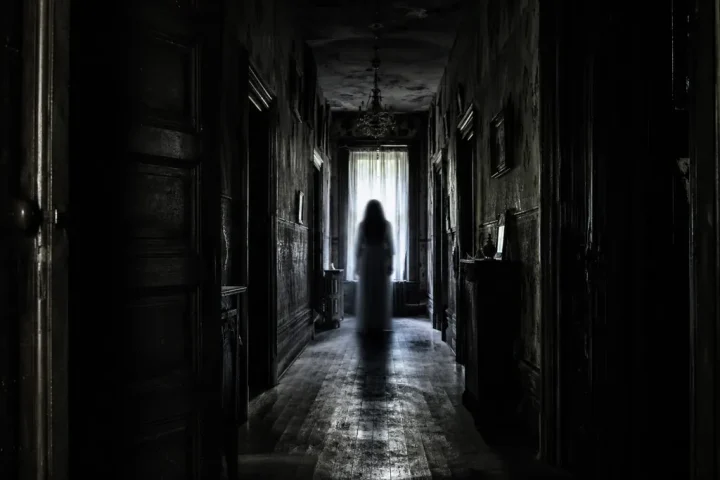
This was especially important in apparition cases. Earlier theories often suggested that a person in crisis, dying, or emotionally intense circumstances might project an image of themselves to someone else. Louisa Rhine, however, leaned towards the idea that the percipient might be creating the experience through ESP-conditioned hallucination.
In other words, the witness might receive psychic information and then unconsciously shape it into an apparition.
Apparitions as ESP-Conditioned Hallucinations
Louisa Rhine’s theory of apparitions was influenced by earlier thinkers such as G.N.M. Tyrrell and Edmund Gurney. She accepted a two-stage model of psi, in which psychic information is first received and then shaped by the mind of the percipient.
According to this view, a person might receive unconscious information about someone’s death, danger or emotional state. The mind then translates that information into an image: a voice, a vision, a dream, a presence, or an apparition.
This meant that apparitions did not necessarily prove that a spirit had appeared. They might instead be symbolic or sensory forms created by the witness’s own mind in response to psychic information.
This idea remains important for occult students today. Not every apparition has to be interpreted as a literal ghost. Some may be spirit manifestations, but others may be telepathic images, clairvoyant impressions, crisis signals, dream-symbols or psychic constructions created by the deeper mind.
Inside the Occult World Mystery School, this kind of distinction matters. We explore ghosts, apparitions, mediumship, spirit contact, psychic perception and survival after death with depth and discernment, so students can move beyond simplistic explanations and learn to ask better questions.
The Survival Question
Louisa Rhine’s work had major implications for the question of survival after death. If spontaneous cases could be explained by the mind of the living percipient, then apparitions of the dead did not automatically prove that the dead had survived and returned.
This made her position controversial. One of the strongest arguments for survival had always been that apparitions, deathbed visions and crisis phenomena seemed to show the continued activity of a person after death. Rhine’s model weakened that argument by suggesting that the living mind might be responsible for many such experiences.
The same applied to physical events reported at the time of death, such as pictures falling from walls or objects moving. These might be interpreted not as actions of the dead, but as psychokinetic effects produced by the living percipient.
Nothing definitive is known about Louisa Rhine’s private beliefs regarding survival after death, but her writings suggest that she was more doubtful than J.B. Rhine. Their negative experiences with mediums in the 1920s may have strengthened her caution.
Criticism of Louisa Rhine’s Approach
Louisa Rhine’s conclusions were criticised by some researchers. They argued that her method favoured her own theory because many of the reports came from the percipients themselves. These accounts often contained little information about the condition, emotional state or actions of the supposed agent, except what appeared inside the experience.
Critics also objected that she excluded certain cases from her main sample, especially cases in which an agent deliberately attempted to project themselves to another person. She considered these semi-experimental rather than spontaneous, but critics argued that excluding them weakened the evidence for agent activity.
Others felt that she sometimes classified cases too strongly in favour of the active-percipient model, even when other interpretations were possible.
Despite these objections, her influence was lasting. Her way of analysing spontaneous cases became common in parapsychology, and her work helped shape later discussions of ESP, apparitions and the psychology of psychic experience.
Louisa Rhine’s Books and Public Work
Louisa Rhine wrote many papers for the Journal of Parapsychology and several books for a general audience. These included Hidden Channels of the Mind from 1961, ESP in Life and Lab from 1967, Mind over Matter from 1970, Psi: What Is It? from 1975 and The Invisible Picture from 1981.
Her writing made psychic research accessible to ordinary readers. She was interested not only in laboratory tests but also in the strange experiences people actually reported: the warning dream, the sudden knowing, the vision of someone far away, the apparition seen at a time of death, the meaningful coincidence that seems to carry information.
In this sense, Louisa Rhine helped preserve the living heart of parapsychology. She reminded researchers that the mystery of psi is not only found in statistics. It is also found in human experience.
Later Life and Leadership
In 1981, Louisa Rhine served as president of the Society for Psychical Research. She was only the third woman and one of the few Americans to hold that position.
After J.B. Rhine’s death, she succeeded him as director of the Foundation for Research on the Nature of Man and editor of the Journal of Parapsychology. Her role in the field continued until the end of her life.
Louisa Rhine died of a heart attack on 17 March 1983. Her final book, Something Hidden, the story of her life with J.B. Rhine, was published posthumously later that year.
Why Louisa Rhine Still Matters
Louisa Rhine matters because she took ordinary psychic experiences seriously. She understood that the unseen does not always appear in dramatic séances, haunted castles or controlled laboratories. Sometimes it appears as a dream, a sudden warning, a vision, an inner certainty or a fleeting apparition at the edge of perception.
Her work also teaches caution. A paranormal experience may be deeply meaningful without proving exactly what caused it. An apparition may be a ghost, but it may also be a telepathic image. A warning dream may be precognition, but it may also be symbolic intuition. A crisis vision may suggest survival, but it may also reveal the strange power of the living mind.
For serious occultists, this is essential. The hidden world should be approached with openness, but also with discipline.
Study Psychic Experience Inside Occult World
Louisa Rhine’s work opens a doorway into one of the most important areas of occult and psychical study: spontaneous psychic experience.
Inside the Occult World Mystery School, we explore apparitions, ghost phenomena, psychic dreams, precognition, telepathy, clairvoyance, mediumship, spirit communication, necromancy, haunted places, divination, demonology, ancient grimoires and the hidden powers of consciousness.
This is not a place for shallow superstition. It is a serious community for occultists, witches, mystics, spirit workers, researchers and seekers who want to understand the unseen with depth, structure and discernment.
Join the Occult World Mystery School and continue the study of the hidden channels of the mind.
The strange experiences people have whispered about for centuries deserve more than dismissal.
They deserve investigation.
They deserve interpretation.
They deserve a place inside serious occult study.
See Also
- J.B. Rhine
- Extrasensory Perception
- Psychokinesis
- Apparitions
- Telepathy
- Clairvoyance
- Precognition
- Spontaneous Cases
- Society for Psychical Research
- Rhine Research Center
- Parapsychology
- Mediumship
- Survival After Death
- Out-of-Body Experience
- Phantasms of the Living
FURTHER READING:
- Berger, Arthur S. Lives and Letters in American Parapsychology. Jefferson, N.C.: McFarland, 1988.
- Coly, Lisette, and Rhea A. White, eds. Women and Parapsychology. New York: Parapsychology Foundation, 1994.
- Rao, K. Ramakrishna. Case Studies in Parapsychology: Papers Presented in Honor of Dr. Louisa E. Rhine. Jefferson, N.C.: McFarland, 1986.
- Rhine, Louisa E. The Invisible Picture: A Study of Psychic Experiences. Jefferson, N.C.: McFarland, 1981.———. Something Hidden. Jefferson, N.C.: McFarland, 1983.
SOURCE:
The Encyclopedia of Ghosts and Spirits– Written by Rosemary Ellen Guiley – September 1, 2007





Follow